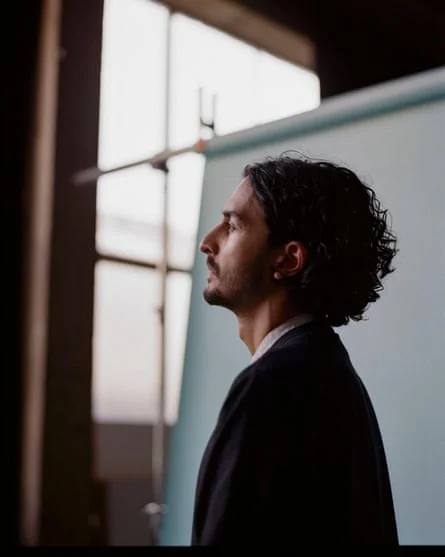
Director Imran Perretta’s debut feature film, “Ish,” has garnered significant critical acclaim, drawing comparisons to seminal coming-of-age narratives like Ken Loach’s “Kes” and Satyajit Ray’s Apu trilogy. The film, centered on the experiences of 12-year-old Ishmail, or Ish, from Luton, has resonated with audiences and critics alike for its poignant portrayal of childhood innocence confronting societal realities. Perretta himself expressed relief at the positive reception, noting, "It’s nice that people have compared Ish to those films rather than Kidulthood," a sentiment that underscores his deliberate departure from more sensationalized depictions of youth culture.
Genesis of a Cinematic Vision
The title, "Ish," was conceived by Perretta from the outset, short for the protagonist’s name, Ishmail. The serendipitous resemblance to other critically lauded three-letter film titles, such as "Kes" and "Apu," was an observation made by others, not a conscious design choice by the director. This alignment, however, has amplified the film’s artistic positioning. Perretta acknowledged reading every review, despite his initial assertion otherwise, and found the comparisons to revered cinematic works a welcome validation. "The subtext is: ‘I thought it was going to be like Kidulthood’," he noted, highlighting the common misconception he aimed to avoid.
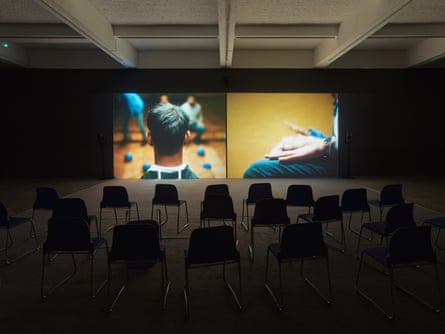
Perretta’s journey to filmmaking is as compelling as the narrative of "Ish." Currently navigating a demanding schedule that includes international art exhibitions, including a recent opening in Poland and preparations for his 2019 video installation "The Destructors" at Tate Britain, he also finds himself in the midst of purchasing his first home and raising two young children. Despite the evident exhaustion, he maintains an energetic and articulate demeanor, a testament to his passion.

A Personal Foundation for a Universal Story
The film draws heavily from Perretta’s own formative experiences. A pivotal moment in his childhood, the traumatic experience of being stopped and searched by police at the age of 13 in the post-9/11 climate, directly inspired the narrative of "Ish." This incident, occurring in Luton, exposed him to a societal perception that shifted his understanding of self. "I was so young, I didn’t really understand what was going on," he recalled. "It was incredibly traumatic. That was 100% the moment in my childhood when I lost my innocence. Because I understood how I was seen outside my family home, outside school, outside the community, all these protected spaces. In that moment, I understood I was seen as a deviant or some sort of threat.”
This profound realization politicized him, providing the impetus for his artistic endeavors. "That kind of made me. From that point I had something to make work about," Perretta stated. He further elaborated that his subsequent artistic output, whether displayed in galleries or on screens, has consistently stemmed from this experience of confronting external perceptions. For "Ish," he collaborated with acclaimed Irish playwright and scriptwriter Enda Walsh, a partnership that enriched the film’s narrative depth and dialogue.
“Ish”: A Tapestry of Childhood and Societal Undercurrents
"Ish" is set against the backdrop of Luton during the summer holidays, capturing the fleeting moments of boyhood for 12-year-olds Ish (portrayed by first-time actor Farhan Hasnat) and his best friend Maram (Yahya Kitana). The film delicately balances the joys of childhood exploration – building dens, foraging for blackberries – with the burgeoning realities of adolescence and the complexities of their social environment. Ish is grappling with the recent death of his mother, leaving his family in a state of profound grief. Meanwhile, Maram, exhibiting early signs of maturation, finds himself drawn to older boys and engaging in activities that court trouble.
The film’s depiction of the stop and search incident is particularly harrowing, illustrating the forceful removal of a child from public space without parental consent. Perretta draws a parallel between this fictionalized event and contemporary issues, citing the recent case of Child Q and instances of interviews conducted under the government’s Prevent anti-extremism strategy without parental or guardian presence. "It happens to children from certain backgrounds more than others. I wanted to explore what it means to drag children into the adult world before their time," he explained, underscoring the film’s exploration of premature exposure to adult scrutiny and prejudice.
The casting process for "Ish" was extensive, spanning six months and involving auditions for approximately 900 local boys. The serendipitous discovery of Hasnat and Kitana, who had been friends since early childhood, proved instrumental. Their established bond translated into an undeniable on-screen chemistry, a crucial element for the film’s authenticity. "It was just about getting out of their way, letting them do what they do naturally, which is basically wind each other up," Perretta remarked, emphasizing his directorial approach of fostering natural performances.
Artistic Choices: Monochrome and Luminous Realism
"Ish" was filmed in Luton over a concentrated period of five weeks during the summer of 2024. Perretta, whose wife is a secondary school teacher who grew up nearby, has long been familiar with the town. He noted that commuter towns like Luton often face negative media portrayals, referencing its association with figures like Stephen Yaxley-Lennon and its labeling as a hub of Islamic extremism. "But at the heart of it was just a community going about their business," he asserted, highlighting the film’s aim to present a more nuanced and humanistic perspective.
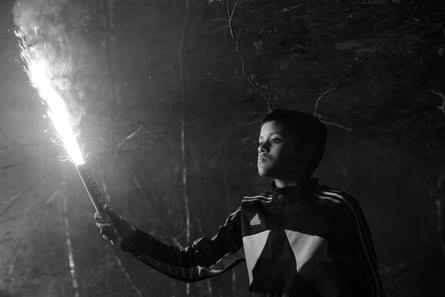
A striking artistic decision was the filming of "Ish" in luminous monochrome. Perretta explained this choice was a deliberate effort to elevate the town’s visual representation. "What I figured is black and white didn’t negatively aesthetise Luton. It gave it grandeur. It made the concrete feel like marble. When you shot in colour, you immediately felt the fact that it had been at the sharp end of austerity." This aesthetic choice imbues the urban landscape with a timeless quality, allowing the narrative and characters to take center stage without being overshadowed by the perceived harshness of the environment.
The practicalities of filming with child actors also presented unique challenges. Legal protections mandate short filming days for minors, with a maximum of six hours on set. Perretta acknowledged the time constraints but maintained a pragmatic approach. "We just didn’t have the time," he stated, a remark that could be misconstrued as dismissive, but which he contextualized with a profound perspective. "When you’ve looked after someone that’s dying, a film set is not that bad. I refuse to get to wound up about that sort of thing.” This philosophical outlook, shaped by personal tragedy, informs his ability to navigate the pressures of filmmaking with a grounded perspective.
A Life Dedicated to Meaningful Creation
Perretta’s path to filmmaking was profoundly influenced by his mother’s illness and subsequent death from cancer when he was 21. During her illness, he served as one of her primary caregivers alongside his father and younger sister. This period, he described, was his "first degree," a profound educational experience that redefined his priorities. After his mother’s passing, a brief stint in an architectural practice solidified his resolve to pursue work that held greater personal significance. "Life’s too short to design toilets," he quipped, referencing his experience spacing toilet cubicles for a high-profile architect, a role he found unfulfilling and left after only a week.
His artistic awakening was further catalyzed during a visit to the Serpentine Gallery in London while his mother was ill. He encountered Derek Jarman’s final film, "Blue" (1993), a deeply personal and experimental work released months before Jarman’s death from an AIDS-related illness. The film’s impact was transformative. "It was so extraordinary seeing that film. I stayed there for hours. I’d never had any experience of contemporary art before, other than school trips to the Tate. I was spellbound by it. I thought: ‘Oh God, I need to do that.’ I just need to run at the things that make me angry and scared, and make work about them. That was the beginning,” Perretta recounted with a reflective smile. This pivotal moment marked the inception of his artistic journey, a path dedicated to channeling personal experiences and societal concerns into impactful creative works.
The success of "Ish" represents not only a personal triumph for Imran Perretta but also a significant contribution to the landscape of contemporary cinema, offering a sensitive and powerful exploration of childhood, identity, and the enduring impact of societal forces. The film’s universal themes, rooted in a specific cultural context, promise to resonate with audiences long after the credits roll.