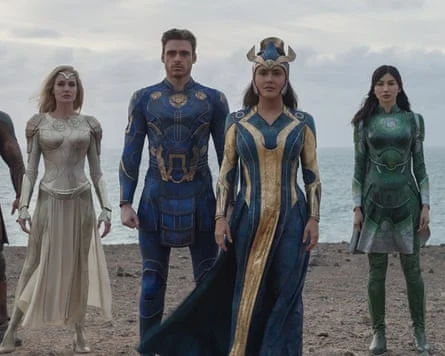
The ongoing debate surrounding the dominance and artistic merit of the modern superhero genre has received a fresh and unexpected contribution from one of its own participants. Academy Award-winning actor Nicolas Cage, whose extensive cinematic career includes multiple forays into comic book adaptations, has launched a sharp critique of the Marvel Cinematic Universe (MCU). Speaking at a fan convention in Texas, the 62-year-old actor characterized the multi-billion-dollar franchise as an overfunded and embarrassing spectacle, explicitly comparing its reliance on physical combat sequences to professional wrestling.
Cage’s remarks immediately reignited a long-standing Hollywood debate regarding the homogenization of contemporary blockbuster cinema. While acknowledging his comments came "with love," the actor painted a vivid picture of seasoned, highly talented dramatic performers donning elaborate costumes for heavily choreographed action set-pieces. His criticism points to a broader industry concern: that the prioritization of visual effects and endless combat sequences frequently overshadows traditional character development and dramatic performance.
A Career Rooted in Comic Book Lore
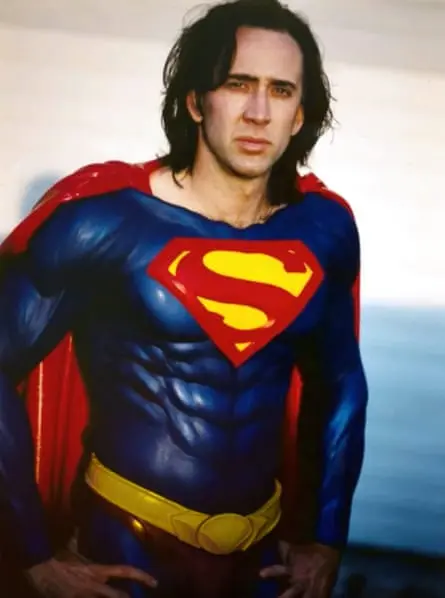
The critique carries distinct weight given Cage’s long-standing, well-documented affinity for comic book culture. Far from being an outsider to the genre, Cage famously named himself after Marvel’s Luke Cage (born Nicolas Coppola). His history with comic book properties spans decades, most notably playing the fiery-headed anti-hero Johnny Blaze in two feature-length adaptations of Ghost Rider—Sony’s Ghost Rider (2007) and its sequel, Ghost Rider: Spirit of Vengeance (2012).
Furthermore, Cage’s most recent television credit places him squarely within the modern streaming-era expansion of comic adaptations: Sony’s Spider-Noir. In the series, Cage starred as a gritty, alternative-universe iteration of the iconic web-slinger. However, despite high anticipation and a unique stylistic pitch, the series was ultimately cancelled after a single season.
Explaining his attraction to Spider-Noir in a subsequent interview with Variety, Cage emphasized that his motivation was driven by aesthetic and historical reverence rather than standard blockbuster ambitions. He noted that he sought to channel the essence of classic Hollywood icons such as Humphrey Bogart, James Cagney, and Edward G. Robinson, tailoring his performance to fit a stylized black-and-white visual framework. This stark contrast between his artisanal, performance-driven approach and the industrial pipeline of major cinematic universes underpins his frustration with contemporary studio slates.
The Evolution of the Superhero Industrial Complex
To fully understand Cage’s metaphor of the MCU as a "glorified WWE," one must examine the operational scale of modern franchise filmmaking. Over the past fifteen years, the Marvel Cinematic Universe, overseen by Kevin Feige under the corporate umbrella of The Walt Disney Company, has released dozens of interconnected feature films and television series. This unprecedented output has fundamentally reshaped the global box office, routinely generating billions of dollars in ticket sales and cementing comic book intellectual property as the primary engine of Hollywood commerce.
However, this commercial triumph has run parallel to growing fatigue among industry traditionalists. The production pipeline relies heavily on pre-visualization, green-screen stages, and extensive post-production computer-generated imagery (CGI). Consequently, actors frequently perform opposite digital doubles or tennis balls on sticks, with the dramatic stakes often deferred until the third-act battle sequences—a structural formula that Cage explicitly targeted in his convention commentary.

By describing these productions as well-funded spectacles where intelligent, gifted actors over the age of fifty are squeezed into rigid, physically demanding costumes just to execute predictable fight choreography, Cage touches upon the grueling physical and artistic compromise demanded by modern franchise contracts.
A Chorus of Industry Dissent
Cage is far from the first prominent cinematic figure to voice reservations about the cultural and artistic hegemony of the superhero genre. His remarks align him with a distinguished cohort of acclaimed directors and auteurs who have openly criticized the industrialization of film art.
Most notably, legendary filmmaker Martin Scorsese ignited a global industry debate in 2019 when he likened Marvel movies to "theme parks" rather than traditional cinema, arguing that they lack the emotional and psychological revelations essential to true cinematic art. Shortly thereafter, Scorsese’s contemporary and peer, Francis Ford Coppola, doubled down on the sentiment during an interview at the Lumière Festival in Lyon, describing the Marvel business model as "despicable."
International filmmakers have added their voices to the chorus as well. Acclaimed Canadian director Denis Villeneuve, known for his work on Arrival, Blade Runner 2049, and the Dune franchise, has previously remarked that the market is saturated with "cut and paste" superhero films that offer little stylistic or narrative variation. Similarly, veteran British director Ken Loach dismissed superhero films as a cynical corporate exercise devoid of genuine artistic value, designed strictly to maximize shareholder profits rather than engage with the human condition.
Despite these recurrent critiques, studio executives and defenders of the genre argue that comic book adaptations fulfill a vital economic and social function. Proponents maintain that these massive cinematic events sustain the global exhibition sector, keeping commercial movie theaters solvent through economic downturns and providing employment for thousands of below-the-line craftspeople, digital artists, and stunt professionals. Furthermore, defenders suggest that blockbuster franchises offer a modern equivalent of classical mythology, providing shared cultural touchstones for global audiences.
Chronology of Major Criticisms Against the MCU
- October 2019: Martin Scorsese publishes his critique in Empire magazine, comparing Marvel films to theme parks and sparking a months-long industry debate.
- October 2019: Francis Ford Coppola reinforces Scorsese’s remarks, calling the Marvel formula despicable during a press engagement in France.
- October 2019: Ken Loach labels superhero films a cynical corporate exercise with no connection to the art of cinema.
- February 2021: Denis Villeneuve criticizes the lack of risk-taking in contemporary franchise output, pointing to formulaic storytelling structures.
- Late 2025 – Early 2026: Nicolas Cage reflects on his role in Spider-Noir and subsequently delivers his "glorified WWE" remarks at a Texas fan convention.
Implications for Future Blockbuster Cinema
As Hollywood navigates a transitional period marked by shifting audience demographics, superhero fatigue, and the rapid growth of streaming platforms, commentary from respected veterans like Cage carries renewed significance. While studios continue to invest heavily in comic book adaptations, box-office returns for several recent franchise entries have indicated that audiences are becoming increasingly selective.
For Cage, the immediate future points away from the realm of capes and comic book adaptations. Following his exploration of neo-noir aesthetics in television, the actor is set to take on the leading role in acclaimed director David O. Russell’s upcoming biographical feature about legendary National Football League coach and Super Bowl impresario John Madden.
Whether Hollywood’s elite will heed the warnings of Scorsese, Coppola, Villeneuve, and now Cage remains to be seen. However, as the economic landscape of filmmaking continues to evolve, the friction between commercial spectacle and artistic integrity will undoubtedly remain a defining narrative of modern cinema.