The afterlife is under new management, and that is likely bad news for the residents of Quahog. Hulu has officially unveiled the trailer for the latest installment in the long-running animated comedy franchise, Family Guy: Happy Hell-o-ween. The special is scheduled to premiere on October 5, 2026, and will be available to stream exclusively on Hulu and the Hulu on Disney+ bundle. This seasonal event marks a notable shift in the series’ distribution strategy, emphasizing the brand’s ongoing pivot toward streaming-exclusive holiday content.
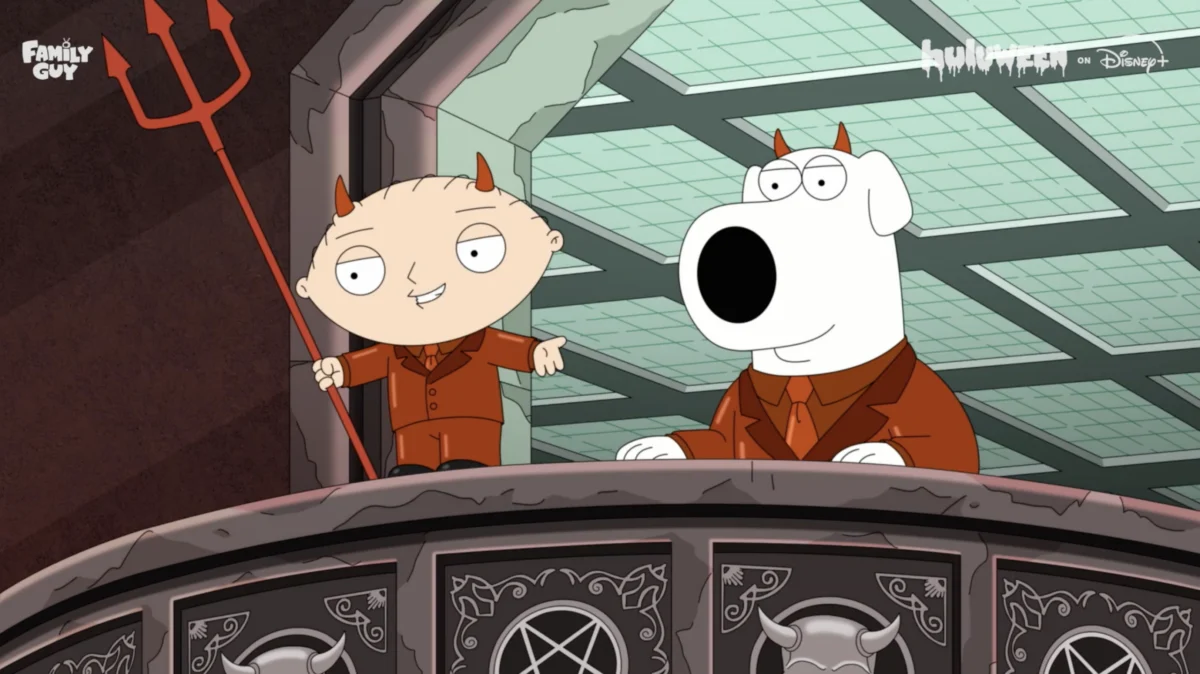
In this upcoming special, the narrative centers on the show’s central duo, Brian and Stewie Griffin, who find themselves unexpectedly transported to the underworld. The premise hinges on the characters being held accountable for two dozen seasons of morally questionable behavior. However, in true Griffin fashion, the pair manages to antagonize the Devil to such a degree that they inadvertently find themselves assuming control of the infernal realm. The resulting chaos serves as the foundation for the episode’s comedic tension.
Casting and Production Context
The production features a high-profile guest performance, with Emmy Award-winning actor Kieran Culkin, known for his critically acclaimed role as Roman Roy in HBO’s Succession, providing the voice for Satan. The casting was first disclosed during the Family Guy panel at San Diego Comic-Con, a traditional venue for major network announcements. The revelation of Culkin’s involvement underscores the series’ continued ability to attract A-list talent for specialized projects, even as the show enters its third decade of production.
Executive producer and showrunner Rich Appel, who has been instrumental in steering the series through its recent transition to a dual-broadcast and streaming model, confirmed that this Halloween special is merely the beginning of the network’s seasonal output. During the Comic-Con presentation, Appel hinted at a secondary holiday-themed special slated for later in the 2026 calendar year, reinforcing the strategy of leveraging seasonal milestones to drive subscriber engagement on the Disney-owned platforms.
A Chronology of Family Guy’s Longevity
Family Guy, created by Seth MacFarlane, first premiered on the Fox network in 1999. Since its inception, the show has defied industry norms regarding longevity, surviving multiple cancellations, a network hiatus between 2002 and 2005, and a transition into the modern streaming era.
The franchise has undergone significant evolution since its debut. By the time of the 2026 Halloween special, the series will have surpassed 24 seasons, solidifying its place as one of the longest-running animated series in television history. This longevity has been supported by a robust secondary market, including syndication on cable networks like Adult Swim and a massive library presence on streaming services.
The move to produce specialized, standalone holiday episodes for Hulu represents a strategic departure from the traditional 22-episode broadcast season model. By creating event-based programming, Hulu aims to minimize the "churn" rate of its subscriber base by offering unique content that exists outside the standard serialized arc of the main series.
Industry Data and Streaming Trends
The transition of legacy animated sitcoms to streaming-first event programming is a trend observed across the media landscape. Data from industry analysts suggests that "appointment viewing"—the practice of watching a show at a specific time—has become increasingly rare. Instead, streamers like Hulu and Netflix have found success in releasing high-value "specials" that function as standalone assets.

According to recent streaming metrics, animated comedies perform exceptionally well in the "evergreen" category, meaning they are frequently re-watched by existing audiences while simultaneously attracting new viewers through social media clips and viral moments. The decision to cast a performer with the cultural capital of Kieran Culkin is a calculated effort to bridge the gap between traditional broadcast audiences and the younger, streaming-dominant demographic that Hulu targets.
The Evolution of the Griffin Universe
The inclusion of an afterlife-centric plotline is a thematic departure from the typical suburban setting of Quahog. While the show has frequently utilized supernatural or metaphysical tropes in its long-running "Road to…" episodes, the decision to dedicate an entire special to the mechanics of Hell suggests a willingness to experiment with the show’s established canon.
From a production standpoint, these specials allow the writing staff to bypass the constraints of the standard sitcom format. By isolating Brian and Stewie—the characters most frequently paired for high-concept adventures—the creative team can lean into the surrealist elements that have become a hallmark of the show’s later seasons. The narrative stakes, while inherently comedic, provide a framework for the writers to engage in social commentary, a foundational element of the Family Guy brand since its inception.
Implications for Future Programming
The release of Happy Hell-o-ween serves as a bellwether for the future of the Family Guy franchise under the ownership of Disney. As the industry grapples with the decline of traditional linear television ratings, the reliance on high-profile, holiday-specific content provides a stable roadmap for success.
If this special performs according to projections, it is highly probable that future seasons will incorporate a higher volume of these "event" specials. This strategy allows for a leaner production schedule for the main series while keeping the intellectual property relevant in the digital consciousness. Furthermore, the collaboration between Hulu and Disney+ highlights the ongoing integration of their content libraries, creating a unified ecosystem that prioritizes long-term retention over immediate, short-term broadcast metrics.
Critical Reception and Audience Anticipation
While the critical consensus for Family Guy has fluctuated over its 24-year run, the series maintains a dedicated and vocal fanbase. The trailer for the Halloween special, which highlights the comedic friction between the protagonists and the infernal bureaucracy, has generated significant social media engagement. Fans have noted the stylistic consistency of the animation, which retains the classic aesthetic that defined the show’s aesthetic pivot in the mid-2000s, while the dialogue remains sharp, leaning into the character-driven cynicism that defines the relationship between Brian and Stewie.
The casting of Kieran Culkin is particularly noteworthy, as it reflects a growing trend of prestige television actors transitioning into voice acting for adult animation. This cross-pollination of talent helps to elevate the perceived quality of the writing and can attract a more diverse audience profile.
Conclusion
As the October 5 premiere date approaches, the industry will be watching closely to see how Happy Hell-o-ween measures up against previous holiday milestones in the show’s history. With a proven track record, a high-profile guest star, and a strategic release window, the special is positioned to be a significant contributor to Hulu’s seasonal traffic.
Ultimately, the afterlife-themed special is more than just a Halloween gimmick; it is a demonstration of how a quarter-century-old series continues to adapt to the shifting demands of modern viewers. Whether or not Brian and Stewie can actually run Hell effectively remains to be seen, but for the viewers, the return of one of television’s most enduring duos is a reliable indicator that the franchise has no intention of slowing down. As the show enters this new phase of its lifecycle, it continues to demonstrate that even after 24 seasons, there is still creative territory left to explore, provided one is willing to look in the most unlikely of places.