A Comprehensive Lifestyle Collection
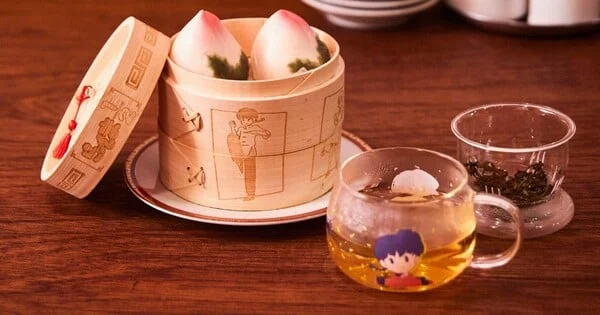
The new merchandise drop from studio CLIP is categorized into two primary sectors: functional tableware and lifestyle accessories. The tableware selection is clearly designed to evoke the aesthetic of the series’ famous settings, most notably the Nekohanten (Cat Café). Items include specialized ramen bowls, Chinese-style soup spoons, themed chopsticks, a two-tier bamboo-style steamer basket, a traditional teapot, and a lidded teacup. For beverage enthusiasts, the line also offers branded plates, beer glasses, and highball glasses, catering to an adult demographic that grew up with the original manga serialization.
Beyond the kitchen, the lifestyle accessories emphasize both utility and fan-service branding. Highlights include a cooking mitt shaped like P-chan—the alter ego of Ryoga Hibiki—and an insulated bag designed to mimic the iconic delivery boxes used by the Nekohanten. The collection further extends to practical daily items, such as reusable shopping bags, tissue case pouches, umbrellas, hand towels, purses, tote bags, and various decorative straps and stickers. A standout item in the collection is the inclusion of "satin kung-fu-style room shoes," which marry the series’ martial arts theme with home comfort.
According to studio CLIP, the price points for these items are positioned within an accessible range, starting at 880 yen and scaling up to 4,400 yen (approximately $5.80 to $29 USD). This pricing strategy is consistent with the brand’s mission to provide "lifestyle design" products that are both aesthetically pleasing and utilitarian, ensuring they appeal to casual shoppers and dedicated collectors alike.
The Enduring Legacy of Rumiko Takahashi’s Work
The release of this collection is not an isolated event but rather a strategic piece of a larger cultural revival. To understand the significance of this collaboration, one must look back at the franchise’s origins. Rumiko Takahashi, often referred to as the "Princess of Manga," introduced Ranma 1/2 in the pages of Shogakukan’s Weekly Shonen Sunday in 1987. The manga ran for nearly a decade, concluding in 1996, and became a cornerstone of the 1980s and 90s manga boom.
The narrative—a genre-bending mix of high-stakes martial arts, romantic comedy, and supernatural gender-swapping elements—proved to be an international phenomenon. An anime adaptation followed in 1989, which aired for 161 episodes, spawning three feature-length films and several original video animations (OVAs). The series was instrumental in the global spread of anime during the 1990s, particularly in North America and Europe, where it was often one of the first titles available on home video.
Chronology of the Modern Ranma 1/2 Revival
The franchise has experienced a concentrated period of activity over the last 24 months, aimed at recapturing the interest of legacy fans while simultaneously courting a younger, modern audience. The timeline of this recent resurgence is as follows:
- June 2024: Shogakukan and associated production committees officially confirmed the development of a high-fidelity anime remake of the original series, featuring the return of the core voice cast to ensure continuity and nostalgia.
- Late 2024: The modern remake premiered, receiving generally positive reviews for its updated animation quality and faithfulness to Takahashi’s original source material.
- September 2026: Studio CLIP announces the launch of the lifestyle and tableware collection, signaling a deepening of the brand’s commercial footprint.
- October 2026: The scheduled premiere of the third season of the modern anime series, marking the next phase in the franchise’s sustained release schedule.
This rapid-fire release of both content and physical merchandise suggests a highly coordinated intellectual property (IP) management strategy by Shogakukan and its partners. By maintaining a steady stream of media presence, the owners of the Ranma 1/2 license ensure that the brand remains top-of-mind for consumers in a competitive market.
Economic and Market Implications
The partnership between a lifestyle brand like studio CLIP and a legacy anime franchise like Ranma 1/2 reflects a broader trend in the Japanese retail sector: the "adultification" of anime merchandise. Historically, anime goods were marketed primarily to children or hardcore collectors. However, contemporary retail strategies have pivoted toward functional, high-quality household goods that fit seamlessly into the lives of adult professionals.
By offering items like highball glasses, tea sets, and sophisticated tote bags, studio CLIP is tapping into the disposable income of the generation that grew up reading Weekly Shonen Sunday in the late 80s and early 90s. Market analysts note that these types of collaborations serve as a low-risk, high-engagement method for retail brands to differentiate themselves. For the IP holder, these collaborations provide a continuous revenue stream that does not rely solely on subscription fees or streaming royalties.
Furthermore, the choice of items—specifically the Nekohanten-themed accessories—suggests that the marketing team is leveraging the most recognizable visual motifs of the show. In the context of the retail landscape, items that act as "lifestyle signals"—subtle nods to one’s interests that do not appear overly juvenile—are currently seeing higher turnover rates in Japanese department stores and online boutiques.
Official Responses and Industry Context
While studio CLIP has remained focused on the logistical rollout of the collection via their online portal and physical storefronts, the move has been widely covered by industry publications such as Anime! Anime! and PR Times. These outlets emphasize the importance of the timing, noting that the release serves as a bridge between the conclusion of recent broadcast cycles and the upcoming third season.
The strategy of "cross-media promotion" is well-documented in the Japanese entertainment industry. When an anime series is slated for a new season, the licensing committee typically works to ensure that physical goods are available in retail spaces to maintain consumer momentum. The inclusion of high-quality kitchenware suggests that the production committee, led by Shogakukan, views the Ranma 1/2 audience as mature and interested in premium products.
Conclusion: A Strategic Intersection of Media and Retail
The upcoming launch of the studio CLIP Ranma 1/2 collection is more than a simple product release; it is a testament to the longevity of Rumiko Takahashi’s work. As the franchise prepares to enter its third season of the modern remake, the availability of these lifestyle goods allows fans to integrate their fandom into their daily lives in a functional way.
For the retail brand, this partnership provides access to a legacy fanbase with deep emotional attachments to the characters of Ranma, Akane, and the supporting cast of the Nekohanten. For the consumer, it provides a rare opportunity to acquire high-quality, themed merchandise that avoids the pitfalls of disposable plastic goods. As the franchise continues to modernize its presentation while honoring its historical roots, the success of this tableware collection will likely serve as a benchmark for how legacy anime properties can maintain relevance in the 21st-century retail environment. With the September 18 launch date approaching, the market will soon see if the demand for these "wacky" martial arts-inspired goods holds true to the enduring popularity of the source material.