Microsoft’s Xbox video game division has initiated a sweeping transformation of its global operations, announcing the elimination of 3,200 positions and the divestment of four prominent first-party game studios. In a move described by leadership as the most significant restructuring in the brand’s history, the tech giant aims to "reset" its gaming business to combat stagnating growth, thinning profit margins, and what it characterizes as a historic crisis in the gaming hardware market. The decision marks a stark turning point for a division that has spent the last several years aggressively acquiring talent and intellectual property.
The restructuring was detailed in an internal memorandum sent to employees on Monday by Asha Sharma, who framed the changes as a necessary evolution to ensure the long-term viability of the Xbox ecosystem. Titled "Resetting Xbox," the memo outlines a phased approach to the workforce reductions. Approximately 1,600 employees were notified of their termination immediately, while the remaining 1,600 layoffs will be executed over the next 12 months. This extended timeline, while unusual for the technology sector, was described by Sharma as a logistical necessity given the scale of the organizational shifts required.
Structural Overhaul and Management Consolidation
A primary driver of the restructuring is the removal of significant bureaucratic friction within the division. In her communication to staff, Sharma revealed that certain internal processes had become burdened by as many as 14 layers of management. This complexity, she noted, had blurred lines of accountability and slowed the company’s ability to respond to player needs and market shifts.
To address this, Xbox will undergo a radical flattening of its corporate hierarchy. The new mandate stipulates that management layers be reduced to no more than five, with a target of three layers wherever possible. This streamlining is intended to empower individual teams and accelerate decision-making processes. As part of this leadership realignment, Helen Chiang has been appointed as the division’s first Chief Operating Officer (COO). Chiang will hold direct Profit and Loss (P&L) responsibility across the entire Xbox division, a move intended to centralize financial accountability and operational efficiency.
The Divestment of First-Party Studios
The restructuring includes a surprising shift in Xbox’s first-party studio strategy. For years, Microsoft has been on an acquisition spree, bringing various independent developers under the Xbox Game Studios and ZeniMax Media umbrellas. However, this latest "reset" involves the departure of four notable studios from Microsoft’s direct control.
Compulsion Games, the Montreal-based developer of We Happy Few, and Double Fine Productions, the acclaimed studio led by industry veteran Tim Schafer known for Psychonauts 2, will be spun out to their respective management teams. Both studios will return to operating as independent entities, a move that grants them creative autonomy but removes the financial safety net of Microsoft’s balance sheet.
Meanwhile, Ninja Theory, the Cambridge-based developer of the Hellblade franchise, and Undead Labs, the creators of State of Decay, have secured external funding and will operate under new ownership. While the specific identities of the new owners were not immediately disclosed, the transition suggests a move to offload the high operational costs associated with these mid-to-large-scale developers.
Addressing the "Hardware Crisis" and Economic Realities
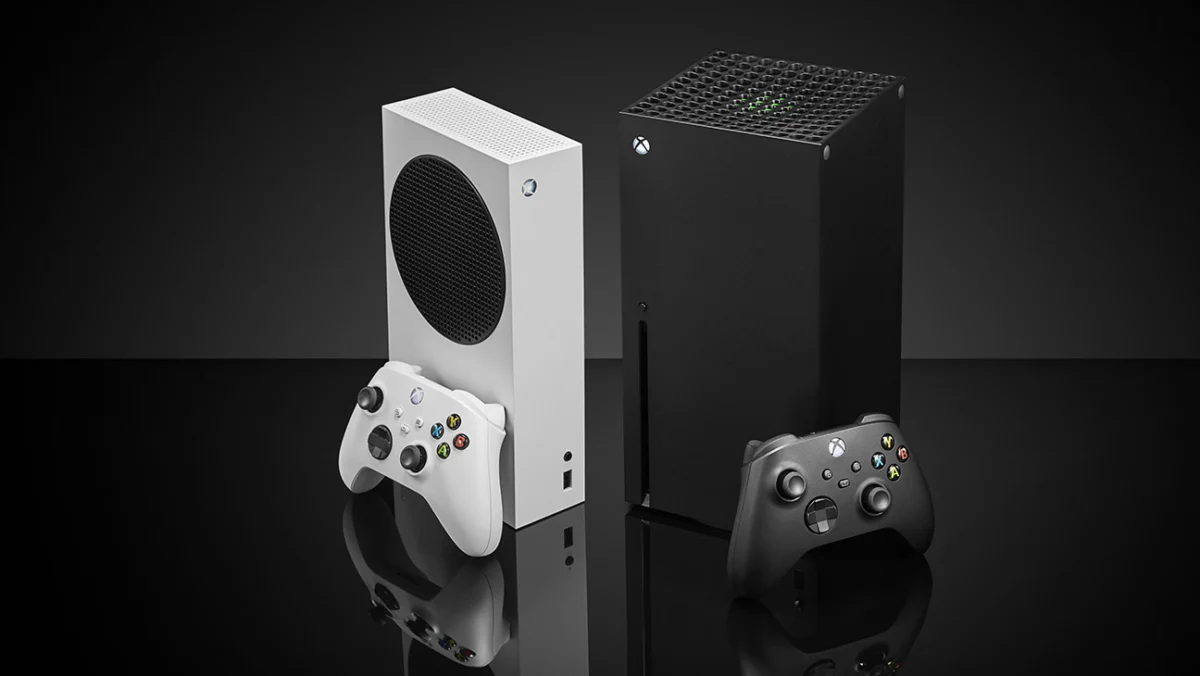
The most striking justification for the layoffs provided by Sharma was the "severe hardware crisis" currently facing the gaming industry. While Microsoft does not frequently disclose exact console sales figures, third-party market data suggests that the Xbox Series X and Series S have struggled to maintain pace with Sony’s PlayStation 5. As of early 2024, estimates suggest a nearly 3-to-1 sales lead for Sony in the current console generation.
The broader industry is also grappling with a post-pandemic correction. During the COVID-19 lockdowns, the gaming sector saw unprecedented engagement and revenue growth, leading many companies to over-hire. As consumer spending has shifted back toward travel and out-of-home entertainment, and as high interest rates have increased the cost of capital, the "growth at any cost" model has become unsustainable.
Sharma’s memo was candid regarding the financial health of the division, stating that margins were lower than anticipated and growth had stalled despite the massive influx of new staff over the past three years. The "reset" is designed to realign the company’s cost structure with the current reality of the market, where hardware sales are no longer the reliable engine of growth they once were.
Chronology of Xbox’s Recent Workforce Transitions
The 3,200 layoffs announced this week follow a turbulent 18-month period for Microsoft’s gaming workforce. To understand the scale of this restructuring, it is necessary to look at the timeline of the division’s recent contractions:
- January 2023: Microsoft announced 10,000 company-wide layoffs, which significantly impacted Xbox and Bethesda (ZeniMax) staff.
- October 2023: Microsoft officially closed its $69 billion acquisition of Activision Blizzard, the largest deal in gaming history, adding roughly 17,000 employees to its roster.
- January 2024: Just months after the acquisition, Microsoft cut 1,900 roles across Xbox, ZeniMax, and Activision Blizzard to eliminate redundancies.
- May 2024: Microsoft shuttered several ZeniMax-owned studios, including Tango Gameworks and Arkane Austin, citing a need to prioritize high-impact titles.
- Current Announcement: The "Resetting Xbox" memo marks the largest single-day layoff event in the division’s history, bringing the total number of gaming roles eliminated at Microsoft in 2024 to over 5,000.
Industry-Wide Context and Comparative Data
Xbox is not alone in its retrenchment. The year 2024 has become a period of historic contraction for the entire video game industry. According to data tracked by industry analysts, more than 11,000 game industry workers were laid off in 2023, and that number has already been surpassed in the first half of 2024.
Major competitors have made similar cuts:
- Sony Interactive Entertainment laid off approximately 900 employees (8% of its workforce) in early 2024, including the closure of its London Studio.
- Electronic Arts (EA) cut 5% of its workforce, or about 670 employees, as part of a move away from licensed IP.
- Riot Games reduced its staff by 11% (roughly 530 roles) to focus on its core "live service" titles.
The "hardware crisis" mentioned by Sharma is also reflected in the broader market. While the Nintendo Switch is nearing the end of its lifecycle and the PS5 has entered the "latter stage" of its cycle according to Sony executives, the lack of a mid-generation sales surge for Xbox has forced a pivot toward software, cloud gaming, and multi-platform releases.
Implications for the Future of Xbox
The decision to spin off studios like Double Fine and Compulsion Games suggests a narrowing of Microsoft’s creative focus. Rather than maintaining a massive portfolio of diverse, experimental "AA" or "indie-plus" studios, Xbox appears to be doubling down on its "tentpole" franchises—such as Halo, Forza, Gears of War, and the newly acquired Call of Duty.
The appointment of Helen Chiang as COO signals a shift toward a more disciplined, P&L-focused management style. By reducing management layers, Microsoft hopes to make the Xbox division function more like a lean software company and less like a sprawling media conglomerate.
Despite the deep cuts, Sharma maintained an optimistic tone regarding the long-term prospects of the brand. She emphasized that the restructuring is intended to facilitate a "bigger future," claiming that the next decade of gaming will be more global and creative than previous eras. Microsoft intends to maintain high levels of investment in the Xbox ecosystem, but with a newfound emphasis on "focus, discipline, and clarity."
The move toward a multi-platform strategy—recently evidenced by Xbox bringing titles like Sea of Thieves and Hi-Fi Rush to PlayStation and Nintendo platforms—is likely to accelerate following this reset. If hardware remains a "crisis" area, the company’s path to growth almost certainly lies in expanding the reach of its content and its Game Pass subscription service to as many screens as possible, regardless of the underlying hardware.
Official Reactions and Market Impact
While Microsoft’s stock price remained relatively stable following the news, analysts have expressed mixed views on the long-term impact of the "reset." Some see it as a necessary pruning of an overextended division, while others worry about the loss of creative diversity following the divestment of studios like Ninja Theory and Double Fine.
In statements gathered from industry circles, the reaction has been one of somber reflection. "The scale of these cuts is a clear admission that the acquisition-heavy strategy of the last five years has met a hard financial ceiling," said one independent industry analyst. "Xbox is now forced to prove it can be profitable as a content-first organization, rather than just a platform holder."
As the 1,600 employees affected by today’s news begin their transition out of the company, the industry watches closely to see if Microsoft’s "disciplined" approach will indeed lead to the "more global and more creative" future Asha Sharma promised, or if it signals a permanent retreat from the ambitious hardware-centric dreams of the past decade. For now, the focus remains on the "reset"—a painful but, in the eyes of Microsoft leadership, unavoidable correction in a rapidly changing digital landscape.