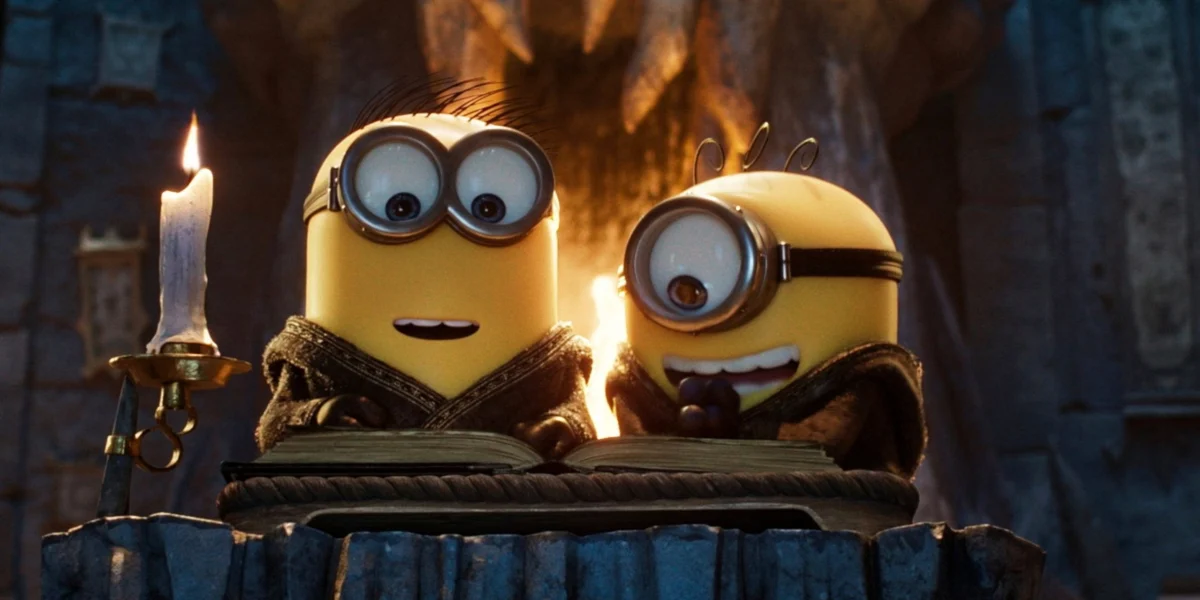
The latest installment in the multibillion-dollar animated series, Minions and Monsters, departs from the established narrative trajectory of the Despicable Me universe by introducing a fresh ensemble of protagonists and a distinct historical setting. Directed and co-written by Pierre Coffin, the film functions as a standalone narrative that explores the origins of a specific tribe of Minions during the 1920s Hollywood era. Shifting focus away from the well-known trio of Kevin, Stuart, and Bob, the film centers on two new leads, James and Henry, as they navigate the transition from silent film stardom to an accidental supernatural crisis involving the unleashing of ancient monsters.
Narrative Overview and Setting
The story begins by clarifying a long-standing point of contention within the franchise’s lore regarding the Minions’ whereabouts during the early 20th century. While previous films suggested the primary group was isolated in an Arctic ice cave, Minions and Monsters establishes the existence of multiple disparate tribes scattered across the globe. This specific group finds itself in Southern California at the dawn of the motion picture industry. Through a series of slapstick accidents, the Minions are captured on film, leading to an instantaneous rise to fame as silent film icons.
The narrative arc follows their meteoric rise and subsequent fall during the industry’s transition to "talkies." Because the Minions’ dialect—a linguistic blend known as Minionese—is largely unintelligible to the general public, their utility in dialogue-heavy sound films evaporates. This professional displacement leads James and Henry to pursue independent filmmaking. Utilizing a mystical spell book acquired from a former villainous employer, they attempt to create the world’s most realistic monster movie. The experiment results in the accidental summoning of literal monsters, forcing the Minions to transition from entertainers to unlikely protectors of the city.
Historical Context and the Silent Film Influence
The choice of 1920s Hollywood serves as more than a mere aesthetic backdrop; it acts as a thematic tribute to the foundations of physical comedy. The Minions have long been compared to the icons of the silent era, such as Charlie Chaplin, Buster Keaton, and Harold Lloyd. Their reliance on pantomime, exaggerated facial expressions, and high-stakes slapstick mirrors the comedic language of the early 20th century.
Minions and Monsters leans heavily into this connection, featuring sequences that reference classic cinema, including homages to the Lumière brothers and Georges Méliès. By placing characters who essentially speak a universal language of gibberish into an era where sound was not a requirement for storytelling, the film highlights the global appeal of the franchise. This period setting allows the production team to experiment with visual styles, ranging from sepia-toned opening credits to the vibrant, chaotic energy of a burgeoning Tinseltown.
The Evolution of the Illumination Franchise
Since their debut in 2010’s Despicable Me, the Minions have become the corporate mascots for Illumination and a dominant force in global pop culture. To date, the franchise—encompassing four Despicable Me films and now three Minions-centric entries—has grossed over $4.6 billion at the worldwide box office.
| Film Title | Release Year | Global Box Office (Approx.) |
|---|---|---|
| Despicable Me | 2010 | $543 Million |
| Despicable Me 2 | 2013 | $970 Million |
| Minions | 2015 | $1.159 Billion |
| Despicable Me 3 | 2017 | $1.034 Billion |
| Minions: The Rise of Gru | 2022 | $940 Million |
| Despicable Me 4 | 2024 | $950 Million+ |
The financial success of these films is attributed to their broad demographic appeal and the "scene-stealing" nature of the Minions themselves. However, critical discourse has often noted the difficulty of sustaining a 90-minute narrative centered solely on characters who lack traditional dialogue. Minions and Monsters attempts to solve this by grounding the story in a high-concept "monster movie" framework and surrounding the Minions with a robust cast of human characters voiced by Academy Award winners and veteran comedic actors.
Voice Cast and Production Details
The production brings together an eclectic ensemble of talent. Pierre Coffin returns not only as the director and co-writer (alongside Brian Lynch) but also as the voice of the entire Minion tribe. His ability to convey distinct personalities through varying pitches and inflections of Minionese remains the cornerstone of the film’s characterizations.
The human supporting cast includes:
- Allison Janney: Portraying a high-stakes Hollywood agent.
- Christoph Waltz: Playing an eccentric film director who first "discovers" the tribe.
- Jeff Bridges: Providing the voices for two rival studio-head brothers, adding a layer of gravitas to the corporate satire within the film.
- Jesse Eisenberg: Voicing Dort, a character whose unpredictable narrative arc provides much of the film’s secondary conflict.
- Trey Parker: Returning to the franchise (after his role in Despicable Me 3) to voice Goomi, a diminutive but chaotic monster who serves as the primary catalyst for the third-act mayhem.
The collaboration between Coffin and Lynch ensures that the film maintains the signature "calculated anarchy" that has defined Illumination’s house style. The animation itself continues to push technical boundaries, particularly in the rendering of the various monsters, which contrast the simple, pill-shaped design of the Minions with more complex, textured creature designs.
Analysis of the Third Act and Genre Shift
While the first two acts of the film are characterized by period-piece satire and Hollywood pastiche, the final thirty minutes pivot sharply into the action-adventure and "Kaiju" genres. The introduction of literal monsters introduces a level of physical stakes rarely seen in the previous spin-offs.
Industry analysts note that this shift toward action is a strategic move to maintain engagement for younger audiences who may be less invested in the historical references of the film’s first half. However, some critics have pointed out that this transition risks falling into the "formulaic" trap common in modern animation, where character-driven humor is occasionally sidelined for large-scale destruction sequences. Despite this, the film maintains its wit through verbal gags and the "monster" names, which have been cited as a highlight of the screenplay.
Cultural Impact and Marketing Strategy
The release of Minions and Monsters follows the massive cultural phenomenon of the "Gentleminions" trend associated with the 2022 release of The Rise of Gru, where teenagers attended screenings in formal attire. This level of organic audience engagement has made the Minions brand one of the most valuable IPs in the entertainment industry.
Marketing for Minions and Monsters has focused on the "fresh start" aspect of the film. By marketing it as an "adventure 65 million years (and a few decades) in the making," Universal Pictures and Illumination are positioning the film as an entry point for new viewers while rewarding long-term fans with deep-cut references to the series’ internal logic. The inclusion of a cameo by George Lucas further signals the film’s intent to appeal to "hardcore cinephiles" and industry veterans, bridging the gap between broad family entertainment and film-industry meta-commentary.
Broader Implications for the Animation Industry
The success of Minions and Monsters is likely to influence how studios approach long-running animated franchises. Rather than strictly adhering to a linear timeline, Illumination’s willingness to explore "anthology" style stories within the same universe allows for creative flexibility. This model prevents "sequel fatigue" by changing the setting, the time period, and the primary cast while keeping the core brand identity—the Minions—constant.
Furthermore, the film’s exploration of cinema history serves as an educational, albeit stylized, introduction to the evolution of filmmaking for younger generations. By showcasing the transition from silent films to talkies and referencing the pioneers of special effects, the movie reinforces the importance of visual storytelling.
As the film enters the global market, it is expected to perform strongly in international territories where the language barrier is non-existent due to the characters’ unique dialect. This "universal" quality remains the franchise’s greatest asset, ensuring that the Minions remain a staple of the global cinematic landscape for the foreseeable future. With a lean running time of 90 minutes, the film is optimized for high theater turnover and repeat viewings, a proven formula for Illumination’s continued commercial dominance.