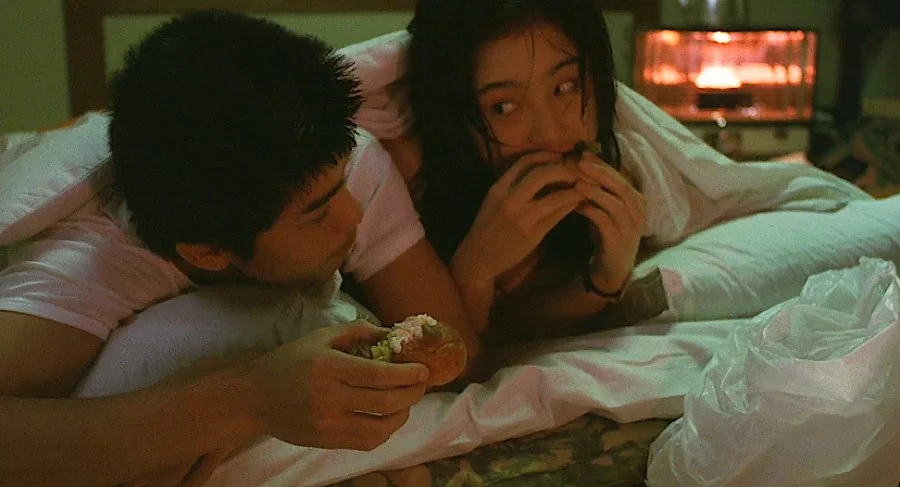
Artistic movements, by their very nature, are transient phenomena. They coalesce from the confluence of visionary artists, burgeoning audience demand, and the specific financial conditions that foster and sustain experimentation. This delicate equilibrium, as potent as it is fleeting, is destined to dissipate, and such was the trajectory of Japan’s iconic Art Theatre Guild (ATG). By the mid-1980s, the unique landscape that had allowed ATG to flourish for decades had fundamentally shifted, bringing its influential run to a close. It is within this period of transition and impending cessation that the 1984 film Mitsugetsu, also known as Honeymoon, finds its historical placement. Directed by Wahei Tatematsu, adapting his own novel, the film emerges not as the flamboyant, defiant swan song often associated with the dissolution of a legendary cinematic institution, but rather as a subdued and melancholic reflection of an era’s quiet fading. Its connection to ATG’s storied legacy lies less in revolutionary artistic statements and more in a pervasive sense of defeat and introspective sorrow that subtly permeates its narrative of a struggling romance.
The Art Theatre Guild: A Pillar of Japanese Independent Cinema
To understand the context of Mitsugetsu, it is imperative to first examine the indelible legacy and eventual decline of the Art Theatre Guild. Established in 1961, ATG quickly became the crucible for the Japanese New Wave, offering a vital alternative to the declining studio system that dominated the 1950s. Unlike commercial studios, ATG focused on producing and distributing independent, experimental, and often controversial films that pushed aesthetic and thematic boundaries. It provided a platform for auteur directors like Nagisa Ōshima, Shūji Terayama, Koji Wakamatsu, and Masahiro Shinoda, whose works explored themes of political radicalism, sexuality, social alienation, and the lingering scars of World War II and the Anpo protests.
ATG’s unique business model involved operating its own chain of art house cinemas, allowing it to cultivate a dedicated niche audience willing to engage with challenging cinema. This self-sustaining ecosystem offered filmmakers an unprecedented degree of artistic freedom, leading to a golden age of Japanese independent cinema throughout the 1960s and 1970s. Films produced under the ATG banner were characterized by their daring narratives, unconventional visual styles, and often stark social commentary, cementing the guild’s reputation as a bastion of avant-garde filmmaking.
The Shifting Sands of the 1980s: Factors in ATG’s Decline
However, the late 1970s and early 1980s heralded a significant shift in Japan’s cultural and economic landscape, posing insurmountable challenges to ATG’s foundational model. The fervent political activism and counter-cultural movements that fueled much of ATG’s early output had largely subsided, giving way to a more consumerist and economically focused society. The "post-Anpo youth" – a generation shaped by the aftermath of the 1960 US-Japan Security Treaty protests – found themselves navigating a Japan increasingly defined by economic prosperity and technological advancement, rather than ideological struggle. The disillusionment of earlier generations morphed into a more introspective, perhaps even apathetic, mood.
Furthermore, the rise of home video technology, television entertainment, and a globalizing popular culture began to fragment traditional cinema audiences. Mainstream Japanese cinema itself started to lean towards more commercially viable genres, often influenced by Hollywood blockbusters or popular manga adaptations. Independent film funding became scarcer, and the unique artistic freedom ATG had championed grew increasingly difficult to sustain. The specific financial circumstances that once made experimentation possible eroded, and with them, the equilibrium that defined ATG’s golden age. By the mid-1980s, ATG found itself struggling to adapt to these new realities, its once-revolutionary ethos now perceived by some as niche or outdated. Mitsugetsu, released in 1984, stands as a poignant artifact from this period of transition, reflecting the exhaustion and introspection that characterized the end of an era.
"Mitsugetsu" (Honeymoon): A Narrative of Disillusionment
At its core, Mitsugetsu is a cross-class love story set against the backdrop of underground post-Anpo youth in Tokyo. The narrative centers on Murakami, a young, aspiring writer grappling with the dual pressures of literary ambition and the exigencies of daily survival. He navigates a series of precarious odd jobs, currently finding a measure of appreciation in the bustling environment of the Tokyo Fish Market. Beyond his mundane employment, Murakami immerses himself in informal artistic circles, notably participating in an experimental dance troupe under the enigmatic guidance of its leader, Sunao. His artistic endeavors are punctuated by regular manuscript submissions to a publishing company, where one of the secretaries, Yuriko, develops an unrequited affection for him. Murakami’s attention, however, is fixated on Mitsuko, a more reserved woman on the cusp of marrying a seemingly ideal, conventional partner.
Murakami’s persistent efforts eventually unsettle Mitsuko’s carefully constructed certainty, leading her to abandon her engagement to be with him. Yet, their nascent relationship soon faces challenges. Murakami grows frustrated by Mitsuko’s measured ardor, sensing that he serves more as a catalyst for her life-altering decision than a truly reciprocal partner. As a desperate measure, they decide to elope, severing ties with their respective worlds: Mitsuko’s affluent, conventional family, and Murakami’s bohemian artistic milieu, where Mitsuko struggles to find her footing. The film then explores the profound question of whether their love can endure the relentless pressures of material hardship and profound social isolation. This struggle against external forces and internal doubts forms the dramatic crux of Mitsugetsu, presenting a stark portrayal of love tested by the harsh realities of a generation’s disillusionment.
Craft and Artistic Merit: A Deep Dive into "Mitsugetsu"’s Production
Despite its subdued narrative and reflective tone, Mitsugetsu showcases remarkable cinematic craftsmanship, a hallmark often associated with ATG productions, even in its later stages.
Direction and Screenplay by Wahei Tatematsu:
Wahei Tatematsu, primarily known as a novelist, brings a literary sensibility to his adaptation. His direction is characterized by a deliberate pacing and a focus on character psychology, aligning with the film’s introspective mood. Tatematsu’s decision to adapt his own work provides an authentic voice to the narrative, though it also contributes to the film’s measured, almost understated, approach. The screenplay meticulously builds the characters’ internal struggles and the societal pressures they face, reflecting a generation grappling with lost ideals and personal identity.
Hojin Hashiura’s Cinematography:
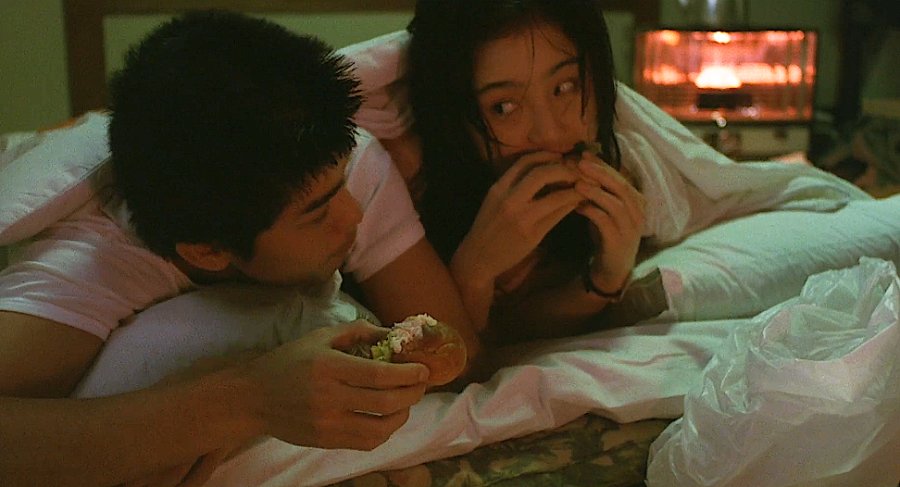
Hojin Hashiura’s cinematography stands out as one of the film’s most compelling elements. The opening sequence, a recurring characteristic of ATG cinema’s penchant for strong introductions, is particularly notable. Set in the pre-dawn hours of the Tokyo Fish Market, it features delicate tracking shots that glide through the bustling yet orderly routines of the awakening city. The visual aesthetic is immediately established through the predominant dark blue tones of the dawn lighting, which, paired with a melancholic saxophone score, effectively sets the film’s somber and reflective mood. This scene not only introduces the setting but also hints at the characters’ early morning struggles and the relentless cycle of urban life.
Hashiura’s visual language extends to the introduction of the central character, Murakami, through a remarkable use of chiaroscuro. This interplay of light and shadow evokes a sense of introspection and recalls the atmospheric qualities of 1970s American cinema, particularly the gritty realism often found in Sidney Lumet’s works. The cinematography consistently enhances the film’s emotional depth, using lighting and framing to underscore the characters’ isolation and the starkness of their environment.
Yosuke Yamashita’s Free Jazz Score:
Unquestionably the film’s highlight, Yosuke Yamashita’s brilliant free jazz score provides the sonic backbone for Mitsugetsu. Yamashita, a pioneering figure in Japanese jazz, imbues the film with an improvisational energy and emotional complexity that complements the narrative’s themes of struggle and uncertainty. His score is not merely background music; it actively participates in the storytelling, particularly in expressing the inner turmoil and "underground" spirit of the post-Anpo youth. The saxophone, a prominent instrument in the score, often carries a melancholic weight, echoing the characters’ sense of disillusionment and the fading dreams of a generation. The use of free jazz, with its inherent unpredictability and emotional intensity, perfectly captures the restless, searching quality of Murakami’s artistic ambitions and the tumultuous nature of his relationship. Yamashita’s contribution elevates the film beyond a simple romance, rooting it firmly in the cultural and artistic currents of its time.
Koichi Sato’s Performance:
A young Koichi Sato delivers a remarkably sober and understated performance as Murakami. His portrayal aligns with Tatematsu’s screenplay, which emphasizes a quiet desperation rather than overt dramatics. Sato embodies the struggling writer with a subtle intensity, conveying the character’s internal conflicts and external pressures through nuanced expressions and body language. His commitment, alongside his co-star’s, to their respective roles lends credibility to the emotional struggles depicted, even when the narrative itself treads familiar ground.
Critical Reception and Thematic Analysis
Upon its release, Mitsugetsu did not achieve the widespread critical acclaim or generate the fervent discussion typically associated with ATG’s more groundbreaking works. This outcome was perhaps inevitable given the film’s tone and the broader context of ATG’s decline. The expectations surrounding a late-period ATG production often leaned towards a final, audacious statement. Instead, Mitsugetsu offered a quiet, introspective romance that, while beautifully crafted in parts, struggled to resonate with audiences accustomed to the more radical narratives of the guild’s heyday.
The narrative’s perceived banality, seemingly a deliberate artistic choice to reflect the pervasive disillusionment of the 1980s generation in Japan, ultimately led to a sense of familiarity for some critics and viewers. The story of an ill-matched couple grappling with socio-economic disparities and the struggle to preserve love against overwhelming odds is a timeless theme. However, once the distinctive "underground bohemian" trappings were peeled away, the feeling that this narrative had been explored before inevitably emerged. This tension between the film’s artistic merits – its exquisite cinematography, committed performances, and sumptuous soundtrack – and its narrative’s perceived lack of novelty, highlights a crucial aspect of ATG’s late-stage challenges. The guild, known for pushing boundaries, was now producing a film that, while aesthetically refined, felt more reflective than revolutionary.
The film’s melancholic romance, while deeply personal, also functions as a microcosm of broader societal shifts. The "post-Anpo youth," once driven by collective political fervor, were by the 1980s increasingly defined by individual struggles, disillusionment with grand ideologies, and a turn towards personal fulfillment or, conversely, quiet despair. Mitsugetsu captures this pivot, portraying characters whose dreams are circumscribed by material pressures and societal expectations rather than expansive political visions. The film’s subdued nature could be interpreted as a reflection of a broader exhaustion within the independent film circuit and a collective sigh for the fading optimism of earlier decades.
Broader Implications for Japanese Cinema
The release of Mitsugetsu just before the eventual dissolution of the Art Theatre Guild carries significant implications for the landscape of Japanese cinema. ATG’s closure marked the end of a unique era where a dedicated institution championed artistic risk-taking and provided a vital counter-narrative to mainstream productions. Its absence left a void for independent and experimental filmmakers, many of whom had relied on ATG for funding, distribution, and a sense of community.
The 1980s witnessed a broader shift in Japanese cinema towards more commercially driven projects, often with larger budgets and a focus on entertainment value. While new independent voices and movements would emerge in subsequent decades, the specific model and artistic freedom fostered by ATG remained unparalleled. Mitsugetsu, therefore, serves not only as a film but as a historical document – a poignant record of the final breath of a legendary institution and the changing sensibilities of a nation. It reminds us that even at the end, ATG continued to nurture talent and produce works of aesthetic value, even if those works were no longer defined by the overt radicalism of its golden age.
Conclusion: A Poignant Reflection of a Fading Era
Mitsugetsu (Honeymoon) stands as a fragile indie love story from Japan’s unforgiving 1980s, serving as a quiet, albeit not flamboyant, epilogue to the storied career of the Art Theatre Guild. It is a film that, despite its narrative struggles, offers considerable artistic merit through Hojin Hashiura’s beautiful cinematography, the committed performances of its lead actors, and most notably, Yosuke Yamashita’s sumptuous free jazz soundtrack. While it may not have delivered the revolutionary cinematic statement some expected from a final ATG production, its melancholic introspection and portrayal of a generation’s quiet disillusionment offer a unique and valuable perspective.
The film’s ultimate impact may reside in its ability to touch viewers deeply, resonating as a timeless love story against a specific historical backdrop. For those seeking to understand the nuanced ending of one of Japan’s most influential cinematic institutions, or the quiet struggles of a generation transitioning from idealism to pragmatism, Mitsugetsu provides a profound and introspective experience. It remains a testament to the enduring power of cinema to capture the shifting tides of culture and the delicate equilibrium of artistic movements, even as they quietly fade into history.