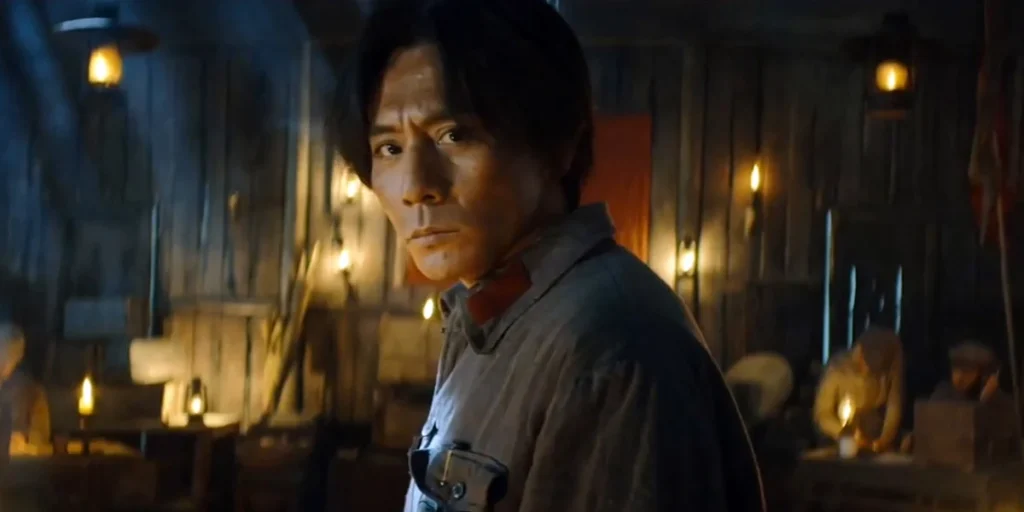
Chong Keat Aun’s fourth feature film, "Mother Bhumi," which he also penned the script for, has emerged as a significant cinematic achievement, garnering substantial critical acclaim and notable awards. The film made its world premiere at the Tokyo Film Festival last October, introducing audiences to its intricate narrative woven around themes of family, mysticism, and socio-political struggle. Headlined by a compelling performance from Fan Bingbing, alongside Natalie Hsu and Bai Run-yin, "Mother Bhumi" secured eight nominations at the prestigious 62nd Golden Horse Awards, ultimately winning three coveted accolades: Best Cinematography, Best Original Film Song, and Best Leading Actress for Fan Bingbing, solidifying its standing as a powerful and artistically resonant work.
The Narrative Core: A Glimpse into Hong Im’s World
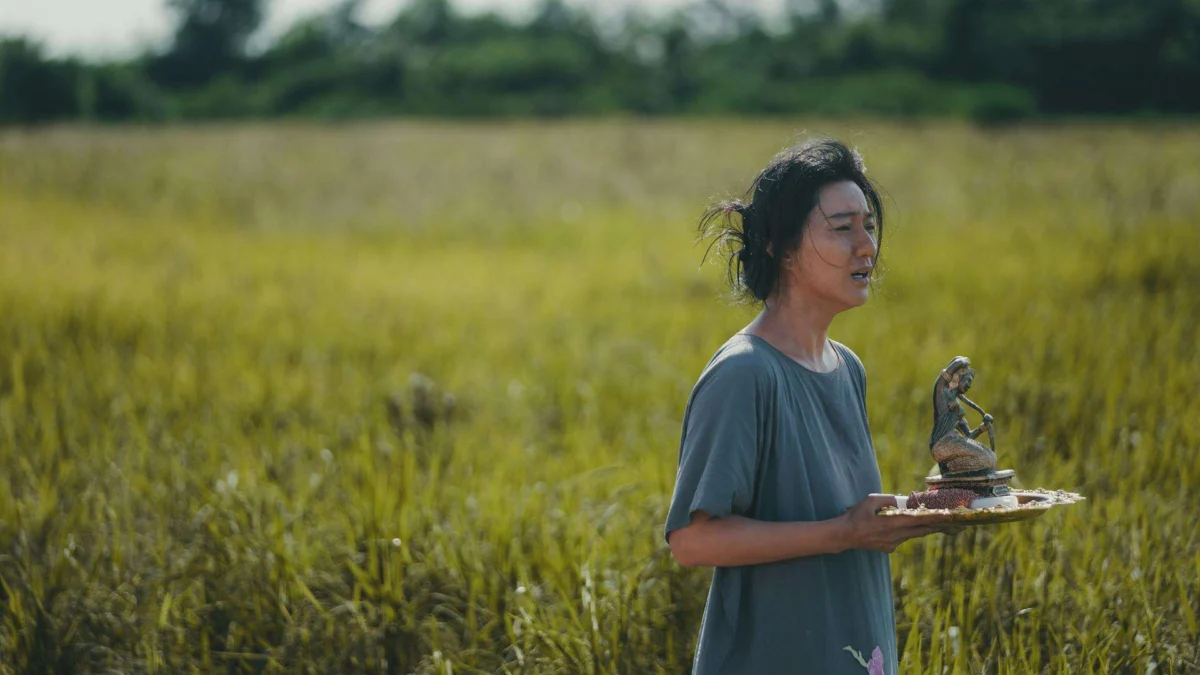
The film’s compelling story unfolds in the late 1990s within a remote northern Malaysian village, situated precariously on the border with Thailand. This setting is a melting pot of cultures, where Chinese, Malay, and Siamese communities coexist, each bringing their unique traditions and challenges to the communal fabric. At the heart of this intricate setting is Hong Im, a widowed farmer portrayed with profound depth by Fan Bingbing. Following the tragic death of her husband, Hong Im embraces a minimalist yet tranquil existence, striving to raise her children amidst their shared belief that her late husband might have reincarnated into the buffalo she keeps within their home – a testament to the blend of spiritualism and daily life that permeates their world.
Hong Im’s life is a tapestry of dual responsibilities and an unwavering commitment to her community. By day, she toils in the paddy fields, providing for her family through arduous agricultural labor. By night, her role transforms; she becomes a ritual healer, utilizing what is perceived as magic to alleviate illnesses and misfortunes that plague her fellow villagers. This dual existence places her at the intersection of the mundane and the mystical, a recurring motif in Chong Keat Aun’s directorial oeuvre.
Beyond her immediate family and healing practices, Hong Im is deeply embedded in the social and political landscape of her village. She actively assists fellow farmers in navigating the often-labyrinthine bureaucracy surrounding changes in land ownership – a particularly pertinent issue during the film’s setting. As the Malaysian government initiated policies that compelled Chinese farmers to relinquish their long-held land rights, Hong Im’s dedication intensified. Her efforts see her frequently traveling to the local household office, a place imbued with personal significance as it was where her husband worked before his mysterious disappearance. This renewed involvement in the land disputes inadvertently rekindles the enigma surrounding her husband’s death, especially as intensifying land conflicts coincide with a series of strange disappearances within the community. Confronted with unsettling emerging truths, Hong Im finds herself battling significant inner turmoil, desperately seeking solace and resolution for herself and her children. Adding to her emotional burden is her daughter, Boon, played by Natalie Hsu, who consistently antagonizes her, attributing her father’s absence to her mother’s supernatural practices. Boon also faces ostracization and trouble at school, a direct consequence of her mother’s controversial reputation within the conservative community.
Accolades and Critical Recognition: The Golden Horse Triumph
The film’s journey from its world premiere to its triumph at the Golden Horse Awards underscores its artistic merit and profound impact. The 62nd Golden Horse Awards, often revered as the "Chinese-language Oscars," represents the pinnacle of cinematic achievement for films from Taiwan, Hong Kong, and mainland China, as well as other Chinese-speaking regions. Its rigorous selection process and esteemed jury make its nominations and wins highly coveted, signaling a film’s exceptional quality and cultural significance.
"Mother Bhumi’s" eight nominations spanned major categories, including Best Feature Film, Best Director, and various technical and acting recognitions, highlighting its comprehensive strength across all production facets. The three wins – Best Cinematography for Leung Ming Kai, Best Original Film Song, and particularly Best Leading Actress for Fan Bingbing – serve as a testament to the film’s excellence in specific areas that profoundly contribute to its overall narrative and aesthetic power. Fan Bingbing’s win, in particular, marked a significant moment, cementing her performance as a standout in a highly competitive field and adding another illustrious award to her celebrated career. The recognition at such a prestigious event not only validates Chong Keat Aun’s artistic vision but also elevates the film’s international profile, bringing its unique Malaysian narrative to a global audience.
The Director’s Vision: Chong Keat Aun’s Signature Style
Chong Keat Aun has firmly established himself as one of Malaysia’s most compelling and thought-provoking filmmakers, and "Mother Bhumi" reaffirms this reputation. His directorial signature is evident in his masterful blending of the supernatural with incisive political, historical, and social commentary. This fusion functions effectively as the narrative backbone of "Mother Bhumi," allowing complex societal issues to be explored through an engaging, often mystical, lens. The intricate relationship between the protagonist, Hong Im, and her children adds a deeply compelling layer of family drama, grounding the fantastical elements in raw human emotion and conflict.
Within this rich narrative context, Chong Keat Aun meticulously brings to the forefront a range of critical issues pertinent to Malaysian society and beyond. These include the nuanced coexistence of different cultures and religions, the pervasive societal problems of rape and misogyny, and the historical injustices of ancestral land theft that have reverberated across generations. The director often uses his films to illuminate the struggles of marginalized communities and the often-unseen facets of Malaysian history. Furthermore, a central element of the story is the lingering question of whether Hong Im can truly perform magic, an ambiguity that hovers over the narrative and keeps the audience captivated, with the ultimate answer only emerging close to the film’s conclusion, demonstrating Chong’s nuanced approach to the supernatural. It is understood that Chong Keat Aun’s intention is often to utilize the fantastical or mystical as a metaphor, drawing audiences into a story that then unravels deeper, often uncomfortable, truths about society and human nature.
Historical and Socio-Political Context: Land Rights in 1990s Malaysia
The film’s setting in the late 1990s is crucial for understanding its socio-political undercurrents. This period in Malaysia was marked by significant economic and political shifts, including the lingering effects of the 1997 Asian Financial Crisis, which brought economic instability and social unrest. More specifically, the issue of land ownership and rights, particularly concerning non-Bumiputera (non-indigenous Malay) communities, was a historically charged and sensitive topic.
Throughout Malaysia’s post-independence history, land policies have often been intertwined with ethnic identity and economic development. Policies such as the New Economic Policy (NEP), while aiming to restructure society and eradicate poverty, have also led to complexities regarding land tenure and ownership for various ethnic groups. In certain regions, development projects, infrastructure expansion, or changes in agricultural zoning could lead to government acquisition of land. For Chinese farmers, many of whom had settled in rural areas for generations and cultivated land under various tenure systems (some formal, some customary), the government’s push to relinquish land rights could be devastating. These actions were often framed within broader national development goals but frequently resulted in displacement, economic hardship, and a sense of injustice for affected communities. The border region depicted in "Mother Bhumi" would have presented unique challenges, possibly involving cross-border land claims, differing legal systems, and a more fluid cultural landscape that could complicate land disputes further.
The portrayal of Hong Im helping her community navigate this bureaucracy is a powerful commentary on grassroots activism and resilience in the face of systemic pressures. Her husband’s disappearance from the local household office – an institution often at the nexus of land administration – subtly implicates governmental structures in the broader narrative of mystery and injustice. The film thus uses a personal tragedy to illuminate a larger, systemic issue that affected many communities during that era. Furthermore, the presence of ritual healing and shamanism in such a setting is culturally authentic for many traditional rural communities, where indigenous beliefs and practices often coexist with mainstream religions, providing comfort and a sense of control in times of uncertainty and hardship.
Stellar Performances Anchor the Narrative
The success of "Mother Bhumi" is undeniably bolstered by the extraordinary performances of its lead actors. Fan Bingbing’s portrayal of Hong Im is a tour de force, embodying the multifaceted layers of a woman who is simultaneously a devoted mother, a revered shaman, a community activist, and a profound victim of circumstances. Her performance exudes a conviction that allows the audience to believe in every aspect of Hong Im’s complex identity, from her quiet resilience in the paddy fields to her mystical rituals and her fierce determination in the face of bureaucratic oppression. Her ability to convey deep inner turmoil while maintaining an outward stoicism is particularly commendable, marking her win for Best Leading Actress as well-deserved. It is understood that Fan Bingbing dedicated considerable effort to understanding the cultural nuances and emotional depth required for such a demanding role, contributing significantly to the film’s authenticity.
Natalie Hsu, as Hong Im’s daughter Boon, delivers an equally effective performance. Her portrayal of a rebellious teenager grappling with her mother’s controversial reputation and the absence of her father creates a potent emotional core for the family drama. The contrasting chemistry between Fan Bingbing and Natalie Hsu is particularly striking and functions exceptionally well, especially during their confrontational scenes. These exchanges vividly capture the generational divide and the complex dynamics of grief and blame within the family unit, adding significant emotional weight to the narrative. Bai Run-yin also contributes a noteworthy performance, completing the family dynamic with his sensitive portrayal.
Visual Storytelling: Cinematography and Aesthetic Excellence
As is characteristic of Chong Keat Aun’s filmography, "Mother Bhumi" is a visual masterpiece, with the cinematography by Leung Ming Kai being of the highest caliber. His work not only earned him a Golden Horse Award but also elevates the film’s aesthetic and narrative impact. Leung Ming Kai masterfully captures the stark beauty of the paddy fields, the intimate details of domestic interiors, and the imposing presence of public buildings with both artistic flair and raw realism. The cinematography seamlessly shifts between evocative ritualistic imagery, which lends itself to the film’s supernatural elements, and an almost documentary-like approach, grounding the narrative in a tangible reality without any loss of cohesion or visual integrity.
The framing throughout the film is equally accomplished, particularly in the voyeuristic sequences presented through the son’s perspective, which adds a unique layer of observation and subjective experience to the storytelling. The color scheme is meticulously controlled, with a deliberate palette that enhances the film’s mood and atmosphere. The night scenes, in particular, stand out for their striking visual quality, utilizing light and shadow to create a sense of mystery, dread, or spiritual transcendence, depending on the narrative’s demands. This visual prowess ensures that "Mother Bhumi" is not just a story to be heard but an experience to be profoundly seen, immersing the audience in its rich, complex world.
Navigating Narrative Challenges and Critical Feedback
While "Mother Bhumi" has been widely lauded, critical analyses have also noted certain narrative challenges. Towards its latter half, some reviewers observed that the narrative falters somewhat, with the director occasionally losing a sense of measure, leading to certain excesses, particularly in the presentation of both the heightened drama and the supernatural elements. This intensity can become even more pronounced for international audiences, as a familiarity with specific historical and cultural contexts of 1990s northern Malaysia is often necessary to fully grasp certain developments and the subtle nuances of the story.
Furthermore, it was suggested that somewhat crisper editing by Erik Moh, allowing the story to move at a slightly brisker pace, might have mitigated some of the aforementioned excessiveness and benefited the overall narrative flow. While the focus on the protagonist is a central strength, occasionally this concentration became almost too intense, leading to a minor imbalance that could have been moderated to allow for broader perspectives or deeper exploration of supporting characters’ internal worlds. These points, however, are often framed as minor critiques within an otherwise robust and engaging cinematic experience, reflective of the ambitious scope of Chong Keat Aun’s storytelling.
Broader Implications and Cultural Significance
"Mother Bhumi" stands as a significant contribution to contemporary Malaysian cinema, continuing to push its boundaries and garner international recognition. The film’s success at the Golden Horse Awards and its presence at the Tokyo Film Festival underscore the growing global interest in Southeast Asian narratives and the unique voices emerging from the region. It serves as a powerful example of how cinema can act as a mirror, reflecting and engaging with complex societal issues, historical injustices, and the rich tapestry of cultural identities within a nation.
The film’s exploration of marginalized communities, ethnic relations, and the struggles over land rights provides valuable insight into Malaysian history and its ongoing social dynamics. It highlights the often-overlooked stories of rural populations and the resilience found within their traditions and beliefs. The balance between artistic merit and social commentary in "Mother Bhumi" ensures that it is not merely entertaining but also thought-provoking, sparking dialogue about issues that remain relevant today. For Fan Bingbing, the film marks a significant artistic comeback and further solidifies her international appeal, demonstrating her versatility and depth as an actress. Ultimately, "Mother Bhumi" transcends its specific setting to tell a universal story of human struggle, resilience, and the enduring quest for truth and solace, cementing its place as an important work in modern Asian cinema.