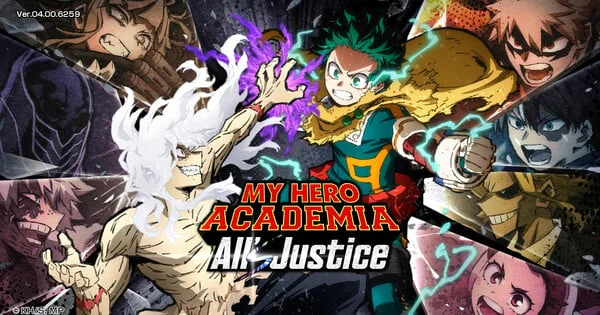
Development History and Franchise Context
The My Hero Academia gaming series has consistently utilized the 3D arena fighter format to emulate the explosive, quirk-based combat popularized by Kōhei Horikoshi’s original manga. Byking Inc., a studio known for its experience with arcade-style fighting titles, has maintained a steady release cadence since the first entry launched in 2018.
The progression of these titles mirrors the narrative trajectory of the series itself. The first game focused on the introductory arcs of the UA High School training, while the second expanded into the Shie Hassaikai and Pro Hero arcs. All’s Justice arrives at a critical juncture, attempting to translate the massive, multi-fronted conflict of the Final War arc into a cohesive gameplay experience. This development path highlights a recurring trend in licensed anime adaptations: the prioritization of fan-service and narrative faithfulness over the introduction of revolutionary gameplay mechanics.
Technical Presentation and Narrative Delivery
A central tension exists within All’s Justice regarding its visual presentation. When the game utilizes its 3D cel-shaded models, the fidelity is impressive, capturing the dynamic energy of the anime’s most iconic confrontations. By utilizing the original Japanese voice cast and a familiar musical score, the game maintains a high level of auditory authenticity.

However, the game’s narrative delivery remains a point of criticism for observers of the series. The transition between high-octane 3D gameplay and static, two-dimensional storytelling elements is often jarring. In many instances, the game employs simple, low-resolution screenshots taken directly from the anime, which are then subjected to rudimentary digital panning or zooming effects. This lack of polish contrasts sharply with the high-fidelity character models, leading to a fragmented user experience. Despite these aesthetic shortcomings, the branching narrative paths allow players to follow specific character arcs—such as the confrontation between Todoroki and Dabi or Endeavor’s struggle against All For One—which provides a more granular look at the series’ climactic moments than previous entries.
Combat Mechanics and Mechanical Refinement
Byking Inc. has implemented significant adjustments to the underlying engine to address historical complaints regarding "floaty" or unresponsive controls. The combat in All’s Justice is notably faster, demanding higher mechanical precision from the player. This increased tempo is designed to reflect the escalating power levels of the characters in the current stage of the anime.
Key mechanical updates include:
- Tag-Team Integration: The combo system now features more fluid transitions, allowing players to swap partners mid-combo to extend damage output.
- Gauge Management: The implementation of "Plus Ultra" finishers and enhanced modes requires strategic resource management, forcing players to balance defensive maneuvers with aggressive offensive pushes.
- Environmental Constraints: While the combat feels refined, the scope of the battlefields is limited. Due to the narrative focus on the Final War, many arenas are restricted to the primary locations of that conflict, such as the floating Hero Academy. This reduces the diversity of environments compared to previous titles, which offered a broader range of settings from across the series’ history.
The Challenge of Accessibility and Market Positioning
From an analytical perspective, All’s Justice occupies a narrow market niche. Data regarding player retention in licensed fighting games suggests that while initial sales are often driven by brand recognition, the longevity of these titles depends heavily on the depth of the gameplay loop.

For the average consumer, the barrier to entry is significant. The game assumes a deep-seated knowledge of the My Hero Academia lore, skipping the foundational character building that would be necessary for a newcomer to understand the motivations behind the Final War conflict. Furthermore, the "mission" modes, which act as the primary single-player endgame content, rely heavily on repetitive, combat-focused scenarios. While these missions offer various handicaps to increase difficulty, they ultimately function as padding, providing little in the way of meaningful progression or narrative expansion.
Industry Implications and Future Outlook
The release of All’s Justice underscores the challenges faced by developers working within the "licensed arena fighter" genre. To satisfy the demands of a dedicated fanbase, studios must deliver an accurate depiction of established powers and character relationships. Simultaneously, to reach a broader audience, they must innovate in a way that makes the game compelling as a competitive fighter.
Industry analysts note that titles like All’s Justice are increasingly viewed as "content updates" to the existing franchise ecosystem rather than distinct, genre-defining products. By focusing on the refinement of existing systems—faster combat, better model textures, and more complex character interactions—Byking Inc. has successfully improved the quality of the "My Hero" experience. However, the lack of substantial new gameplay modes or structural innovation suggests that the series may be reaching the plateau of what the current 3D arena framework can offer.
Reception and Fanbase Reaction
Initial feedback from the enthusiast community has been largely positive regarding the combat improvements, with many citing the increased speed and mechanical depth as the title’s strongest assets. Conversely, the "cheap" presentation of the narrative sequences has drawn scrutiny from critics who expected a more polished cinematic experience, especially given the high production standards of the source material.

Official statements from Bandai Namco Entertainment America Inc. have emphasized the game’s role as a celebration of the series’ peak moments. By prioritizing the inclusion of every major combatant and their corresponding "quirk" abilities, the publisher appears to have prioritized the "definitive" nature of the roster over the creation of a standalone, narrative-driven experience.
Ultimately, the success of All’s Justice will be measured by its ability to engage the established fan base during the post-launch window. For those already invested in the My Hero Academia franchise, the game provides a competent, albeit familiar, platform to engage with their favorite characters in a high-speed format. For the broader gaming public, however, the title remains a secondary experience, subordinate to the anime and manga from which it derives its value. Whether future iterations will attempt to break this cycle by introducing more robust game modes or a more comprehensive approach to storytelling remains to be seen. As the industry moves toward more service-oriented models, it is likely that the "My Hero" franchise will continue to evolve, though it may require a shift in design philosophy to remain relevant in a competitive market.