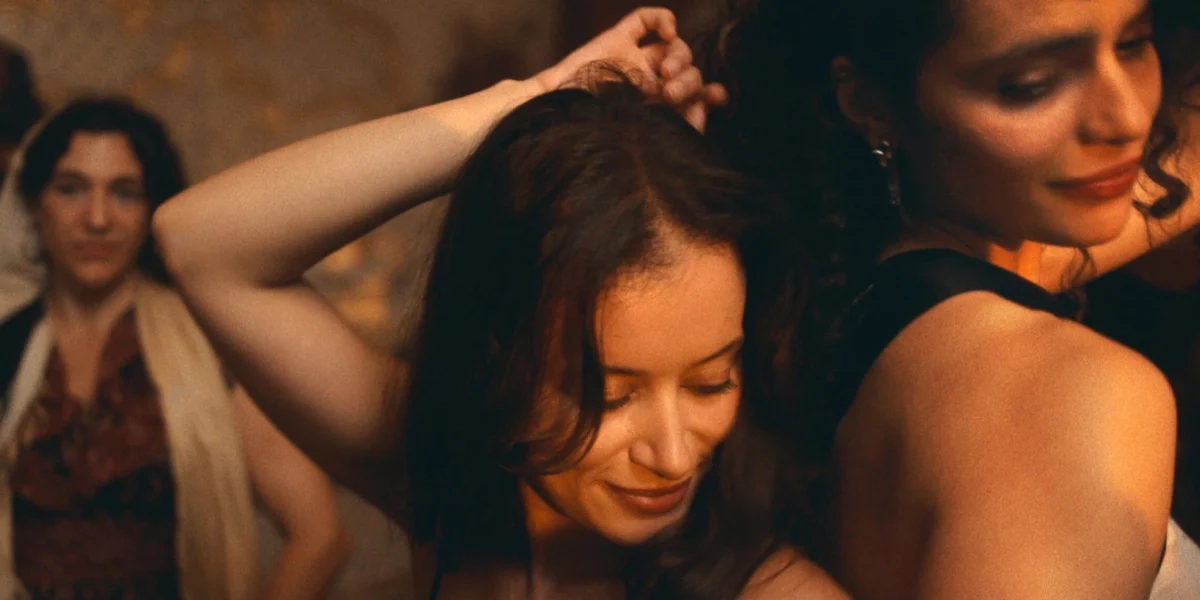
The cinematic landscape of contemporary France has continually sought to examine the intricate mosaic of its multicultural populace, yet few recent works achieve the delicate balance demonstrated in Hanaël El Yousfi’s feature film, The Daughters of Abraham. Running at a precise and gripping 94 minutes, the film anchors itself within the vibrant, often turbulent port city of Marseille, specifically focusing on the city’s Moroccan expatriate community. Written by Hanaël El Yousfi and Mia Grace Brown, and starring a compelling ensemble cast featuring Mélissa Guers, Ava Baya, Gabrielle Cohen, Bilel Chegrani, and Syrus Shahidi, the narrative unfolds as a profound exploration of human navigation. It meticulously charts the emotional, cultural, religious, linguistic, and moral trajectories of young women standing at the crossroads of tradition and modernity. At its core, the movie avoids the well-worn traps of cinematic cliché and heavy-handed didacticism, opting instead for a nuanced, documentary-like authenticity that elevates it from a standard coming-of-age drama to a significant sociological artifact.
Main Facts and Narrative Premise
The central plot of The Daughters of Abraham revolves around the unexpected reunion of two young women whose childhood intimacy had been fractured by the invisible yet formidable walls of societal expectations. Myriam, portrayed with striking vulnerability by Mélissa Guers, is a young Jewish woman, while Eva, brought to life with equal intensity by Ava Baya, is a Muslim woman raised in the sun-drenched, culturally layered environment of Marseille. Historically, the socio-religious backgrounds of these two communities are frequently juxtaposed in global media as antagonistic or mutually exclusive. However, El Yousfi’s screenplay smartly emphasizes the profound similarities that unite them, far outweighing the superficial boundaries that seek to divide them.
The narrative catalyst occurs during the sun-soaked weeks of summer break. Initially, the atmosphere is defined by the carefree exuberance typical of youth—reconnecting over shared memories, reclaiming lost time, and basking in the Mediterranean warmth. However, this fragile tranquility is shattered by a sudden, disruptive tragedy at a local gathering. This pivotal event serves as the narrative’s turning point, forcing both Myriam and Eva out of their youthful complacency. As the consequences of the incident ripple outward, the protagonists find themselves trapped between the rigid, insular expectations of their respective families and the urgent necessity to remain faithful to their own evolving moral compasses. The resulting tension highlights the universal struggle of youth trying to forge an independent identity under the watchful, often suffocating gaze of ancestral heritage.
Chronology and Cinematic Progression
To fully appreciate the structural integrity of The Daughters of Abraham, one must examine its chronological pacing. The film establishes its thematic tone within the opening sequences, where a palpable sense of chaos and disorientation permeates the screen. This stylistic choice is intentional; it mirrors the internal state of young adults attempting to navigate cultural dualities.
In the first act, viewers are introduced to the sun-bleached landscapes of Marseille, where Myriam and Eva organically drift back into one another’s lives. The progression feels unhurried, allowing the audience to invest in the authenticity of their restored bond. The second act introduces the disruptive tragedy at the party, abruptly halting the narrative’s leisurely pace and plunging the characters—and the audience—into an atmosphere of heightened anxiety. This event forces a swift chronological shift from carefree adolescence to forced maturity.
As the timeline advances through the fallout of the incident, the film details the escalating domestic pressures faced by both women. Family members step into the narrative not merely as supporting characters, but as embodiments of historical continuity and societal pressure. The final act does not offer a neat, Hollywood resolution; instead, it presents a delicate reconciliation with reality. The characters recognize that while the past cannot be erased, its constraints can either serve as a protective foundation or a suffocating cage, depending on how courageously one chooses the path forward.
Supporting Data and Production Context
The artistic success of The Daughters of Abraham relies heavily on its behind-the-scenes talent and deliberate aesthetic choices. Lensed by cinematographer Fabien Faure, the visual language of the film alternates between sweeping, sun-drenched vistas of Marseille and claustrophobic, dimly lit domestic interiors. Faure’s camera captures the duality of the city—its blinding light and its deep, shadowy alleys—mirroring the internal conflicts of the protagonists.
Statistically and demographically, Marseille provides an ideal canvas for this narrative. As France’s second-largest city and its principal port, Marseille has historically functioned as a vital gateway for Mediterranean migration, boasting significant populations of North African and Jewish heritage. According to regional demographic studies, the city’s unique geopolitical and cultural makeup fosters both remarkable social cohesion and distinct pockets of insularity. El Yousfi utilizes this geographic reality to ground the fictional narrative in tangible socioeconomic truths. The port city has long occupied a legendary status in global cinema—most famously immortalized by William Friedkin’s 1971 classic, The French Connection. However, while Friedkin’s work utilized Marseille as a gritty backdrop for international crime and police procedurals, El Yousfi reframes the port as a living, breathing ecosystem where everyday citizens negotiate the complex terms of integration, displacement, and belonging.
Character Dynamics and Artistic Performances
The emotional weight of the film rests squarely on the shoulders of its lead actresses, Mélissa Guers and Ava Baya. Guers portrays Myriam with a quiet fortitude, capturing the internal friction of a young woman questioning the boundaries of her religious upbringing without wishing to sever her familial ties. Baya matches this with a fierce, magnetic performance as Eva, conveying the outward confidence and inward fragility of a young Muslim woman striving for autonomy in a traditional household.
Supporting performances by Gabrielle Cohen, Bilel Chegrani, and Syrus Shahidi add layers of texture to the societal web surrounding the two young women. Chegrani and Shahidi, in particular, ground the male perspective within the community, illustrating how patriarchal structures operate not necessarily through overt malice, but through deeply ingrained cultural expectations and protective instincts that inadvertently stifle individual freedom. The interplay between these characters underscores a central thesis of the film: that the most damaging conflicts are frequently those fought within the domestic sphere, where proximity breeds both profound affection and volatile friction.
Broader Impact and Sociological Implications
Beyond its merits as a work of narrative fiction, The Daughters of Abraham offers timely sociological commentary on contemporary European multiculturalism. By focusing on the microcosmic relationship between a Jewish woman and a Muslim woman in a southern French port city, the film reflects upon issues of far more insidious impact on global stages. In an era marked by rising sectarian tensions, geopolitical polarization, and polarized identity politics, El Yousfi’s work serves as a subtle counter-narrative.
The film posits that human relationships are rarely defined by rigid geopolitical binaries. Instead, they are continuously negotiated through shared daily experiences, linguistic nuances, and mutual vulnerabilities. The title itself—alluding to a shared Abrahamic heritage—serves as a poetic reminder of common historical roots, even as the characters grapple with the modern sociopolitical fractures that threaten to tear them apart.
Critics and cultural analysts have noted that films addressing these themes often risk falling into the trap of didactic moralizing, presenting characters as mere mouthpieces for political ideologies. However, The Daughters of Abraham successfully avoids this pitfall by keeping its focus resolutely human. The decisions made by Myriam and Eva are driven by adolescent impulse, emotional desperation, and genuine affection, rather than grand political agendas. Consequently, the political implications of the film emerge organically from personal tragedy and familial obligation.
Conclusion and Critical Reception
Hanaël El Yousfi’s feature film stands out as a remarkable achievement in modern French cinema, blending lyrical cinematography with unflinching social realism. Through its exploration of Marseille’s Moroccan expatriate community, the movie expands the cinematic vocabulary of migration and coexistence. It reminds viewers that the paths we choose are rarely straightforward, and that maintaining a sense of direction often requires immense personal courage.
As The Daughters of Abraham continues to make its way through festival circuits and arthouse cinemas, it is anticipated to spark important conversations regarding youth identity, interfaith dialogue, and the enduring complexity of family bonds. By refusing to offer easy answers or sentimental resolutions, El Yousfi respects the intelligence of her audience, delivering a profound meditation on what it means to belong to a community, a family, and oneself.