The landscape of the Friday the 13th franchise has undergone a significant shift in recent weeks, characterized by a dual momentum of official studio development and high-quality independent production. Following the announcement that a new, officially sanctioned Friday the 13th film is entering production with director Steve Miner at the helm—marking the return of the iconic slasher to the big screen after a two-decade hiatus—the franchise has received a stylistic expansion through the release of the animated short, Never Hike Alone: Ghosts in the Fog. Produced by Womp Stomp Films in collaboration with Mako Animation, this project represents the first time the character of Jason Voorhees has been rendered in an animated medium, signaling a potential evolution in how horror franchises leverage digital animation to maintain cultural relevance during periods of IP dormancy.
The Evolution of the Never Hike Alone Series
Womp Stomp Films, spearheaded by filmmaker Vincente DiSanti, has spent years cultivating a reputation for delivering fan-driven content that maintains tonal consistency with the original Paramount Pictures and New Line Cinema iterations of the Friday the 13th series. The Never Hike Alone universe began in 2017 with the release of the original fan film, which introduced a gritty, suspense-heavy approach to the character of Jason Voorhees.
The chronology of the series has expanded steadily since its inception. The original Never Hike Alone (2017) was followed by the prequel Never Hike in the Snow (2020) and the sequel Never Hike Alone 2 (2023). These projects gained critical traction within the horror community not only for their high production values but also for the inclusion of legacy actors. Notably, Never Hike Alone 2 featured the return of Thom Mathews, who reprised his iconic role as Tommy Jarvis from the 1986 film Friday the 13th Part VI: Jason Lives, alongside Vincent Guastaferro, who returned as Sheriff Rick Cologne. By integrating established actors, DiSanti’s work effectively bridges the gap between official canon and independent artistic expression.
Anatomy of Ghosts in the Fog
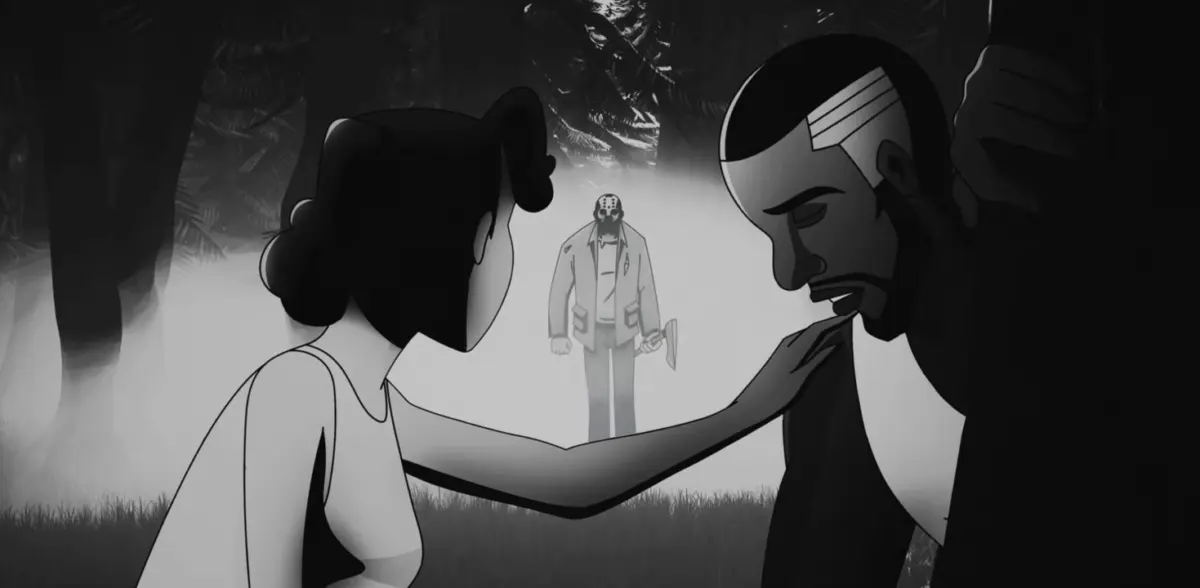
The release of Ghosts in the Fog serves as a narrative bridge, set four years prior to the events of the inaugural 2017 film. The short film follows a trio of hikers—Lana (Chelsea Rebecca), Brandon (Zoran Gvojic), and Dom (Diego Valenzuela)—who venture into the forbidden territory surrounding Crystal Lake. The narrative device of the "mysterious fog" serves to obscure the environment, heightening the tension before the inevitable confrontation with the antagonist.

The project is the result of a creative partnership between directors Juan Rivera and Vincente DiSanti, working from a screenplay penned by DiSanti and Diego Valenzuela. By transitioning from the live-action aesthetic of previous installments to 2D animation, the production team has demonstrated an ability to navigate the logistical constraints of live-action filmmaking while exploring the inherent creative freedoms offered by animation. Specifically, the medium allows for a more stylized and potentially unrestricted depiction of violence, a hallmark of the slasher subgenre that often faces strict censorship hurdles in live-action theatrical releases.
Impact of Independent Production on IP Longevity
The rise of high-quality fan productions like those from Womp Stomp Films provides a compelling case study for intellectual property management. For nearly twenty years, the Friday the 13th franchise was mired in complex legal disputes regarding copyright ownership, which effectively halted any major studio-led development. During this period of inactivity, independent creators became the primary stewards of the brand.
By maintaining a consistent release schedule and honoring the internal lore established by the classic films, these creators prevented the franchise from fading from the public consciousness. The success of these projects suggests that dedicated fan communities can play a critical role in preserving the market value of a dormant franchise. When the rights finally cleared for a new, official studio film, the audience interest—cultivated in no small part by the sustained efforts of independent filmmakers—remained at a peak.
Technical and Creative Implications of Animated Horror
The adoption of animation by Womp Stomp Films and Mako Animation is a significant development for the slasher genre. Historically, the Friday the 13th films have relied on practical effects, prosthetics, and makeup to achieve their iconic "kill" sequences. The move to 2D animation in Ghosts in the Fog suggests a shift toward a medium that allows for greater fluidity and imaginative staging of combat and suspense.
From a production standpoint, animation offers a scalable solution for depicting complex scenarios that would be prohibitively expensive to execute with traditional practical effects. For the horror industry, this indicates a potential avenue for feature-length animated spin-offs that could exist alongside live-action iterations. If Ghosts in the Fog succeeds in driving engagement, it may serve as a proof-of-concept for future animated horror projects that seek to push the boundaries of what is possible in the slasher format.

Broader Market Context and Future Outlook
The simultaneous arrival of a major studio feature film announcement and the release of an independent animated project creates a unique market dynamic. The official return of Jason Voorhees to theaters, with a veteran director like Steve Miner (who previously directed Friday the 13th Part 2 and Part 3) attached, provides the legitimacy and scale required for a franchise revival. Simultaneously, the independent sector provides the agility and experimentation needed to keep the fanbase engaged.
The integration of legacy elements—such as the narration by Thom Mathews in the new animated short—creates a sense of continuity that is highly valued by long-term fans. By keeping the mythos of Camp Crystal Lake alive through various mediums, the creators involved in these projects are ensuring that the Jason Voorhees character remains a central figure in modern horror.
As the industry looks toward the next phase of the Friday the 13th franchise, the success of projects like Ghosts in the Fog serves as an important reminder of the power of grassroots creativity. The collaboration between Womp Stomp Films and Mako Animation demonstrates that, even within the confines of a ten-minute short, the core elements of the franchise—suspense, isolation, and the relentless pursuit of victims—remain as potent as ever.
Whether the future of the series will continue to incorporate animated elements remains to be seen, but the precedent set by this release is clear: the digital medium offers a viable and effective platform for the expansion of classic horror icons. As the franchise prepares for its cinematic return, the contributions of the independent community continue to be an essential component of the Friday the 13th ecosystem, providing a bridge between the classic era of the 1980s and the digital-first landscape of the 2020s. The release of Ghosts in the Fog is not merely a piece of content; it is a testament to the enduring appeal of the Crystal Lake legend and the creative potential of those who continue to tell its stories.