The Javits Center in New York City has once again opened its expansive exhibition halls to hundreds of thousands of costumed attendees, industry professionals, and global media outlets for the annual New York Comic Con (NYCC). As one of the largest pop culture conventions in North America, the event serves as a massive economic driver for the metropolitan area, generating tens of millions of dollars in tourism, hospitality, and retail revenue. While convention organizers emphasize the vibrant community and multi-billion-dollar entertainment marketplace that NYCC represents, seasoned attendees and health officials frequently remind participants of the practical realities of navigating crowded convention floors. Public health guidance during major indoor gatherings continues to stress basic hygiene protocols, such as frequent hand sanitization and avoiding direct contact between unwashed hands and consumable items, to mitigate the transmission of seasonal viruses commonly referred to in fandom subcultures as con crud.
Beyond the bustling convention floor, the broader entertainment and literary landscape offers a diverse array of releases spanning classic fantasy illustration, maritime historical drama, contemporary speculative essays, and high-concept science fiction television. Publishers, streaming networks, and film studios have strategically timed their autumn offerings to capture the attention of audiences remaining outside the immediate vicinity of New York City, resulting in a robust market of niche and mainstream media properties.
The Historic US Publication of Tove Jansson’s The Hobbit Illustrations
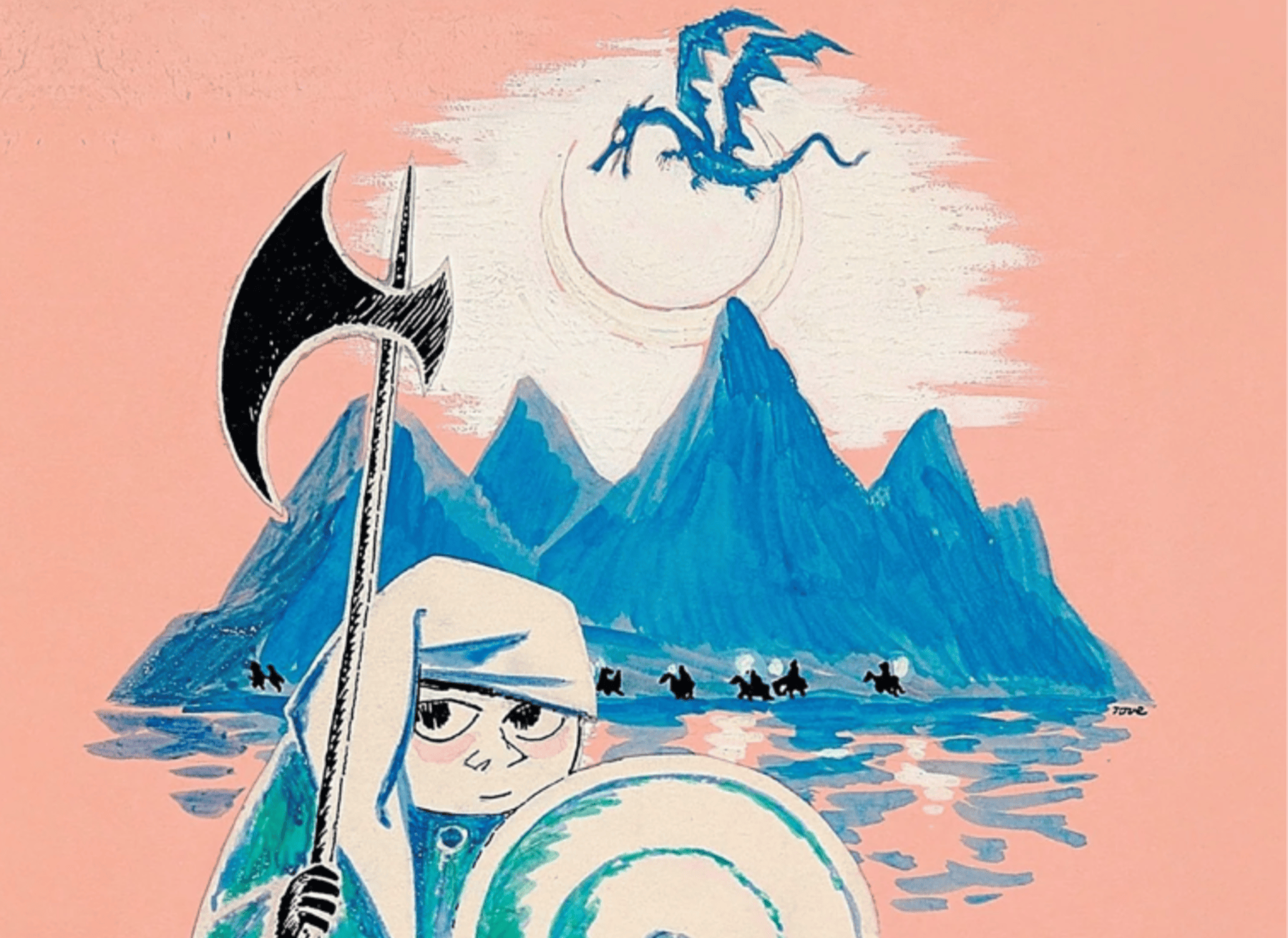
Among the most notable literary releases of the season is the long-awaited United States publication of The Hobbit: Illustrated by Tove Jansson, issued this week by publisher William Morrow, an imprint of HarperCollins. While readers in Finland and Sweden have enjoyed access to Jansson’s distinct artistic interpretation of J.R.R. Tolkien’s seminal fantasy novel for decades, copyright and licensing complexities historically prevented a wide American release.
The origin of this unique artistic pairing traces back to mid-century Scandinavian publishing partnerships, heavily involving Astrid Lindgren, the renowned creator of Pippi Longstocking. Operating in her capacity as a publisher at Rabén & Sjögren, Lindgren recognized the enduring cultural significance of Tolkien’s work, writing in correspondence to Jansson that the novel would undoubtedly become "the children’s book of the century, and will live long after we are dead and buried."
Jansson, internationally celebrated as the creator and illustrator of the whimsical Moomin series, approached Middle-earth with an idiosyncratic visual vocabulary that diverges sharply from the traditional, romanticized depictions popularized by subsequent artists like Alan Lee and John Howe. Her rendering of the dragon Smaug and the company of dwarves offers a stark, modernist, and minimalist aesthetic that adds a fresh layer of interpretation to Tolkien’s classic text. Literary analysts note that this cross-cultural collaboration highlights the interconnected nature of European children’s literature during the post-war era, providing contemporary American collectors and Tolkien enthusiasts with a rare artifact of mid-century book design.
Maritime Dramas and Adaptation Fatigue: Treasure Island and Black Sails
In the realm of premium television, MGM+ is preparing to launch a new serialized adaptation of Robert Louis Stevenson’s classic adventure novel, Treasure Island, scheduled to premiere on Sunday, October 11. Despite boasting a high-profile cast featuring critically acclaimed actors David Oyelowo and Hayley Atwell, industry observers have noted a surprisingly subdued marketing campaign surrounding the project’s rollout.
The release arrives in a surprisingly crowded marketplace for maritime fiction. Starz’s critically acclaimed historical drama series Black Sails, which served as a prequel to Stevenson’s narrative, continues to maintain a passionate cult following despite remaining under-appreciated by broader mainstream audiences during its original broadcast run from 2014 to 2017. The intricate storytelling, complex character dynamics, and stellar performances of an ensemble cast—including Hannah New and Jessica Parker Kennedy—have led television critics to frequently re-evaluate the series as a high-water mark for prestige historical adventure television.
Furthermore, major studios continue to mine the source material, with a high-budget feature film adaptation directed by Ridley Scott slated for release in 2027. Media analysts suggest that Hollywood’s recurring interest in nautical classics reflects a broader industry reliance on established intellectual property with built-in global recognition, though success ultimately hinges on unique narrative differentiation in an increasingly saturated streaming ecosystem.
Exploring Alienation and Technology in We Radiant Things
In the nonfiction and literary essay sector, poet and author Franny Choi has released We Radiant Things: Notes on Being Alien and Becoming Cyborg, published by Graywolf Press. Following the widespread critical acclaim of her 2019 poetry collection Soft Science, Choi’s new essay collection investigates the intersections of race, emerging technology, bodily autonomy, and contemporary alienation.
The opening chapters of the collection tackle prominent cinematic touchstones of speculative fiction, including Alex Garland’s 2014 film Ex Machina and Mamoru Oshii’s 1995 anime classic Ghost in the Shell. Rather than offering traditional cinematic critique, Choi employs a poetic and deeply personal framework that examines how marginalized identities navigate digital spaces and technological surveillance. Describing her critical methodology, Choi writes of approaching cultural artifacts "tenderly, from stabbing range."
Literary critics have praised the collection for its fluid prose and sharp intellectual rigor, positioning Choi as a vital voice in contemporary speculative nonfiction. Cultural commentators note that as artificial intelligence and automation increasingly dominate public discourse, essay collections like We Radiant Things provide essential frameworks for understanding the socio-political implications of technological integration.
Streaming Science Fiction: Netflix’s Below and the Expanding Sea Monster Genre
Rounding out the autumn media landscape is the Netflix release of Below, a high-concept thriller set in the rugged coastal environment of Newfoundland. Starring veteran actor Josh Hartnett alongside Mackenzie Davis and Charlie Heaton, the series centers on an unfolding maritime mystery involving anomalous biological phenomena off the Canadian coast.
Critical reception for Below has been cautiously optimistic, with outlets such as Variety and RogerEbert.com praising the atmospheric tension, practical creature design, and strong central performances, while other reviewers noted pacing inconsistencies typical of modern supernatural mystery series. The project has drawn thematic comparisons to classic procedural thrillers, evoking the investigative tone of The X-Files combined with modern prestige television sensibilities.
The release of Below capitalizes on a steady consumer appetite for claustrophobic, regional horror and sci-fi narratives that utilize isolated landscapes to heighten psychological tension. Industry analysts point out that mid-budget genre television distributed via global streaming platforms offers reliable engagement metrics, allowing established actors like Hartnett and Davis to anchor ambitious, high-concept storytelling without the financial pressures of traditional theatrical box office distribution.