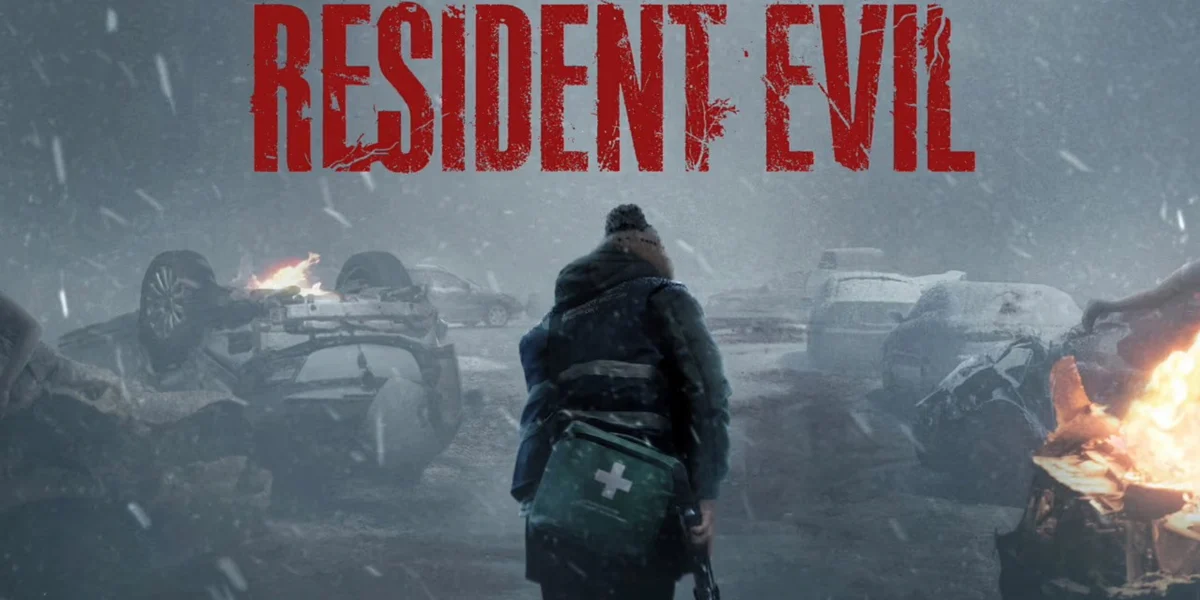
The Next Best Picture Podcast has released its flagship weekly film review, turning its critical lens toward director Zach Cregger’s highly anticipated cinematic reboot of the Capcom video game franchise, Resident Evil. Hosted by Larry Fried—who stepped in for regular host Matt Neglia—the discussion features an expert panel consisting of critics Josh Parham, Brendan Hodges, and Will Mavity. The episode dives deep into the horror-comedy tone, narrative structure, performances, and potential awards-season trajectory of the new feature film, which stars Austin Abrams, Zach Cherry, Kali Reis, and Paul Walter Hauser.
The latest entry in the long-running intellectual property shifts the narrative focus to Bryan, played by Austin Abrams, a young medical courier thrust into the harrowing chaos of a sudden outbreak of infected monsters within Raccoon City. As Cregger takes the helm following his breakout success in the horror genre, film critics and industry analysts have closely monitored how the production balances faithful adaptations of Capcom’s source material with distinct directorial auteurism. The podcast panel provides an exhaustive, spoiler-filled examination of these creative choices, offering listeners a granular breakdown of the film’s structural strengths and weaknesses.
Background and Context of the Resident Evil Cinematic Franchise
To understand the weight and expectation surrounding Zach Cregger’s Resident Evil, it is necessary to examine the turbulent cinematic history of Capcom’s flagship survival-horror franchise. Launched in 1996 with the release of the original PlayStation video game, the franchise quickly became a cultural touchstone, pioneering the survival-horror genre and selling tens of millions of copies worldwide.
Hollywood first adapted the property in 2002 under the direction of Paul W.S. Anderson, starring Milla Jovovich. While critically polarizing, that initial live-action feature proved to be a commercial success, spawning a six-film franchise that grossed over $1.2 billion globally through Constantin Film and Screen Gems. Following the conclusion of Anderson’s series, the studio attempted a more faithful, game-accurate reboot in 2021 with Johannes Roberts’s Resident Evil: Welcome to Raccoon City. That film grossed approximately $42 million worldwide against a modest production budget, leaving the studio searching for a fresh creative vision capable of capturing both mainstream audiences and hardcore fans.
Enter Zach Cregger, whose 2022 horror film Barbarian became a critical darling and a box-office success, grossing over $45 million globally on a $4.5 million budget. Cregger’s reputation for subverting audience expectations, blending intense dread with dark humor, and executing precise suspense sequences made him an ideal candidate to revitalize the dormant Resident Evil intellectual property. The involvement of a prestigious ensemble cast—including Austin Abrams, Zach Cherry, Kali Reis, and Paul Walter Hauser—further signaled to industry observers that this iteration aimed to elevate the dramatic weight and character-driven performances typically absent from video game adaptations.
Chronology and Production Timeline of the Reboot
The development of the latest Resident Evil reboot spans several years of strategic repositioning by Constantin Film and its distribution partners. Following the mixed box-office reception of Welcome to Raccoon City in late 2021, studio executives began evaluating alternative directions for the franchise. By mid-2023, reports emerged that Zach Cregger had entered negotiations to write and direct a new installment, separate from previous continuity.
Production commenced in earnest throughout 2024, with casting announcements rolling out steadily to build anticipation. The inclusion of Austin Abrams as Bryan—a departure from traditional franchise protagonists like Leon S. Kennedy or Chris Redfield—highlighted a narrative shift toward an "everyman" perspective experiencing the early hours of the Raccoon City catastrophe. Principal photography concluded later that year, followed by an extensive post-production period focused on practical creature effects, atmospheric sound design, and the delicate calibration of the film’s horror-comedy tone.
As marketing campaigns ramped up in the months leading to its release, trailers emphasized Cregger’s signature tension-building alongside unexpected comedic beats delivered by supporting players like Zach Cherry and Paul Walter Hauser. This stylistic pivot generated significant discourse across film enthusiast communities, setting the stage for deep-dive analyses from outlets such as the Next Best Picture Podcast.
Critical Discussion and Analytical Breakdown on the Podcast

During the extensive, spoiler-filled episode, the panel led by Larry Fried examines multiple facets of the production, beginning with the central performance of Austin Abrams. The critics analyze how Abrams anchors the narrative, portraying a vulnerable medical courier whose mundane daily routine is violently upended by the Umbrella Corporation’s biological catastrophe. The conversation highlights how this grounded point-of-view character allows the audience to process the absurd and terrifying escalation of the outbreak.
The panel also evaluates the supporting cast, noting that performers like Kali Reis, Zach Cherry, and Paul Walter Hauser bring distinct energy and comedic relief to an otherwise grim apocalyptic landscape. The integration of humor within a high-stakes horror framework is a primary talking point, with the reviewers debating whether Cregger successfully marries laughs with genuine frights or if tonal whiplash occasionally undercuts the dramatic tension.
Furthermore, the discussion tackles Cregger’s directorial choices, including his pacing, spatial awareness during action sequences, and utilization of practical effects over computer-generated imagery. The panel contrasts these technical elements with previous cinematic adaptations, arguing that this reboot injects a much-needed cinematic identity into a franchise frequently dominated by generic action tropes.
Awards-Season Potential and Industry Implications
While horror films and video game adaptations traditionally struggle to gain traction during the Academy Awards season, the Next Best Picture Podcast panel dedicates a portion of their review to exploring whether Cregger’s film possesses any above-the-line or below-the-line awards potential. Given the critical acclaim achieved by auteur-driven horror features in recent years—such as Jordan Peele’s work or Ari Aster’s releases—cinephiles increasingly look to the genre for technical excellence.
The podcast discusses potential recognition in technical categories such as makeup and hairstyling, sound design, and production design, given the meticulous recreation of the decaying urban environment of Raccoon City and the grotesque mutation of infected subjects. However, the panel maintains a realistic perspective regarding major categories like Best Picture or acting races, acknowledging the inherent commercial bias of major voting bodies against horror-comedy hybrid films.
Broader Impact on Video Game Adaptations
The release of Zach Cregger’s Resident Evil and the subsequent critical discourse reflect a broader paradigm shift in Hollywood’s approach to intellectual property derived from interactive media. Historically dismissed as low-prestige commercial ventures, video game adaptations have experienced a renaissance in recent years, propelled by high-budget television series like The Last of Us and Fallout, as well as critically acclaimed cinematic releases.
By entrusting a major horror property to a distinctive voice like Cregger, Constantin Film signals a willingness to prioritize directorial vision over corporate homogeneity. If the film achieves sustained commercial success and critical longevity, it could pave the way for other studios to grant visionary filmmakers creative autonomy when adapting beloved gaming franchises. Conversely, any missteps in balancing fan expectations with creative reinvention serve as a cautionary tale for future studio productions attempting to modernize legacy properties.
Podcast Distribution and Network Affiliation
The Next Best Picture Podcast operates as a prominent fixture within the film criticism community, offering regular analysis of upcoming releases, festival coverage, and awards-season prognostication. The show’s integration into the Evergreen Podcasts Network provides listeners with reliable access across major digital streaming platforms, including Apple Podcasts, Spotify, and dedicated RSS feeds.
By maintaining a Patreon community starting at $1 per month, the production team offers financial supporters ad-free early access to exclusive content, including extended spoiler reviews and specialized filmmaker spotlights. Listeners seeking further commentary on contemporary cinema and the ongoing Oscar race can continue following the participating critics—Larry Fried, Josh Parham, Brendan Hodges, and Will Mavity—via their respective professional channels and social media profiles on X.