Georgia Bernstein’s debut feature, Night Nurse, emerged as a provocative standout at the Sundance Film Festival, premiering in the NEXT competition and quickly distinguishing itself from the festival’s more conventional selections. The film, which promises a chilling dive into psychological manipulation and illicit desire, is set for a wide release on July 10 via IFC, generating considerable anticipation within arthouse cinema circles. With its unsettling narrative and bold aesthetic choices, Night Nurse has been lauded for its confident direction and its unflinching exploration of human needs and vulnerabilities, pushing the boundaries of contemporary psychological thrillers.
The film introduces Eleni (Cemre Paksoy), a freshly minted nurse whose initial assignments involve overnight shifts in a memory-care unit. Her world soon intertwines with that of Douglas (Bruce McKenzie), a patient undergoing evaluation for early-onset Alzheimer’s. What begins as a professional relationship quickly devolves into a complex web of complicity and mutual gratification. Eleni, drawn into Douglas’s orbit, becomes his active partner in a calculated phone scam targeting other elderly individuals, wherein she impersonates their granddaughter in distress, urgently soliciting cash. The narrative meticulously unpacks the motivations behind their actions, revealing a disturbing symbiosis where both characters derive not only monetary gain but also a profound, albeit twisted, sexual thrill from their confidence game.
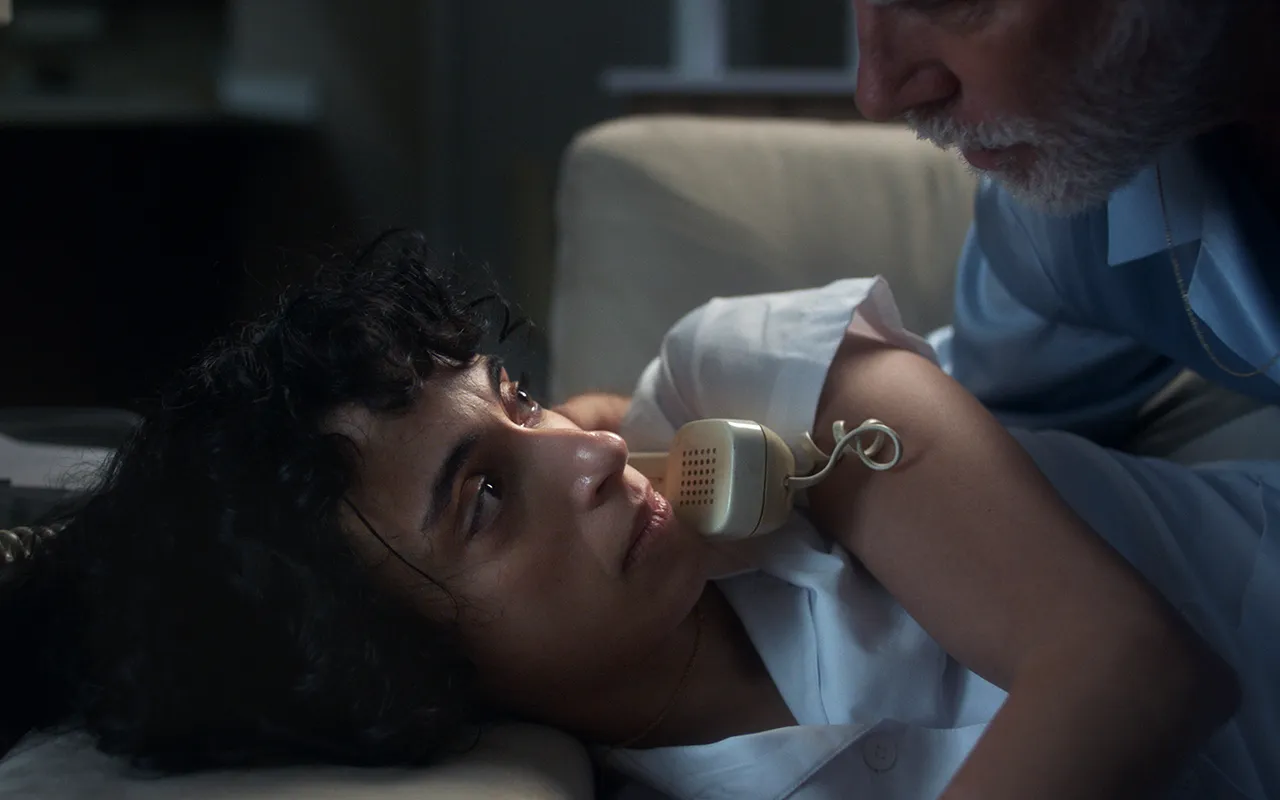
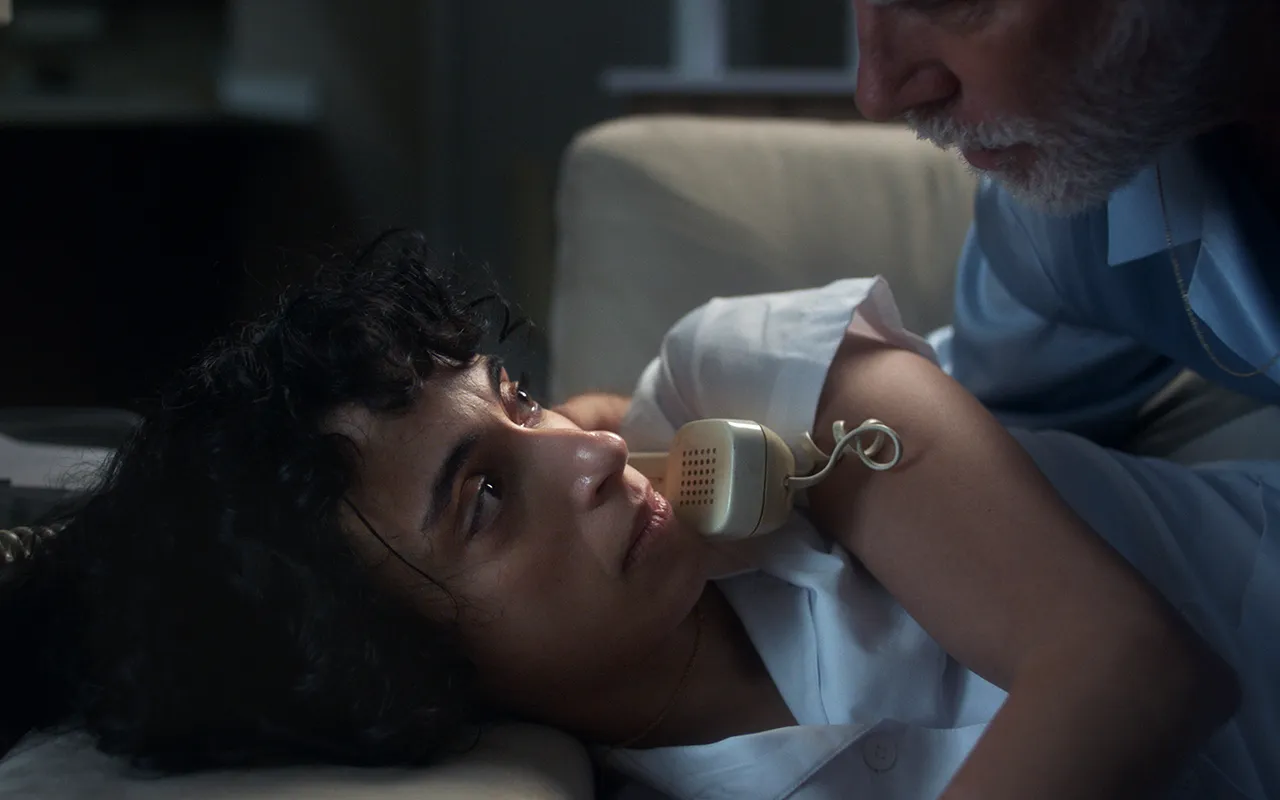
Bernstein’s directorial prowess is immediately evident in key sequences, such as the pivotal first scam call. Shot in an agonizingly sustained long take, the scene deliberately obscures Eleni’s reactions at moments of heightened audience curiosity, forcing viewers to project their interpretations onto her inscrutable demeanor. Douglas physically entangles himself and the telephone cord around Eleni, a visceral representation of their burgeoning, unhealthy connection. As the scam is sealed, Eleni turns from the camera, her back shielding her immediate emotional response, only to then pivot and attempt to kiss Douglas. His recoil, punctuated by the blunt refusal, "If you’re looking for a pogo stick, I’m really not your guy," shatters the illusion of reciprocal romantic desire, cementing the transactional and manipulative core of their bond.
Unpacking the Film’s Thematic Core
At the heart of Night Nurse lies a compelling, unsettling question, articulated by Mona (Eléonore Hendricks) to Eleni: "It’s amazing to be needed, isn’t it? It feels good to mean something to somebody." Bernstein takes this fundamental human craving for purpose and significance and extrapolates it to its most problematic and morally ambiguous conclusions. The film meticulously dissects how this innate desire can drive individuals to exploit others, blurring the lines between care and manipulation, empathy and predation. Douglas seeks a renewed sense of agency and importance through Eleni, while Eleni finds a warped form of validation and excitement in their shared transgression. Even when Eleni grapples with nascent guilt, Mona offers a chilling justification for their actions, suggesting their victim was "numb to life before today. You gave him purpose. You helped him." This philosophical underpinning challenges viewers to confront the ethical implications of seeking personal fulfillment at another’s expense, especially within a vulnerable population.
The film’s exploration of power dynamics is equally nuanced and unsettling. While initially appearing as an older man preying on a younger woman’s vulnerability, the narrative frequently shifts, revealing Eleni’s agency and her active participation in the scheme. This ambiguity, a deliberate choice by Bernstein, complicates traditional victim-perpetrator narratives, forcing the audience to grapple with the fluid nature of control and influence. The setting of a retirement community, a space traditionally associated with care and comfort, is transformed into a crucible for moral decay, where the boundaries of ethics are tested and ultimately dissolved.
A Tapestry of Cinematic Influences
Bernstein’s Night Nurse is a rich tapestry woven from diverse cinematic influences, creating a distinctive aesthetic and narrative voice that resonates with the work of acclaimed international auteurs. The director herself acknowledges a deep affinity for the "cerebral psychosexuality" of Canadian filmmaker Atom Egoyan, particularly his mastery of contained spaces and his unique approach to pacing and lighting. Films like Egoyan’s Exotica (1994) and The Adjuster (1991) are echoed in Night Nurse‘s suffocating atmosphere and its dissection of human relationships within insular, almost dreamlike environments. The languid, out-of-time world of the retirement community, where patients walk in "endless circles," mirrors the existential ennui often present in Egoyan’s work.
Another significant Canadian influence is David Cronenberg, whose "pacing and lighting" in films like Crash (1996) left a profound mark on Bernstein. She and her cinematographer, Lidia Nikonova, along with editor Alex Jacobs, reportedly studied Crash repeatedly. Bernstein admired Cronenberg’s ability to render Toronto as a "gray" yet "beautiful" backdrop, a sensibility she aimed to replicate in her portrayal of the bleak Chicago suburbs where Night Nurse is set. This approach eschews conventional beauty for a starker, more psychologically resonant visual landscape.
Beyond North American cinema, Bernstein draws from European masters, notably Catherine Breillat, known for her "twisted and troubling power dynamics," often between young women and older men. Bernstein acknowledged the trope but sought to "push it to the extreme" by introducing the elements of a nurse-patient relationship, an Alzheimer’s evaluation, and the added layer of a scam, which exponentially complicates the power balance and ethical considerations. The influence of Lucrecia Martel, particularly her distinct "gaze," also shaped the film’s perspective, adding a unique lens through which the story unfolds, informed by the collaborative vision of two women filmmakers.
Interview feedback also drew comparisons to the literary world, specifically the "Ballardian" psychological spaces found in J.G. Ballard’s novels, such as Cocaine Nights (1996). While Bernstein hadn’t read it, the interviewer’s observation about a "cult of personality" taking over an elderly community on the Spanish Riviera resonated with the film’s premise. This unexpected parallel underscores a shared sensibility for exploring societal anxieties and human deviance within contained, seemingly innocuous settings. The film’s title itself is a nod to exploitation cinema, specifically Roger Corman’s nurseploitation trilogy, including Stephanie Rothman’s The Student Nurses (1970), hinting at a subversive reinterpretation of genre tropes. Bernstein’s ambition to "shoot like Fassbinder" and make the film "feel big," despite its low-budget origins, further illustrates her commitment to a grand cinematic vision.
Genesis and Production: A Collaborative Endeavor
Night Nurse marks Georgia Bernstein’s directorial debut, a significant milestone following her established career as a producer on Alex Phillips’s first two features, All Jacked Up and Full of Worms (2022) and Anything That Moves (2025). This background in independent filmmaking provided her with a robust network and practical experience, which proved invaluable in bringing her own vision to fruition.
The film’s inception was unconventional, stemming from a unique academic collaboration. After producing Anything That Moves, Bernstein’s colleague, Eddie Linker, a Chicago-based producer, invited her to use her script for Night Nurse as the subject for a class he was teaching at Northwestern University. This led to Bernstein, Linker, and Veronica Barbosa co-teaching a "how to make a first feature" class, essentially transforming a university course into a pre-production workshop. Students learned practical aspects of filmmaking, from forming an LLC and crafting a budget to applying for tax credits. By the end of the quarter, a substantial portion of the film’s pre-production was complete, leveraging academic resources and fostering a collaborative, community-driven approach that defined the project. This innovative model demonstrates how independent filmmakers can harness educational institutions to bridge the gap between concept and execution.
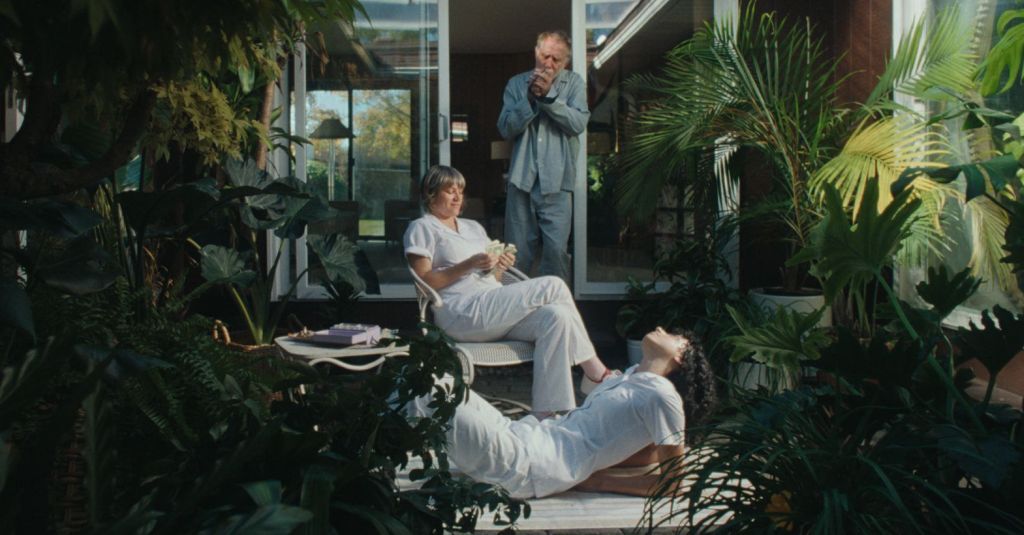
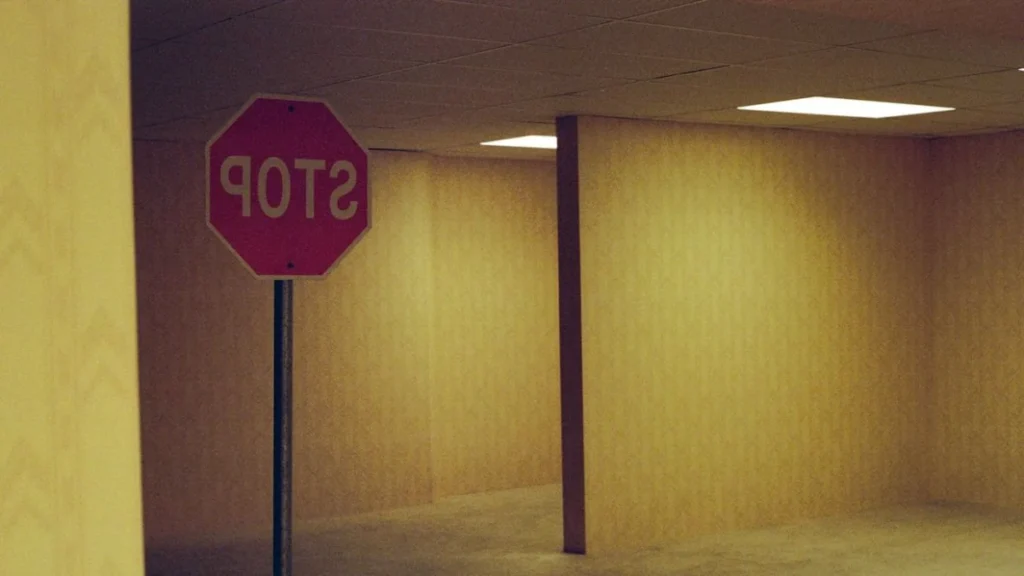
The production itself was a testament to resourcefulness and strong collaborative relationships. The decision to shoot "almost the entire movie" in Bernstein’s actual grandmother’s house in the Chicago suburbs was both a practical necessity and a profound artistic choice. Bernstein wrote the script with "every specific room" in mind, allowing the architecture and existing atmosphere of the house to shape the narrative and visual design. This intimate connection to the location imbued the film with an "out of step with time" quality, characterized by 70s wallpaper, vintage landlines, and the deliberate absence of smartphones, creating a disorienting, timeless aesthetic crucial to the film’s psychological effect. The use of older $100 bills further reinforced this sense of temporal displacement.
Key to the film’s distinctive visual style was the collaboration between Bernstein and cinematographer Lidia Nikonova. Bernstein, having scouted Nikonova online after being impressed by her work on Family Portrait (2024), recognized a shared sensibility. Nikonova’s initial skepticism, reflected in a delayed email response, gave way to an enthusiastic partnership, famously declaring, "I was born to shoot lusting nurses." Their deep creative synchronicity involved extensive location scouting in Bernstein’s grandmother’s house, taking numerous photos, and meticulously planning camera movements to capture the essence of the space.
The directorial confidence apparent in Night Nurse stemmed from this rigorous pre-production. Bernstein emphasized detailed choreography and crucial rehearsal periods with the lead actors, Cemre Paksoy and Bruce McKenzie. These rehearsals, conducted over several days in the grandmother’s house, allowed for meticulous blocking and camera placement discussions with Nikonova. A strategic decision was made to shoot all the intimate scenes during the first week, specifically the second day, which, though challenging, ensured the team was "super prepared" and immediately established the film’s intense tone.
A defining characteristic of Night Nurse‘s visual language is the deliberate and almost exclusive use of a dolly. Bernstein actively rejected the easier option of a Steadicam, explaining, "I just don’t like the Steadicam look, especially for this film. It’s not heavy enough; I really wanted the weight of the dolly, the camera’s ga-dunk on the dolly moving really slowly." This choice contributed to the film’s "slow motion" pacing, influencing not only camera movement but also actor performances, such as Eleni’s deliberate crawling across carpeted floors. The dolly, despite the small confines of the house, fit "literally just through the doorway," a testament to the crew’s precision and commitment to achieving a specific, weighty cinematic feel that belies its independent budget.
Crafting the Ensemble and Score
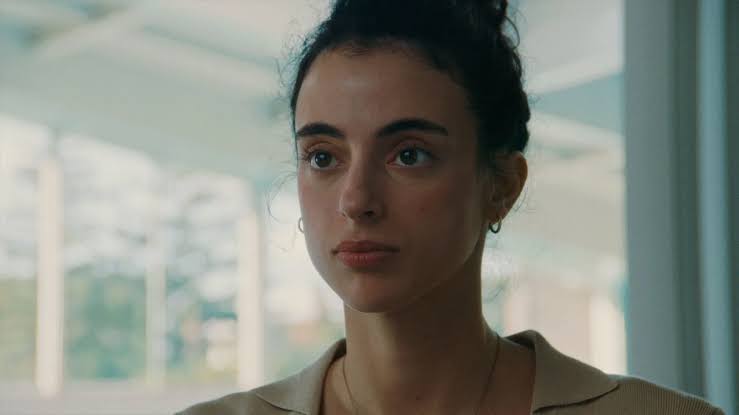
Bernstein’s casting philosophy was largely driven by her existing relationships and admiration for specific talents. With the exception of Douglas, for whom a full casting process was undertaken, every role was written with a particular actor in mind. Bruce McKenzie, who ultimately embodied Douglas, brought an "unexpected" and "specific" quality that diverged from Bernstein’s initial vision of a "Cassavetes or Humphry Bogart" type, enriching the character beyond its written form. Cemre Paksoy (Eleni) and Eléonore Hendricks (Mona) were chosen due to Bernstein’s long-standing appreciation for their work and mutual connections. Colleen Rose Trundy, a friend and performance artist, rounded out the key ensemble, illustrating Bernstein’s talent for assembling a cohesive team from various facets of her life.
The film’s score, composed by Steven B. Jackson and Samm Clapp, further enhances its atmospheric tension. Having previously collaborated on Bernstein’s produced films, All Jacked Up and Full of Worms and Anything That Moves, the duo, often joined by their respective brothers and other musicians, brought a unique approach to Night Nurse. They employed an "old fashioned" method of playing music live to picture, incorporating instruments like flute and piano as central elements. The score was heavily influenced by Francis Ford Coppola’s The Conversation (1974), aiming for a recognizable, repetitive theme that would reinforce the film’s cyclical nature – the sense of "spinning in circles" and being trapped within the narrative’s psychological maze. Some melodies were pre-composed and performed live, while others were improvised, adding an organic layer to the film’s sonic landscape.
Broader Impact and Critical Reception
Night Nurse‘s premiere at Sundance in the NEXT competition, a category dedicated to showcasing "bold, innovative works that push the boundaries of storytelling," underscores its critical recognition as a distinctive voice in contemporary cinema. Its challenging subject matter and ambiguous moral landscape have been a focal point of discussion, distinguishing it from films that prioritize clear-cut narratives and easily digestible themes. The film’s intentional ambiguity regarding power dynamics—"Who’s taking care of who? Who has the power?"—forces audiences to engage actively with the ethical complexities presented, resisting easy answers and fostering deeper contemplation.
The film’s success at Sundance and its impending wide release via IFC suggest a growing appetite for sophisticated, character-driven psychological thrillers that are unafraid to explore the darker facets of human nature. For Georgia Bernstein, Night Nurse establishes her as a director with a clear, confident vision and a remarkable ability to synthesize complex influences into a unique cinematic experience. Her journey from producer to director, marked by innovative production strategies and a strong collaborative ethos, offers a compelling model for emerging independent filmmakers. As Night Nurse prepares to reach a broader audience, it stands as a testament to the power of independent cinema to provoke, challenge, and ultimately enrich the cinematic landscape.