The contemporary television landscape is increasingly defined by ambitious expansions of established and revered literary and cinematic universes, transforming beloved narratives into long-form serials that delve deeper into their foundational myths and characters. This trend is vividly exemplified by three high-profile productions currently making waves: The Testaments, the highly anticipated sequel series to Hulu’s critically acclaimed The Handmaid’s Tale; HBO’s It: Welcome to Derry, a chilling prequel exploring the origins of Stephen King’s iconic monster; and FX’s Alien: Earth, a new series set within the terrifying cosmos of the Alien franchise. These projects represent a calculated evolution in storytelling, leveraging the immersive capabilities of television to enrich existing lore, introduce new perspectives, and engage audiences in unprecedented ways.
The Enduring Legacy of Gilead: The Testaments Continues a Dystopian Saga
The journey of Margaret Atwood’s seminal 1985 dystopian novel, The Handmaid’s Tale, into a sprawling television epic began with showrunner Bruce Miller’s initial, almost prophetic, desire for a sequel. Miller recounts his first reading of the novel, reflecting, “I was like, ‘Well, I hope there’s a sequel!’” Decades later, Miller found himself at the helm of the Hulu series, which premiered in 2017. Its launch coincided with the tumultuous political climate of the first Trump administration, a period that imbued the series’ themes of reproductive rights, totalitarian control, and female subjugation with an acute, often unsettling, contemporary resonance. The imagery of the handmaids’ red capes and white bonnets, initially a symbol of oppression, quickly transmuted into an emblem of resistance globally, appearing at protests and demonstrations. The show’s immediate and profound impact was underscored by its historic win as the first streaming offering to secure an Emmy for Outstanding Drama Series, a triumph that heralded a new era for television and laid the groundwork for its subsequent 13 Emmy awards over five additional seasons.
As The Handmaid’s Tale series gained momentum, the idea of extending Atwood’s narrative beyond the original novel began to coalesce, independently, in both Miller’s and Atwood’s minds. Miller notes that the concept of a sequel had likely been suggested "a zillion times before" to Atwood, but it was perhaps her "personal relationship with some of the cast" and witnessing "the fun of television in terms of expanding stories" that solidified her decision. By the time production commenced on the second season of The Handmaid’s Tale, Atwood revealed to Miller that she was actively writing a sequel novel. The Testaments, set 15 years after the events of The Handmaid’s Tale, was eventually published in 2019 to widespread critical acclaim, earning Atwood a share of the prestigious Booker Prize. Crucially, Atwood had already shared her expanded vision with Miller, providing a singular, impactful directive for the ending of the Handmaid’s Tale series: "Don’t kill Aunt Lydia." This command ensured the menacing, yet complex, figure portrayed by Emmy winner Ann Dowd would survive, poised for her pivotal role in The Testaments.
The narrative bridge between Atwood’s two novels and Miller’s series adaptation became a complex, yet creatively fertile, space. In Miller’s television continuity, Elisabeth Moss’s character, June Osborne (Offred), successfully escapes the oppressive Republic of Gilead to Canada, a significant deviation from the original novel where Offred’s fate after her capture remains ambiguous, implied to be her death and the subsequent transcription of her recorded testimony. The Testaments novel picks up 15 years later, following Agnes Jemima, a handmaid-in-training who is unaware of her true parentage as June’s daughter. Miller, while initially reluctant to alter a novel he deeply admired, recognized the necessity for the story to "evolve in order to fit the medium of television." His collaborative process with Atwood involved regular meetings during each season’s writing, where he would present his ideas for her input. This synergy, particularly the foreknowledge of The Testaments‘ central premise, granted Miller the creative license to strategically "fill in the gaps" between Atwood’s first novel and his eventual adaptation of the sequel.
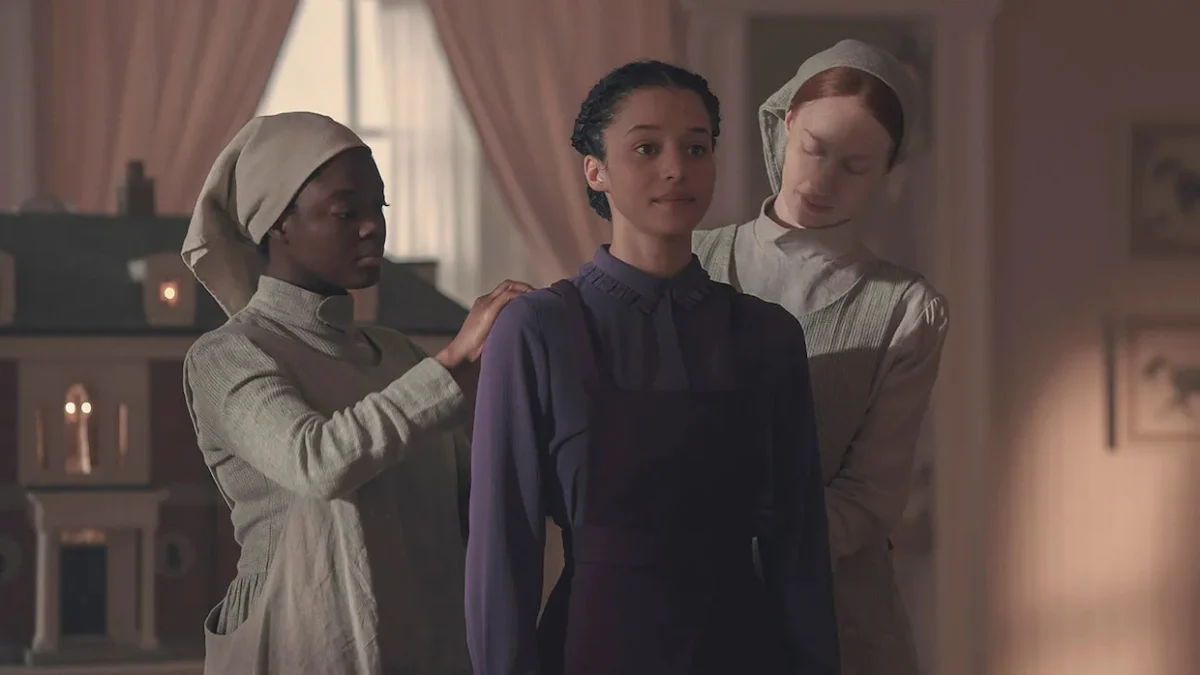
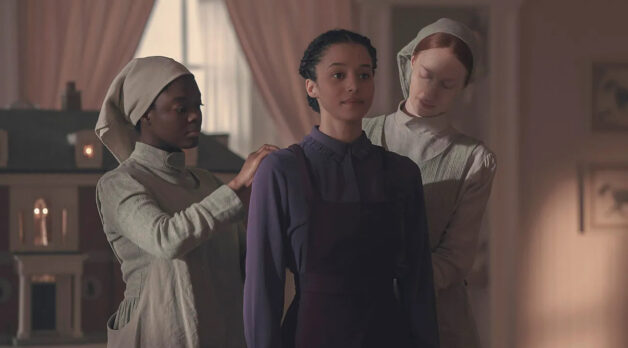
Miller explains that The Testaments solidified his understanding of Atwood’s comfort with "expanding the world." He felt that her sequel demonstrated her considerations for "where the characters would be placed" after The Handmaid’s Tale, which "really encouraged me [to consider] some victories for June." This conviction directly led to the show’s most significant departure from the source material: June’s survival and continued active role in the resistance, rather than her anonymous death in Atwood’s original novel. Consequently, while the specific plot details of the television adaptation of The Testaments would naturally diverge from Atwood’s novel, its overarching narrative and profoundly relevant themes of resilience, justice, and the fight against authoritarianism are meticulously maintained. The critical success of its predecessor and Chase Infiniti’s recent Gotham Award win for her lead performance in The Testaments position the series as a formidable contender in the upcoming Emmy season, underscoring the power of extending beloved narratives with respect and creative ambition.
Unmasking the Monster: It: Welcome to Derry Explores Pennywise’s Origins
Beyond the dystopian corridors of Gilead, another iconic literary universe is undergoing a profound expansion on the small screen: Stephen King’s It. The terrifying entity known as Pennywise the Dancing Clown, who has haunted generations through King’s 1986 novel and its subsequent adaptations, is now the subject of HBO’s prequel series, It: Welcome to Derry. This venture was born from the collaborative dynamic between director Andy Muschietti and actor Bill Skarsgård during the production of the two-part film adaptation, It: Chapter One (2017) and It: Chapter Two (2019). Muschietti reveals that deep conversations with Skarsgård, focused on understanding Pennywise’s motivations, led them "into depths that transcend the story you’re telling." This exploration sparked an excitement about "the potential exploration of Pennywise’s origins—when did the monster become the clown? It’s very enigmatic in the book, but intentionally cryptic." The two It films were commercial successes, grossing over $1.1 billion worldwide, demonstrating a massive appetite for King’s horror on the big screen, and paving the way for further exploration.
Andy and his sister Barbara Muschietti serve as executive producers on It: Welcome to Derry, which is set 27 years prior to It: Chapter One. While King’s novel bifurcates its timeline between the late 1950s and the mid-1980s, the Muschiettis’ first film adaptation shifted the "Losers’ Club" childhood narrative to the late 1980s, a period that Barbara describes as "our childhood," making it personally resonant. The prequel, therefore, establishes its narrative in the early 1960s, a deliberate choice that allows the creators to intertwine historical context with supernatural horror. Against the backdrop of the Cold War and the burgeoning Civil Rights Movement, a new group of young outcasts, reminiscent of the original "Losers’ Club," confronts the insidious evil lurking beneath Derry. This strategic setting not only grounds the supernatural elements in tangible historical anxieties but also promises to deepen the thematic layers of the series.
The Muschiettis’ vision for Pennywise’s origin story introduces Bob Gray, the human alter ego, as a dancing clown on the carnival circuit during the tail end of the Great Depression. Accompanied by his young daughter, Gray’s life takes a sinister turn when he is lured away by an unnamed monstrous entity that eventually assumes his persona, utilizing the clown’s form to attract its young victims. This evocative use of vaudevillian imagery not only adds a unique aesthetic to the horror but also sets the stage for a grander narrative arc across future seasons of Welcome to Derry, allowing the series to explore other historically significant periods as it traces the entity’s long history in Derry.
Stephen King’s prolific body of work has seen countless adaptations, varying in their faithfulness to the source material. Recognizing the profound responsibility of expanding on such an iconic work, the Muschiettis maintain close communication with the author. Barbara Muschietti emphasizes, "Whenever we want to test the waters, we let him know immediately," acknowledging King as "the mastermind behind the whole enterprise." The challenge inherent in this endeavor lies in demystifying an iconic horror villain without diminishing its terror. Andy Muschietti addresses this, stating, "Over the three seasons that we’re planning, we’re hitting the character’s motivation right in the face, and it’s very clear what he wants. It’s not something that people necessarily will expect, but it’s very exciting." This promise of a clear, yet unexpected, motivation for Pennywise underscores the delicate balance required to enrich a villain’s lore while preserving the core essence of their dread. The expansion of It into a prequel series demonstrates the potential for horror franchises to deepen their mythology, offering new insights into characters and settings that have long captivated audiences.
A New Breed of Terror: Noah Hawley’s Alien: Earth Explores Corporate Dread
The final frontier of franchise expansion discussed here takes us to the chilling void of space with Noah Hawley’s Alien: Earth for FX. Unlike Bruce Miller or the Muschiettis, Hawley, celebrated for his Emmy-winning anthology series adaptation of Fargo, had no prior direct involvement with the Alien film franchise. Yet, he approached the daunting task of navigating this venerated sci-fi horror universe with confidence and a clear vision. Set just before the harrowing events of Ridley Scott’s seminal 1979 film, Alien: Earth introduces Sydney Chandler as Wendy, a pioneering human-cyborg hybrid – the first of her kind. Her mission: to lead a team of fellow hybrids in investigating the crash landing of a research vessel, only to discover a xenomorph running rampant, having decimated the ship’s crew. The original Alien film, despite its modest budget for its time, was a critical and commercial success, grossing over $100 million worldwide and launching one of cinema’s most enduring horror icons. Its success spawned numerous sequels, prequels, and spin-offs, though with varying degrees of critical reception.
Hawley’s approach to Alien: Earth is not merely to offer another monster movie, but to leverage the "larger canvas of a 10-episode series" to bring the franchise’s core themes into a contemporary light. He poses the question, "What is [the original] movie at its core? If it had just been a monster movie, I don’t know if there would be a television series there." For Hawley, the genius of Scott’s original film lay not just in the terrifying xenomorph, but in the insidious corporate malevolence represented by Weyland-Yutani. The film famously depicted Sigourney Weaver’s Ripley battling not only the alien creature but also the treacherous android Ash, who prioritized the preservation of the xenomorph specimen for the corporation over human life.
In Alien: Earth, this corporate conflict is amplified and modernized. Wendy finds herself trapped between two powerful entities: Weyland-Yutani, which owns the ill-fated vessel and claims ownership of the alien specimen, and Prodigy, the tech company responsible for the groundbreaking hybrid program. Hawley succinctly captures this thematic core: "You realize she’s trapped between nature and technology, and they’re both trying to kill her. That seems pretty on point with our moment on Earth right now." This analysis highlights the series’ ambition to resonate with modern anxieties about unchecked technological advancement and corporate power, transforming the xenomorph into a terrifying manifestation of these larger societal fears.
A significant aspect of Hawley’s creative freedom in Alien: Earth is the introduction of new extraterrestrial creatures. He provocatively states, "It’s called Alien. It’s not called Xenomorph, right?" This distinction allows him to expand the franchise’s bestiary beyond the iconic biomechanical creature, creating new forms of life – some deadly, others surprisingly benign – that challenge audience expectations and invigorate the sense of cosmic dread. This expansion is designed to make the universe "fresh again for the audience," offering new mysteries and threats. Hawley articulates his guiding philosophy: "If you say, ‘Here’s the world of Alien, here’s the creatures and premise that you love, and let me see if I can do something additive to it,’ the hope is that people will feel happy about that." This "additive" approach aims to honor the franchise’s legacy while charting new, compelling narratives, proving that even the most established sci-fi horror universes can find new avenues for terror and thematic depth on television.
The Broader Implications of Franchise Expansion in the Streaming Era
The proliferation of these ambitious television expansions—The Testaments, It: Welcome to Derry, and Alien: Earth—reflects a significant shift in the entertainment industry, particularly driven by the dynamics of the streaming era. Studios and networks are increasingly investing in established intellectual properties (IPs) for several compelling reasons. Firstly, familiar franchises arrive with a pre-built audience and a degree of brand recognition, significantly reducing the marketing hurdles inherent in launching entirely new concepts. This inherent audience appeal translates into higher initial viewership and sustained engagement, crucial metrics for streaming platforms competing for subscriber attention.
Secondly, television offers a narrative canvas far broader and more detailed than feature films. This extended format allows showrunners and creators to delve into character backstories, explore thematic complexities, and build intricate world-lore in ways that a two-hour film rarely can. For authors like Margaret Atwood and Stephen King, or the expansive universe of Alien, this means an opportunity to see their creations explored with a depth previously unattainable, often with their direct involvement and blessing. The collaborative nature, as seen with Miller and Atwood, or the Muschiettis and King, underscores a growing respect for source material while embracing the unique storytelling capabilities of television.
However, this trend is not without its challenges. The delicate balance between faithfulness to the original source material and the creative imperative to innovate and expand is a constant tightrope walk. Audiences, often deeply invested in these universes, can be fiercely protective of established canon. Creators must navigate these expectations, as seen in Miller’s decision regarding June’s fate or the Muschiettis’ nuanced approach to Pennywise’s origins. Over-explanation or radical departures can alienate long-time fans, while overly conservative adaptations might fail to attract new ones or justify their existence.
The financial implications are also substantial. These projects often command blockbuster-level budgets, reflecting their cinematic scope and ambitious visual effects. For example, The Handmaid’s Tale series has consistently been one of Hulu’s most expensive productions, with costs per episode often exceeding $5 million. Similarly, a high-concept sci-fi series like Alien: Earth or a horror epic like It: Welcome to Derry would require significant investment to achieve the desired production value. This investment signals a confidence in the long-term viability and profitability of these extended universes on the small screen, especially as platforms seek to differentiate their content libraries.
Ultimately, the phenomenon of expanding beloved franchises into new television series represents a dynamic and evolving chapter in contemporary storytelling. It’s a testament to the enduring power of these narratives and characters that they can transcend their original mediums, finding new life, deeper meaning, and fresh relevance in the episodic format. As audiences continue to seek immersive and expansive storytelling experiences, the small screen is increasingly becoming the grand stage where literary and cinematic universes not only continue but profoundly evolve.