The television landscape is bracing for the 76th Primetime Emmy Awards on September 14, an event that promises not only to celebrate excellence in comedy, drama, and limited series but also to highlight the shifting tides within the industry’s most dynamic categories. Beyond the glamour and recognition, this year’s awards are poised to become a significant battleground for late-night hosts and sketch comedy, particularly within the newly re-merged variety series category, against a backdrop of unprecedented political pressure and industry upheaval.
The Intricate World of Emmy Nominations and Rule Changes
The Emmy Awards, administered by the Television Academy, are renowned for their extensive scope and often complex, evolving rules. While the Primetime Emmys on September 14 will honor key categories with 23 awards, the full spectrum of television achievement is recognized across two Creative Arts Emmy ceremonies held a week prior, where approximately 100 additional Emmys are distributed for craft-focused achievements and specific guest acting roles. This bifurcated approach underscores the sheer volume and diverse nature of television production.
The Television Academy’s commitment to adapting its guidelines to reflect the industry’s changes frequently results in category adjustments, a process designed to ensure fairness and relevance but often leading to periods of strategic recalibration for networks and production teams. A notable rule change implemented this year directly impacts guest acting nominations: a performer can no longer be nominated as a guest actor for a role if they have previously received a lead or supporting actor nomination for the same character. This rule aims to prevent situations like Claire Foy’s 2021 win for a brief appearance as a young Queen Elizabeth in the fourth season of The Crown, a role for which she had already secured a Best Actress in a Drama Emmy in 2018.
The immediate impact of this new regulation was observed with Jon Hamm. Apple mistakenly submitted him as a guest actor for his role on The Morning Show, despite his earlier 2024 supporting actor nomination for the very same character. Consequently, Hamm was disqualified from the guest actor category for that specific submission. While this incident highlights the meticulous nature of Emmy submissions and the potential for oversight, Hamm remains eligible for two other Emmy nominations this year, mitigating the impact of the disqualification on his overall chances. Such instances underscore the administrative complexities that underpin the Emmy Awards process, where adherence to intricate rules can significantly alter a contender’s path to recognition.
The Evolution of the Variety Series Category: A Historical Overview
The variety series category, a cornerstone of the Emmys since its inception in 1951, has undergone several significant transformations, each reflecting the changing landscape of television entertainment. Initially, the category encompassed a broad array of shows, from musical revues to comedic sketches and talk formats.
-
Early Splits (1970s): In the early 1970s, recognizing the inherent differences between pure talk shows and performance-based variety, the Television Academy briefly split the category into two subcategories. This allowed programs like The Tonight Show with Johnny Carson and The Dick Cavett Show to compete independently from musical and sketch series such as Rowan & Martin’s Laugh-In and The Carol Burnett Show. This division aimed to create a more equitable competitive environment, acknowledging the distinct creative demands of each format.
-
Re-merger and Mismatched Competitors (Mid-1970s to 2014): However, from the mid-1970s through 2014, the category reverted to a single entity. This period was characterized by a diverse, often mismatched, lineup of competitors. The 1990s, in particular, witnessed peculiar outcomes, such as Jay Leno’s The Tonight Show triumphing over the musical showcase MTV Unplugged in 1995. Another notable example involved Politically Incorrect with Bill Maher competing against Muppets Tonight, with both ultimately losing to Dennis Miller Live. By the mid-2000s, the category became largely dominated by late-night talk shows, with hosts like Stephen Colbert, Jimmy Fallon, Jimmy Kimmel, Bill Maher, Conan O’Brien, and Jon Stewart consistently vying for the award. Saturday Night Live received occasional nominations but found itself competing against a talk-show heavy field. Jon Stewart’s The Daily Show achieved legendary status during this era, setting a record with 10 consecutive wins, solidifying the dominance of the satirical news-talk format.
-
The Second Split (2015-2022): In 2015, the Academy once again recognized the need for greater specificity, splitting the category into "Variety Talk Series" and "Variety Sketch Series." This division allowed sketch-based programs to compete directly against similar formats. Inside Amy Schumer and Key & Peele were among the early winners in the Variety Sketch Series category before Saturday Night Live embarked on an impressive six-year winning streak that lasted until 2023. Concurrently, in the Variety Talk Series category, HBO’s Last Week Tonight with John Oliver established itself as an unparalleled force, securing seven consecutive Emmys.
-
The "Scripted Variety" Interlude (2023): In a further refinement, in 2023, the Academy moved Last Week Tonight with John Oliver into a new "Scripted Variety Series" category, acknowledging its distinct format which often combines in-depth investigative journalism with comedic segments, setting it apart from more traditional talk shows. This move allowed The Daily Show (then hosted by Trevor Noah) to finally win the Variety Talk Series Emmy. Last Week Tonight continued its winning streak in its new category, adding three more Emmys to its impressive tally.
-
The 2026 Re-merger: A New Competitive Landscape: This year, however, the two variety categories—Variety Talk Series and Variety Sketch Series—have been merged once again. This decision brings Last Week Tonight with John Oliver, with its seemingly unbeatable track record, back into direct competition with the established network late-night shows and Saturday Night Live. This re-merger creates a fascinating and potentially unpredictable race, bringing together formidable contenders from diverse formats into a single, highly competitive category.
Late-Night Under Siege: Colbert, Kimmel, and the Political Climate
The timing of this category re-merger is particularly salient, given the intense political scrutiny and direct pressure experienced by several late-night hosts in the past year, particularly those critical of the Trump administration. The perceived targeting of shows hosted by Stephen Colbert and Jimmy Kimmel has added a charged layer to their potential Emmy outcomes.
-
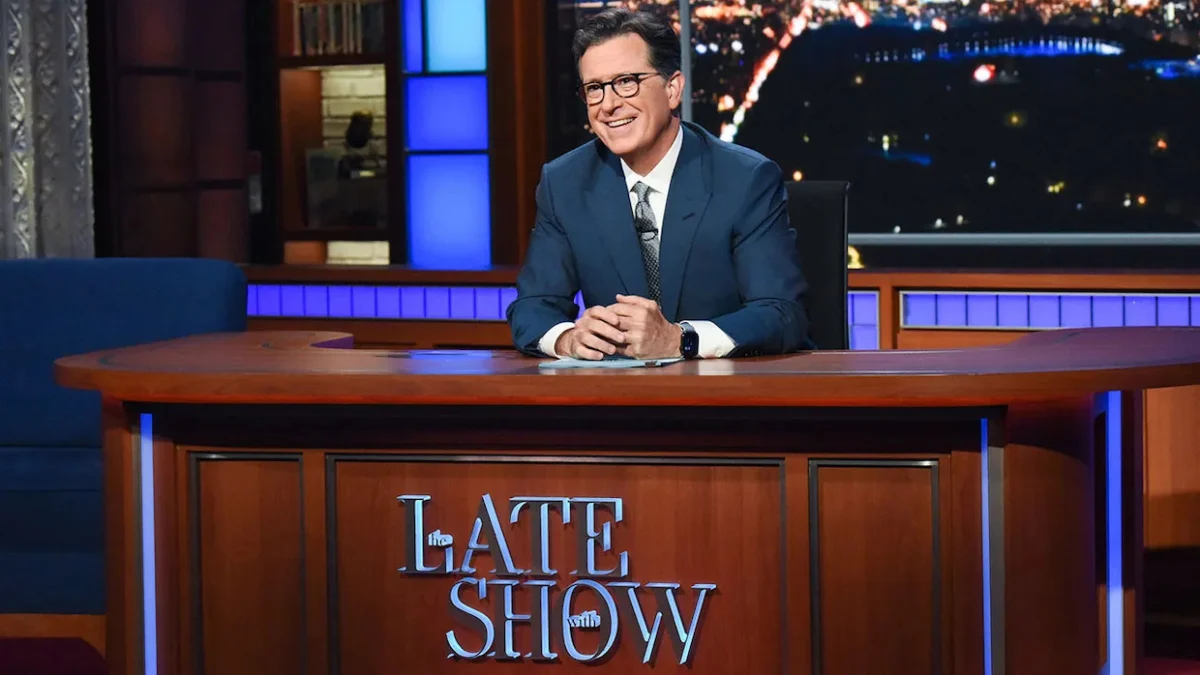
The Cancellation of The Late Show with Stephen Colbert: Stephen Colbert’s The Late Show, which he began hosting in 2015 following David Letterman’s departure, concluded its 11-season run on May 21. CBS’s decision to cancel the franchise, a network staple for 33 years, came in the wake of parent company Paramount’s sale to Skydance Media, led by David Ellison. The official explanation cited by Paramount was that the long-running program was incurring an annual loss of $40 million. However, this explanation was met with skepticism by many industry observers and critics. They suggested that the cancellation was more likely tied to Colbert’s consistent and sharp criticism of the Trump administration over the years, noting the reported friendly relationship between the Ellison family and the current administration.
The news of the cancellation sent shockwaves through the industry and among viewers. Despite the abrupt termination, Colbert’s final season became a remarkable, poignant "swan song." Ahead of its conclusion, The Late Show achieved a significant milestone, winning its first talk series Emmy last September. This victory, coming just months before its announced end, felt like a powerful validation from the industry. Furthermore, during an earlier Emmy ceremony, Colbert himself received a lengthy standing ovation as a presenter, an emotional moment that underscored his stature and the respect he commanded among his peers, particularly in light of the impending show’s end. While Colbert is now without his nightly platform, his exit from The Late Show is etched into television history as a testament to comedic resilience and the courage of political commentary in challenging times.
-
The Jimmy Kimmel Live! Controversy and Public Backlash: Hot on the heels of Colbert’s cancellation, Jimmy Kimmel Live! faced its own severe challenge. On September 17, the show was temporarily pulled from the air following intense pressure from the Trump administration and FCC chairman Brendan Carr. This pressure stemmed from a comment Kimmel made in an opening monologue regarding the assassination of conservative commentator Charlie Kirk. The incident quickly escalated, with major broadcast groups, Nexstar Media Group and Sinclair Broadcast Group, reportedly threatening to pull the show from their ABC affiliates, casting a shadow of uncertainty over Kimmel’s future.
However, the swift and overwhelming public reaction provided a powerful counter-narrative. An immediate and widespread public backlash, coupled with threats of audience boycotts targeting the networks and their affiliates, demonstrated significant public support for Kimmel and opposition to perceived censorship. This public outcry proved effective: Kimmel was back on the air within a week. His return episode on September 23 garnered a record-breaking 6.26 million viewers, marking a series high. Furthermore, his monologue from that episode accumulated an astonishing 26 million views across various social media platforms, indicating a massive surge in engagement and support. This episode served as a powerful reminder of the audience’s role in defending journalistic and comedic freedom, and the potential consequences of political interference in media.
The Emmy Race: A Politically Charged Contest?
The recent experiences of Colbert and Kimmel are widely expected to influence the Emmy voting, transforming the variety series category into more than just a contest of comedic merit; it may become a barometer of the Academy’s political sentiment.
-
Stephen Colbert’s The Late Show: The Late Show holds a unique edge this year. Voters might view this as not only the final opportunity to honor the show and Colbert for his significant contributions but also as a symbolic vote against the perceived political pressures of the Trump administration. The prospect of an acceptance speech from Colbert and his team, potentially addressing the circumstances of the show’s cancellation, could be a powerful moment that resonates deeply with the largely liberal-leaning Academy members.
-
Jimmy Kimmel’s Jimmy Kimmel Live!: Despite being nominated in this category (across its various iterations) for the past 12 years, Jimmy Kimmel Live! has yet to secure the variety series Emmy. This year, fueled by the public’s robust defense of his show against political interference, Kimmel could find himself in a strong second position. If Emmy voters indeed cast their ballots with political considerations in mind, Kimmel’s show presents a compelling narrative of resilience in the face of adversity.
-
John Oliver’s Last Week Tonight: The formidable Last Week Tonight with John Oliver remains a dominant force. Having won seven consecutive Emmys in its original category and three more in the "Scripted Variety Series" category, Oliver’s meticulously researched, critically acclaimed, and often bitingly satirical program is a consistent favorite. Its return to the main variety series category means that Colbert and Kimmel will face an extremely tough opponent, one that has consistently set a high bar for political commentary and comedic execution. Overcoming Oliver’s streak would be a monumental achievement for any competitor.
-
NBC’s Saturday Night Live: Saturday Night Live, with its enduring legacy and topical humor, is a perennial nominee and a strong contender. While SNL has, at times, ruffled political feathers, its relationship with figures like former President Trump has been complex (he famously hosted the show during his presidential campaign in 2015). The show, currently riding high off its 50th-anniversary celebrations last year, is anticipated to secure a nomination. The 51st season saw the departure of fan-favorite Bowen Yang, who earned four acting nominations during his tenure. However, SNL has maintained its creative energy in 2026, pivoting more towards the absurd and less towards immediate political timeliness. The unexpected success of SNL UK, which broadcasts live from London and has become a surprise hit, further solidifies Lorne Michaels’s status as a comedy institution, showcasing the enduring global appeal and adaptability of the SNL format.
-
The Daily Show: The Daily Show, now featuring Jon Stewart back at the desk on Monday nights and a rotating ensemble of guest hosts throughout the rest of the week, is highly likely to secure the fifth nomination slot in the category. Historical precedent supports this, as the Trevor Noah-hosted iteration won the talk show Emmy when Last Week Tonight was in the "Scripted Variety" category, and the multi-host version also earned a nomination last year. Its continued relevance and historical significance make it a strong candidate.
Broader Impact and Implications
The 76th Primetime Emmy Awards are shaping up to be more than just a celebration of television. For the many liberal-leaning members of the Television Academy, the Emmy ballot presents a unique opportunity to make a political statement, expressing solidarity with hosts who have faced unprecedented challenges and, perhaps, registering a collective stance against perceived attempts to stifle critical commentary. The outcome of the variety series category, in particular, will be closely watched as a reflection of how the industry perceives its role in a polarized political environment.
Regardless of which show ultimately claims the Emmy, one almost certainly predictable reaction will emanate from the highest echelons of political power. As the award ceremony concludes on September 14, a rambling rant from the former president on Truth Social regarding the perceived political bias of Hollywood and the media would be a widely anticipated response, further underscoring the deep intertwining of entertainment and politics in contemporary American discourse. This year’s Emmys will not merely honor artistic achievement; they will serve as a potent cultural flashpoint, reflecting the ongoing tensions and the critical role of satire and commentary in shaping public conversation.