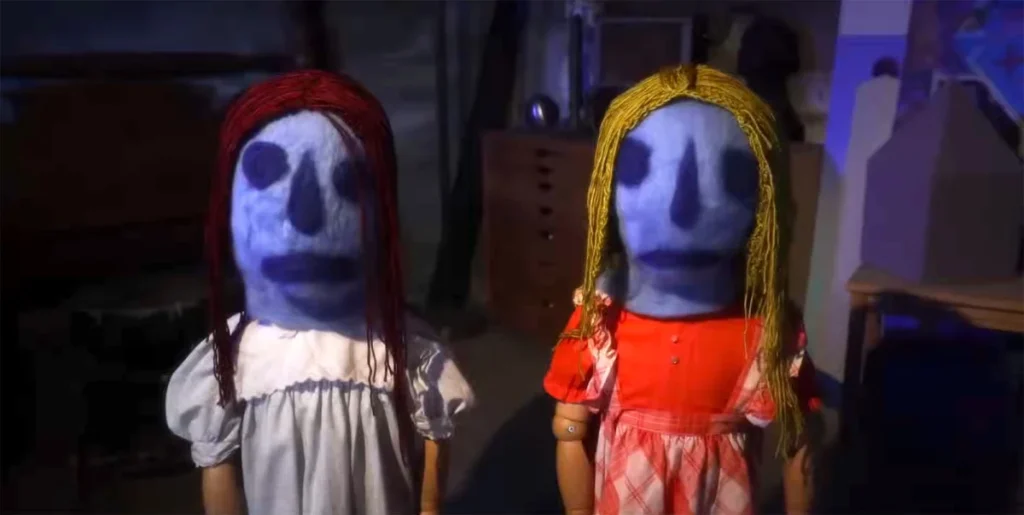
Uncork’d Entertainment has officially released the trailer and promotional poster for Arcade Dreams, a sweeping documentary feature that chronicles the rich, enduring history of public gaming spaces. Directed by Zachary Weddington—best known for his critically acclaimed work on Viva Amiga: The Story of a Beautiful Machine—the film sets out to document the evolution of communal gaming
culture from its earliest iterations in the late 19th and early 20th centuries to the modern era of specialized lounges and contemporary arcades.
Scheduled for a direct-to-video-on-demand (VOD) release on November 27, 2026, the documentary arrives at a time when traditional coin-op spaces have experienced an unexpected cultural and commercial renaissance. Eschewing a traditional festival circuit debut, the production company Rock Steady Media, alongside producers Rob Hart and Andrew Taraba, has opted for a direct digital distribution strategy, bringing the deep dive into arcade heritage straight to enthusiasts and casual viewers alike.
Main Facts and Production Overview
Arcade Dreams positions itself as the definitive visual record of coin-operated entertainment, tracing a lineage that stretches back more than a hundred years. The feature-length documentary is structured around a mix of archival footage, historical deep dives, and extensive interviews with the visionaries, engineers, competitive players, and preservationists who defined the industry.
At its core, the film examines the intersection of technological innovation, industrial design, and social sociology. Arcades have historically served as neighborhood cultural hubs—spaces where physical proximity fostered communities long before the advent of broadband internet and online multiplayer matchmaking. Weddington’s lens captures the sensory environment unique to these spaces: the mechanical clatter of pinball bumpers, the glowing CRT-phosphor aesthetic of classic upright cabinets, the tactile feedback of microswitch joysticks, and the economic ritual of stacking quarters on the glass bezel of a Street Fighter or Pac-Man machine.

Chronology of Coin-Op: A Century of Evolution
To understand the scope of Arcade Dreams, one must examine the chronological milestones that the documentary traverses. The history of the arcade is not a linear progression of video games, but rather a sequence of distinct cultural eras driven by manufacturing ingenuity and changing public tastes.
The Penny Arcade Era (Early 1900s)
Long before silicon chips or vector monitors, public entertainment was driven by mechanical marvels. The documentary begins by exploring the early 20th-century penny arcades, boardwalk attractions, and nickelodeon parlors. These spaces featured automated fortune tellers, mutoscopes (early flip-book motion picture devices), strength testers, and rudimentary mechanical shooting galleries. These mechanical novelties represented the democratization of leisure, offering urban populations accessible entertainment for pocket change.
The Golden Age of Pinball (Mid-20th Century)
As mechanical engineering grew more sophisticated, pinball machines emerged as the dominant form of pub and parlor entertainment. However, this era was fraught with political and social resistance. During the mid-20th century, pinball was frequently classified as a game of chance rather than skill, leading to widespread municipal bans in major metropolitan areas—most notably New York City, where law enforcement officials viewed pinball as a mafia-backed racket that corrupted youth. The documentary highlights the pivotal turning point when the narrative shifted from prohibition to acceptance.
The Video Game Explosion (1970s–1980s)
The introduction of digital computing revolutionized the landscape. Starting with Nolan Bushnell and Ted Dabney’s Computer Space in 1971 and the subsequent commercial triumph of Atari’s Pong, coin-operated video games sparked a global cultural phenomenon. The late 1970s and 1980s represent the traditional "Golden Age" of the arcade, characterized by massive hits like Space Invaders, Asteroids, Pac-Man, and Donkey Kong. During this era, arcades transformed from shady back-alley establishments into brightly lit, neon-drenched cultural epicenters housed inside suburban shopping malls.
The Modern Renaissance (Present Day)
Following the console wars of the 1990s and the rise of home gaming systems, traditional standalone arcades faced a severe economic contraction, leading to the closure of thousands of venues worldwide. However, the 21st century has witnessed a sustained revival. Modern arcades have largely pivoted toward experiential models, including "barcades" that cater to adults with craft beverages and nostalgic titles, competitive esports lounges, and virtual reality installations. Arcade Dreams captures this contemporary landscape, demonstrating how a century-old industry continues to reinvent itself.
Key Figures and Expert Commentary

A primary strength of Arcade Dreams lies in its roster of interview subjects. Rather than relying solely on contemporary commentators, Weddington secured interviews with the actual architects of the industry. The documentary features contributions from several foundational figures in gaming history:
- Eugene Jarvis: The legendary game designer whose work at Atari and Williams Electronics fundamentally shaped action-genre tropes. Jarvis is celebrated as the creator behind foundational arcade masterpieces including Defender (1980), Robotron: 2084 (1982), and Smash TV (1990). His insights provide a technical and artistic perspective on the pressures of designing games for high-turnover arcade environments.
- Roger Sharpe: A defining figure in pinball history, Sharpe is best known for his successful 1976 demonstration before the New York City Council, where he legally proved that pinball was a game of skill rather than hazard, effectively overturning decades of prohibition.
- George Gomez: An acclaimed industrial designer renowned for creating some of the most complex and visually striking arcade cabinets in history, most notably the Tron arcade cabinet released by Bally/Midway in 1982, as well as numerous iconic pinball machines.
- Gary Stern: The founder and CEO of Stern Pinball, the world’s oldest and largest producer of physical pinball machines. Stern offers an executive-level view of manufacturing economics, supply chains, and the perseverance required to keep physical, mechanical gaming alive in a digital world.
- Brian Colin: The co-creator of the classic destruction-themed arcade game Rampage, who discusses the collaborative and often idiosyncratic nature of game development during the medium’s boom years.
- Imoto Arcade: A prominent modern gaming culture personality and preservationist who bridges the gap between historical nostalgia and current-day community engagement.
Supporting Data and Market Implications
The release of Arcade Dreams arrives amidst broader economic and cultural trends favoring heritage media and physical preservation. According to market data from the trade association Amusement and Music Operators Association (AMOA) alongside historical tracking from industry analysts, the location-based entertainment sector has seen consistent post-pandemic growth.
While home consoles and personal computers dominate raw market share in terms of software sales, location-based entertainment—which includes arcades, family entertainment centers, and immersive experiences—generates billions of dollars annually in the United States alone. The appeal of physical spaces lies in the experiential economy; consumers increasingly seek out social, out-of-home activities that cannot be replicated on a standard living room television or computer monitor.
Furthermore, the documentary taps into a multi-generational nostalgia market. Generation X and Millennials, who spent their formative years in 1980s and 1990s arcades, now possess the disposable income necessary to support boutique arcades, home cabinet collecting, and documentary media celebrating their youth. Meanwhile, younger generations have embraced retro aesthetics through independent game development and retro-themed venues.
Broader Cultural Impact
From a sociological standpoint, arcades have long served as laboratories for early human-computer interaction and social organization. Before online forums or social media networks existed, the arcade physicalized the concept of high-score leaderboards. Players gathered around a physical cabinet to witness high-skill play, share strategy tips, and establish local social hierarchies based purely on gaming competence.

By documenting this lineage, Arcade Dreams serves as both an act of historical preservation and a cultural examination of how humans play together. As physical public spaces continue to shrink in an increasingly digital and isolated society, the enduring appeal of the arcade—a dimly lit room filled with flashing lights, synthesized audio, and strangers bonding over a cooperative game—remains a powerful counter-narrative to modern isolation.
Conclusion and Availability
Zachary Weddington’s follow-up to Viva Amiga promises an exhaustive, meticulously researched look into a subculture that has continuously defied predictions of its demise. Through archival recovery and firsthand accounts from the engineers and players who built the industry, the film maps the transition of play from mechanical novelty to digital empire.
Uncork’d Entertainment will make Arcade Dreams available across major digital VOD platforms starting November 27, 2026. For historians, long-time gaming enthusiasts, and casual fans of interactive media, the documentary offers a front-row seat to the machines, minds, and memories that shaped modern gaming culture.