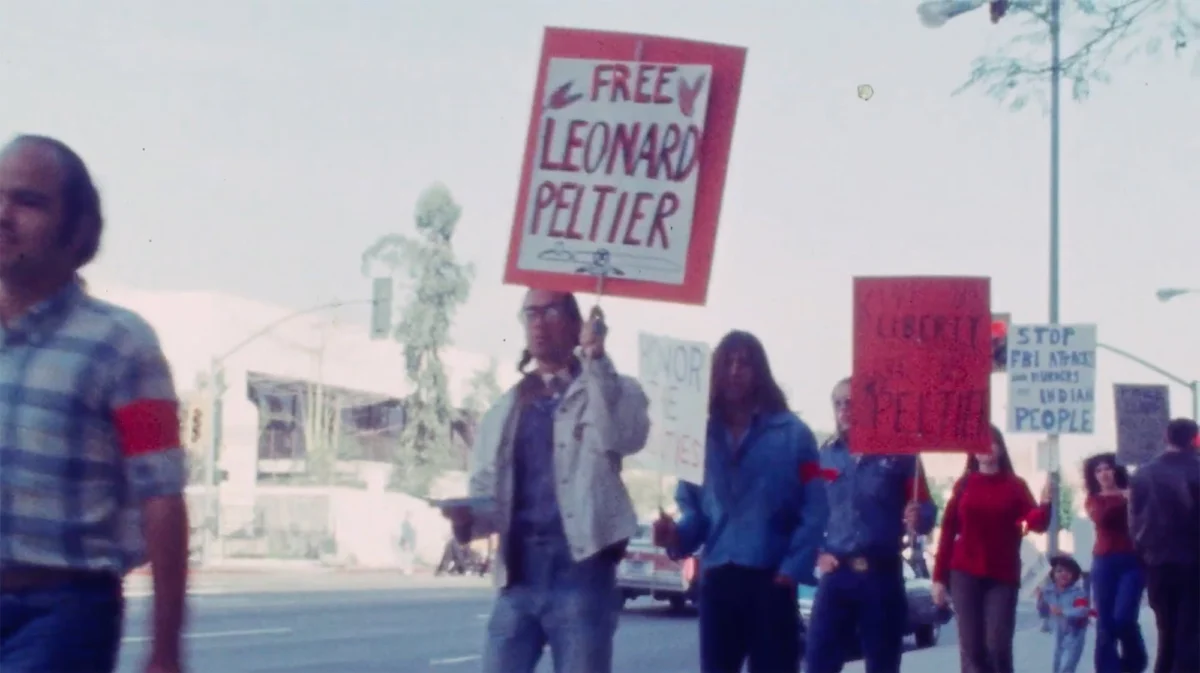
Netflix has officially released the trailer for Free Leonard Peltier, a compelling and deeply researched documentary feature directed by acclaimed filmmakers David France and Jesse Short Bull. The film, which first debuted at the 2025 Sundance Film Festival to critical acclaim, is scheduled for a worldwide streaming release on October 12, 2026. The documentary revisits the tumultuous events surrounding the 1975 shootout on the Pine Ridge Indian Reservation in South Dakota, the resulting conviction of American Indian Movement (AIM) activist Leonard Peltier, and the half-century legal battle that followed.
By combining rare archival footage, contemporary interviews, and visual recreations, the documentary sets out to examine one of the most discredited and divisive criminal convictions in modern American jurisprudence. France and Short Bull anchor their narrative not merely in a single courtroom verdict, but in the broader historical context of Indigenous resistance, federal government surveillance, and the systemic tensions that defined an era.
Background Context of the 1975 Pine Ridge Incident
The roots of the Leonard Peltier case stretch back to the geopolitical and social friction of the 1970s, a period marked by intense activism among Native Americans fighting for treaty rights, sovereignty, and self-determination. The American Indian Movement, founded in Minneapolis in 1968, had emerged as a vocal and militant force challenging federal policies and the corruption surrounding tribal governance on reservations.
In June 1975, the Pine Ridge Indian Reservation in South Dakota was a powder keg. Years of political infighting, poverty, and federal intervention had turned the region into a zone of frequent violence. On June 26, 1975, FBI agents Ronald Coler and Jack Williams entered the reservation to execute an arrest warrant. A shootout ensued, resulting in the deaths of both federal agents and Joe Stuntz, a young Native American man.

The ensuing manhunt was one of the largest in FBI history. While several individuals were initially charged in connection with the deaths, Leonard Peltier—who had fled to Canada before being extradited back to the United States—became the sole person ultimately convicted of first-degree murder for the killings of Coler and Williams. His 1977 conviction in Fargo, North Dakota, has remained a lightning rod for controversy ever since, with defense attorneys, civil rights organizations, and international human rights bodies arguing that the trial was marred by coerced testimony, withheld evidence, and prosecutorial misconduct.
Chronology of a Half-Century Legal Struggle
The timeline of Leonard Peltier’s incarceration and the subsequent fight for his freedom spans nearly five decades, making his case one of the longest-running clemency efforts in modern U.S. history.
- June 26, 1975: A shootout on the Pine Ridge Indian Reservation results in the deaths of FBI agents Ronald Coler and Jack Williams, as well as AIM member Joe Stuntz.
- February 1976: Leonard Peltier is arrested in Canada and subsequently extradited to the United States to stand trial.
- April 1977: An all-white jury in Fargo, North Dakota, convicts Peltier on two counts of first-degree murder. He is sentenced to two consecutive life terms in federal prison.
- 1979–1986: Multiple appeals are filed by Peltier’s legal team, citing newly uncovered ballistics evidence and alleged government suppression of exonerating documents obtained under the Freedom of Information Act. These appeals are systematically denied by federal courts.
- 1990s–2000s: A global advocacy campaign gains momentum. Figures ranging from Nelson Mandela and the Dalai Lama to Archbishop Desmond Tutu and Amnesty International petition U.S. presidents for executive clemency. Despite these appeals, neither President Bill Clinton nor subsequent administrations grant a pardon or commutation.
- January 2025: Facing deteriorating health and mounting pressure from civil rights advocates, federal authorities commute Peltier’s sentence to home confinement. While allowed to leave federal prison after nearly fifty years behind bars, his conviction is not legally overturned, leaving his legal record intact.
- 2025–2026: Free Leonard Peltier premieres at the 2025 Sundance Film Festival, completing a regional film festival circuit before securing global distribution through Netflix for an October 2026 debut.
Production and Collaborative Direction
Free Leonard Peltier marks the first collaborative directorial effort between David France and Jesse Short Bull. Both filmmakers bring distinct and established credentials to the project.
David France is widely recognized for his incisive investigative documentaries that tackle complex social justice issues. His previous works include the Oscar-nominated How to Survive a Plague, which chronicled the early years of the AIDS crisis and the activism of ACT UP; The Death and Life of Marsha P. Johnson; Welcome to Chechnya, an unflinching look at the persecution of LGBTQ+ individuals in Russia; and How to Survive a Pandemic.
Jesse Short Bull brings a vital, localized perspective to the project, having previously co-directed the acclaimed documentary Lakota Nation vs. United States, which explored the history of the Black Hills and the broken treaties affecting the Lakota people.

The production team also includes Paul McGuire, Jhane Myers, and N. Bird Runningwater, whose collective backgrounds in Indigenous storytelling and documentary production ensure that the film addresses its subject matter with cultural nuance and historical accuracy.
Official Responses and Perspectives
The legacy of the Leonard Peltier case continues to generate starkly polarized viewpoints within American institutions and the public sphere.
Representatives for the Federal Bureau of Investigation and associations representing retired agents have historically maintained that Peltier’s guilt was established beyond a reasonable doubt in a court of law. For the law enforcement community, the murder of agents Coler and Williams remains a profound tragedy, and opposition to Peltier’s release has been rooted in the principle that those who kill law enforcement personnel must serve their full sentences without exception.
Conversely, Peltier’s legal teams, civil rights advocates, and Indigenous leaders have consistently argued that the trial was fundamentally compromised. Key pieces of evidence—including ballistics reports that initially suggested the FBI’s weapon matching was inconclusive—were restricted or omitted during the proceedings. Even some prosecutors involved in the original appellate process later expressed reservations about the integrity of the conviction, writing letters suggesting that clemency would be an appropriate resolution given the evidentiary ambiguities.
When Peltier was granted home confinement in January 2025, human rights organizations welcomed the decision as a necessary humanitarian measure, given his advanced age and declining health, while simultaneously reiterating that true justice would require a full exoneration and an overturning of the verdict.

Broader Impact and Implications of the Documentary
Beyond its focus on an individual legal battle, Free Leonard Peltier arrives at a time of renewed national and international reckoning regarding systemic inequities within the American criminal justice system. The film serves as a historical case study on the intersection of state power, political dissent, and minority rights.
By examining the strategies employed by the federal government against the American Indian Movement during the COINTELPRO era, the documentary contextualizes how state agencies monitored and neutralized political dissidents. Analysts suggest the film will reignite discussions regarding prosecutorial accountability, the use of confidential informants, and the hurdles faced by incarcerated individuals seeking post-conviction relief after decades behind bars.
As streaming platforms increasingly become vehicles for deep-dive investigative journalism and historical reassessment, the global release of Free Leonard Peltier on Netflix ensures that a new generation of viewers will confront the complexities of the case. Whether the documentary will influence ongoing legal efforts to fully vacate Peltier’s conviction remains to be seen, but its arrival guarantees that the debate over his legacy will remain at the forefront of public discourse.