Helen Walsh’s Distinctive Cinematic Voice Emerges
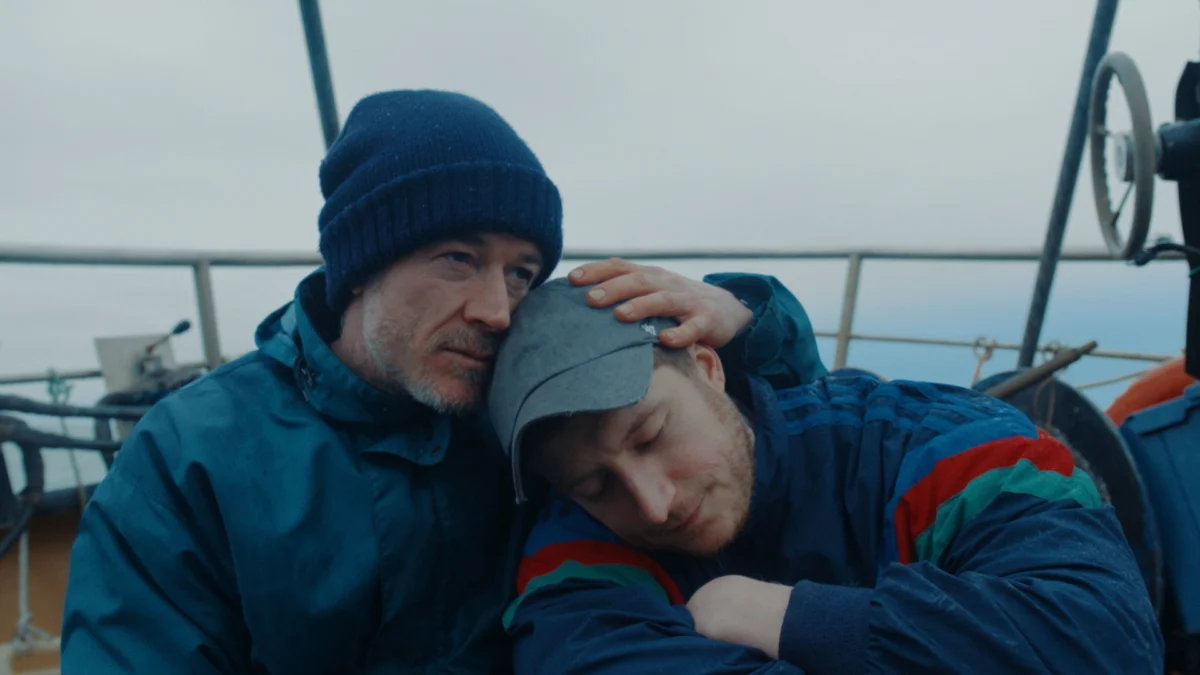
Helen Walsh, a celebrated English novelist known for her unflinching exploration of human psychology and social dynamics in works like Brass and The Lemon Grove, makes a potent transition to filmmaking with On the Sea. Her literary background is palpable in the film’s "fine-grained" approach to character development and its nuanced portrayal of internal conflict, which avoids simplistic narratives in favor of a layered psychological depth. While it shares thematic echoes with Francis Lee’s critically acclaimed 2017 feature God’s Own Country in its depiction of a rugged, elemental gay love story in a rural setting, Walsh’s film meticulously carves its own identity. Instead of the Yorkshire Dales, it immerses viewers in the stark beauty of the North Welsh coast, presenting a distinct milieu where taciturn men are bound by generations of tradition and a stoic resistance to emotional vulnerability. The film premiered at the Provincetown Film Festival, receiving accolades for its "melancholy sensuality" and its powerful, understated performances. With a runtime of 1 hour and 51 minutes, it offers an unhurried, immersive experience that allows its slow-burn potency to resonate deeply.
A Landscape Forged in Hardship: Setting the Scene in North Wales
The choice of North Wales as the primary setting for On the Sea is not merely aesthetic; it is integral to the film’s narrative and thematic core. The coastal waters, with their icy seawater and rough currents, serve as a constant, unforgiving presence, mirroring the harsh realities faced by the characters. This region, often characterized by its resilient working-class communities and deep-rooted cultural identity, provides a fertile ground for exploring themes of tradition, community, and the quiet struggles of everyday existence. The atmospheric charge of the film is palpable, imbued with a "palpable sense of place" that informs every interaction and decision.
The story centers on Jack (Barry Ward), a middle-aged mussel farmer, and his younger brother Dyfan (Celyn Jones). Their shared enterprise is a "hardscrabble" family business, passed down through three generations of men enduring the backbreaking work of hand-raking mussel beds in bitterly cold winds. This meticulous attention to the quotidian labor in harsh conditions draws a direct line to Luchino Visconti’s 1948 Italian neorealist classic, La Terra Trema. Visconti’s film depicted the desperate struggles of dirt-poor Sicilian fishermen against exploitative economic systems, and Walsh’s On the Sea echoes this tradition by highlighting the contemporary challenges faced by small-scale fisheries against larger commercial operations. The economic precarity of their livelihood is not just background noise; it intensifies the pressures on the characters, narrowing their choices and amplifying the stakes of any personal deviation from established norms. The constant physical demands and the ever-present threat to their business underscore a fundamental truth: in such environments, survival often takes precedence over personal fulfillment or emotional expression.
The Weight of Masculinity and Suppressed Desire
Central to On the Sea is an exploration of the restrictive codes of masculinity that dominate these coastal communities. For generations, men like Jack and Dyfan have been expected to embody stoicism, strength, and unwavering dedication to their demanding work. Emotional expression, particularly vulnerability or non-conformity, is often viewed with suspicion or outright condemnation. This cultural backdrop creates an environment where "pleasure, passion and desire have been dulled," pushed beneath the surface by the relentless grind of labor and the fear of social ostracism. The film expertly illustrates how these "set in stone" codes stifle individual expression and complicate the pursuit of authentic relationships.
Jack’s journey is a profound illustration of this internal conflict. As a man in his middle age, rooted in his community and bound by his marriage, he finds himself unexpectedly drawn to Daniel (Lorne MacFadyen), an itinerant deckhand. The attraction between them is initially "so veiled it’s almost undetectable," a testament to the pervasive self-denial and the unspoken rules governing their world. Daniel, less tied to the community’s expectations, is "more obvious with his glances and the hints he drops into their terse conversations," acting as a quiet catalyst. Barry Ward’s performance as Jack is critical here, conveying with remarkable subtlety the "unease of a man reading and responding to the stranger’s signals even as he feigns indifference, fearful of disrupting his life." His face becomes a canvas for a "million conflicts," particularly the longing for a more fulfilling life juxtaposed with the sudden reminder that courageous choices might have led to different paths.
The film meticulously builds the tension of their burgeoning relationship, culminating in a pivotal moment where Daniel physically confronts Jack after a public humiliation. This act of aggression, paradoxically, "spurs Jack into acting on his desires." Their initial sexual encounters are depicted as "fumbling, nervous and almost feral," gradually evolving into moments of "increasingly tender and uninhibited" intimacy. However, the external pressures remain. Daniel, seeking more than clandestine hookups, asks, "What is this?"—a question that Jack, trapped by his reality, struggles to answer beyond the stark declaration, "This is my town. I live here." The "emotional inarticulacy of both men is quietly bruising," highlighting the profound difficulty of navigating personal desires within a rigid social framework. This struggle is not just about a gay relationship; it’s about the universal human desire for authenticity in the face of deeply entrenched social expectations.
Intertwined Lives: A Web of Relationships and Conflict
The narrative of On the Sea is not solely focused on Jack and Daniel’s relationship but is intricately woven into a broader tapestry of familial and community dynamics. The friction between Jack and his brother Dyfan, for instance, runs deep. Dyfan’s resentment stems from a combination of factors: Jack’s recent battle with cancer, which forced Dyfan to keep the mussel business afloat solo, and his perception of Jack being "too soft" on their sons, particularly Jack’s "surly teenage son Tom" (Henry Lawfull). Dyfan’s hostility escalates into homophobic insinuations, strategically deployed over a family dinner, revealing a toxic mix of personal prejudice and opportunistic business maneuvering. He aims to "buy out Jack’s share of the business," exploiting Jack’s vulnerability and the societal disapproval of his perceived transgressions. This portrayal of Dyfan highlights how economic pressures can amplify existing prejudices, making the pursuit of personal happiness even more perilous.
Jack’s marriage to Maggie (Liz White) forms another crucial emotional anchor. Their history as "high school sweethearts" and his genuine love for her make his internal struggle all the more poignant. The film portrays the "crushing sadness" of his regret, knowing the "hurt he stands to cause" his wife. Maggie, initially unaware, becomes an increasingly central figure as Dyfan’s insinuations mount. Her journey from unsuspecting wife to someone who must confront a devastating truth is handled with remarkable sensitivity. The script suggests that her "rock-solid strength of character kicks in" once she moves past her initial anger, hinting at a complex and dignified response that avoids melodramatic clichés. This is a vital counterpoint to Jack’s internal turmoil, providing a glimpse into the profound impact of his choices on those he loves.
The accident involving old-timer Bernie (Danny Webb), who loses a leg after Tom is indirectly responsible, serves as a significant plot catalyst. Jack’s decision to take charge of Bernie’s care, initially through "firm insistence" and later voluntarily, creates the circumstances for Daniel’s involvement and the subsequent development of their bond. Bernie, a vulnerable figure, becomes a nexus for the community’s obligations and an unexpected facilitator of Jack’s personal awakening. Even Jack’s estranged son, Tom, undergoes a transformation. His initial "hostile distance" gives way to a "late display of loyalty that silences his uncle," suggesting a generational shift or a nascent understanding that transcends rigid traditionalism. A tender scene where Tom’s girlfriend (Leisa Gwenllian) offers friendly words to an isolated Jack further underscores the film’s nuanced exploration of support and connection in unexpected places.
The Art of Subtlety: Cinematography and Score
Helen Walsh’s directorial vision is profoundly supported by the film’s exceptional technical craftsmanship. Cinematographer Sam Goldie’s work is instrumental in establishing the film’s distinctive aesthetic and emotional tone. Goldie employs "gritty textures and searching close-ups" that not only capture the harshness of the North Welsh environment but also create an "alternate landscape" on the characters’ faces. Jack’s "lined, stubbly face, his calloused hands, bulky wool sweaters and water-slicked rubber waders" become visual metaphors for a life of toil and suppressed emotion. The camera frequently lingers, allowing the unspoken emotions to play out in subtle gestures and expressions, reinforcing the "emotional inarticulacy" that defines many of the characters.
The visual palette predominantly features "cloudy skies," casting much of the film in shadow and contributing to its melancholic atmosphere. This somber lighting scheme is occasionally punctuated by rare moments of visual poetry, such as a "rare patch of sunlight seen from underwater during a swim off Bernie’s boat." This fleeting glimpse of light can be interpreted both literally as a brief respite from the prevailing gloom and symbolically as a flicker of hope, a memory of a happier past with Maggie, or a yearning for freedom and clarity. The ambiguity of such moments invites viewers to engage actively with the film’s subtext.
Complementing the visuals is Felix Rösch’s "delicate score." The music, infused with "regionally inflected sounds," subtly enhances the film’s emotional depth without ever overpowering the narrative. It provides an undercurrent of "melancholy sensuality," supporting the quiet intensity of the drama and allowing the characters’ raw feelings to surface without relying on overt dialogue. The score acts as an emotional compass, guiding the audience through the complexities of Jack’s internal world and the nuances of his relationships. Together, the cinematography and score create an immersive and deeply felt cinematic experience that lingers long after the credits roll.
Broader Cultural Resonance and Implications
On the Sea contributes significantly to the evolving landscape of LGBTQ+ representation in cinema, particularly by situating a queer love story within a working-class, rural context. Films like God’s Own Country have paved the way, but Walsh’s film further enriches this subgenre by exploring the challenges of desire and authenticity not just for young, emerging identities, but for middle-aged individuals deeply embedded in their communities and existing family structures. It moves beyond simplistic "coming out" narratives to delve into the complex implications of self-discovery and the pursuit of truth later in life, highlighting the societal pressures that can force individuals to live in quiet desperation.
The film also offers a poignant social commentary on the enduring power of tradition and the economic realities that shape human lives in remote communities. It implicitly critiques the rigidity of "old-fashioned norms" and the suspicion directed towards any "digression," while simultaneously acknowledging the resilience and deep-seated loyalties that define these places. The characters’ struggles are not merely personal; they are symptomatic of broader societal issues, including the decline of traditional industries, the challenges of maintaining a livelihood in a competitive global economy, and the slow, often painful evolution of social acceptance.
While On the Sea avoids the facile optimism of a conventional "happy ending," Walsh’s subtle writing ensures that the conclusion offers a sense of "comfort and even a kind of peaceful deliverance." The narrative, while taking "some unsurprising turns sketched out in foreshadowing," also presents "less expected developments," particularly in the nuanced reactions of characters like Maggie and Tom. This refusal to tie up every loose end neatly, instead embracing the complexities and ambiguities of life, is a hallmark of truly insightful storytelling. The film’s lasting impression lies in its ability to stay with the viewer, prompting reflection on themes of love, loss, courage, and the enduring human quest for authenticity in the face of profound adversity. It is a powerful reminder that even in the bleakest landscapes, moments of connection and personal truth can ultimately lead to a form of quiet liberation.