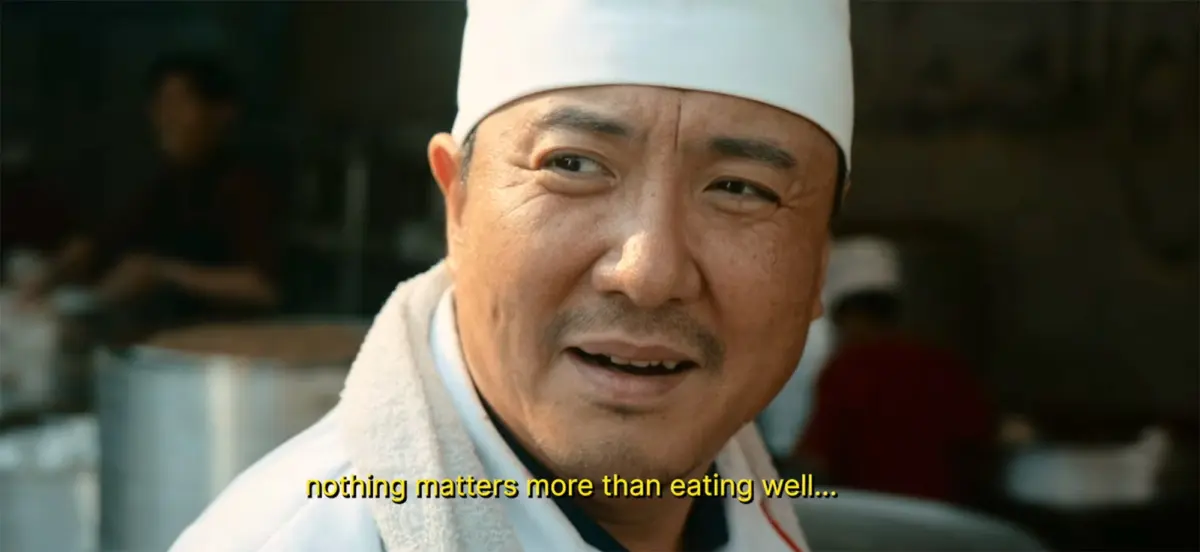
Well Go USA has officially released the domestic trailer and promotional poster for the acclaimed Chinese box office phenomenon Once Upon a Time in the Middle East. Directed by acclaimed filmmaker Wen Muye, the anti-war drama represents China’s official entry into the international feature film category for the upcoming Academy Awards. Originally titled Welcome to the Loong Restaurant in Mandarin, the film enjoyed a lucrative theatrical run in its home country after opening in August 2026. Following its domestic success, the North American distribution will commence via Well Go USA in select theaters starting October 9, 2026.
The narrative centers on Xu Fu, portrayed by prominent Chinese box office star Shen Teng. Driven by the need to support his family and clear mounting financial debts, Xu travels to the Middle East to find economic stability. Alongside restaurant manager Ma Junsheng, played by Jiang Qiming, Xu takes over a struggling eatery in the fictional metropolis of Bahata. Through relentless hard work and a dedication to culinary hospitality, the two men transform the failing establishment into a thriving local hub. However, the fragile stability of their new lives is abruptly shattered when sudden geopolitical conflict engulfs the city, with the United States military positioned as the primary antagonistic force in the regional skirmish.
Unlike traditional war epics that predominantly focus on tactical combat, grand military heroics, and geopolitical strategy, Wen Muye’s film deliberately shifts its narrative lens toward the humanitarian toll borne by ordinary civilians. When heavy fighting breaks out and threatens the surrounding neighborhood, Xu Fu chooses to transform his restaurant into an emergency sanctuary. He risks his life to protect a vulnerable group of local orphans and stranded residents trapped in the crossfire. Driven by a central thematic message emphasizing basic human connection and the universal comfort of food, the story highlights resilience, empathy, and sacrifice amid devastating circumstances.

Production Background and Creative Leadership
The film brings together a notable creative team led by director Wen Muye, who previously earned widespread critical and commercial acclaim for his work on the hit dramas Dying to Survive and Nice View. The screenplay was co-written by Wen Muye, Lang Qunli, and Wei Zhong, combining sharp character development with tense dramatic stakes. Behind the scenes, the production was spearheaded by prominent producer Ning Hao alongside Mohamed Osama, ensuring a collaborative cross-cultural approach to the depiction of the Middle Eastern setting.
The extensive international cast features a blend of prominent Chinese and regional actors, including Omar Sharif, Aarif Lee Zhi-ting, and Sherif Sabby. This casting strategy reflects an effort to ground the fictional city of Bahata with authenticity, balancing the star power of lead actor Shen Teng with a diverse supporting ensemble. Shen, widely recognized for his comedic prowess in previous blockbusters, delivers a dramatic pivot in this feature, anchoring the film’s emotional core as a compassionate, philanthropic chef pushed to extraordinary lengths.
Chronology of Release and Awards Season Trajectory

The journey of Once Upon a Time in the Middle East from production to international distribution follows a carefully coordinated timeline designed to maximize both commercial returns and awards season eligibility:
- August 2026: The film officially premieres in theaters across China, quickly establishing itself as a massive box office hit and generating intense domestic discourse.
- September 2026: Industry committees select the feature as China’s official submission to the Academy Awards, positioning it as a major contender in the international feature film race.
- October 7, 2026: Well Go USA debuts the official United States theatrical trailer and primary marketing materials, including the official US poster.
- October 9, 2026: The film begins its theatrical rollout across North American markets, managed by Well Go USA.
Box Office Context and International Reception
The film’s theatrical run in China demonstrated the immense pulling power of its lead actor and the enduring audience appetite for high-production-value national dramas. By tapping into themes of international migration, labor, and localized survival, the project resonated deeply with moviegoers navigating contemporary economic anxieties. Industry analysts note that selecting a film with strong populist commercial backing, rather than a strictly traditional arthouse feature, reflects a strategic shift by Chinese selection committees aiming to capture broader academy voting blocs through universally understood emotional narratives.
At the same time, the film’s overt anti-war and anti-American framing has drawn significant scrutiny from international media analysts. By positioning U.S. intervention as a destabilizing force within a fictionalized Middle Eastern urban center, the film engages directly in geopolitical commentary through popular cinema. This narrative choice aligns with broader trends in recent high-budget Chinese cinema, where domestic productions increasingly center Chinese protagonists acting as moral agents and protectors within global crisis zones.

Implications for the Academy Awards Race
As China’s official submission for the 99th Academy Awards, Once Upon a Time in the Middle East enters a highly competitive international race. Securing a slot on the shortlist requires navigating the tastes of the Academy’s international feature film executive committee, which evaluates entries based on artistic merit, storytelling craftsmanship, and cultural resonance.
While the film benefits from polished technical execution, massive box office momentum, and strong performances, its specific political framing may influence how international voting bodies receive it. Films that overtly critique Western foreign policy often face polarized reception among Western critics, yet they frequently succeed in resonating with audiences looking for perspectives outside traditional Hollywood narratives.
With Well Go USA slated to bring the film to North American audiences this week, industry observers will closely monitor its box office performance outside of Asia. The localized release will test whether the emotional resonance of a chef protecting orphans in a war zone can transcend cultural and geopolitical divides, ultimately determining if the box office sensation can translate its domestic triumph into a viable Oscar campaign.