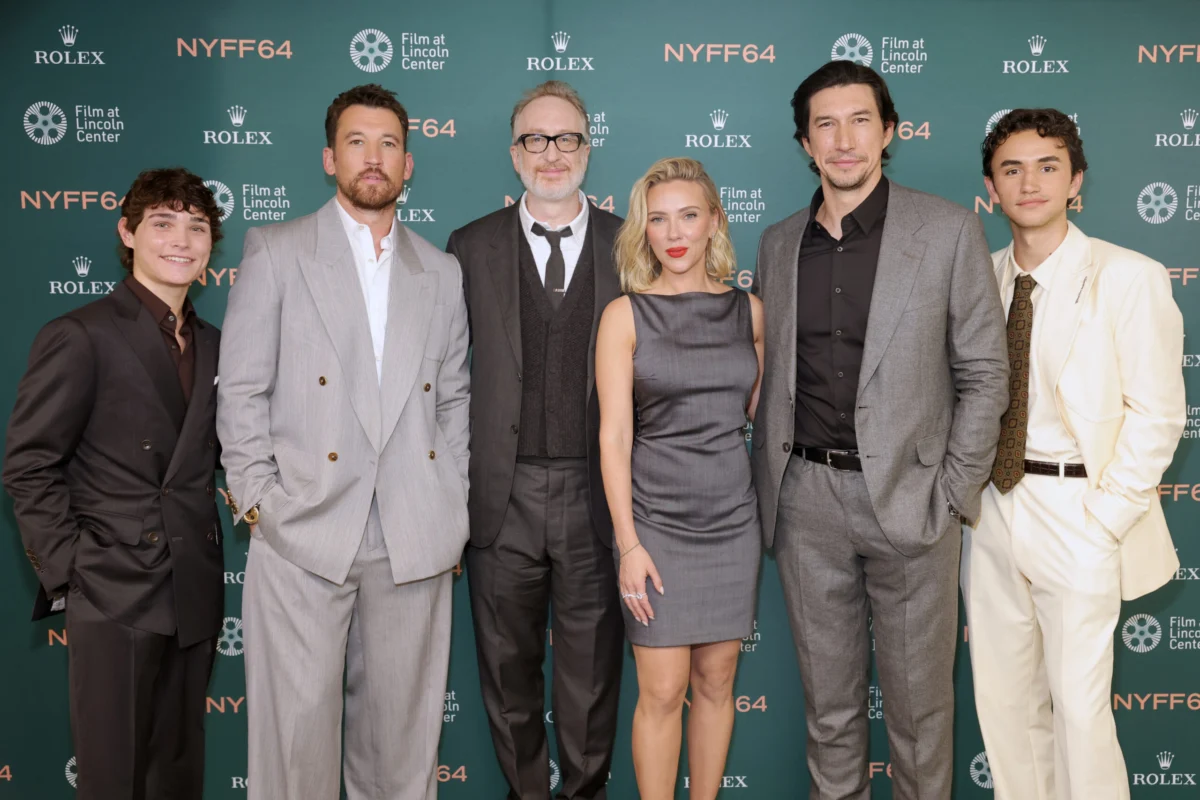
The 2026 New York Film Festival (NYFF) opened its highly anticipated slate this week with the North American premiere of James Gray’s latest cinematic venture, Paper Tiger. The film, a tension-filled crime thriller set against the gritty backdrop of 1980s Queens, represents a departure from the director’s recent foray into intimate, strictly autobiographical storytelling. Starring Miles Teller, Adam Driver, and Scarlett Johansson, the feature explores the disintegration of a family unit under the pressure of criminal entanglement, specifically a high-stakes moneymaking scheme that forces the protagonists into the orbit of the Russian mob.
A Shift in Narrative Strategy
For audiences familiar with James Gray’s filmography, particularly his 2022 semi-autobiographical drama Armageddon Time, Paper Tiger serves as a thematic pivot. While both films share a geographic and temporal DNA—rooted in the director’s personal history in New York City—Gray has been adamant that the new project is not a direct sequel.
During a post-screening discussion at the festival, Gray clarified the distinction. “This one is much different,” he noted. “I think that one [Armageddon Time] was much more close to the facts of the case. There are many things that my brother, I’m sure, will recognize as from our life, but it’s not a documentary.”
The director emphasized a stylistic shift, moving away from the observational realism of his previous work toward a genre-focused framework. Gray expressed an intention to lean into a “Hitchcockian” aesthetic, prioritizing dramatic intensity and suspense over the linear constraints of memoir. By adopting a pulpier, more volatile narrative structure, Gray aims to challenge the audience’s expectations of the domestic crime drama.
The Cast and Character Dynamics
The success of Paper Tiger hinges on the interplay between its three leads. Miles Teller portrays the family patriarch, Irwin, a man whose ambition is eclipsed by the illicit opportunities brought to him by his older brother, Gary, played by Adam Driver. Scarlett Johansson rounds out the core trio as Hester, whose internal struggle mirrors the broader instability of the household.
The casting choices reflect a deliberate attempt to capture the desperation of 1980s New York. Adam Driver’s performance has been noted for its volatile energy, serving as the catalyst for the film’s central conflict. Meanwhile, newcomer Roman Engel, who plays the youngest of the sons, provides the necessary grounding for the story. Engel noted that Gray’s direction was unconventional, focusing on personal authenticity rather than rigid performance markers. “He would mostly just try to tell me to be myself on set and don’t try to live someone else’s experience,” Engel shared regarding his collaboration with the director.
Historical and Cultural Context of the 1980s
To understand the gravity of the plot, one must consider the socio-economic climate of New York in the 1980s, a decade marked by both the rise of the city’s financial dominance and the simultaneous expansion of organized crime syndicates. The Russian mob, which features prominently as an antagonistic force in the film, saw a significant increase in its operational capacity in the United States during the late 1980s. This period serves as more than just a aesthetic backdrop; it functions as a pressure cooker that accelerates the moral decline of the characters.
Gray utilizes this period as a metaphor for the pursuit of the American Dream, albeit one corrupted by the shadow of criminality. The film reflects a recurring preoccupation in Gray’s work: the inevitable collision between familial loyalty and external, systemic pressures.
The Philosophy of the Open Ending
One of the most debated elements of Paper Tiger is its lack of a traditional resolution. As the film reaches its climax, the fates of Irwin, Gary, and Hester remain unresolved, leaving the audience to grapple with the uncertainty of their futures.
In a Q&A held Friday night at the NYFF, Gray addressed this departure from standard narrative tropes. “I love the idea that the life of the movie goes on past the movie,” he stated. “I love the open ending. I love the idea that the film exists past the boundaries of the screen and the time.”
This narrative choice is rooted in the director’s belief that reality rarely offers the clean, cathartic conclusions typically demanded by Hollywood studios. By refusing to provide a clear answer regarding the characters’ fates, Gray forces the viewer to engage with the ambiguity of the human condition. He argues that in life, few individuals ever possess the “whole story,” and by mirroring this in film, he invites a more profound, if unsettling, connection between the audience and the characters.
Industry Implications and Distribution
The premiere at the New York Film Festival is a significant milestone for Neon, the studio responsible for the film’s distribution. Following the critical success of previous festival-to-theater releases, Neon has slated Paper Tiger for a calculated rollout. The film is scheduled to arrive in select U.S. theaters on November 13, 2026, followed by a wider release on November 20.
Industry analysts are monitoring the film closely, as it represents a test of the “prestige thriller” market. With a budget estimated to be in the mid-range—typical for character-driven dramas of this nature—the film’s performance will likely serve as a barometer for the appetite of domestic audiences for non-franchise, auteur-led cinema.
Comparative Analysis: Then and Now
When comparing Paper Tiger to the broader body of work from James Gray, it is evident that while the director is moving toward higher-intensity dramas, he remains tethered to the theme of the “cautionary tale.” In his early films like Little Odessa or The Yards, Gray explored the immigrant experience and the cyclical nature of neighborhood violence. Paper Tiger acts as a refinement of these earlier interests, stripping away some of the romanticism often associated with the mob genre and replacing it with an intense focus on the personal stakes of his characters.
Furthermore, the film serves as a response to the changing landscape of cinema. In an era dominated by intellectual property and large-scale spectacle, Gray’s insistence on "personal connection" as the engine of drama is a deliberate counter-programming effort. He has frequently stated that “love is everything,” and through the medium of a crime thriller, he attempts to demonstrate that the most intense suspense often arises from the potential loss of that connection.
Conclusion and Future Outlook
As the 2026 New York Film Festival progresses, Paper Tiger has emerged as a cornerstone of the event’s programming. Its reception will likely influence the discourse surrounding the upcoming awards season, particularly regarding screenplay and performance categories.
The film stands as a testament to the evolution of James Gray, a director who has successfully navigated the transition from strictly personal, memory-based storytelling to the creation of complex, genre-bending narratives. By blending the raw, lived-in reality of his past with the high-stakes, dramatic intensity of a modern thriller, Gray has produced a work that invites deeper inquiry into the nature of family, morality, and the lingering echoes of our choices long after the credits roll.
For the audience, the film serves as both a gripping narrative and a sobering reminder of the volatility inherent in the pursuit of success. As the November release dates approach, the industry will look to see if this blend of introspection and suspense resonates with the broader public, further cementing Gray’s status as a master of the contemporary American drama.