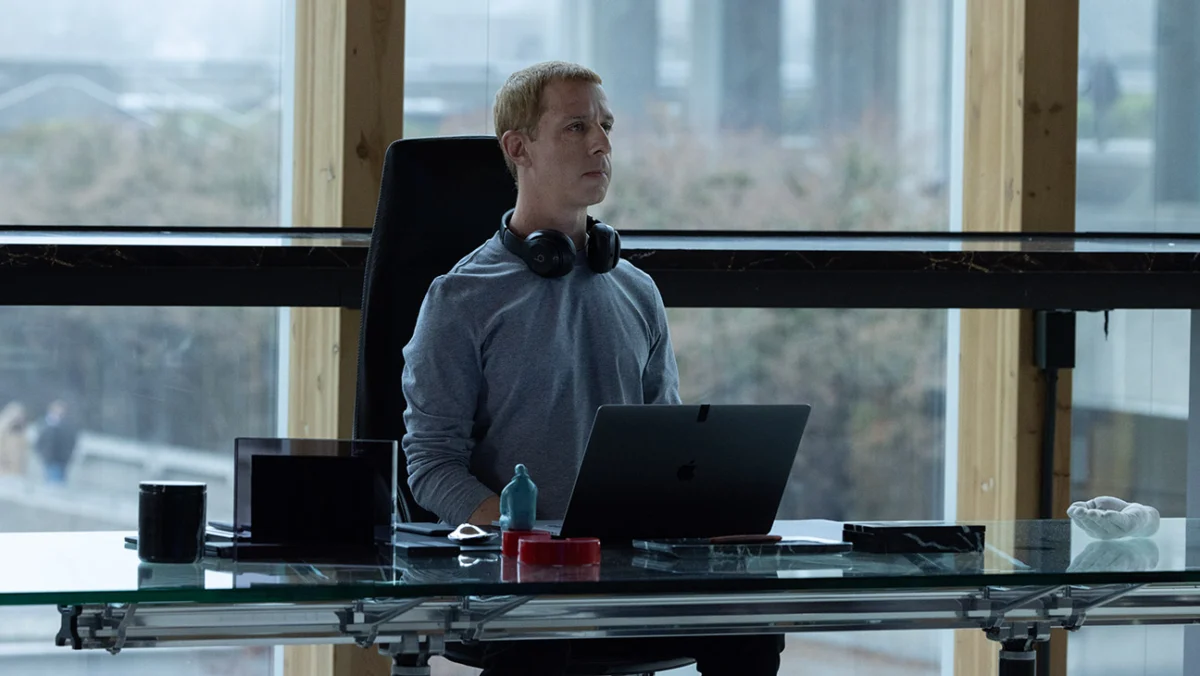
The production of The Social Reckoning, the highly anticipated follow-up to the 2010 cinematic landmark The Social Network, has become the subject of intense industry discourse following recent revelations regarding lead actor Jeremy Strong’s unconventional performance process. Director Aaron Sorkin, who returned to helm this exploration of the Meta CEO’s later career, disclosed that Strong’s total commitment to the "method" acting technique created a distinct and occasionally jarring atmosphere on set, effectively mirroring the perceived social distance of the real-life Mark Zuckerberg.
The film, which is scheduled for a wide theatrical release on October 9, shifts the narrative focus from the collegiate origins of Facebook to the turbulent 2021 period, specifically chronicling the whistleblower leaks and the subsequent investigative reporting conducted by The Wall Street Journal in their landmark "The Facebook Files" series. As the production prepares to debut, the focus has shifted from the screenplay to the transformative—and often isolating—process Strong utilized to embody one of the world’s most scrutinized technology executives.
The Anatomy of a Method Performance
In a detailed interview with The New York Times, Aaron Sorkin provided a rare window into the internal dynamics of the set. Sorkin described Strong not merely as an actor playing a part, but as a performer who meticulously constructs a psychological barrier between himself and his colleagues to maintain the integrity of his portrayal.
"Jeremy does a tremendous amount of work before he shows up on your set," Sorkin noted. "He did not speak in his own voice on the set or walk the way Jeremy walks."
This dedication meant that the standard social camaraderie typically found on a film set—the casual conversations during downtime, the communal meals at the craft services table, or the lighthearted interactions between takes—was entirely absent for the lead performer. Sorkin took the proactive step of briefing the supporting cast, which includes high-profile actors such as Jeremy Allen White and Mikey Madison, on what to expect. He explicitly advised them that Strong would be maintaining his character’s persona throughout the duration of production.
Sorkin’s directive to the cast was clear: "He’s not going to be yucking it up with you between takes. He is going to treat you the way he imagines Mark treats the people around him." By normalizing this distance, Sorkin aimed to foster an environment where the on-screen tension felt earned rather than manufactured.
Chronology of The Social Reckoning Development
The project, which carries the weight of following a film that won three Academy Awards and achieved near-mythic status in contemporary cinema, has been in development for several years. The trajectory of the production can be mapped through the following timeline:
- September 2021: The Wall Street Journal publishes "The Facebook Files," providing the foundational research and narrative framework for the film’s central conflict.
- Early 2024: Casting announcements confirm Jeremy Strong as the lead, marking a significant departure from Jesse Eisenberg, who defined the role in the 2010 film.
- Summer 2025: Principal photography commences. Reports from the set begin to circulate regarding the intensive nature of the production.
- August 2026: Strong speaks with GQ, revealing he reached out to Mark Zuckerberg personally to discuss the ethical weight of the project.
- September 2026: Aaron Sorkin confirms the intensity of the on-set environment in promotional interviews.
- October 9, 2026: Global theatrical release.
The Responsibility of Portrayal
Jeremy Strong, known for his rigorous and often intense approach to roles—most notably in his Emmy-winning turn as Kendall Roy in HBO’s Succession—has been vocal about the apprehension he feels regarding this specific character. Taking over a role previously occupied by Jesse Eisenberg presents a unique set of challenges, particularly given the evolution of public perception toward Zuckerberg over the last fifteen years.
During his recent profile in GQ, Strong acknowledged the existential weight of the assignment. "It feels incredibly fraught to talk about the movie," Strong stated. He emphasized that his primary goal was to "understand and defend his point of view and fight his fight," regardless of the public’s existing biases against the Meta CEO.
In an unprecedented move, Strong revealed that he took the initiative to contact Zuckerberg directly after being cast. While he stopped short of disclosing the contents of the CEO’s response, the act of reaching out underscores the actor’s commitment to "veracity." He acknowledged that the gesture might have caused anxiety among the production’s legal and publicity teams at Sony, but he maintained that the personal outreach was necessary for his internal understanding of the man he was tasked to represent.
Contextualizing the "Facebook Files"
The subject matter of The Social Reckoning is markedly different from the aspirational and competitive nature of The Social Network. By focusing on the 2021 whistleblower disclosures—which included internal documents suggesting that Meta was aware of the negative impact of its platforms on teenage mental health and political discourse—the new film occupies a darker, more corporate-centric space.
The financial and social implications of these events were profound. Following the release of the documents, Meta faced a massive wave of regulatory scrutiny, a rebranding campaign that shifted the company’s focus to the "Metaverse," and a significant decline in public trust. By casting an actor with Strong’s reputation for internalizing conflict, Sorkin appears to be signaling that the film will prioritize the psychological toll of corporate crises over the tech-bro bravado that characterized the 2010 original.
Analytical Perspective: The Ethics of Immersion
The debate surrounding "method acting" has intensified in recent years, with some industry veterans arguing that it can create toxic work environments, while others, like Sorkin, defend it as a necessary tool for achieving artistic truth.
From a production standpoint, Sorkin’s decision to manage the expectations of his cast suggests a sophisticated understanding of human group dynamics. By framing Strong’s detachment as a professional necessity rather than a personal slight, the director mitigated the risk of interpersonal conflict on set. This approach aligns with the growing trend in Hollywood of hiring "intimacy coordinators" and on-set consultants to manage the emotional well-being of performers, though the "method" approach remains a distinct, individualistic path.
The implications for The Social Reckoning are significant. If the film succeeds, it will likely be because of the stark, icy tension that Strong was able to generate through his isolation. If the audience connects with the portrayal, it will validate the idea that to capture the essence of a modern corporate titan, an actor must effectively divorce themselves from the collective human experience of the film set.
Broader Impact and Future Outlook
As the release date approaches, the industry is watching to see if The Social Reckoning can replicate the cultural impact of its predecessor. While The Social Network acted as a foundational text for the "Silicon Valley" genre, the sequel is positioned as a critique of the mature, global power that these platforms have since acquired.
The inclusion of actors such as Jeremy Allen White and Mikey Madison suggests a balance between the high-stakes, dialogue-heavy drama that is a hallmark of a Sorkin production and a more modern, visceral style of filmmaking. The film’s success will be measured not just by its box office returns, but by its ability to navigate the complex, often polarizing reality of Meta’s current position in the global economy.
For Jeremy Strong, the role represents a pivotal moment in his career, further cementing his reputation as an actor who does not merely perform a role but inhabit it entirely. Whether his performance will be viewed as an act of profound dedication or a cautionary tale remains to be seen. However, as Aaron Sorkin noted, "You cannot argue with the results." As theatergoers prepare for the October debut, the final product will ultimately serve as the definitive verdict on whether this high-pressure, immersive process was the correct lens through which to view one of the most transformative figures of the digital age.