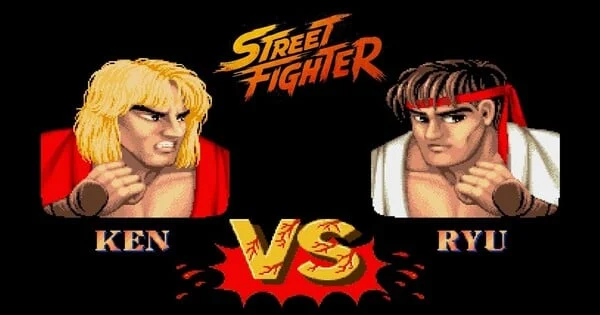
The release of this new promotional footage marks a significant milestone in a long-gestating project that seeks to translate CAPCOM’s legendary fighting game franchise into a high-budget cinematic experience. Directed by Kitao Sakurai, the film is scheduled to arrive in theaters on October 16, 2026. The trailer focuses on the core dynamic of the franchise: the storied, volatile rivalry between the iconic combatants Ryu, portrayed by Andrew Koji, and Ken Masters, played by Noah Centineo. They are joined by Callina Liang, who steps into the role of the enigmatic Chun-Li.
A New Cinematic Direction
The narrative of this iteration, set in 1993, moves away from the campy tone of the 1994 live-action adaptation. Instead, it positions the World Warrior Tournament as a high-stakes conspiracy. According to the official synopsis provided by Paramount, Ryu and Ken are forced to reconcile their strained relationship to survive a broader, more dangerous plot that threatens to consume them both. This shift toward a grounded, character-driven thriller reflects a modern industry trend of "prestige" video game adaptations, following the critical and commercial success of similar projects like HBO’s The Last of Us and various high-profile game-to-film conversions.
The Challenging Production Timeline
The path to the screen for this Street Fighter film has been characterized by significant corporate shifts and creative pivots. The project’s development timeline highlights the complexities of modern studio distribution and creative management:
- April 2023: Legendary Entertainment officially acquires the film and television rights to the Street Fighter intellectual property from CAPCOM, signaling a long-term commitment to the franchise.
- June 2024: Directors Danny and Michael Philippou, initially attached to the project, depart citing scheduling conflicts with their own film Bring Her Back.
- February 2025: Kitao Sakurai is confirmed as the new director, bringing his distinct visual style—known for his work on The Eric Andre Show and Bad Trip—to the project.
- March 2025: Sony Pictures, the film’s original distribution partner, removes the project from its release calendar, creating uncertainty regarding the film’s theatrical future.
- December 2025: A major pivot occurs when Paramount Pictures and Legendary sign a comprehensive multi-year distribution deal, effectively saving the film and positioning it as the inaugural title under their new partnership.
- August 2025: Principal photography commences in Australia, signaling that the project had finally secured the necessary infrastructure to move forward.
- October 16, 2026: The finalized global release date.
This timeline underscores the volatility of Hollywood production schedules. The shift from Sony to Paramount is particularly noteworthy; it represents a major realignment in the distribution landscape, where Legendary—a production powerhouse—sought a more favorable home for its high-budget, tentpole-style projects.
Historical Context of the Street Fighter Brand
The Street Fighter franchise is one of the most successful and enduring pillars of the gaming industry. Since its inception, it has served as a cultural touchstone that extends far beyond the arcade cabinet. The upcoming film is tasked with rectifying the franchise’s checkered history in live-action cinema.
The 1994 film starring Jean-Claude Van Damme as Guile and Raúl Juliá as M. Bison remains a cult classic, though it was largely panned by critics for its loose adaptation of the source material. Subsequent efforts, such as 2009’s Street Fighter: The Legend of Chun-Li, failed to gain critical or commercial traction. Furthermore, digital-first experiments like Street Fighter: Assassin’s Fist and Street Fighter: Resurrection, produced by Machinima, demonstrated that there is a dedicated appetite for more faithful, grounded iterations of the characters’ origins.
The contrast between the 1994 film and the 2026 project is stark. While the 1990s era emphasized an ensemble action-movie aesthetic, the 2026 version appears to be leaning into the "street level" combat and the psychological weight of the characters’ training. This reflects the broader evolution of CAPCOM’s own brand, which has successfully rebranded Street Fighter 6 as a modern, stylish, and highly technical competitive platform.

Market Implications and Distribution
The collaboration between Paramount and Legendary is not merely about one film; it is a strategic maneuver intended to maximize global reach. By excluding China from the deal—where Legendary East maintains localized control—the studios are tailoring their distribution strategy to accommodate the unique regulatory and market environments of the world’s two largest cinema-going regions.
The decision to market this film as the first under the new partnership suggests that Paramount views Street Fighter as a "priority franchise." If the film succeeds, it could lead to an expansive cinematic universe, potentially incorporating other characters from the deep CAPCOM roster. Industry analysts have noted that the success of the film will likely hinge on whether it can appeal to the massive, multi-generational audience of the games, which recently saw a resurgence with the June 2023 launch of Street Fighter 6.
Data-Driven Outlook
The gaming landscape surrounding the film is currently at a peak. Street Fighter 6 has enjoyed a sustained period of popularity, bolstered by constant updates, new character additions, and its recent launch as a tentpole title for the Nintendo Switch 2 in mid-2025. By aligning the release of the film with the continued lifecycle of the current game, the production team is leveraging a synergy that is rarely achieved in the industry.
Statistical analysis of current trends in video game adaptations suggests that projects which maintain close creative oversight from the original developers—in this case, CAPCOM—tend to perform significantly better with both critics and fans. Given that CAPCOM has been deeply involved in the development of the Street Fighter film since the acquisition of rights, there is a strong expectation of narrative fidelity.
Conclusion: The Stakes of the World Warrior
The Street Fighter film represents a high-stakes test for all involved. For Legendary, it is a chance to prove they can turn a legacy gaming property into a sustainable, long-term film franchise. For Paramount, it is an opportunity to anchor their distribution slate with a globally recognizable brand.
The inclusion of a 1993 setting is a calculated choice; it honors the era in which the franchise reached its peak of global influence, essentially serving as a "period piece" for the fighting game genre. By focusing on the internal conflict between Ryu and Ken—the duality of the "wandering warrior" versus the "wealthy heir"—the film moves away from simple "good vs. evil" tropes and toward a more complex exploration of the martial arts ethos.
As the October 2026 release date approaches, the industry will be watching closely to see if this project can break the long-standing "curse" of video game adaptations. With a clear direction, a seasoned director in Kitao Sakurai, and a robust distribution network behind it, the film stands as one of the most anticipated releases of the 2026 calendar year. Whether it can effectively capture the "fists, fate, and fury" promised in the trailer remains to be seen, but the infrastructure for a success story is, for the first time, firmly in place.