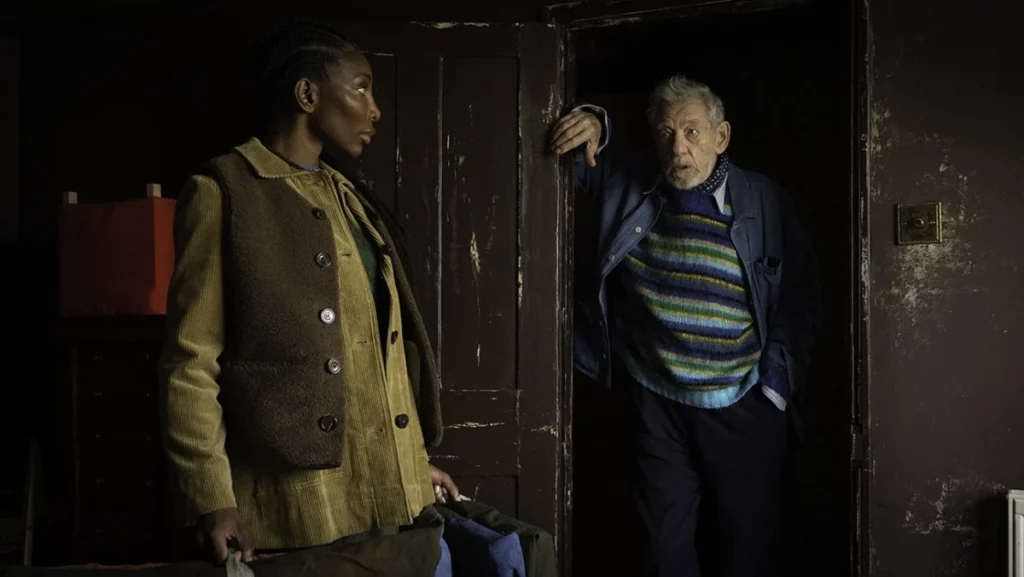
The film, an Uruguayan-Argentine co-production, serves as a dark, stylized comedy that centers on the sudden death of an affluent Argentine woman in her seaside villa in Punta del Este. The narrative pivot point arrives when the deceased’s will reveals a condition that upends the lives of her surviving relatives: her entire estate is bequeathed not to her family, but to her prize-winning Afghan hound, Prince. Jaime, the woman’s longtime live-in butler and former lover, is appointed as the dog’s legal guardian, effectively becoming the gatekeeper to the family fortune.
The World Premiere and Festival Context
The film is set to receive its world premiere at the 70th edition of the BFI London Film Festival (LFF) on Thursday, Oct. 8. As a premier cultural event, the LFF provides a global platform for international cinema, and the inclusion of Prince highlights the growing international profile of Uruguayan filmmaking. Alpha Violet, a Paris-based sales agent known for representing high-concept international titles, has secured the distribution rights, signaling strong confidence in the film’s potential for global appeal.
The festival circuit serves as a critical launchpad for independent features. Historically, the BFI London Film Festival, which draws hundreds of thousands of attendees and industry professionals, functions as a barometer for critical reception in the European market. By premiering in London, Borgia’s work enters a competitive landscape that prizes both narrative innovation and cultural specificity.
A Narrative Built on Social Observation
The film’s thematic architecture is rooted in the social dynamics of Punta del Este, a resort city that serves as a microcosm for Latin American wealth inequality. Borgia has stated that his screenplay was born from a period of intense observation after relocating from Montevideo. In the coastal town, the juxtaposition between the working class—those who provide essential services—and the wealthy elite creates a unique atmosphere of proximity and distance.
Jaime, portrayed by the acclaimed actor Roberto Suárez, represents this ambiguity. His role as a "live-in butler and former lover" defies traditional social classifications. This lack of definition is central to the film’s tension; as the estranged son and granddaughter of the late Isabel move into the villa, the dynamic shifts from a domestic routine into a high-stakes power struggle. The house becomes a claustrophobic pressure cooker, forcing Jaime to confront not only the greed of the relatives but also his own estranged son, Diego, and a past he has long sought to suppress.

Production and Technical Execution
The production of Prince involved a meticulous approach to casting and logistics. Federico Borgia, who previously co-directed Clever (2015) and The Champion of the World (2019) with Guillermo Madeiro, moved into his first solo directing project with a clear vision for the film’s aesthetic.
Roberto Suárez was the director’s first choice for the lead role. Known for his extensive background in theater, Suárez reportedly contributed significantly to the script’s evolution. His involvement suggests a collaborative process where the dialogue and character beats were refined through iterative drafts. The supporting cast, including Maitina De Marco and Esteban Bigliardi, was assembled through a blend of established professional connections and casting outreach within Argentina, ensuring a diverse range of performances that balance the absurdity of the plot with grounded, human reactions.
One of the most notable technical challenges—and triumphs—of the production was working with the film’s titular star. While Afghan hounds are notoriously difficult to train compared to breeds like the Border Collie or the German Shepherd, the production team identified a specific dog that possessed a temperament unusual for the breed. The director noted that the dog was remarkably professional on set, with the only notable incident being a brief tumble into the pool that required extensive grooming to reset the canine’s aesthetic.
Fact-Based Analysis of the Film’s Themes
The core premise of Prince—the inheritance of property by a pet—is a trope that serves as a vehicle for a broader social commentary on avarice. In legal reality, the concept of a "pet trust" or naming an animal as a beneficiary is a complex, albeit not entirely unheard-of, practice in international estate law. By anchoring his film in this legal absurdity, Borgia critiques the transactional nature of familial relationships among the wealthy.
The film examines how the presence of money acts as a catalyst for conflict. When the dog becomes the primary obstacle to the relatives’ inheritance, the animal is transformed from a beloved pet into a commodity, and ultimately, a target. This creates an ironic inversion where the animal exhibits more "humanity" than the human characters who are blinded by greed.
Furthermore, the "class divide" mentioned in the synopsis is a recurring motif in Latin American cinema. The villa itself acts as a character, representing a fading luxury that requires the maintenance of the working class. When that power dynamic is disrupted by the death of the owner, the subsequent struggle for control exposes the fragility of the social order.

Chronology of Development
The film’s journey from conception to premiere follows a deliberate path:
- Formative Years: Borgia’s childhood interest in dog shows and the image of the "lawyer-like" groomer established the visual seeds for the film.
- The Relocation Phase: The transition from Montevideo to Punta del Este provided the environmental context and social landscape required for the script.
- Pre-Production: The writing process, involving feedback from lead actor Roberto Suárez, saw the script evolve into its current "kitsch comedy" format.
- Production: Filming in the coastal villa setting allowed for the creation of a claustrophobic, high-contrast atmosphere.
- Post-Production: Fine-tuning the balance between black humor and drama, culminating in the selection for the BFI London Film Festival.
Implications for the Uruguayan Film Industry
The success of Prince at a major international festival like LFF represents a significant milestone for Uruguayan cinema. The country’s film industry has been steadily gaining recognition for its ability to produce highly stylized, low-to-mid-budget films that punch above their weight on the global stage.
By handling the distribution through a firm like Alpha Violet, the film is positioned to reach territories beyond South America, including key markets in Europe and North America. This exposure is vital for the sustainability of local directors who operate within the independent film ecosystem. If Prince performs well, it may pave the way for increased international co-production opportunities for Uruguayan creators.
Future Outlook and Closing Reflections
While Federico Borgia remains characteristically humble regarding his future projects—often noting the "addictive" nature of filmmaking that keeps him returning to the craft despite the uncertainty of the process—his latest work reflects a maturation of his artistic voice.
Prince is not merely a film about a dog; it is a clinical observation of how individuals behave when their security is threatened. By grounding the narrative in the specific geography and social strata of Punta del Este, Borgia has created a story that, despite its localized roots, addresses the universal themes of inheritance, greed, and the complicated, often undefined bonds that connect people.
As the film makes its debut in London, the audience and critical response will determine its trajectory in the coming awards season and theatrical release cycle. However, the rigor behind the film’s production and the deliberate nature of its narrative structure suggest that Prince will be a significant entry in the 2026 festival calendar, marking a bold solo debut for its director. The blend of high-concept satire and intimate character drama positions it as a work that is likely to resonate with viewers interested in the darker, more cynical side of human nature, all while maintaining the visual flair that the director has clearly cultivated.