The upcoming release of the animated feature film Ray Gunn represents the culmination of a multi-decade creative journey for Academy Award-winning director Brad Bird. Developed as a passion project that predates some of the filmmaker’s most iconic works, including The Iron Giant and The Incredibles, the movie introduces audiences to a retrofuturistic universe blending classic film noir conventions with science fiction. Distributed as a Netflix Original film, Ray Gunn is scheduled to make its global streaming debut on December 18, 2026, backed by production studio Skydance Animation.
Main Facts of the Production and Narrative
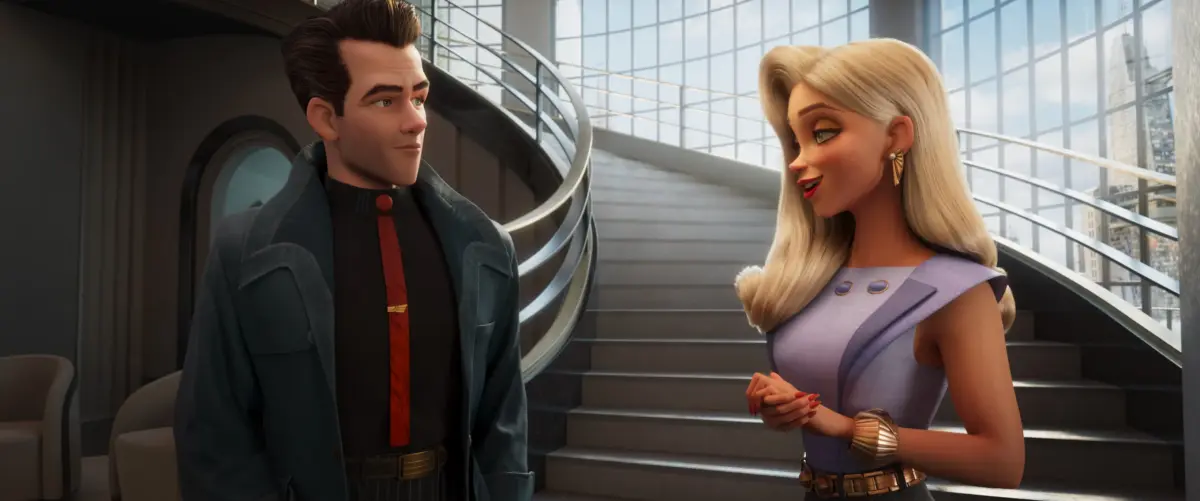
Set in the sprawling, art deco-inspired metropolis of Metropia, Ray Gunn follows the professional and personal trials of Raymond "Ray" Gunn, an ex-cop operating as a freelance private investigator. Voiced by Sam Rockwell, Gunn navigates a gritty, AI-surveilled urban landscape where flying vehicles populate the skies and aliens occupy a marginalized social standing as second-class citizens.
Gunn’s commitment to personal integrity frequently compromises his financial stability. He operates alongside his long-time partner, Eye-Ra Kadok—a cyclopean, tripod-legged investigator voiced by Tom Waits—while dodging asset repossessions due to unpaid overhead expenses. The trajectory of Gunn’s career shifts when he is retained by Arnold Dom, portrayed by Bobby Cannavale. Dom suspects marital infidelity by his fourth wife, Venus Nova, a volatile and high-profile multimedia megastar voiced by Scarlett Johansson, whose persona draws stylistic parallels to contemporary pop icons.
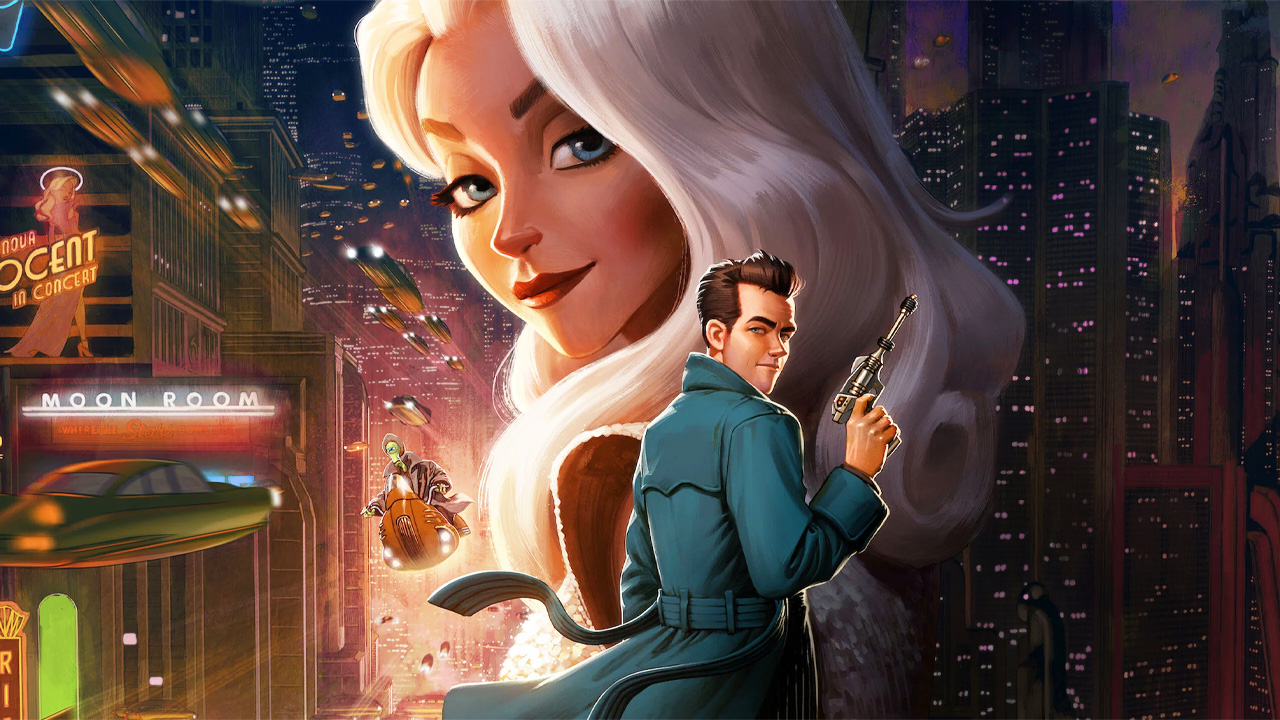
Following the initial surveillance assignment, Nova’s record label, Megamax—led by CEO Barry, voiced by Alan Tudyk—hires Gunn to act as her official bodyguard. The studio attempts to preemptively manage potential public relations crises ahead of a major album release. As individuals within Nova’s immediate circle begin to experience violent deaths, Gunn and Kadok are drawn into a complex conspiracy involving organized crime figures, high-tech weaponry, and institutional secrets capable of destabilizing Metropia.
Chronology and Development History
The conceptual origins of Ray Gunn extend back many years within Brad Bird’s professional timeline, developing well before the production cycles of his critically acclaimed animated features for major studios. Originally envisioned as a traditional two-dimensional hand-drawn animated project, the film faced prolonged development hurdles, shifting studios and formats over successive decades.
Skydance Animation eventually acquired the property, integrating it into their growing slate of feature-length productions. Under Skydance, the project transitioned fully into a three-dimensional computer-animated format while retaining its distinct 1939-inflected art deco aesthetic and stylistic homages to classic Hollywood cinema. The long gestation period allowed Bird to refine the narrative alongside co-writer Matthew Robbins, incorporating thematic elements that reflect both Golden Age detective stories and modern socio-economic anxieties.
Supporting Data and Visual Design
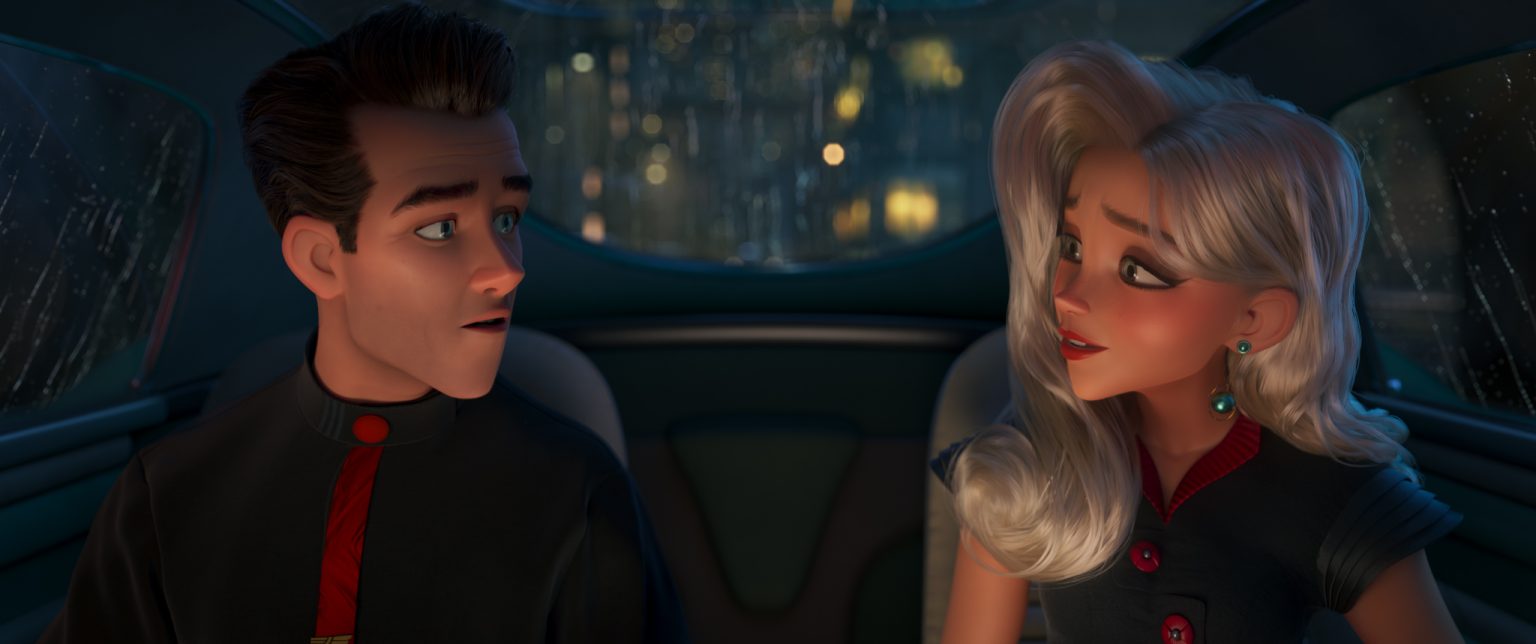
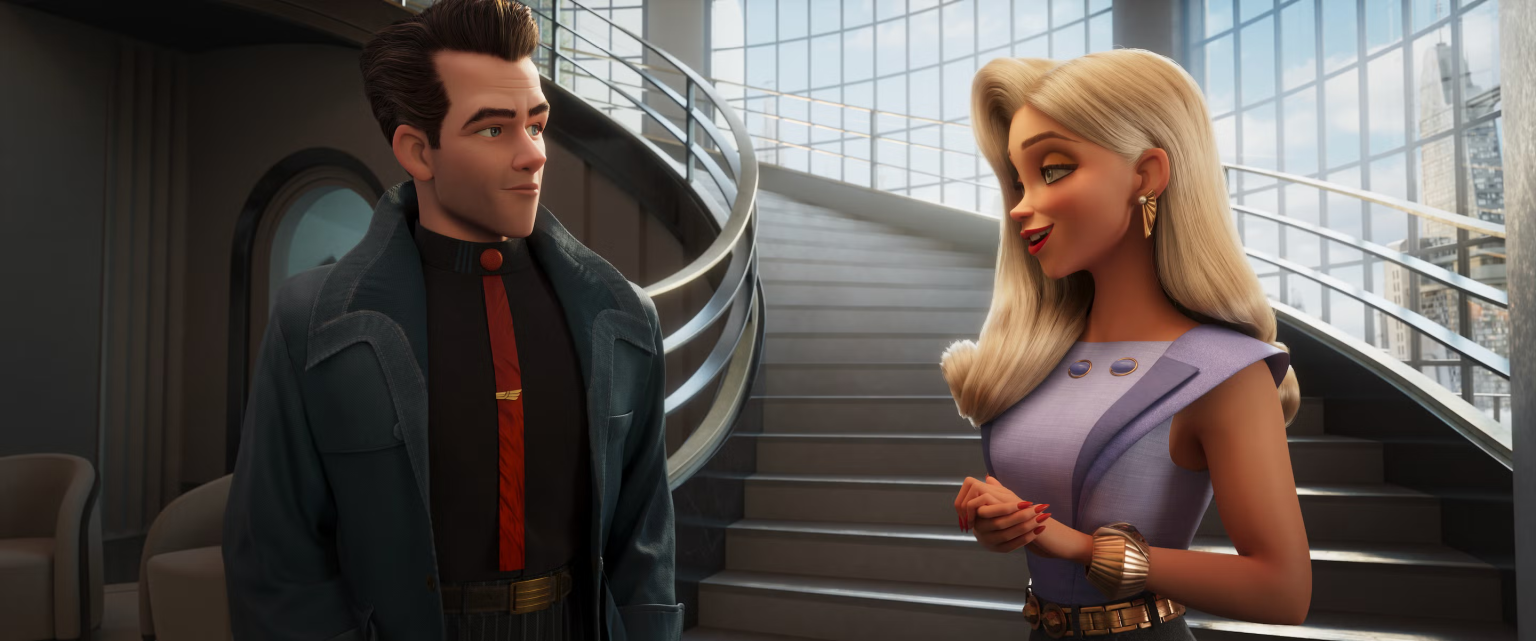
As Skydance Animation’s fourth major theatrical or streaming release, Ray Gunn marks a distinct stylistic departure from the studio’s preceding catalog. Visual execution was spearheaded by lead character designers Tony Fucile, Teddy Newton, and Devonn Wilson. The aesthetic synthesis combines the geometric, stylized human proportions reminiscent of The Iron Giant with exaggerated anatomical shapes, creating a diverse visual taxonomy that distinguishes human citizens from the alien population of Metropia.
The film’s auditory landscape is anchored by a swinging, jazz-infused original score composed by Michael Giacchino, a frequent collaborator with Brad Bird. Giacchino’s musical arrangement functions as a structural narrative device, reinforcing the pacing of stealth sequences, action set pieces, and dialogue-driven investigatory scenes. The production design deliberately utilizes lighting and shadow techniques characteristic of traditional 1940s and 1950s noir cinema, including high-contrast chiaroscuro lighting and rain-slicked urban environments.
Official Responses and Cast Integration
The voice cast features prominent industry talent, reflecting Skydance Animation’s strategy to secure high-profile actors for animated features. Sam Rockwell, Scarlett Johansson, Tom Waits, Bobby Cannavale, Alan Tudyk, and Matt Berry—who voices a slug-like mob boss analog named Signor Ferrari—contributed vocal performances designed to echo archetype characters from foundational noir pictures such as The Maltese Falcon, Casablanca, Chinatown, and The Big Sleep.
While representatives for Netflix and Skydance Animation have positioned Ray Gunn as a premier family-friendly gateway into classic cinema genres, industry analysts have noted the calculated balance struck between mature thematic trappings and accessible storytelling parameters. The narrative deliberately addresses systemic discrimination, corporate exploitation, and urban corruption, though reviewers have observed that these heavy motifs operate primarily as narrative scaffolding rather than fully realized socio-political commentaries.
Broader Impact and Industry Implications
The release of Ray Gunn on Netflix carries significant implications for the landscape of high-budget original animation outside of traditional studio monopolies like Disney and Pixar. By demonstrating a willingness to finance auteur-driven genre experiments, Skydance Animation and Netflix are testing audience appetite for mature animation concepts tailored to multi-generational demographics.
Critics have noted that while the film’s structural fidelity to traditional noir conventions offers a sophisticated alternative to standard family animation fare, the constraints of maintaining a broadly accessible rating prevented the filmmakers from fully exploring the darker implications of the narrative’s xenophobia and anti-corporate themes. Nevertheless, the film establishes a high-water mark for Skydance’s visual capabilities, setting a new technical and artistic benchmark for the studio’s future output.
Ray Gunn is scheduled for a worldwide release exclusively on Netflix on December 18, 2026.