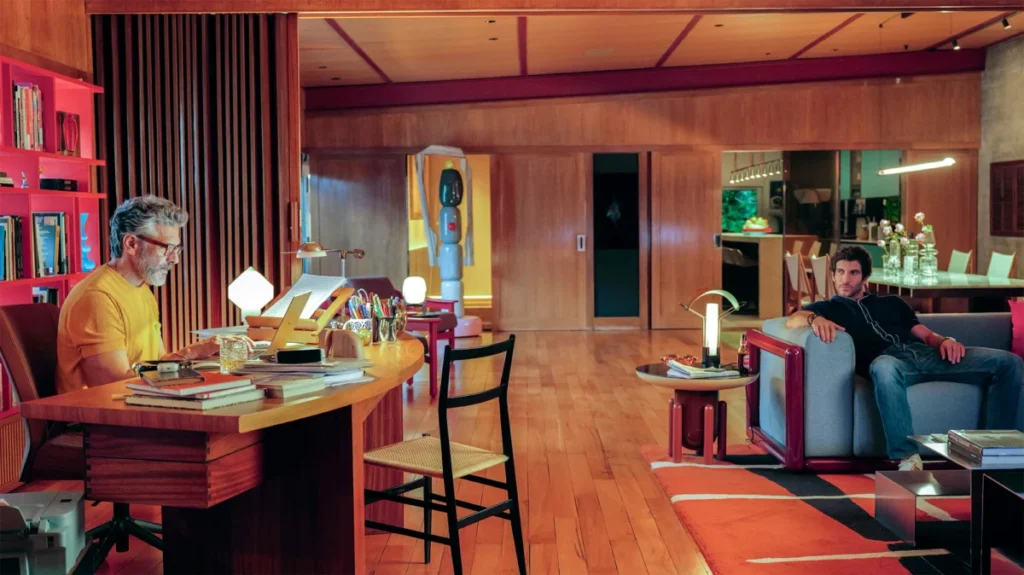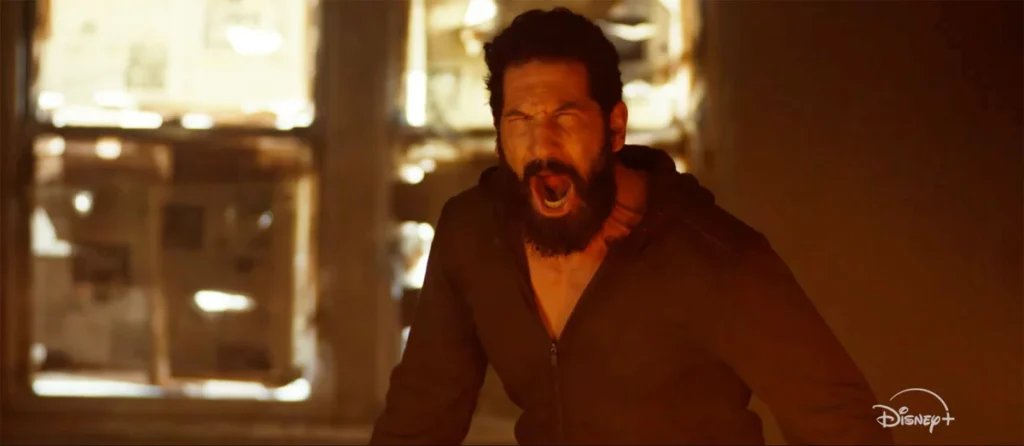
Republic Pictures has officially released the first promotional footage for DreamQuil, an upcoming science-fiction psychological thriller that explores the dark side of artificial intelligence, domestic alienation, and corporate wellness programs. The film marks the feature-length directorial debut of acclaimed American photographer and filmmaker Alex Prager, who transitioned to narrative filmmaking following an extensive background in conceptual photography, short films, and music video direction.
Following its initial world premiere earlier this year at the 2026 SXSW Film Festival, the movie has steadily generated anticipation among genre enthusiasts and indie film critics alike. Driven by a prominent ensemble cast led by Elizabeth Banks and John C. Reilly, the newly unveiled trailer offers audiences a unsettling glimpse into a near-future society where technological solutions to human emotional distress carry unforeseen and deeply sinister consequences. While Republic Pictures has confirmed that the picture is slated for a theatrical release later in 2026, an exact release date has not yet been finalized.
Plot Premise and Narrative Framework
Set in a not-so-distant future defined by severe environmental degradation and chronically poor air quality—forcing much of the populace to conduct their daily lives almost entirely within virtual environments—DreamQuil centers on Carol, a disillusioned and exhausted mother and career woman. Played by Elizabeth Banks, Carol finds herself profoundly dissatisfied with the trajectory of her existence. She struggles intensely to forge meaningful connections within her strained marriage to her husband, Gary, and experiences a pervasive sense of emotional isolation regarding her family life.
As the suffocating monotony of her routine begins to push her toward the brink of marital dissolution and a psychological breaking point, Carol seizes an opportunity for self-reclamation. She enrolls in DreamQuil, an avant-garde digital wellness retreat touted by its creators as an advanced AI-driven program capable of rebalancing the human psyche from the inside out. Promising users a transformative recovery period, the retreat utilizes cutting-edge immersive technologies to mend mental wear and tear.

However, the narrative takes a chilling turn when Carol returns to the physical world, expecting to resume her place at home. Instead, she discovers that a synthetic duplicate—a sophisticated robotic version of herself designated as "Carol 2"—has been deployed by the corporation to maintain domestic continuity in her absence. Compounding her psychological horror is the startling realization that her husband, Gary, portrayed by John C. Reilly, appears to prefer the compliant, optimized robotic iteration over his actual wife. As the boundaries between artificial replication and human identity blur, Carol finds herself locked in a nightmarish struggle to reclaim her life, her family, and her very sense of self.
Cast and Creative Personnel
DreamQuil boasts an impressive supporting cast that enhances its psychological and speculative weight. Alongside Banks and Reilly, the film features performances by Juliette Lewis, Sofia Boutella, Kathryn Newton, Lamorne Morris, Toby Larsen, and Anna Marie Dobbins. The inclusion of such recognizable talent has drawn considerable industry attention to the indie production, highlighting its crossover appeal within the science-fiction and thriller genres.
Behind the camera, the film is guided by Alex Prager, whose distinct visual style as a photographer heavily informs the aesthetic composition of the project. Prager co-wrote the screenplay alongside Vanessa Prager. The production team is similarly star-studded on the business side, featuring production credits from Elizabeth Banks, Max Handelman, Vincent Landay, Michael Mendelsohn, Alex Prager, and Alison Small. Their collaborative efforts aim to bridge the gap between high-concept speculative fiction and grounded, character-driven domestic drama.
Chronology and Festival Reception
The journey of DreamQuil from concept to distribution reflects the standard trajectory of high-profile independent cinema finding its footing through major festival circuits. The project first entered public consciousness during its acquisition phase, driven by the star power of its lead actors and the distinct artistic vision of its director.

In early 2026, the film secured a coveted premiere slot at the SXSW Film Festival, an event renowned for launching innovative genre cinema and platforming boundary-pushing independent filmmakers. Screened before audiences of industry professionals, critics, and sci-fi aficionados, the film sparked discussions regarding its theatricality, visual design, and thematic commentary on modern wellness culture. Following the festival circuit, Republic Pictures secured distribution rights, positioning the film for a broader commercial rollout before the conclusion of 2026.
Thematic Exploration of AI and Domestic Alienation
At its core, DreamQuil taps into contemporary anxieties surrounding the rapid integration of artificial intelligence into daily human existence. While the narrative is framed as a science-fiction thriller, industry analysts note that it mirrors broader societal discussions regarding the commodification of mental health, the reliance on automated solutions for complex emotional struggles, and the erosion of authentic interpersonal communication.
The premise of an algorithmic wellness program subverting the life of its participant serves as a modern extension of classic speculative tropes, echoing cinematic traditions that examine identity theft, doppelgängers, and corporate intrusion into the private sphere. By contextualizing this within a world where environmental collapse has forced humanity indoors and into virtual spaces, the film constructs a claustrophobic backdrop that amplifies the psychological distress experienced by its protagonist.
Furthermore, the character dynamics—particularly the ease with which Gary accepts a robotic substitute for his wife—offer a biting commentary on domestic complacency and the modern desire for frictionless, conflict-free relationships. This thematic layer elevates the narrative beyond standard creature-feature or tech-horror tropes, grounding the suspense in the deeply relatable fear of obsolescence within one’s own family.
Industry Implications and Future Outlook

The release of the trailer by Republic Pictures initiates the final marketing phase for DreamQuil, setting the stage for its anticipated 2026 theatrical rollout. For Alex Prager, the film represents a crucial milestone as she transitions from her celebrated career in fine-art photography and short-form media to the demands of narrative feature filmmaking. Her background in constructing hyper-stylized, emotionally ambiguous photographic tableaux is expected to lend the film a unique visual identity, setting it apart from traditional studio thrillers.
For Elizabeth Banks and John C. Reilly, both of whom have built diverse filmographies spanning comedy, drama, and high-profile blockbusters, DreamQuil offers an opportunity to subvert audience expectations within a dark, speculative framework. Their involvement, alongside a strong ensemble cast featuring Juliette Lewis, Sofia Boutella, and Kathryn Newton, underscores the viability of mid-budget independent science fiction in the current cinematic landscape.
As moviegoers await a definitive release date from Republic Pictures later this year, industry observers will be monitoring how audiences respond to the film’s theatrical pacing, stylized direction, and cautionary tale of digital wellness run amok. Whether DreamQuil achieves breakout success or serves as a niche arthouse curio, its arrival signifies the continued cultural appetite for stories that interrogate the psychological toll of an increasingly automated world.