Chusei Sone’s Transition from Nikkatsu Roman Porno to Mainstream Youth Drama
Chusei Sone’s career trajectory leading up to "Scars of the Sun" provides crucial context for understanding the film’s unique aesthetic and thematic concerns. Sone was a prominent director during the Nikkatsu Roman Porno era, a period from 1971 to 1988 when Nikkatsu, one of Japan’s oldest film studios, pivoted to producing softcore pornography films to stave off bankruptcy. However, these films, often made on tight schedules and limited budgets, were not merely exploitative; they frequently served as a creative outlet for directors to explore complex social issues, psychological dramas, and avant-garde cinematic techniques under the guise of erotic cinema. Sone, along with other notable directors like Tatsumi Kumashiro and Kōji Wakamatsu, used the Roman Porno format to push boundaries, often imbuing his works with a raw, improvisational energy and a keen eye for human behavior.
His move to Toei, a major studio known for its diverse output including yakuza films, samurai epics, and family-friendly fare, represented a significant shift. For Sone, it meant adapting his distinctive style—honed in a genre that prioritized freedom of expression and episodic storytelling—to a more conventional, yet still artistically challenging, youth drama format. This transition was part of a broader trend in Japanese cinema where directors from niche genres sought opportunities in mainstream productions, bringing their unique perspectives to new audiences. "Scars of the Sun," therefore, can be viewed as a fascinating intersection of Sone’s established artistic sensibilities and the demands of a larger studio production, attempting to bridge the gap between art-house sensibilities and commercial viability.
Narrative Framework: A Fragmented Portrait of Youthful Disillusionment
The film’s narrative immediately plunges the audience into a world of restless energy and underlying tension. It opens with a high-octane car race, a visceral introduction to the volatile lives of its young protagonists. This is quickly followed by Shuhei Mogi attending the funeral of a friend who has died in a traffic accident, accompanied by his companions Takeshi and Tatsuo. Their presence at the somber event feels jarringly out of place, leading to their swift expulsion by the bereaved family, who implicitly blame them for the tragedy. This initial sequence establishes a sense of alienation and societal disapproval that permeates the film.
Later, Shuhei seeks solace at his regular snack bar, "EDEN," where he learns that his estranged father, Rintaro, a celebrated writer, has been nominated for the prestigious Japan Literary Prize. Rather than reacting with pride or joy, Shuhei descends into heavy drinking, a clear indication of the deep-seated distance and unresolved issues that separate him from his father, his home, and perhaps even himself. This early characterization sets the stage for the emotional core of the film, suggesting a generational chasm and a profound sense of personal unmooring.
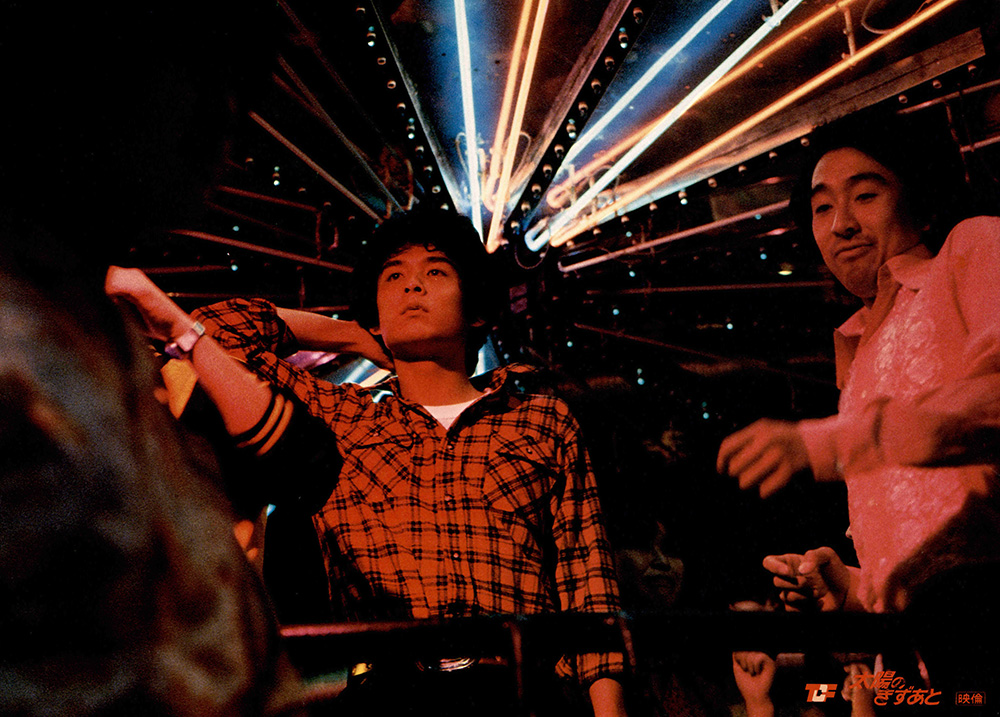
The plot thickens with the unexpected arrival of Shuhei’s younger brother, Koji, whom he hasn’t seen in eleven years, since their parents’ divorce separated them. Koji, now living with their mother in Hakodate, has come to Tokyo for winter cram school and introduces Shuhei to his classmate, Kaori. Shuhei integrates them into his existing circle of friends, including Karasawa and Takeshi. The group’s activities oscillate between the neon-lit disco nights of Akasaka and the more serene, yet equally charged, atmosphere of a beach house in Onjuku, Chiba. However, this reunion, initially promising, gradually devolves into a tense confrontation. Koji struggles to assimilate into Shuhei’s fast-paced, hedonistic world, while Kaori finds herself drawn to the charismatic yet enigmatic leader of the group. The narrative thus explores themes of sibling rivalry, unresolved family wounds, jealousy, and the pervasive aimlessness that defines this cohort of young adults.
Thematic Depth and Societal Reflection in Early 1980s Japan
"Scars of the Sun" is particularly fascinating as a youth drama precisely because it often resists conventional narrative explanations. The characters are constantly engaged in a flurry of activities—fighting, drinking, swimming, dancing, driving, and general revelry—yet the motivations behind their actions remain stubbornly opaque. This narrative ambiguity, which might be perceived as a weakness due to a seemingly messy and at times carelessly assembled plot, paradoxically aligns with the very lives it depicts. These are young people adrift in a society that, despite its economic prosperity in the early 1980s, offered them little in terms of clear purpose or stable family structures. They lack the emotional vocabulary to articulate their anger, loneliness, or frustration, leading their behavior to become the primary form of dramatic expression, even when the surrounding plot lacks traditional coherence.
The early 1980s in Japan represented a period of immense economic growth and modernization, often referred to as the "bubble economy" era. While this brought prosperity, it also led to significant social changes, including shifts in family dynamics, increased urbanization, and a growing sense of alienation among some segments of the youth. Traditional values were slowly eroding, and a new generation grappled with an abundance of material wealth but a potential scarcity of spiritual or emotional direction. "Scars of the Sun" captures this zeitgeist, portraying a youth grappling with a void, filling it with transient pleasures and confrontational interactions. The aimlessness of Shuhei and his friends can be seen as a direct reflection of this societal backdrop, where the pressures of academic success and corporate life often overshadowed personal fulfillment and emotional well-being.
Cinematic Craftsmanship: Visuals, Sound, and Editing
Technically, "Scars of the Sun" immediately establishes a distinctive atmosphere through Akira Shiizuka’s striking cinematography and a potent use of sound. The opening sequences featuring car races are among the film’s most impressive elements. The public-road action possesses a dangerous, almost unauthorized energy, with vehicles swerving, colliding, and approaching highway entrances in ways that generate palpable tension. These sequences, meticulously captured, imbue the film with a physical charge that persists even when the dramatic narrative occasionally falters, serving as a powerful visual metaphor for the characters’ reckless lives.
Shiizuka’s use of long shots is another major asset, contributing significantly to the film’s aesthetic and thematic depth. A beachside scene, for instance, depicts characters conversing by a bonfire while other figures play in the background, creating a strange, dislocated beauty. Similarly, sequences involving boats, swimming, and bodies moving towards the shore effectively emphasize the confusion and emotional turbulence of the group more eloquently than dialogue could. These extended shots allow the audience to observe the characters within their environment, highlighting their isolation and the vastness of their undirected energy.
The editing, however, is notably disjointed, often feeling as if the movie deliberately or accidentally abandons conventional storytelling. This results in an uneven rhythm that, while potentially frustrating for viewers accustomed to linear narratives, also mirrors the randomness and impulsivity of the characters’ actions. Violent scenes are sometimes presented from a considerable distance, a directorial choice that, while occasionally perplexing, further contributes to the film’s distinctive, fragmented style. This unconventional approach to editing reinforces the idea that the film is less about a tightly plotted story and more about capturing the raw, unpolished reality of its subjects’ lives.
Performances: Capturing the Nuances of Discontent
The performances in "Scars of the Sun" are as varied and complex as the film itself. Ken Ogata, in the role of Shuhei’s father, Rintaro, delivers an impressive and increasingly intense portrayal as his character’s presence becomes more pronounced towards the film’s climax. His scene with the journalists, in particular, is memorable, showcasing his ability to convey intellectual authority alongside a simmering emotional detachment. Ogata, a respected veteran actor, brings a gravitas that anchors the film’s exploration of generational conflict.
Kenichi Kaneda captures Shuhei Mogi’s cool, drifting exterior and occasional hardness, though some of his line delivery and use of slang can feel somewhat stiff or dated to contemporary audiences. Despite these minor imperfections, Kaneda effectively conveys the character’s internal conflict and his struggle to reconcile with his past and present. Koji Tanaka is arguably more immediately effective as the wounded younger brother, Koji. His performance skillfully combines resentment, vulnerability, and shame, making his character’s struggle to fit in and his eventual confrontation with Shuhei particularly poignant. Akiko Enami brings significant emotional weight to the role of the mother, especially in a powerful scene where she confronts her son about his injuries. The blocking in this scene, with characters moving in and out of the room, the closing of a sliding door, and the mother rising to turn on the light, demonstrates Sone’s masterful control of performance and spatial dynamics, enhancing the emotional impact without relying on overt melodrama.
Enduring Legacy and Re-evaluation
In its entirety, "Scars of the Sun" may not constitute a narratively cohesive or conventionally satisfying work. Its story is uneven, its characters are occasionally underwritten, and its sense of causality often feels vague to the point of carelessness. Yet, it is precisely Chusei Sone’s distinctive direction that imbues the film with a restless, abrasive quality that remains compelling. The dangerous car sequences, the evocative long shots, the unstable group dynamics, and the pervasive melancholy stemming from broken family ties all contribute to a cinematic experience that is perhaps more interesting in its individual fragments than as a perfectly polished whole.
The "ambiguous rape scene" alluded to in critical discussions serves as a reminder of Sone’s background in Roman Porno, where such challenging and often controversial elements were explored, albeit within a different genre context. While its inclusion might raise eyebrows, it can be analyzed as a narrative choice that reflects the darker undercurrents of the characters’ lives and the genre conventions Sone was familiar with, rather than a gratuitous insertion. This aspect further highlights the film’s willingness to tackle difficult themes without easy answers.
"Scars of the Sun" may not be counted among Sone’s most polished or widely recognized achievements, but its raw portrayal of directionless youth, emotional damage, and bodies moving through empty leisure spaces possesses a rough, compelling fascination that continues to resonate. Its re-evaluation by critics and cinephiles decades after its release underscores its unique position in Japanese youth cinema, offering a candid and often unsettling glimpse into a generation grappling with identity and purpose in a rapidly changing world. The film stands as a testament to Sone’s unwavering artistic vision and his ability to find beauty and truth in the imperfections and ambiguities of human experience.