Saban Films and Roadside Attractions have officially unveiled the first trailer for Lucky Strike, a high-stakes survival thriller set during the waning months of World War II. Directed by Rod Lurie and starring Scott Eastwood, the film marks a significant creative reunion for the duo following their collaboration on the critically acclaimed 2020 military drama The Outpost. Scheduled for a theatrical release on June 26, 2026, Lucky Strike aims to blend historical accuracy with the visceral tension of a manhunt narrative, focusing on a pivotal moment in the European Theater of Operations.
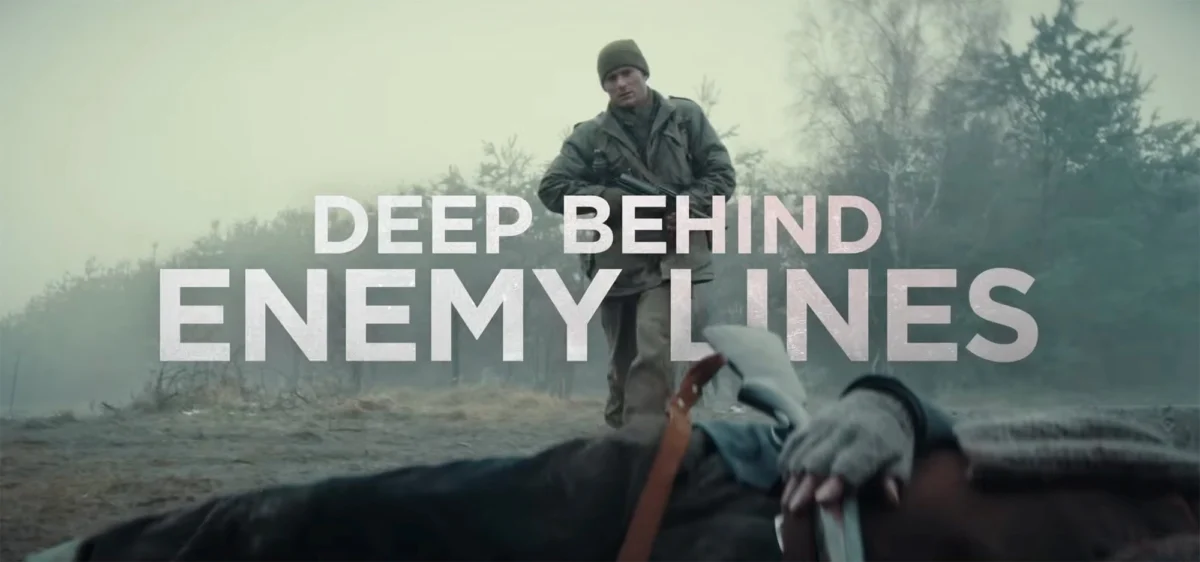
The film is set during the Battle of the Bulge, the last major German offensive campaign on the Western Front. Scott Eastwood portrays John Castle, an American Allied soldier who finds himself wounded and isolated behind enemy lines. The narrative follows Castle as he attempts to navigate the treacherous, frozen terrain of the Ardennes Forest while being hunted by an advancing Nazi Panzer division. Central to the plot is Castle’s reliance on the Motorola SCR-300, a backpack-mounted radio transceiver that represented the cutting edge of military communication technology in 1944. The story emphasizes the soldier’s psychological resilience and tactical ingenuity as he uses the device to provide intelligence to Allied forces while evading capture.
Historical Context: The Battle of the Bulge
To understand the stakes of Lucky Strike, one must look at the historical magnitude of the Ardennes Counteroffensive, popularly known as the Battle of the Bulge. Launched on December 16, 1944, the operation was Adolf Hitler’s final attempt to split the Allied armies and force a negotiated peace. The offensive took place in the densely forested Ardennes region of Wallonia in eastern Belgium, northeast France, and Luxembourg.
The battle was characterized by some of the most brutal conditions faced by American troops during the war. Soldiers dealt with sub-zero temperatures, deep snow, and thick fog that grounded Allied aircraft, giving the German Panzers an initial advantage. At the height of the conflict, approximately 600,000 American troops were involved. The casualty count was staggering, with the United States suffering over 89,000 casualties, including 19,000 killed, making it the bloodiest single battle fought by the U.S. in World War II.
Lucky Strike captures the desperation of this period, focusing on the transition from the initial German shock to the isolated pockets of American resistance. By centering the story on a single soldier trapped behind lines, the film provides a micro-perspective on a macro-historical event, illustrating how individual grit contributed to the eventual Allied victory.
Technological Significance: The Motorola SCR-300
A defining element of Lucky Strike, as highlighted in the trailer, is the protagonist’s use of the Motorola SCR-300. In the mid-1940s, this device was a revolutionary piece of equipment. Developed by the Galvin Manufacturing Corporation (which later became Motorola), the SCR-300 was the first radio to be nicknamed a "walkie-talkie" (though that term was also applied to the smaller SCR-536).

The SCR-300 was a frequency-modulated (FM) transmitter-receiver that allowed infantry units to maintain contact with command centers over a range of approximately three to five miles. Weighing nearly 35 pounds, the unit required a dedicated operator to carry it on their back. Its introduction near the end of the war changed the nature of tactical warfare, allowing for real-time coordination between ground troops and artillery or air support.
In the context of the film, the radio is more than a prop; it is Castle’s only lifeline and his most dangerous burden. The trailer suggests that the Nazi forces are acutely aware of the tactical advantage the radio provides, making Castle a high-priority target. This focus on period-accurate technology reflects director Rod Lurie’s established commitment to military realism.
Production Background and Creative Collaboration
Lucky Strike serves as a homecoming for several key figures in modern military cinema. Director Rod Lurie, a graduate of the United States Military Academy at West Point, has built a career on exploring themes of leadership, duty, and survival. His filmography includes The Last Castle, The Contender, and the 2011 remake of Straw Dogs. However, it was his work on The Outpost—a film detailing the Battle of Kamdesh in Afghanistan—that cemented his reputation for directing intense, tactically grounded combat sequences.
The reunion with Scott Eastwood is a focal point for the production. Eastwood’s performance in The Outpost as Sergeant First Class Clint Romesha was widely praised for its grounded intensity. In Lucky Strike, Eastwood appears to take on a more internal, survival-focused role. The film also features a robust supporting cast, including Colin Hanks (Band of Brothers), Aunjanue Ellis-Taylor (King Richard), and Taylor John Smith (Where the Crawdads Sing).
The screenplay was co-written by Lurie and Marc Frydman, the latter of whom also serves as a producer. The production team includes Yariv Lerner, Les Weldon, and Jonathan Yunger, many of whom have extensive experience in the action and war genres. The collaboration between Saban Films and Roadside Attractions for the distribution indicates a strategy targeting both mainstream action audiences and those interested in prestige historical dramas.
Chronology of the Project and Release Schedule
The development of Lucky Strike has followed a steady trajectory toward its Summer 2026 release.
- Late 2024: Initial reports surfaced regarding Lurie and Eastwood’s interest in a WWII survival project.
- Early 2025: Casting was finalized, with Colin Hanks and Aunjanue Ellis-Taylor joining the ensemble. Principal photography commenced in locations chosen to replicate the harsh winter environments of the Ardennes.
- Late 2025: Post-production began, focusing on the integration of practical effects and digital enhancements to recreate the scale of the Nazi Panzer advancements.
- May 22, 2026: The official trailer and poster were released to the public via YouTube and major film news outlets.
- June 26, 2026: The film is set to debut in select US theaters, positioning it as a major mid-summer cinematic event.
The June release date is strategic, often a period where studios release high-concept thrillers. By launching during the 81st anniversary year of the end of World War II, the film taps into a renewed public interest in the "Greatest Generation" and the historical lessons of the mid-20th century.

Analysis of Implications and Cinematic Trends
Lucky Strike arrives at a time when World War II cinema is shifting away from broad, sweeping epics like The Longest Day toward intimate, character-driven survival stories. This trend, bolstered by films like Christopher Nolan’s Dunkirk and Sam Mendes’ 1917 (though the latter was WWI), emphasizes the sensory experience of the individual soldier.
The film’s focus on "spy craft" and "wits" over sheer firepower suggests a narrative that values tension and suspense. By pitting a single man against an entire armored division, the filmmakers are utilizing a classic "David vs. Goliath" trope, but grounding it in the documented reality of the Battle of the Bulge. This approach allows the film to explore the psychological toll of isolation and the "fog of war" in a way that larger ensemble films often cannot.
Furthermore, the involvement of Rod Lurie ensures a certain level of institutional respect for the military subject matter. Given his West Point background, Lurie’s films often avoid the more hyperbolic tropes of Hollywood action cinema in favor of portraying the logistical and emotional realities of combat. Lucky Strike appears to continue this tradition, focusing on the importance of communication technology and the sheer physical endurance required to survive one of history’s coldest winters.
Official Responses and Industry Outlook
While official reviews are pending the June screening, industry analysts have noted that the partnership between Saban Films and Roadside Attractions suggests a confident rollout. Roadside Attractions, in particular, is known for handling films with strong narrative depth and critical potential.
Representatives for the film have emphasized that Lucky Strike is "inspired by true events," a phrase that carries weight in the war genre. While John Castle may be a fictionalized composite or a specific historical figure whose story has been dramatized, the events surrounding the radio technology and the German offensive are rooted in historical record.
The trailer’s opening dialogue—"80 years from now, everyone will know what happened in that battle. But will they understand it?"—serves as a mission statement for the film. It suggests that Lucky Strike is intended to be more than an action movie; it is an attempt to bridge the gap between historical fact and emotional understanding for a modern audience.
As the theatrical window approaches, Lucky Strike stands as a testament to the enduring power of World War II narratives. With a combination of a proven directorial hand, a rising lead actor, and a focus on a unique technological aspect of the war, the film is poised to be a significant addition to the canon of military survival cinema. Audiences can expect a rigorous exploration of a soldier’s will to survive against the backdrop of one of the most defining conflicts in human history.