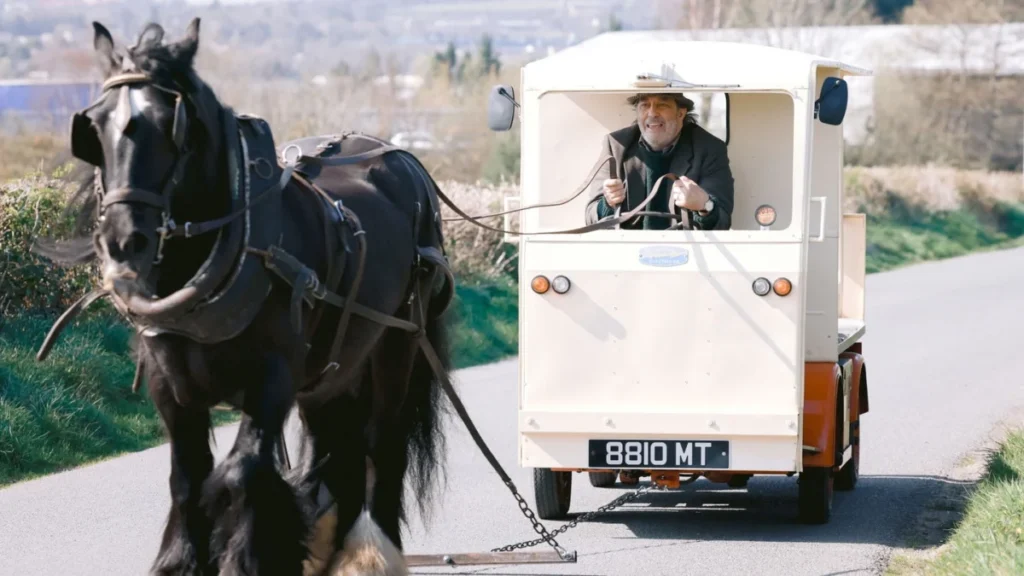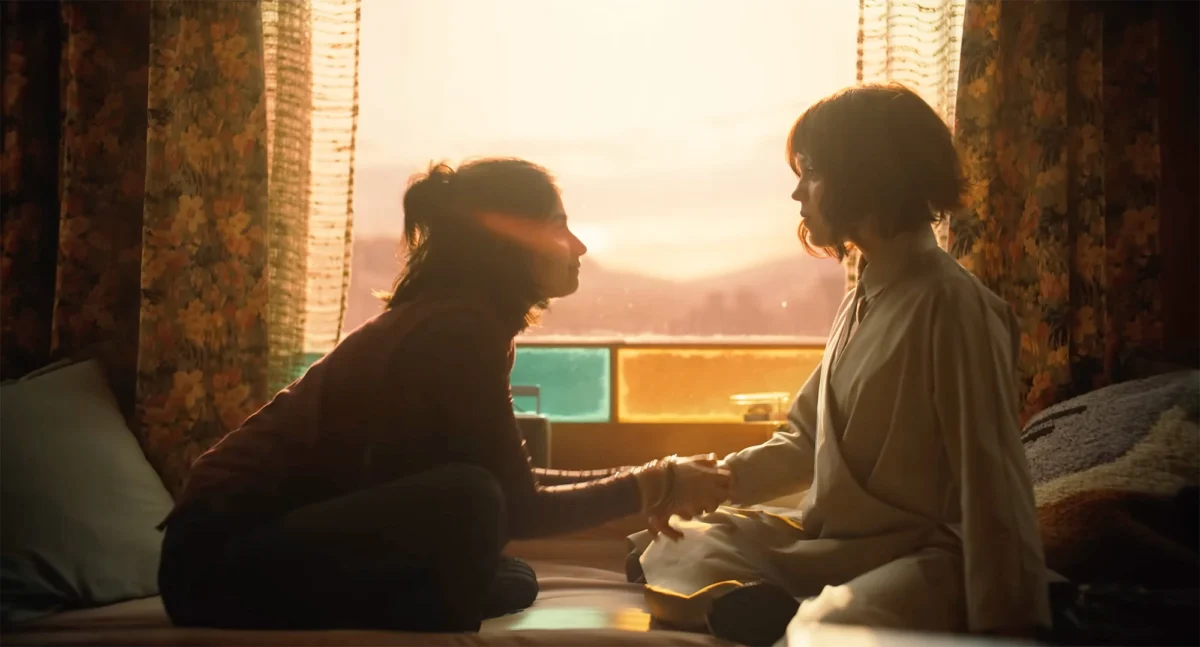
Sony Pictures has officially released the first trailer for Klara and the Sun, a high-profile science fiction adaptation directed by Academy Award winner Taika Waititi. Based on the 2021 bestselling novel by Nobel Prize-winning author Kazuo Ishiguro, the film marks a significant tonal shift for Waititi, moving away from the exuberant comedy of Thor: Ragnarok and Next Goal Wins toward a more contemplative, emotionally resonant exploration of artificial intelligence and human connection. The studio has confirmed a nationwide theatrical release scheduled for October 23, 2026, positioning the film as a primary contender for the autumn awards circuit.
The narrative centers on Klara, portrayed by Jenna Ortega, an "Artificial Friend" (AF) designed to alleviate the loneliness of teenagers in a near-future society. The trailer introduces Klara as she sits in a storefront, observing the world with a unique, solar-powered perspective, waiting to be chosen by a family. She is eventually purchased by a mother, played by six-time Oscar nominee Amy Adams, to serve as a companion for her daughter, Josie, played by newcomer Mia Tharia. The story delves into the complexities of their bond as Klara attempts to navigate the nuances of human emotion, grief, and the desperate hope of a family facing a health crisis.
Adaptation of a Modern Literary Masterpiece
The source material for the film, Klara and the Sun, was one of the most anticipated literary releases of 2021. It was Kazuo Ishiguro’s first novel after receiving the Nobel Prize in Literature in 2017. Ishiguro, known for works such as The Remains of the Day and Never Let Me Go, has a long history of exploring the "servant" perspective and the ethical boundaries of science. While Never Let Me Go dealt with the bioethics of cloning, Klara and the Sun shifts the focus to the digital and mechanical, questioning whether an algorithm can truly replicate the "specialness" of a human soul.
The adaptation was spearheaded by 3000 Pictures, a Sony-backed production label led by Elizabeth Gabler, which specializes in prestige literary adaptations. The screenplay was co-written by Waititi and Dahvi Waller, the latter of whom is best known for her work on Mad Men and as the creator of the critically acclaimed miniseries Mrs. America. This collaboration suggests a blend of Waititi’s idiosyncratic visual style with Waller’s disciplined approach to character-driven drama.

The Evolution of Taika Waititi’s Cinematic Style
Taika Waititi’s involvement in the project has been a point of interest for industry analysts since the film’s inception. Waititi rose to international prominence through independent New Zealand films like Boy and Hunt for the Wilderpeople, characterized by their "deadpan" humor and "maverick" energy. His transition into the Marvel Cinematic Universe with Thor: Ragnarok and his Oscar win for the screenplay of Jojo Rabbit solidified his status as a blockbuster director with a distinct voice.
However, Klara and the Sun appears to represent a maturation of his directorial lens. While the trailer hints at the "amusing and clever" touches synonymous with Waititi’s work, the overall atmosphere is described by early viewers as "haunting" and "spiritually inquisitive." The film joins a lineage of "sentimental sci-fi"—a subgenre that includes Spike Jonze’s Her and Kogonada’s After Yang—where the technology serves as a mirror to examine the fragility of the human condition rather than as a vehicle for action or spectacle.
A High-Profile Ensemble Cast
The casting of Jenna Ortega in the titular role of Klara is a strategic move by Sony, leveraging the actress’s massive global popularity following her roles in Wednesday and Beetlejuice Beetlejuice. Playing an Artificial Friend requires a delicate balance of mechanical precision and burgeoning empathy, a challenge Ortega appears to meet through a performance defined by wide-eyed observation and stillness.
Supporting Ortega is a robust ensemble of veteran actors and rising stars:
- Amy Adams: As Josie’s mother, Adams portrays a woman grappling with the "fraught relationship" she has with her daughter and the lingering trauma of past losses.
- Mia Tharia: As Josie, the young girl who forms a "kindred spirit" bond with Klara.
- Aran Murphy: Cast in a pivotal role as Rick, Josie’s best friend and a key figure in the novel’s exploration of social stratification.
- Natasha Lyonne and Steve Buscemi: While their specific roles were kept under wraps during much of the production, their presence adds a layer of character-actor prestige to the world-building.
- Simon Baker: Appearing in a supporting capacity that rounds out the adult world surrounding the children and their AFs.
Production Timeline and Development
The journey from page to screen for Klara and the Sun was relatively swift, reflecting the high demand for Ishiguro’s intellectual property.

- March 2021: The novel is published to instant critical acclaim and commercial success.
- Late 2021: Sony’s 3000 Pictures acquires the film rights in a competitive bidding war.
- 2023: Taika Waititi is officially attached to direct and co-write.
- Early 2024: Casting announcements begin, with Jenna Ortega and Amy Adams confirmed as the leads.
- 2024-2025: Principal photography takes place, utilizing locations that emphasize the "near-future" aesthetic—a blend of modern minimalism and natural landscapes.
- June 22, 2026: The first official trailer is released to the public via Sony Pictures’ digital platforms.
- October 23, 2026: Scheduled wide theatrical release.
The production was produced by David Heyman, whose track record includes the Harry Potter franchise and Gravity, alongside Garrett Basch and Waititi himself. The involvement of Heyman’s Heyday Films underscores the production’s high-budget, "prestige" nature.
Industrial Context: AI in Contemporary Cinema
Klara and the Sun arrives at a time when the global conversation surrounding Artificial Intelligence has reached a fever pitch. Unlike the dystopian "killer robot" tropes of the 20th century, modern cinema is increasingly focused on the "companion" aspect of AI. This reflects real-world developments in Large Language Models and social robotics designed for elder care and mental health support.
Data from the film industry suggests that audiences are becoming more receptive to "soft sci-fi" that explores the ethics of technology. According to recent box office and streaming analytics, films that personify AI in domestic settings—such as M3GAN (2023) or The Creator (2023)—have seen strong engagement, though Klara and the Sun leans much more heavily into the "literary drama" category. By focusing on an "Artificial Friend" whose primary function is to prevent loneliness, the film taps into contemporary anxieties regarding social isolation and the commodification of companionship.
Official Responses and Strategic Positioning
While official reviews are embargoed until closer to the release, the initial reaction from film critics and social media commentators has been largely positive, with many noting the visual fidelity to Ishiguro’s prose. Sony Pictures has marketed the film as a "heartfelt journey of discovery," emphasizing the "unwavering loyalty" of the protagonist.
Industry analysts suggest that Sony’s choice of an October release date is a clear indication of their awards season ambitions. Historically, late October is the preferred window for films looking to build momentum for the Golden Globes and Academy Awards. Given the pedigree of the source material and the talent involved, Klara and the Sun is expected to be a major player in categories such as Best Adapted Screenplay, Best Actress (for Adams or Ortega), and Best Director.

Broader Impact and Implications
The release of Klara and the Sun is likely to reignite interest in Kazuo Ishiguro’s bibliography, much like the 2010 adaptation of Never Let Me Go did for his earlier work. Furthermore, the film serves as a test case for whether Taika Waititi can successfully transition back into the "prestige drama" space after several years of focusing on large-scale franchise filmmaking.
From a technological standpoint, the film’s depiction of Klara’s "grid-based" vision—a unique aspect of the novel where she perceives the world in segmented boxes—is expected to be a highlight of the film’s visual effects. This stylistic choice aims to immerse the audience in a non-human consciousness, providing a literal "new perspective" on familiar human experiences.
As the theatrical window approaches this fall, Klara and the Sun stands as a significant cultural moment, bridging the gap between high-concept science fiction and intimate human drama. It poses the fundamental question that Klara herself must answer: in a world of programming and data, what does it truly mean to love? Sony Pictures’ nationwide rollout on October 23, 2026, will finally provide audiences with Waititi’s answer to that question.