The 79th Cannes Film Festival served as the launchpad for a significant new entry in the contemporary horror canon with the premiere of Marion Le Corroller’s directorial debut, a production that navigates the intersection of clinical precision and visceral terror. Screened as part of the prestigious Midnight Screenings section, the film—alternatively titled Species or Sanguine—represents a collaborative writing effort between Le Corroller and Thomas Pujol. With a runtime of 103 minutes, the feature explores the psychological and physical deterioration of a young medical professional, utilizing the body horror subgenre to offer a sharp critique of modern labor demands and the specific anxieties of the "Gen Z" demographic.
Premiere and Contextual Significance at the 79th Cannes Film Festival
The selection of Species for the Midnight Screenings at Cannes places Marion Le Corroller in the company of filmmakers who use genre cinema to push aesthetic and thematic boundaries. Historically, this section has been a catalyst for high-concept horror and thriller films that eventually find international acclaim, such as Julia Ducournau’s Raw or Coralie Fargeat’s The Substance. The film’s debut comes at a time when French cinema is experiencing a resurgence in "genre-bending" narratives, moving away from traditional drama toward more aggressive, visually arresting storytelling.
The atmosphere at the Palais des Festivals during the screening was reportedly one of intense physical reaction, a testament to the film’s reliance on high-quality practical effects. Industry analysts noted that the film’s inclusion in the festival lineup underscores a growing appetite for "elevated horror"—films that prioritize social commentary alongside traditional scares.
Narrative Overview: A Synthesis of Medical Drama and Visceral Horror
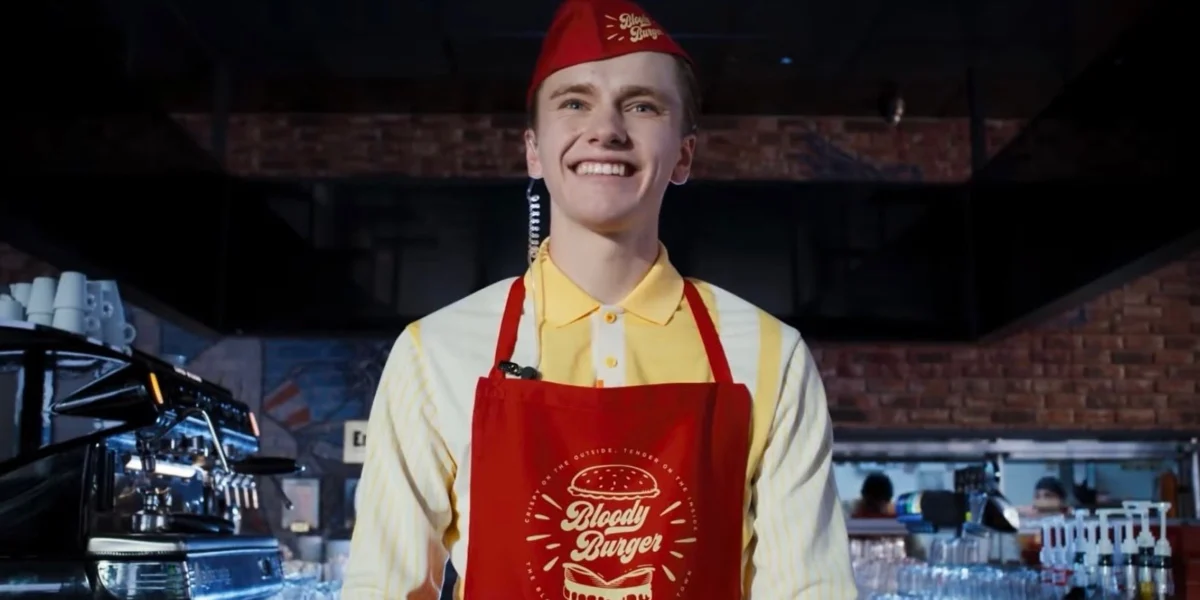
The film follows Margot, portrayed by Mara Taquin, a young and increasingly overwhelmed intern at one of France’s most competitive emergency departments. The narrative begins with a darkly comedic prologue involving a fast-food employee whose calm, detached demeanor during a violent outburst sets the tone for the film’s exploration of psychological dissociation.
As the story transitions to the clinical environment of a high-intensity Paris hospital, Margot is introduced as an ambitious but struggling newcomer. She operates under the scrutiny of Helene (Karin Viard), a supervisor whose efficiency borders on the robotic. The plot is catalyzed by the arrival of Lila (Sonia Faïdi), a pregnant patient presenting with inexplicable bodily lesions. Upon examining the patient, Margot suspects the emergence of a novel pathogen. However, the investigation takes a personal turn when Margot begins to manifest identical symptoms, leading to a terrifying transformation that is both a medical mystery and a psychological descent.
The Allegory of the Gen Z Virus: Sociological Implications of Professional Pressure
The central conceit of Species is what critics have termed the "Gen Z virus." Unlike traditional viral horror where the infection leads to a loss of humanity or mindless aggression, Le Corroller’s virus acts as a biological response to the hyper-competitive demands of the modern workplace. The infection forces the body to "mutate" into a more efficient, resilient version of itself.
This thematic choice mirrors current sociological data regarding workplace burnout. According to a 2023 study by the French National Authority for Health (HAS), nearly 34% of healthcare professionals in France report symptoms of severe exhaustion, with interns being particularly vulnerable due to 80-hour work weeks and high-stakes environments. In the film, as Margot’s skin begins to shed and her body undergoes gruesome changes, her professional performance improves exponentially. She gains the ability to perform complex surgeries and provide instant diagnoses, effectively becoming the "ideal worker" at the cost of her physical integrity.
This serves as a potent metaphor for the "hustle culture" prevalent among younger generations, where the pressure to succeed often requires the sacrifice of health and personal identity. The film suggests that in order to survive the current economic and professional landscape, the individual must literally become a different species.
Character Analysis and the Performance of Mara Taquin
Mara Taquin’s performance is the emotional anchor of the film. Known for her role in Zero Fucks Given, Taquin brings a frantic, lived-in energy to the role of Margot. Her portrayal captures the physical manifestations of chronic stress—the tremors, the fatigue, and the eventual cold detachment that accompanies her transformation.
The supporting cast provides the necessary friction to drive Margot’s development. Karin Viard, a veteran of French cinema, delivers a calculated performance as Helene, representing the older generation of professionals who have already hardened themselves to the rigors of the industry. Kim Higelin plays Pauline, Margot’s rival intern, whose presence heightens the film’s commentary on workplace competition. While the film has been criticized for an underdeveloped romantic subplot involving Sami Outalbali’s character, Louis, the primary focus remains on the interpersonal dynamics within the hospital walls.
Technical Craftsmanship: Cinematography, Score, and Special Effects
The technical execution of Species is instrumental in maintaining its high-tension atmosphere. Cinematographer Guillaume Schiffman, noted for his work on The Artist, employs a diverse visual palette to differentiate between Margot’s mundane reality and her virus-enhanced perspective. The use of fisheye lenses and subjective point-of-view shots creates a sense of claustrophobia and disorientation, particularly during the sequences where the virus takes hold.
The practical effects work is a highlight of the production. The lesions and the eventual skin-shedding sequences are rendered with a level of detail that avoids the "uncanny valley" of digital effects. One particularly visceral scene involves Margot using acid to treat her own lesions, a moment that has been cited as one of the most effective examples of body horror in recent years.
The auditory experience is shaped by the composer ROB, whose score utilizes atmospheric tension to mirror the rhythmic, often mechanical sounds of a hospital. The music does not merely underscore the horror; it replicates the sensory overload experienced by a medical professional during a crisis.
Chronology of Production and Development
The development of Species began in 2021, following Marion Le Corroller’s success with short films that explored similar themes of bodily autonomy and social pressure.
- 2021-2022: Le Corroller and Thomas Pujol finalized the script, originally titled Sanguine, focusing on the intersection of the medical field and biological mutation.
- Late 2022: Casting was finalized, with Mara Taquin and Karin Viard signed on to lead the project.
- 2023: Principal photography took place over 45 days in Paris, primarily within a decommissioned medical wing to ensure authenticity in the set design.
- Early 2024: Post-production focused heavily on the practical SFX and the integration of Schiffman’s experimental cinematography.
- May 2024: The film premiered at the 79th Cannes Film Festival, receiving a standing ovation during its Midnight Screening slot.
Industry Impact and the Evolution of the French Genre Film
The emergence of Species marks a significant moment for the French film industry. For decades, French cinema was largely defined by auteur-driven dramas and comedies. However, the last ten years have seen a surge in "New French Extremity" influences permeating the mainstream. Species fits into this evolution by combining the high production values of a prestige drama with the uncompromising gore of a genre film.
The film’s focus on the "Gen Z" experience also signals a shift in target demographics for French horror. By addressing issues such as professional burnout, the lack of work-life balance, and the alienation of the modern medical system, Le Corroller has created a film that resonates with a global audience facing similar economic and social pressures.
Market analysts suggest that Species is well-positioned for international distribution, particularly in North American and Asian markets where body horror has a dedicated following. The film’s ability to blend intellectual social commentary with "gross-out" horror makes it a versatile product for both film festivals and commercial streaming platforms.
Broader Implications and Final Analysis
Species (Sanguine) is more than a standard entry in the horror genre; it is a document of contemporary anxiety. By literalizing the "shedding of skin" required to adapt to a high-pressure environment, Marion Le Corroller has provided a visceral critique of a society that values output over the individual.
The film’s success at Cannes suggests that the "Midnight Screenings" will continue to be a vital space for directors to explore radical ideas. As Margot’s journey from a frazzled intern to a hyper-efficient "new species" concludes, the audience is left to contemplate the cost of such an evolution. The film does not offer easy answers, nor does it provide a traditional "cure" for its central virus. Instead, it suggests that the mutation is an inevitable consequence of the world we have built.
With Species, Le Corroller establishes herself as a director capable of handling complex thematic material while maintaining the technical rigor required for high-end horror. The film’s 103-minute runtime is a lean, focused exploration of a transformation that is as much psychological as it is biological. As the industry looks toward the next generation of filmmakers, Species stands as a definitive example of how genre cinema can be used to diagnose the ills of the modern age.