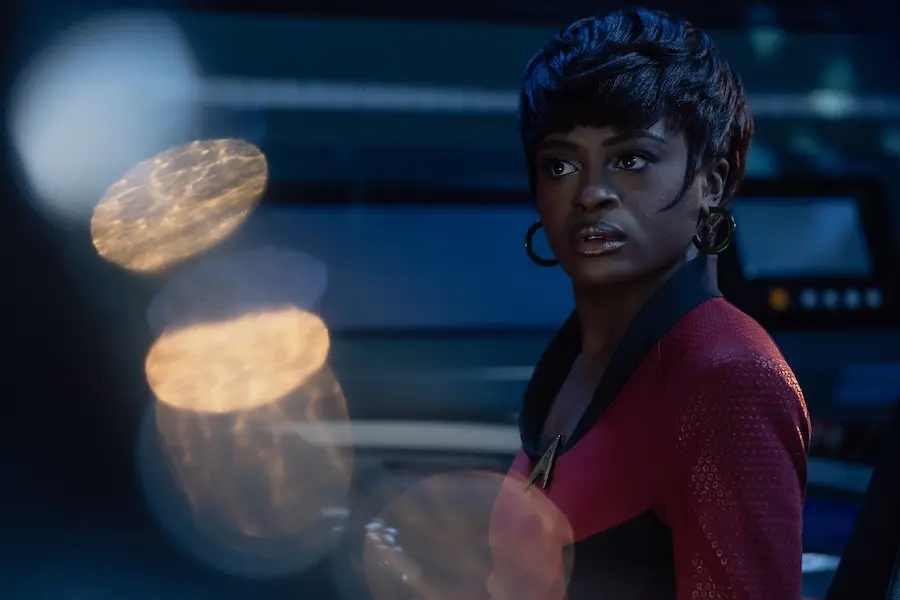
The television landscape is fraught with uncertainty, forcing creative teams to frequently prepare for multiple contingencies regarding the longevity of their series. For the production crew behind Paramount+’s acclaimed science fiction drama Star Trek: Strange New Worlds, this reality nearly reshaped the trajectory of the fourth season. In a recent comprehensive interview with industry journalists, showrunners Akiva Goldsman and Henry Alonso Myers revealed that the intricate, time-travel-heavy narrative of the season four finale—titled "Tomorrow’s Enterprise"—was originally conceptualized and constructed as a potential series finale.
The admission sheds light on the high-stakes environment of modern television production, where renewal decisions often lag behind creative production schedules. As the writers’ room navigated the complex plotting of season four, the absence of an official season five greenlight forced the leadership team to engineer a sweeping, definitive conclusion to the voyages of Captain Christopher Pike and the crew of the USS Enterprise. Fortunately, creative hurdles were met with administrative resolution just in time, allowing the team to pivot and reengineer the narrative framework to ensure the iconic ship’s journey would continue.
The Production Dilemma: Balancing Ambition with Uncertainty
In contemporary streaming television, production windows are notoriously protracted. Post-production, visual effects, and principal photography require months of lead time, often creating a significant gap between when a season is written and when network executives confirm subsequent installments. For Star Trek: Strange New Worlds, this operational reality has cultivated a distinct institutional philosophy among its showrunners.
According to behind-the-scenes accounts from previous production cycles, Goldsman, Myers, and their collaborative writing staff have maintained a consistent strategy: they routinely approach season-ending arcs with a dual-purpose mindset. If a network cancellation order were to drop unexpectedly, these episodes needed to possess the thematic weight, emotional closure, and narrative gravitas required to serve as a satisfying series finale for the devoted fanbase. Conversely, if renewed, the episodes had to seamlessly integrate into the broader, ongoing mythology of the franchise without leaving the overarching plot permanently fractured.
"Tomorrow’s Enterprise" exemplifies this meticulous structural balancing act. By plunging the iconic starship and its crew into a turbulent temporal anomaly, the episode naturally lent itself to high-stakes storytelling that explored the ultimate destinies of the Enterprise personnel. For a franchise bridging the gap between its prequel era and the canonical timeline of Star Trek: The Original Series (TOS), utilizing time travel as a narrative crucible provides a poignant mechanism to examine the heavy burdens of command, destiny, and inevitability.
The Chronology of a Creative Pivot
The genesis of the season four finale began months prior to its eventual broadcast realization, born from a confluence of scheduling pressures and creative aspirations.
As the writers’ room broke down the overarching arc for the fourth season, network deliberations regarding a fifth-season renewal remained fluid. Facing an impending production deadline where scripts needed to be finalized to maintain the grueling shooting schedule, Goldsman and Myers made the pragmatic decision to draft an ending that could permanently capstone the series if necessary.
"It was almost the episode to end the show with," Goldsman noted during the retrospective discussion. "We didn’t know whether we were going to have a season 5. So we built a thing that was going to serve as a potential season finale."
The chronology shifted during the latter stages of the scripting process. While the writers were actively refining the complex temporal mechanics of the finale, official word arrived from studio executives confirming that Star Trek: Strange New Worlds had officially secured a fifth-season renewal order.
This confirmation triggered a rapid operational reengineering within the production office. The writers were tasked with maintaining the rich, emotionally resonant premise of "Tomorrow’s Enterprise" while systematically dismantling its definitive conclusion. Elements designed to offer finality to character arcs were softened, cliffhangers were introduced or expanded, and the narrative bridge to a future season was constructed—all without sacrificing the intricate thematic framework the team had already spent months developing.
Drawing Inspiration from Cinematic Time Travel
Time travel is a narrative staple within the broader Star Trek canon, dating back to classic episodes of The Original Series such as "The City on the Edge of Forever" and feature films like Star Trek IV: The Voyage Home. However, maintaining originality within a well-trodden subgenre presents a formidable challenge for contemporary showrunners.
Co-showrunner Henry Alonso Myers emphasized the deliberate effort to ensure the temporal mechanics featured in Strange New Worlds remained distinct across different seasons. Season four, in particular, stood out for incorporating two disparate approaches to the time-travel genre that functioned in entirely contrasting ways.
In shaping the specific emotional and mechanical beats of "Tomorrow’s Enterprise," the creative team drew unexpected inspiration from outside the traditional science fiction canon—specifically pointing to the 2000 speculative thriller film Frequency, starring Dennis Quaid and Jim Caviezel. The film, which centers on a father and son communicating across decades via a ham radio, inspired the Strange New Worlds writers to explore localized, deeply personal temporal communication rather than massive, universe-shattering paradoxes.
Specifically, the writers envisioned a scenario wherein a core bridge officer—specifically the ship’s communications officer—engages in a direct, across-time dialogue with a future iteration of herself. This intimate framing device allowed the narrative to pivot away from sterile technobabble and instead focus squarely on character introspection, psychological growth, and the profound weight of personal evolution.
Emotional Core and thematic Inversion
At its philosophical center, Star Trek has historically utilized speculative science fiction to explore contemporary human conditions. For the creative team behind Strange New Worlds, the time-travel narrative in the season four finale served as a mechanism to explore a unique thematic thesis: the dialogue between who an individual currently is and who they are destined to become.
"There was an emotional core idea there, which is that there’s always something for you to learn from who you’re going to become, and there’s always something for you to learn from the person who you used to be," Myers explained.
This dynamic establishes a fascinating juxtaposition when viewed through the unique lens of the Star Trek prequel format. In traditional dramatic storytelling, characters grow toward an unknown future, discovering their identities incrementally. However, within Strange New Worlds, a unique dramatic irony exists: while the audience—and to some extent, franchise canon—holds a broad awareness of the ultimate historical destinations awaiting certain legacy characters like Spock, Uhura, and Pike, the characters themselves remain entirely blind to their ultimate trajectories.
By introducing future versions of these characters through temporal anomalies, the narrative inverted standard developmental tropes. The past selves were forced to confront the sobering realities of their future paths, while the future iterations gained a renewed appreciation for the idealism, naivety, and unwritten potential of their younger days. This emotional wrestling match provided the episode with a theatrical depth that resonated deeply with both longtime fans and critics reviewing the season’s culmination.
Industry Implications and Fan Reception
The revelation that "Tomorrow’s Enterprise" underwent a last-minute structural overhaul offers valuable insight into the logistical realities facing premium franchise television in the streaming era. As studios closely monitor budgets, viewership metrics, and long-term content strategies, creative teams frequently operate under conditions of ambiguity.
The ability of Goldsman, Myers, and their crew to successfully transition a definitive series-ender into a sustainable season finale underscores the agility required in modern showrunning. Industry analysts note that such flexibility is increasingly vital as streaming platforms recalibrate their output schedules and renewal timelines. A poorly handled pivot in these circumstances often results in disjointed storytelling or unresolved narrative threads that alienate audiences; conversely, a successful pivot—as demonstrated by the reception of Strange New Worlds—can elevate an episode into a masterclass of adaptable writing.
Fan and critical response to "Tomorrow’s Enterprise" has been overwhelmingly positive, with reviewers praising the episode’s ambitious scope, emotional resonance, and willingness to lean into the heavier, high-stakes traditions of the franchise. The complex character dynamics, bolstered by standout performances from the ensemble cast, solidified the episode’s status as a high-water mark for the series.
Looking Forward to the Final Chapter
As the production team now focuses its energies on the fifth and final season of Star Trek: Strange New Worlds, the near-miss surrounding the season four finale serves as a defining moment in the show’s history. While the precise mechanics of what was altered in the script remain closely guarded secrets within the writers’ room, the broad strokes of the characters’ futures remain a compelling focal point.
Whether the glimpses of the future shown in "Tomorrow’s Enterprise" will ultimately serve as accurate foreshadowing for characters whose fates are not strictly codified by The Original Series canon remains to be seen. Barring unforeseen timeline manipulations, narrative revisions, or creative detours, viewers will finally discover the ultimate fate of the Enterprise crew when the final season premieres.
Until then, the near-miss of "Tomorrow’s Enterprise" stands as a testament to the resilience, adaptability, and enduring creative vision driving one of modern science fiction’s most celebrated television enterprises.