
The catastrophic events of October 2023, when Hurricane Otis struck the Mexican resort city of Acapulco as an unprecedented Category 5 storm, are set to be examined in dramatic detail through the upcoming Netflix Original film Surviving Hurricane Otis. Scheduled for a global release on October 23, 2026, the biographical survival drama marks a major milestone for Mexican cinema. Directed by acclaimed filmmaker Jorge Michel Grau and starring prominent Mexican actors Benny Emmanuel and Kristyan Ferrer, the production represents one of the most ambitious attempts to bring a contemporary natural disaster of this magnitude to the screen.
Grau, widely recognized for his work on projects such as We Are What We Are and the earthquake drama 7:19, co-wrote the screenplay alongside José Leonor Alejandro and Venancio Villalobos. Produced by a seasoned team including Julián de Tavira, Alexis Fridman, Diego Rabasa, Viridiana Torres, Héctor Villegas, and Leonardo Cordero, the film aims to eschew traditional Hollywood disaster-movie tropes in favor of an authentic, minute-by-minute recreation of the ordeal faced by those caught in the storm’s path.
The Chronology of an Unprecedented Storm
To understand the weight of the narrative in Surviving Hurricane Otis, one must examine the timeline of the disaster itself. Hurricane Otis began as a seemingly benign tropical disturbance off the Pacific coast of Mexico in late October 2023. Meteorological models initially predicted a standard, relatively weak tropical storm that posed minimal threat to the mainland, lulling both regional authorities and residents of Acapulco into a false sense of security.
However, over an uncommonly warm expanse of the Pacific Ocean, Otis underwent an explosive intensification phase that caught the global meteorological community off guard. In less than 24 hours, the storm escalated from a tropical storm into a ferocious Category 5 hurricane—the maximum rating on the Saffir-Simpson scale. Sustained winds reached an astonishing 165 miles per hour (270 kilometers per hour) right as the eye of the storm converged on the Guerrero coast.

On the night of October 24 and into the early hours of October 25, 2023, Otis made landfall directly over Acapulco. It entered the history books as the first Pacific hurricane on record to strike land at Category 5 strength. Because the rapid intensification occurred so quickly—leaving barely half a day between initial warnings and catastrophic impact—evacuations were virtually impossible, and coastal infrastructure was entirely unfortified for winds of that velocity.
Plot and Narrative Focus
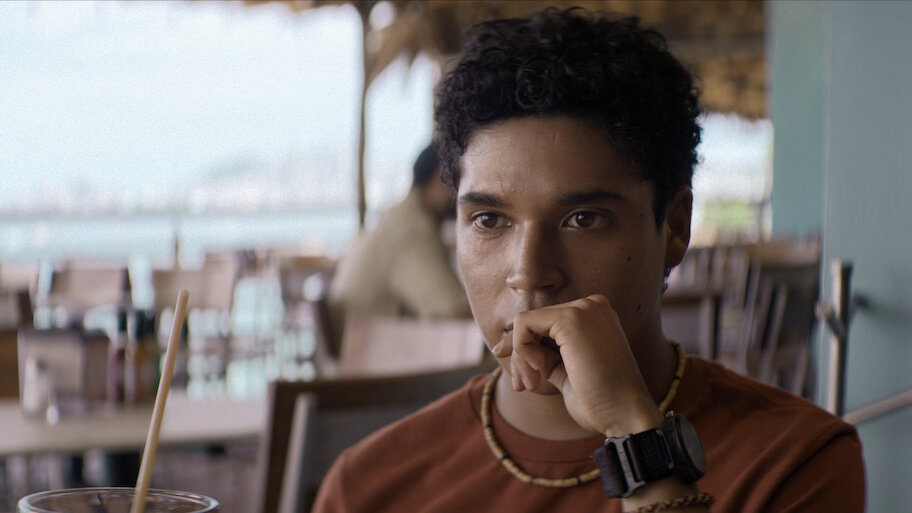
While the historical record outlines the macro-level destruction of Acapulco, Surviving Hurricane Otis narrows its lens to a micro-level narrative of human endurance. The official logline provided by Netflix centers on Wirpul, played by Benny Emmanuel, and his half-brother, Cándido, portrayed by Kristyan Ferrer. The two men, working as sailors, find themselves trapped in the path of the tempest. Their struggle against the elements on the shattered piers and turbulent waters of Acapulco serves as the emotional core of the film, transforming a narrative of sheer devastation into a testament of brotherhood and resilience.
Director Jorge Michel Grau emphasized the rigorous research and meteorological accuracy that went into filming these sequences. In interviews leading up to the release, Grau noted that the production team consulted weather data to track the exact wind speeds, directional shifts, and atmospheric pressures hour by hour. This attention to detail ensures that the cinematic depiction mirrors the actual harrowing timeline of how Wirpul and Cándido were swept away from the coastline and subjected to the fury of the storm before miraculously surviving to tell their tale.
Cast and Production Background
The film benefits from the strong central performances of Benny Emmanuel and Kristyan Ferrer, two veterans of Mexican cinema who share established on-screen chemistry. Emmanuel, whose extensive resume includes collaborations with Netflix across projects such as Snakes and Ladders, Pedal to Metal, and The (Almost) Legends, brings emotional depth to the role of Wirpul. His past credits also feature critically acclaimed independent works like Sin Nombre and Chicuarotes.
Kristyan Ferrer complements Emmanuel’s performance in the role of Cándido. Ferrer, known for his powerful turns in films such as 600 Miles, Days of Grace, and Buen Día, Ramón, brings a grounded intensity to the survival drama. The pairing of Emmanuel and Ferrer reunites two actors who previously shared the screen in Cary Joji Fukunaga’s acclaimed immigration drama Sin Nombre, adding a layer of established rapport to their portrayals of estranged half-brothers fighting for survival.
Behind the camera, Grau has noted that the production scale of Surviving Hurricane Otis stands apart from traditional Mexican filmmaking. While Mexico has a history of producing cinema centered around natural disasters—most notably earthquakes, including Grau’s own film 7:19—those projects typically operated within the financial constraints of independent art-house budgets. Surviving Hurricane Otis, backed by the global reach and financial infrastructure of Netflix, represents a structural shift, utilizing state-of-the-art visual effects, sound design, and physical stunt work to recreate a Category 5 hurricane with cinematic fidelity.
Economic and Societal Aftermath in Acapulco
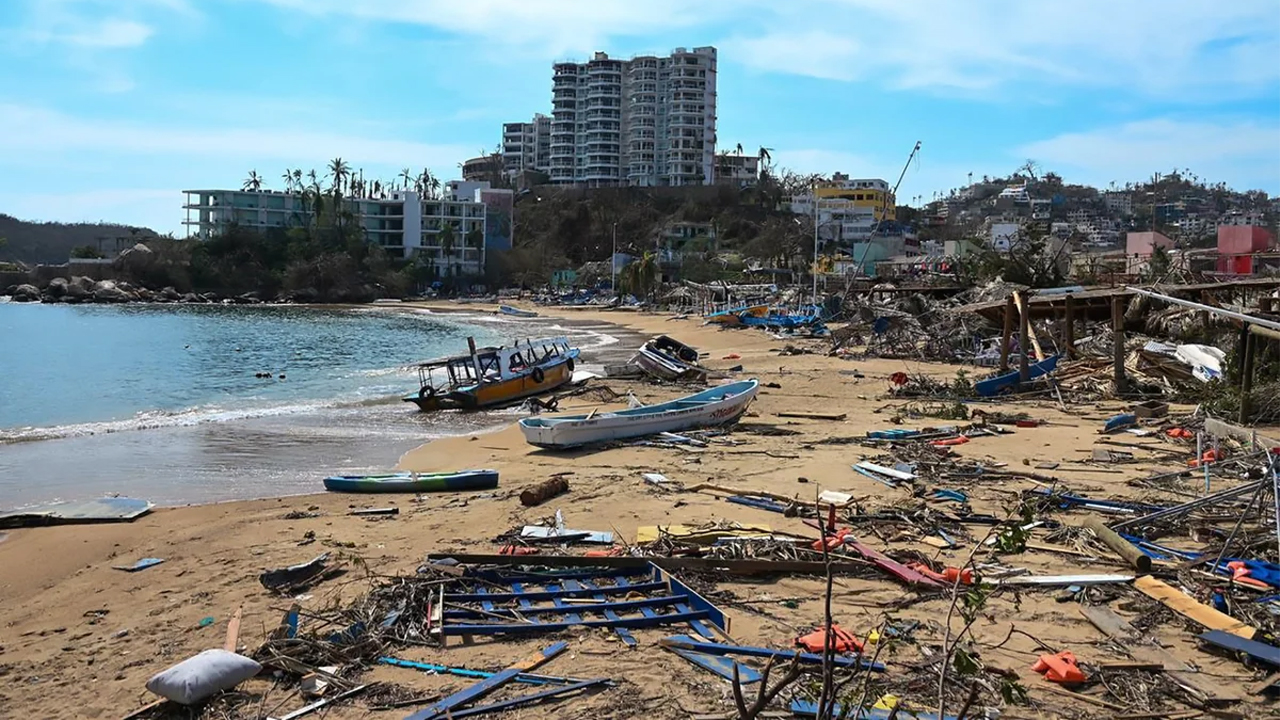
The real-world legacy of Hurricane Otis extends far beyond meteorological records, leaving a permanent scar on the socio-economic landscape of one of Mexico’s premier tourist destinations. When the storm severed communication lines, knocked out the power grid, and flattened high-rise hotels along the Costera Miguel Alemán, Acapulco was effectively cut off from the rest of the world for days.
Official figures place the death toll at a minimum of 52 fatalities, with dozens of individuals remaining missing in the aftermath. The economic toll was equally staggering. Financial analysts and government agencies estimated total damages to range between $12 billion and $16 billion USD. This valuation solidifies Hurricane Otis as the costliest Pacific hurricane in recorded history and the most expensive natural weather disaster in modern Mexican history.
The devastation laid bare the vulnerabilities of coastal cities facing climate change and unusually warm ocean temperatures. Infrastructure, including luxury resorts, residential neighborhoods, and vital healthcare facilities, was reduced to skeletal frames of twisted metal and shattered glass. The federal government mobilized thousands of military and national guard personnel to deliver humanitarian aid, restore order, and begin the arduous process of reconstruction.
Implications and Cultural Relevance
The arrival of Surviving Hurricane Otis on a global streaming platform like Netflix carries significant cultural implications for Mexican storytelling. By moving away from stylized Hollywood disaster narratives—which often rely on generalized American protagonists or fictionalized global cities—the film anchors its perspective firmly in the local experience of Mexican workers, sailors, and residents.
Media analysts point out that biographical survival dramas based on recent national tragedies carry a dual responsibility: they must honor the memory of those who lost their lives while accurately portraying the systemic and environmental factors that exacerbated the catastrophe. By focusing on the true story of two sailors tossed into the abyss, Grau’s film avoids exploiting the tragedy for cheap thrills, opting instead for a character-driven study of courage under extreme duress.
Furthermore, the release arrives at a time of heightened global awareness regarding climate anomalies and the increasing frequency of rapid intensification events in tropical weather systems. As warming ocean temperatures continue to fuel high-category storms with little warning, the story of Hurricane Otis serves as a stark reminder of the unpredictable future facing coastal communities worldwide.
As the global release date of October 23, 2026, approaches, anticipation continues to build among international film critics and audiences alike. Surviving Hurricane Otis promises not only to deliver a masterclass in tension and survival filmmaking but also to serve as a cinematic monument to the resilience of Acapulco and its people.