The cinematic chronicling of Hollywood icons has become an increasingly prevalent trend in the film industry, and Sylvester Stallone is the latest subject to find himself observing his own legacy from the outside looking in. The upcoming film I Play Rocky, which garnered significant attention following its world premiere at the Toronto International Film Festival earlier this month, provides a focused look at the arduous and improbable journey behind the production of the 1976 original Rocky. Directed by Peter Farrelly, the film features actor Anthony Ippolito as a young Stallone during the mid-1970s, capturing his relentless pursuit to bring his underdog story to the screen against the wishes of studio executives.
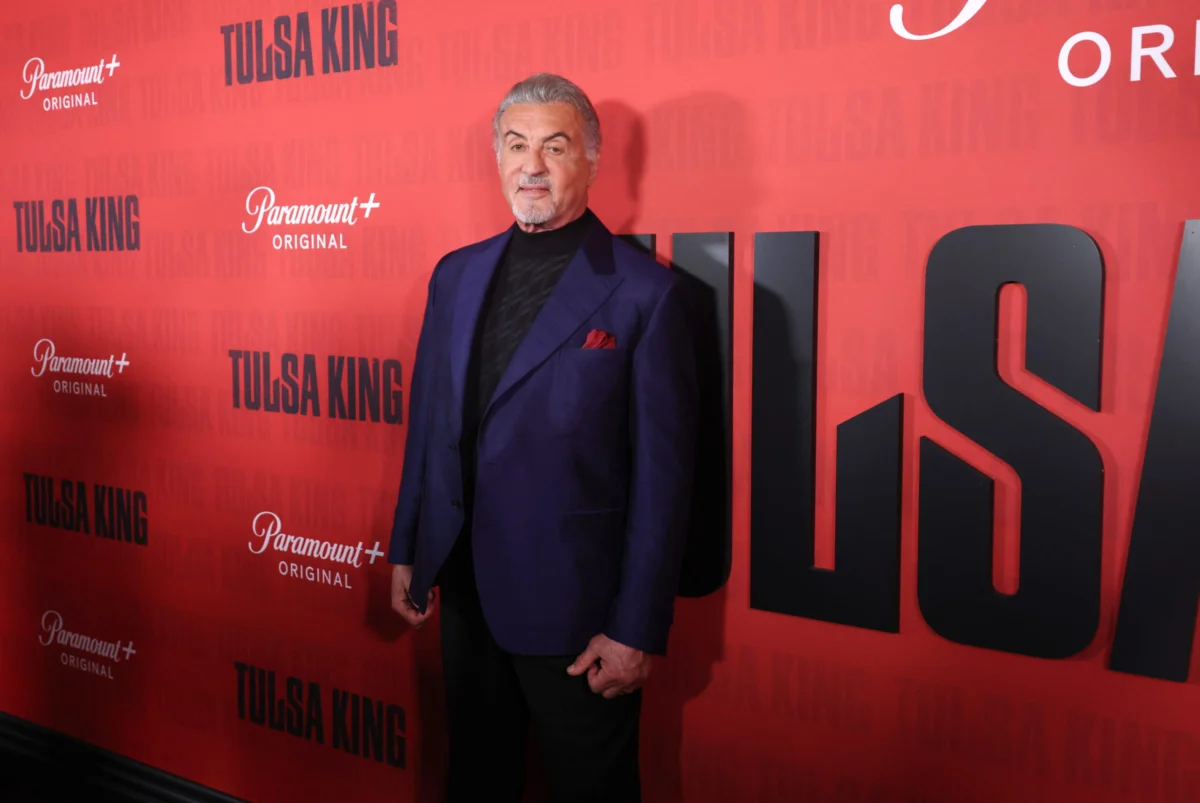
During an appearance at the 92nd Street Y (92NY) in New York City on Monday, Stallone addressed the biopic while promoting his new memoir, The Steps. His reaction to the film reflects a complex intersection of professional detachment and personal curiosity, noting that his initial response was one of skepticism.
The Making of a Legend: Context and Production
The 1976 film Rocky, directed by John G. Avildsen, is widely considered one of the greatest success stories in cinematic history. Produced on a modest budget of approximately $1 million, the film went on to gross over $225 million worldwide, winning the Academy Award for Best Picture and cementing Stallone’s status as an international superstar. The narrative of the film’s production—a struggling, unknown actor refusing to sell his script unless he was cast in the lead role—has become part of the foundational mythology of the New Hollywood era.
I Play Rocky serves as a dramatized account of this specific period. By focusing on the friction between Stallone’s creative vision and the commercial constraints of the 1970s studio system, the film attempts to humanize the process of filmmaking. Anthony Ippolito’s portrayal has been noted for its uncanny physical and manneristic resemblance to the young Stallone, a detail that even the subject himself found difficult to ignore.
"I was kind of mixed because I’m going, ‘I’m not dead yet. Aren’t we jumping the gun a little bit?’" Stallone admitted during the 92NY conversation. However, upon viewing footage of Ippolito, his reservations were tempered by a sense of recognition. "I actually thought it was me the first moment; there were a couple of angles. I go to my daughter and say, ‘That’s unbelievable.’"
Stallone’s Stance on Creative Autonomy
Stallone has been clear regarding his level of involvement in the production: he has remained entirely hands-off. While he offered Ippolito an open invitation for guidance, he opted not to intervene in the script development or the directorial choices made by Farrelly. This distance, Stallone suggested, was a deliberate choice to allow the creative team to build their own narrative.
"I said, ‘I’ll just sit back and watch.’ I talked to the kid. I said, ‘If you want any questions, here I am,’ and that was it. But they did it all on their own," he explained. The process of watching a younger actor inhabit his likeness has provided Stallone with a unique perspective on his own mannerisms. He joked about observing Ippolito’s performance, remarking, "I go, ‘Do I talk like that?’ Now I get it. Now I get it."
This detachment is consistent with Stallone’s long-standing desire to maintain control over his intellectual property, a trait that defined his career trajectory from the late 1970s through the present day.
Reflections on the Rocky Franchise and Rocky V
Beyond the new biopic, the 92NY discussion delved into Stallone’s critical assessment of his own filmography. When asked about watching the Rocky series today, he offered a candid, albeit self-critical, assessment. He compared the experience to looking at an old photograph: while the audience may view the work with nostalgia or reverence, the creator often focuses on the imperfections.
Specifically, Stallone identified 1990’s Rocky V as a "thorn in my side." The film, which was directed by John G. Avildsen rather than Stallone himself, is frequently cited by critics and fans alike as the weakest entry in the franchise. Stallone expressed a clear desire to revisit the project, noting that he is currently in discussions with Amazon regarding the possibility of a director’s cut or a recut of the film.
"It bothers me to death because I know I took my foot off the gas," Stallone said. "I should have directed it myself, and I should have been more aware of not trying to be cool to the audience." His goal for a potential recut is modest, suggesting that while it would not transform the film into a masterpiece, it could reach a level of "acceptability" that would resolve his lingering frustrations with the final product.
The Changing Landscape of Hollywood
The conversation also touched upon the broader state of the film industry and whether a talent like Stallone could achieve a similar rise to prominence in the current climate. Stallone’s assessment was pessimistic regarding the current "ideology" of Hollywood. He argued that the industry has undergone a fundamental shift in both subject matter and the types of actors who gain traction.
"It’s a whole different ideology out there… I don’t think so. It’s a whole different mindset," Stallone stated. He pointed to the nature of modern action cinema, labeling it "anachronistic" compared to the gritty, character-driven dramas of the 1970s.
Stallone utilized the example of The Godfather to illustrate the difficulty of replicating past successes in a contemporary setting. He argued that iconic films are inextricably linked to the social climate, ethnicity, and cultural zeitgeist of the era in which they were produced. "Try casting it. Impossible. The whole premise—it just came at a certain time, and that’s why it makes it so unique," he noted. According to Stallone, the modern obsession with remakes often overlooks this critical factor: that a film’s impact is tied to the specific historical moment of its creation.
Analytical Perspective: The Biopic Trend
The production of I Play Rocky sits at the intersection of two major industry trends: the reliance on established intellectual property (IP) and the surge in biographical storytelling. For studios, films about the making of famous movies provide a "safe" investment, as they leverage the brand equity of the original work while offering a behind-the-scenes narrative that appeals to cinephiles.
However, the risk of such projects—as alluded to by Stallone—is the potential for the subject’s own life story to be commodified before their legacy is fully solidified. The fact that Stallone is still active and overseeing his own creative output creates a unique dynamic where the "living history" of the franchise is being challenged or rewritten by others.
As Stallone prepares for the release of his memoir, The Steps, on Tuesday, his reflections serve as a reminder of the fragility of the creative process. Whether it is his frustration with Rocky V or his philosophical skepticism toward modern Hollywood, Stallone remains a central figure in the conversation about what constitutes an enduring cinematic legacy. His willingness to engage with these questions—even when the answers are self-critical—underscores a career defined by a persistent, if sometimes turbulent, drive for creative perfection.
Ultimately, the release of I Play Rocky will serve as a test case for how audiences perceive the retelling of familiar stories, particularly when the subject of those stories remains an active participant in the industry. For Stallone, it is a surreal chapter in a life that has already been documented across multiple decades and iconic performances.