The announcement that Warner Bros. Animation’s upcoming adaptation of Dr. Seuss’s classic children’s book The Cat in the Hat will feature Bill Hader voicing a corporate-employed protagonist has ignited a broader industry conversation regarding the vocational tropes dominating contemporary Western animation. Published originally in 1957, Theodor Seuss Geisel’s seminal work remains a cornerstone of juvenile literature, celebrated for its brisk narrative, anarchic humor, and foundational morality. However, translating these compact, conceptually boundless children’s books into feature-length cinematic properties has historically challenged Hollywood studios.
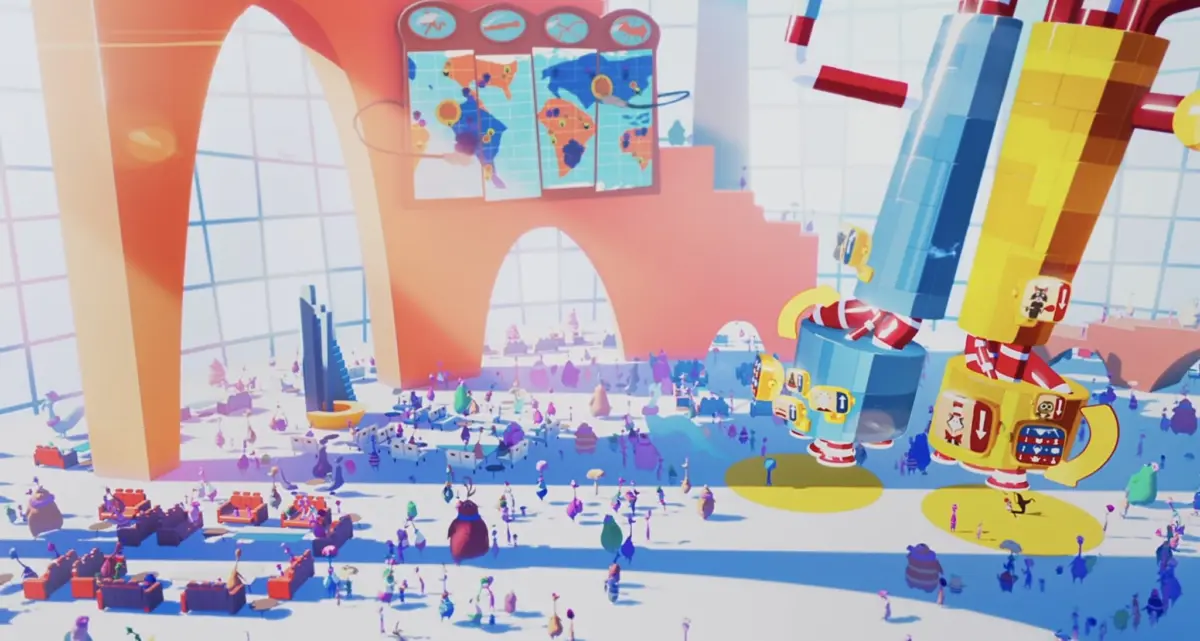
The impending Warner Bros. release introduces a radical departure from the source material by embedding the chaotic, fey-like feline within a structured corporate hierarchy. Specifically, the titular Cat is portrayed as an employee of the Institute for the Institution of Imagination and Inspiration, LLC—complete with human resources departments, managerial oversight, corporate reviews, and the perpetual threat of termination. While studio executives view such narrative scaffolding as essential for stretching a minimalist picture book into a 90-minute feature film, cultural critics and media analysts point to this creative choice as symptomatic of a pervasive capitalist conditioning embedded within modern children’s media.
Historical Context and the Legacy of Dr. Seuss Adaptations

The challenge of adapting Dr. Seuss to the screen is rooted in the structural nature of his bibliography. Most Seuss narratives are short stories designed to impart concise lessons concerning environmentalism, consumerism, Cold War escalation, or interpersonal generosity, utilizing vibrant illustrations and memorable characters to engage young readers. The Cat in the Hat presents a uniquely sparse narrative foundation: two children confined to a house on a rainy day are visited by a disruptive, anthropomorphic cat whose chaotic antics test their patience and discipline while threatening to incur their mother’s wrath.
Historically, cinematic translations of these properties have faced severe hurdles. The 2003 live-action feature film adaptation of The Cat in the Hat, starring Mike Myers and produced by Universal Pictures and Imagine Entertainment, was met with widespread critical disdain and commercial backlash. The film’s broad humor, dark comedic deviations, and perceived misinterpretation of the source material so profoundly alienated the Seuss estate that Audrey Geisel, the author’s widow, enacted a strict moratorium prohibiting any future live-action adaptations of her late husband’s literary catalog.
Consequently, Hollywood shifted its focus toward animation, where intellectual properties could be managed under tighter aesthetic and narrative controls. Warner Bros. Animation’s current project represents the latest iteration of this strategy, leveraging recognizable voice talent like Bill Hader to modernize and expand the Seuss universe for contemporary audiences.
The Mechanics of Corporate Emulation in Modern Animation

In the forthcoming Warner Bros. film, the Cat’s fantastical toolkit—including spatial anomalies, exotic creatures, and a time-traveling stopwatch—is recontextualized not as the innate magic of an autonomous entity, but as company-issued property intended for performance-based employee use. Furthermore, the narrative stakes are driven by the Cat’s desire to cheer up two displaced siblings, Gabby and Sebastian, who have recently relocated to a new city, all while dodging the punitive measures of corporate management.
This creative pivot reflects a broader systemic trend within Western animation: the systematic injection of vocational labor, corporate structures, and economic anxiety into narratives originally designed to transcend mundane reality. Rather than existing as a force of unbridled, whimsical chaos, the Cat in the Hat must justify his existence through productivity metrics, annual reviews, and employment status.
Media analysts observe that this storytelling device mirrors a long-standing pattern across major animation studios, including Disney, Pixar, and Illumination. Over the past three decades, the thematic architecture of family films has progressively shifted away from fantastical escapism toward institutional assimilation.
A Chronology and Taxonomy of Vocational Tropes in Animation

To quantify the prevalence of this narrative device, industry reviews of animated cinema reveal a steady integration of workplace mechanics across major releases since the late 1990s:
- 1995–2001 (The Industrialization of Play and Emotion): Pixar’s Toy Story (1995) established a paradigm wherein sentient toys view their existence through the lens of vocational duty, fearing obsolescence and replacement by automation. This framework was expanded in Monsters, Inc. (2001), which literalized the corporate workplace as an energy-generation facility dependent on institutional quotas.
- 2003–2010 (Vocational Specialization): Films such as Cars (2006), Ratatouille (2007), and WALL-E (2008) explicitly anchored their protagonists’ identities and existential crises to specific trades, culinary industries, and mechanical labor functions. Illumination Entertainment entered the market with Despicable Me (2010), introducing the Minions—a species whose nomenclature and entire cultural purpose are defined exclusively by their status as corporate henchmen.
- 2015–Present (Systemic Bureaucratization): Recent blockbusters have increasingly framed systemic societal issues through institutional employment. Zootopia (2016) addresses systemic prejudice through the perspective of municipal law enforcement; Soul (2020) maps the afterlife onto a corporate talent acquisition and bureaucracy model; and Elemental (2023) examines immigrant socio-economic mobility through the management of a family-owned convenience store.
Industry Rationale and Studio Perspectives
Representatives for major animation studios defend these narrative choices by citing the psychological developmental needs of child audiences. Developmental psychologists consulted by production firms often suggest that children possess a natural curiosity regarding adult labor and societal roles. Questions such as "What do you want to be when you grow up?" are introduced to children at an early age, making vocational frameworks an intuitive entry point for character motivation and conflict resolution.
From a screenwriting perspective, corporate structures provide immediate narrative utility. Establishing an institution with hierarchical management, defined rules, and measurable objectives offers a predictable engine for conflict, raising the stakes through familiar tropes such as job loss, performance reviews, and corporate restructuring. For executive producers navigating high-budget intellectual property investments, anchoring whimsical characters to corporate environments minimizes narrative ambiguity, ensuring that test audiences and commercial partners can easily digest the character’s motivations.

Socio-Economic Implications and Cultural Analysis
Critics and cultural historians, however, argue that embedding corporate bureaucracy into children’s literature normalizes vocational ennui and economic anxiety at an unnecessarily early age. By transforming magical, transcendent entities into wage laborers or corporate contractors, studios inadvertently reinforce the notion that imagination, creativity, and chaos must be commodified, regulated, and funneled through institutional oversight to hold value.
The cultural trajectory of the Disney Princess archetype offers a parallel case study in this ideological shift. Historically centered on royalty and aristocratic governance—a trope increasingly anachronistic in modern democratic societies—the archetype underwent a deliberate pivot with films like The Princess and the Frog (2009). Protagonist Tiana notably rejected passive royal inheritance in favor of entrepreneurial labor, establishing the goal of restaurant ownership as her primary defining trait. While lauded at the time for promoting a strong work ethic, cultural commentators note that this shift successfully traded the archaic myth of divine right for the modern myth of productivity as the ultimate measure of personal worth.
When applied to a literary icon like Dr. Seuss’s Cat in the Hat, this ideological imperative reaches a logical extreme. The original character functioned as a literary escape hatch—an embodiment of unstructured play that defied adult order and domestic discipline without justification or apology. By assigning the Cat a boss, human resources compliance protocols, and the threat of unemployment, the cinematic adaptation subverts the foundational ethos of the character.

Outlook and Future Industry Trends
As Warner Bros. Animation prepares for the wide release of The Cat in the Hat, box office analysts and entertainment economists will closely monitor audience reception to determine whether modern viewers embrace this corporate-adjacent reimagining. While commercial viability remains the primary metric for studio greenlights, the ongoing discourse highlights a growing tension between artistic integrity in literary adaptations and the systemic demands of modern intellectual property management under global capitalism.