Television has long been a mirror reflecting societal anxieties and technological shifts, a phenomenon underscored by the cyclical relevance of HBO’s critically acclaimed comedy series, The Comeback. Since its debut in 2005, the show, co-created by Michael Patrick King and Lisa Kudrow, and starring Kudrow as the perpetually fame-hungry former sitcom star Valerie Cherish, has uncannily coincided with pivotal existential crises within the medium. Its initial limited run in 2005 served as a sharp satire of the nascent reality television boom, a genre that threatened to devalue scripted content with its low production costs and tabloid-ready drama. This early iteration garnered a devoted cult following, leading to its revival by HBO in 2014, a period when reality TV had largely solidified its place in the programming landscape. However, this revival arrived on the precipice of another seismic industry shift: the impending streaming wars, which ushered in an era of "peak TV" and an overwhelming churn of "prestige" content, ultimately diluting the very meaning of the adjective.
A Chronology of Television’s Evolving Crises and Valerie Cherish’s Enduring Struggle
The trajectory of The Comeback provides a unique chronological lens through which to view the tumultuous evolution of the television industry over nearly two decades.
-
2005: The Reality TV Onslaught. When The Comeback first premiered, reality television was rapidly ascending. Shows like American Idol, Survivor, and The Apprentice dominated ratings, offering networks a cost-effective alternative to expensive scripted dramas and comedies. This period marked a significant shift in audience consumption and industry economics. Critics and traditionalists voiced concerns that the emphasis on unscripted drama, often sensationalized, would erode the artistic integrity of television. Valerie Cherish’s desperate attempt to reclaim relevance by starring in a reality show, The Comeback, and later a behind-the-scenes look at her fictional sitcom, Room and Bored, captured this tension perfectly, exposing the manufactured authenticity and exploitative nature of the genre. Data from Nielsen Media Research at the time indicated a steady increase in reality programming hours across major networks, sometimes accounting for over 20% of prime-time schedules, significantly impacting budgets for scripted development.
-
2014: The Dawn of the Streaming Wars and "Peak TV." The 2014 revival of The Comeback arrived as Netflix was transitioning from a DVD rental service to a formidable content producer, paving the way for a multitude of streaming platforms like Hulu, Amazon Prime Video, and later, HBO Max (now Max), Disney+, and Apple TV+. This era was characterized by an unprecedented explosion of scripted content, famously dubbed "Peak TV" by FX Networks CEO John Landgraf, who noted the number of scripted series in the U.S. surpassed 400 titles annually by 2015, rising to over 500 by 2019. This content glut, while offering viewers unparalleled choice, also led to a struggle for visibility and the eventual desensitization to the term "prestige," as every platform vied for critical acclaim and subscriber loyalty. Valerie’s return in 2014, attempting to navigate a new Hollywood landscape, inadvertently highlighted the challenges of standing out in an increasingly crowded market.
-
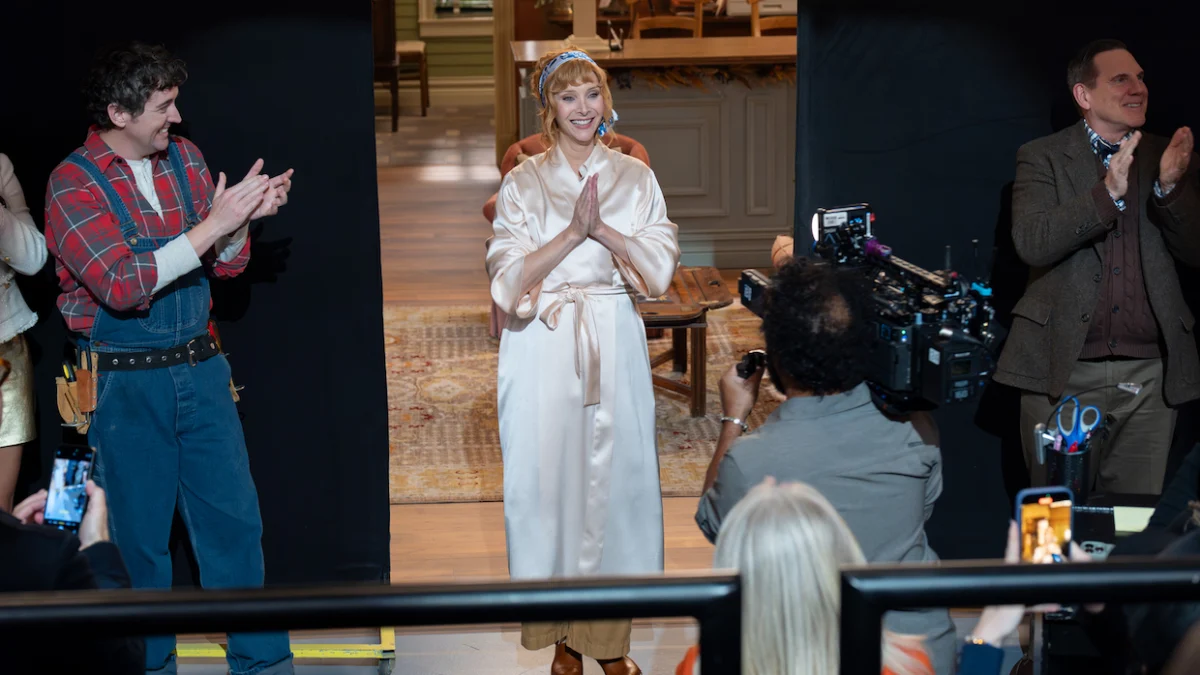
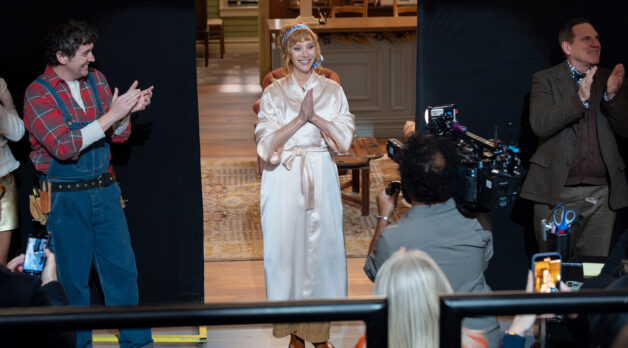
2026: AI, Industry Contraction, and Labor Unrest. Fast forward twelve years, past a global pandemic, two major Hollywood strikes (WGA and SAG-AFTRA in 2023), and significant corporate consolidation, Kudrow returns for what HBO has definitively stated will be Valerie Cherish’s third and final season. This latest iteration directly confronts the most pressing existential threat facing the entertainment industry today: artificial intelligence. Valerie’s character finds herself in the lead role of How’s That?!, the first sitcom to be entirely written by AI. As an executive producer, she grapples with a profound ethical and creative dilemma. The livelihood of an entire cast and crew, including Valerie herself, hinges on the show’s success at a time when Hollywood production has significantly contracted. The AI-driven scriptwriting machine, named Allassist, churns out an overwhelming volume of plagiarized material, with veteran sitcom actors recognizing lines from their past work. This directly imperils the livelihoods of TV writers and the creative integrity of the entire medium that propelled Valerie to stardom decades prior. The WGA’s 2023 strike, which lasted 148 days, prominently featured AI regulation as a core demand, with writers advocating for safeguards against AI being used to generate or rewrite literary material or to train AI models on their work without consent or compensation. This real-world context imbues The Comeback‘s final season with chilling timeliness.
Valerie Cherish: Heroine of Humiliation and Resilience
While Valerie Cherish has often been the comedic foil in The Comeback, her relentless pursuit of fame and attention frequently leading to humiliating pratfalls, she is undeniably the show’s hero. Despite her self-serving motivations, Lisa Kudrow imbues Valerie with an undeniable charm that fosters genuine audience empathy. Her journey consistently highlights the pervasive sexism and ageism that older female entertainers confront in a youth-obsessed industry. Moreover, Valerie is consistently surrounded by individuals equally, if not more, self-absorbed than she is, creating a satirical ecosystem where her flaws are merely amplified reflections of the industry at large.
The third season marks a notable departure from the show’s signature mockumentary format, a stylistic choice that initially mirrored the reality TV genre it parodied. This shift allows for a more propulsive narrative, enabling Valerie to take a more direct, proactive stance. She fights harder than ever, not just for her own career, but implicitly for the broader community of TV writers—her historical antagonists within the Hollywood ecosystem—whose livelihoods are now threatened by AI. This evolution positions Valerie not merely as a survivor, but as a reluctant champion for the human element in creativity.
‘Hacks’: A Parallel Narrative of Female Resilience and Industry Satire
The thematic parallels between The Comeback and HBO Max’s Emmy-winning comedy series Hacks are striking, suggesting a shared lineage in showbiz satire. Co-created by Lucia Aniello, Paul W. Downs, and Jen Statsky, Hacks chronicles the platonic yet complex relationship between Deborah Vance (Jean Smart), an aging stand-up comic icon, and Ava Daniels (Hannah Einbinder), her young, sardonic Gen-Z comedy writer. Over several seasons, Deborah battles to shatter the ultimate glass ceiling for a female entertainer: hosting a late-night comedy show.
Hacks‘ penultimate season sees Deborah achieve this monumental goal, only to have her triumph abruptly snatched away. She makes the principled decision to quit the show rather than succumb to network demands that she fire Ava, who has become an outspoken and essential creative partner. The recently concluded fifth and final season of Hacks mirrors Valerie Cherish’s struggle to reclaim her voice and hold onto her stardom. Silenced by a non-compete clause that prohibits her from performing for a year, Deborah finds herself navigating a new phase of professional limbo. The season four finale, which depicted Deborah’s downfall, aired mere weeks before CBS’s unexpected cancellation of The Late Show with Stephen Colbert, further amplifying the timely relevance of Hacks‘ storyline concerning corporate censorship and the precarity of even established star power. Both Valerie and Deborah embody an endangered species of television icons, their careers constantly at risk of fading should they dare to slow down or challenge the status quo.
The AI Bogeyman: Nuance Across Satirical Lenses
The specter of artificial intelligence looms large in both The Comeback and Hacks, though each series approaches the threat with distinct satirical nuances.
In Hacks, AI initially manifests as a more overtly menacing "bogeyman." As Deborah endeavors to generate new revenue streams for her Madison Square Garden comeback show, she encounters a slick venture capitalist promoting a large language model called "QuikScribbl." The proposal is to license Deborah’s likeness and material—and, by extension, Ava’s creative work—for this AI. This proposition sparks Ava’s impassioned monologue about the dangers of AI and the pervasive, often self-serving, narrative of its inevitability. Ava’s blunt analogy—"This is exactly like when a fing random-ass diner puts a sign out front that’s like, ‘Best Waffles in America.’ According to who? The people trying to sell the fing waffles!"—articulates the skepticism surrounding AI’s inherent value proposition. It is only when the tech entrepreneur suggests that Deborah use the machine to write her jokes that she fully grasps the existential threat and the deeply insulting implication that a machine could replicate the nuanced craft of a seasoned comedian.
The Comeback, in contrast, portrays AI as less of a monstrous threat and more of a pathetic, almost comical, joke. Valerie’s new multi-cam sitcom, How’s That?!, produced by the Big Tech-funded network NuNet, is depicted as undeniably hokey and dated. The scripts generated by its proprietary AI, Allassist, are passable but utterly stale. When a joke fails to land with the live studio audience, the machine generates an overwhelming number of alternative punchlines, far more than any actor could reasonably attempt, and most are inherently unfunny. Valerie gradually comprehends that human writers, despite their flaws, cannot truly be replaced. While an AI cannot personally insult or diminish her talent, it also cannot provide her with anything genuinely compelling or surprising to work with. The legendary TV director James Burrows, appearing as himself, articulates this truth to Valerie after the pilot shoot: "I saw every one of those jokes coming, and so did you. Surprising only comes from a group of writers huddled in a corner, beating themselves up to beat out a better joke." This highlights the fundamental inefficiency of making television—or any creative endeavor—less human. The irreplaceable human element lies in the struggle, the collaboration, the unique perspectives, and the capacity for genuine surprise and emotional resonance that AI, at its current stage, cannot replicate.
The Emmy Race: A Battle of Showbiz Satire Titans
It is fitting, and perhaps inevitable, that these two female-fronted HBO (or Max) shows, both incisive showbiz satires, will likely contend against each other in the upcoming Emmy race. Hacks has established itself as an Emmy powerhouse, boasting 12 wins to date, including Best Comedy Series for its third season, an impressive four consecutive Best Actress wins for Jean Smart, and last year’s Best Supporting Actress win for Hannah Einbinder. Its critical acclaim and industry recognition are well-documented.
The Comeback, despite its ardent cult following and critical reappraisal over the years, has historically struggled to gain significant traction with Emmy voters. Lisa Kudrow earned Best Actress nominations for its first two seasons, and the show received two other nods for writing and casting in its inaugural season, but it has never achieved Hacks‘ level of awards success. However, coming off the heels of The Studio‘s sweep in the comedy categories last year – another showbiz satire – the current awards landscape seems ripe for another industry-insider comedy to collect this year’s top comedy series Emmy. Hacks, with its established track record and critical momentum, holds a distinct edge.
While a joint win for Best Actress by Jean Smart and Lisa Kudrow remains a highly improbable scenario, as unlikely as Deborah Vance and Valerie Cherish sharing a meal at the exclusive Polo Lounge, such an outcome would represent a profoundly satisfying symbolic conclusion. It would be a testament to the enduring power and resilience of two iconic TV characters and their equally formidable real-life counterparts, who have not only survived but thrived through the tumultuous evolutions of the medium, against all odds. Their narratives, woven with both humor and emotional depth, offer a powerful, comedy-fueled resistance against the perceived inevitability of industry collapse and the dehumanizing creep of technology, reaffirming the irreplaceable value of human creativity and the enduring spirit of the entertainer.