The literary and cinematic trope of the "found family"—a diverse assembly of unrelated individuals who form deep, communal bonds—has long served as a cornerstone of modern storytelling. Whether examining mystery-solving youth traveling in retro utility vehicles, exploratory starship crews traversing uncharted space, or academic study groups brought together by extraordinary circumstances, these narrative units typically rely on well-established archetypes: the charismatic leader, the moral idealist, and the sensitive genius. However, recent narrative analysis within media studies highlights a frequently overlooked yet vital structural component within these ensembles: the character archetype known colloquially as the Weird Li’l Guy.
Far from functioning merely as a source of superficial comic relief, this distinct narrative entity provides the psychological friction necessary for deep character development. By maintaining a fiercely idiosyncratic and unapologetic sense of self, the Weird Li’l Guy (WLG) creates a safe behavioral space for other ensemble members to express vulnerability, thereby reinforcing the emotional architecture of the found family. As contemporary narratives continue to deconstruct traditional hero’s journeys, the function, peril, and broader thematic implications of this archetype have become central to understanding modern audience engagement across literature, television, and cinema.
Defining the Archetype: More Than Just Comic Relief

In dramatic theory, ensemble casts require balancing mechanisms to prevent narrative stagnation. While traditional comedic characters exist primarily to deliver punchlines, the Weird Li’l Guy operates on a more complex psychological level. The archetype is defined by a distinct refusal to conform to societal or institutional norms within their respective fictional universes. This non-conformity frequently generates lighthearted tension, but it fundamentally serves as a mirror for the core cast.
Media analysts note that the presence of an unapologetically eccentric character lowers the emotional stakes for the more rigid protagonists. When a narrative introduces an entity that defies categorization—whether due to alien biology, psychological trauma, post-apocalyptic conditioning, or cosmic omniscience—it forces the surrounding characters to drop their guard. Consequently, the WLG acts as a catalyst for emotional authenticity, allowing hardened mercenaries, cynical leaders, and guarded intellectuals to establish genuine bonds of trust.
Yet, this narrative utility often comes with a severe structural cost. Across multiple genres, characters filling this archetype exhibit a statistically significant vulnerability to mortal peril or self-sacrifice. Narrative pacing frequently leverages the protection of the WLG to galvanize protagonists into action, utilizing the character’s inherent innocence or fragility as the ultimate test of the ensemble’s collective morality.
Chronological Examination of Notable Ensembles

The evolution of the Weird Li’l Guy can be traced across decades of landmark media releases, demonstrating the archetype’s adaptability and enduring resonance with audiences.
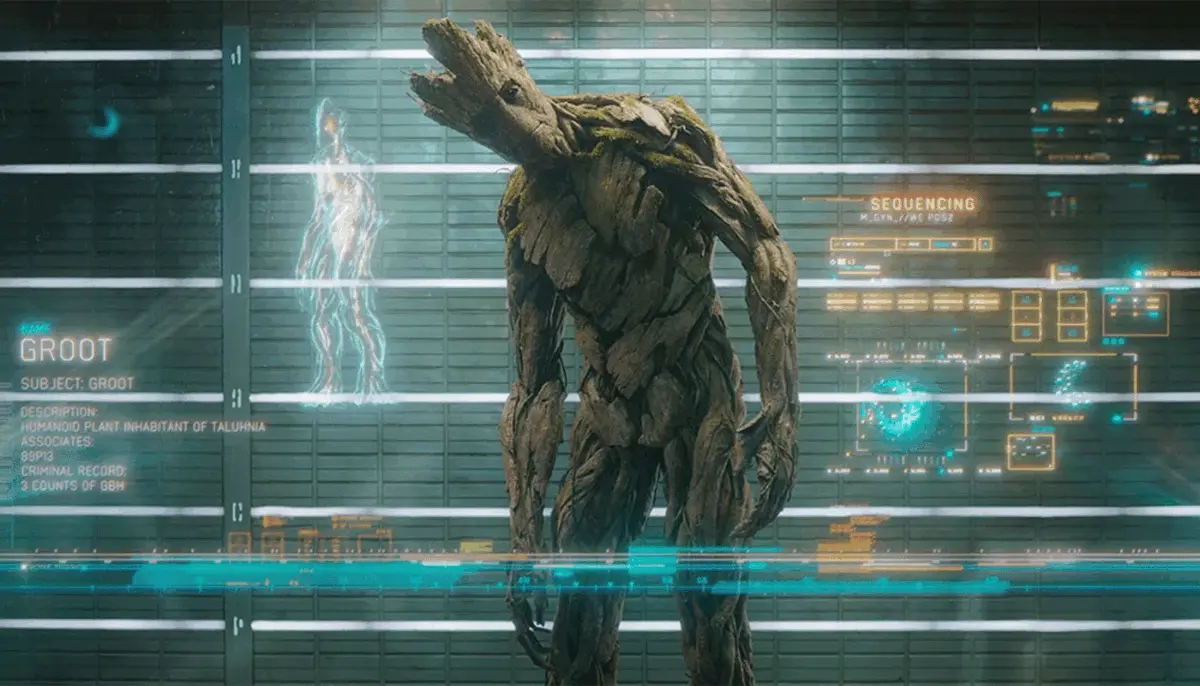
Groot (The Guardians of the Galaxy, 2014)
Introduced in Marvel Studios’ cinematic adaptation of Guardians of the Galaxy, the arboreal extraterrestrial Groot initially presented as a simplistic muscle-bound companion to the genetically altered mercenary Rocket Raccoon. Despite possessing a vocabulary limited to three distinct words, Groot evolved into the emotional anchor of a notoriously dysfunctional group of outcasts.
The chronology of the character’s narrative arc establishes a pattern of selfless intervention. During critical moments of fracture within the team, Groot’s unwavering optimism and protective instincts compelled disparate personalities to mount rescue operations and confront existential threats. The character’s ultimate sacrifice—shielding his chosen family from a catastrophic starship crash—redefined the WLG archetype by cementing self-sacrifice as the ultimate expression of found family loyalty. This dynamic gained additional retrospective depth in subsequent franchise installments, which contextualized the profound nature of grief, companionship, and emotional survival among marginalized beings.
River Tam (Firefly, 2002)
Within television history, Joss Whedon’s short-lived sci-fi western series Firefly introduced a psychological variant of the archetype through River Tam, portrayed by Summer Glau. River entered the narrative as a severely traumatized adolescent prodigy who had survived illicit neurological experimentation by a clandestine galactic government.

Operating as a fugitive alongside her physician brother Simon, River was integrated into the smuggling crew of the vessel Serenity. Rather than serving purely as comedic relief, River embodied the living embodiment of the crew’s moral code. Her erratic behavior, psychic volatility, and frequent non sequiturs positioned her as a narrative focal point—a living MacGuffin pursued by bounty hunters and hostile fringe populations. Her integration into the crew tested and ultimately solidified Captain Malcolm Reynolds’ foundational philosophy: that once an individual is accepted onto a ship, they constitute family, regardless of logistical or political liability.
Nux (Mad Max: Fury Road, 2015)
George Miller’s critically acclaimed post-apocalyptic action feature Mad Max: Fury Road utilized an uncommon narrative trajectory: the transition of an antagonist into a foundational member of a protective collective. Nux, a terminally ill "War Boy" indoctrinated into the cultish regime of Immortan Joe, initially appeared as a suicidal zealot eager to die for his warlord.
Nux’s eccentricities—such as naming the tumors on his neck after personal companions and embracing a performative desire for glorious combat—set him apart from standard cinematic henchmen. Following his failure to capture a convoy of runaway slave-brides, Nux experienced a crisis of faith catalyzed by Capable, one of the escaped women. By acknowledging Nux as a sentient individual rather than a disposable asset, the group dismantled his lifelong ideological programming. Nux’s subsequent integration into the fugitive collective demonstrated that institutionalized malice can be unlearned through empathy, culminating in a deliberate act of tactical self-sacrifice that secured freedom for his new companions.
Janet (The Good Place, 2016–2020)
NBC’s philosophical comedy series The Good Place reinterpreted the archetype through Janet, an anthropomorphized repository of universal information portrayed by D’Arcy Carden. Initially functioning as a non-human utility tool within an experimental afterlife setting, Janet underwent exponential developmental iterations across hundreds of timeline resets.

As Janet accumulated experiential data, she developed empathy, emotional complexity, and relational autonomy, eventually marrying within the ensemble and experiencing complex emotional states such as jealousy. Despite her transition into a near-omniscient entity, Janet retained her foundational role as a stabilizing, idiosyncratic guide for a group of ethically flawed humans attempting to navigate cosmic bureaucracy. Her trajectory elevated the Weird Li’l Guy archetype from a localized comedic device to a cosmic custodian of human vulnerability and moral growth.
Gollum (The Lord of the Rings, 2001–2003)
Peter Jackson’s cinematic translation of J.R.R. Tolkien’s literary masterpiece presents the most complex manifestation of the archetype: a character who treads the razor-thin boundary between antagonist and provisional member of a traveling fellowship. Gollum, warped by centuries of exposure to the One Ring, accompanied Frodo Baggins and Samwise Gamgee toward Mount Doom under an uneasy and volatile truce.
While Gollum never achieved full integration into a harmonious found family, his presence served a vital psychological function for the primary protagonists. Tolkien’s narrative utilized Gollum as a living cautionary tale, illustrating the ultimate degradation awaiting those who succumbed to absolute temptation. This recognition of shared vulnerability elicited profound empathy from Frodo, whose consistent restraint and kindness toward the wretched creature served as a spiritual bulwark against the Ring’s corruption. The tragic trajectory of Gollum—who stood on the precipice of redemption before succumbing to ingrained paranoia—highlights the profound stakes inherent in the archetype’s interaction with core ensemble dynamics.
Broader Impact and Critical Implications

Media analysts evaluating the persistence of the Weird Li’l Guy across disparate genres point to changing audience expectations regarding representation and psychological depth. Modern narratives increasingly reject flat, idealized protagonists in favor of flawed, complex ensembles that reflect contemporary understandings of community and mental health.
The inclusion of an eccentric, non-conforming archetype allows creators to address complex themes—such as trauma, rehabilitation, neurodivergence, and social alienation—within accessible frameworks. By anchoring high-stakes adventures around characters who defy conventional standards of capability or normalcy, storytellers validate the experiences of marginalized or atypical audiences. Furthermore, the recurrent narrative choice to place these characters in mortal peril underscores a fundamental thematic truth: the strength of a community is frequently measured by its capacity to protect and cherish its most vulnerable and unusual members.
As the media landscape continues to evolve, the Weird Li’l Guy remains an indispensable narrative instrument. Far from being a disposable storytelling gimmick, the archetype functions as the emotional glue of the found family, ensuring that stories of cosmic conflict, post-apocalyptic survival, and metaphysical philosophy retain a grounded, deeply human core.