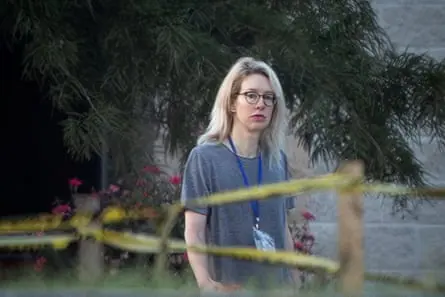
The narrative of Elizabeth Holmes remains one of the most astonishing corporate deceptions in modern economic history, a cautionary tale that continues to resonate across Silicon Valley and the broader global technology sector. From her meteoric rise as the world’s youngest self-made female billionaire to her eventual conviction and imprisonment for wire fraud and conspiracy, the Theranos saga exposes the dangerous intersection of unbridled ambition, charismatic manipulation, and systemic failures in corporate governance and venture capital due diligence.
As new media projects, documentaries, and academic analyses continue to dissect the mechanics of her deception, the fundamental questions surrounding Holmes’s psychological motivations, the vulnerabilities of elite investors, and the structural flaws of tech-sector "founder culture" remain acutely relevant.
Chronology of a Catastrophic Deception: From Stanford Dropout to Disgrace
The trajectory of Theranos traces a rapid arc from ambitious startup to high-profile fraud, fueled by bold promises and sustained by an elaborate web of secrecy.
- 2003: At the age of 19, Elizabeth Holmes drops out of Stanford University, where she had been studying chemical engineering, and founds Real-Time Cures, later renamed Theranos (a portmanteau of "therapy" and "nanotechnology"). Her stated mission is to revolutionize the blood-testing industry by developing microfluidic technology capable of running hundreds of complex medical assays from a mere few drops of blood obtained via a finger prick.
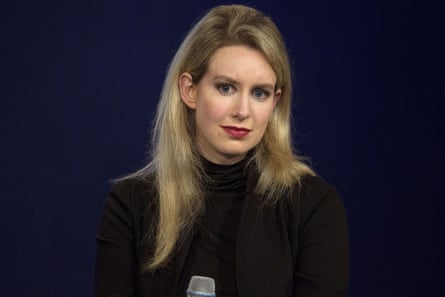
- 2004–2013: Operating largely in stealth mode during its early years, Theranos eventually secures substantial venture backing. Holmes cultivates a distinct persona—characterized by her blonde hair, unblinking gaze, signature black turtlenecks reminiscent of Apple co-founder Steve Jobs, and a cultivated deep voice—to project authority and gravitas in male-dominated technology circles.
- 2013–2014: Theranos partners with major pharmacy chains, including Walgreens, to deploy its proprietary "Edison" blood-testing devices. By 2014, the company achieves a valuation of $9 billion, and Holmes amasses a personal net worth estimated at $4.5 billion. She is featured prominently on the covers of major business and lifestyle magazines and receives widespread acclaim from political figures and media outlets.
- 2015: Investigative reporter John Carreyrou of The Wall Street Journal publishes a series of exposés revealing that Theranos is not using its proprietary Edison devices for the vast majority of its commercial blood tests, but instead relies on traditional, commercially available machines manufactured by third parties. Stanford medical professor John Ioannidis publishes a critical commentary in the Journal of the American Medical Association highlighting the absence of peer-reviewed scientific data supporting the company’s claims.
- 2016–2018: Regulatory scrutiny intensifies. The Centers for Medicare & Medicaid Services (CMS) sanctions Theranos, revoking its laboratory license and banning Holmes from operating a blood-testing facility for two years. Commercial partnerships dissolve, civil lawsuits mount, and the U.S. Securities and Exchange Commission (SEC) charges Holmes with "massive fraud." Theranos officially dissolves in September 2018.
- 2021–2022: Following delays related to the COVID-19 pandemic and the birth of her first child, Holmes stands trial in federal court. A jury convicts her on four counts of wire fraud and conspiracy related to defrauding investors. In November 2022, U.S. District Judge Edward Davila sentences Holmes to 11 years and three months in federal prison.
- 2023: After multiple legal appeals and maneuvers to delay her reporting date, Holmes surrenders to Federal Prison Camp Bryan in Texas in May 2023 to begin serving her sentence.
The Anatomy of Persuasion: How Theranos Seduced Elite Backers
The survival and growth of Theranos for over a decade, despite a total lack of verifiable scientific validation, relied heavily on Holmes’s extraordinary capacity to sway high-profile individuals. Rather than appealing primarily to biomedical experts or clinical laboratory scientists—who would have immediately recognized the physical limitations and technical hurdles of microfluidic blood collection, such as sample clotting and hemolysis—Holmes targeted non-technical elites, billionaire industrialists, and former statesmen.

The company’s board of directors and investor roster read like a roll call of global power and influence, featuring media mogul Rupert Murdoch, retail magnate Carlos Slim, technology executive Larry Ellison, and former U.S. Secretaries of State Henry Kissinger and George Shultz. For these figures, backing Theranos offered an opportunity to participate in a venture that promised to transcend the superficial utility of consumer software applications and deliver genuine, life-changing medical advancements.
According to historians and medical professionals who observed her ascent, Holmes deliberately manipulated gendered expectations and leveraged the cultural anxieties surrounding Silicon Valley’s perceived superficiality. Margaret O’Mara, a history professor at the University of Washington and author of The Code: Silicon Valley and the Remaking of America, notes that Holmes positioned herself as a visionary solving fundamental human problems at a time when critics were increasingly questioning the societal value of mobile apps and social media platforms.
Furthermore, medical oncologists and researchers who encountered Holmes during her peak years have highlighted her reliance on absolute secrecy as a defense mechanism against technical scrutiny. When challenged regarding the fundamental laws of physics and biology—such as the inherent challenges of running expansive metabolic and genetic panels on minute sample volumes—Holmes routinely dismissed inquiries as attempts to steal proprietary trade secrets rather than addressing the underlying scientific validity of her platform.
Whistleblowers and Institutional Resistance
The unraveling of Theranos was catalyzed not by federal regulators or watchful venture capitalists, but by internal whistleblowers and rigorous investigative journalism. Among the most significant internal dissenters was Tyler Shultz, a Stanford graduate and grandson of former Secretary of State George Shultz. Having joined Theranos as an intern and later working full-time in research and development, Tyler grew increasingly alarmed by the systematic manipulation of test results and the routine practice of discarding invalid data points to conceal device malfunctions.
When Tyler raised these ethical and safety concerns directly to Holmes and other company executives, he faced swift retaliation, intimidation, and legal threats from Theranos’s aggressive legal team, led by attorney David Boies. The internal conflict placed immense strain on his relationship with his grandfather, who struggled to reconcile his personal affection and admiration for Holmes with the documented technical warnings raised by his own family member. George Shultz ultimately maintained his support for Holmes throughout much of the active phase of the scandal, illustrating the powerful psychological hold that charismatic founders can exert even over seasoned diplomats.
Concurrently, the academic community attempted to sound alarms. John Ioannidis, a professor of medicine and health research at Stanford University, faced intense pressure from Theranos representatives after publishing his 2015 critique in JAMA. Company representatives urged Ioannidis to retract his statements and meet with Holmes to review proprietary patent filings—documents that independent scientists later characterized as overly broad, vague, and functionally devoid of reproducible clinical validation data.
Cultural Implications and the Modern Technology Landscape
The legacy of Theranos extends far beyond the legal consequences faced by Elizabeth Holmes and her romantic and business partner, Ramesh "Sunny" Balwani. The scandal exposed systemic vulnerabilities within the venture capital ecosystem, where the fear of missing out ("FOMO") frequently supersedes rigorous scientific and financial due diligence. Investors eager to back the next generational talent have historically demonstrated a willingness to suspend skepticism, particularly when founders project absolute certainty and align themselves with the aesthetic and rhetorical markers of established tech icons.
In the years following the collapse of Theranos and the subsequent media adaptations—including the bestselling book Bad Blood by John Carreyrou, the Hulu miniseries The Dropout, and various documentary explorations—observers have frequently questioned whether the lessons of the scandal were truly internalized by the financial markets. The rapid expansion of artificial intelligence, private credit markets, and speculative biotech funding in the mid-2020s has demonstrated that the appetite for high-risk, founder-centric capital deployment remains largely undiminished.
Analysts and economic historians argue that the "founder culture" that enabled Elizabeth Holmes to raise nearly $1 billion for an unproven medical device remains a defining characteristic of modern American capitalism. As unprecedented amounts of capital concentrate in the hands of remarkably small circles of technology leaders, the Theranos collapse stands as a permanent historical benchmark—a reminder of the vital necessity of independent scientific verification, transparent peer review, and uncompromising institutional oversight in fields where human health and public safety are directly at stake.