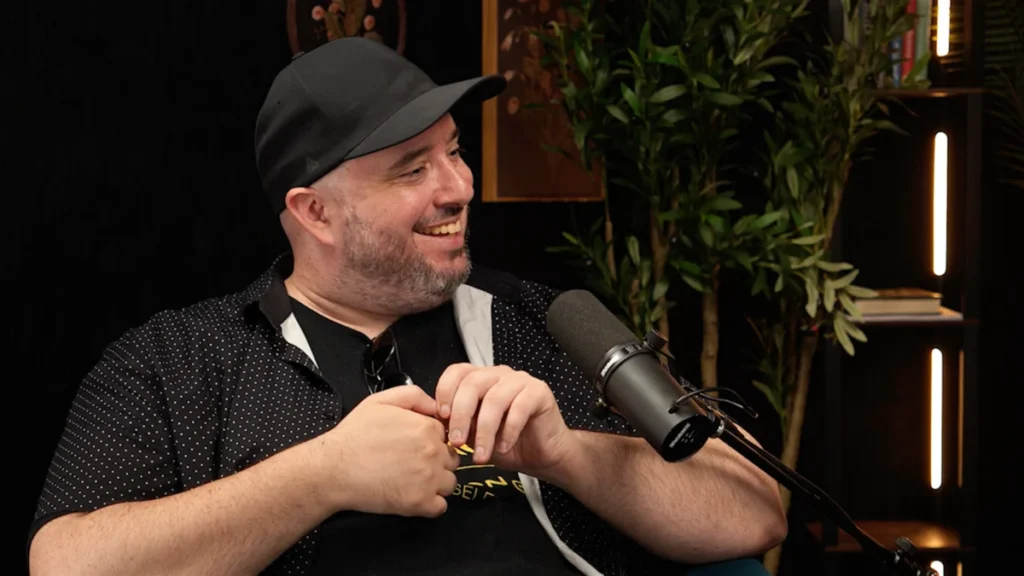
The landscape of American independent cinema has long been enriched by artists who operate seamlessly across multiple disciplines. Among them, Tim Blake Nelson occupies a singular space. Recognized widely for his memorable character work in cinematic milestones such as O Brother, Where Art Thou and The Ballad of Buster Scruggs, Nelson has continually gravitated toward narratives concerning outsiders, society’s margins, and the misunderstood. With his latest directorial venture, The Life and Deaths of Wilson Shedd, Nelson delivers what is arguably his most severe, uncompromising exploration of these themes to date.
Clocking in at 121 minutes, the film is a true-story-inspired drama that examines the anatomy of crime, institutional trauma, state-sanctioned punishment, and the harrowing, improbable connection forged between two deeply isolated individuals. Anchored by a star-studded cast that features Amanda Seyfried, Scoot McNairy, Wunmi Mosaku, Devyn Tyler, Missi Pyle, Grant Harvey, William Jackson Harper, Tim Blake Nelson himself, and Elizabeth Marvel, the project represents a twelve-year labor of love for its writer-director. Yet, beneath its meticulous technical execution and formidable central performances lies a grueling cinematic experience that grapples with uncomfortable moral questions regarding empathy, capital punishment, and society’s unyielding fixation on true crime.
Main Facts and Narrative Premise
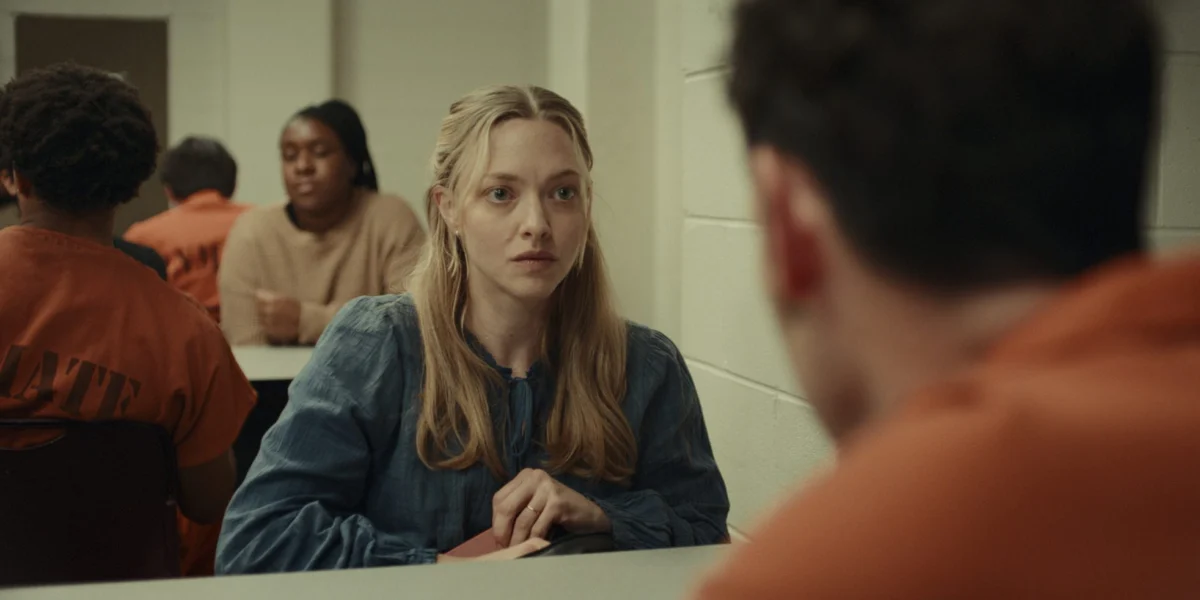
The Life and Deaths of Wilson Shedd centers on Karen, portrayed by Amanda Seyfried, an Oklahoma-based educator who finds herself trapped inside a profoundly abusive marriage. Seeking both a professional escape and a semblance of purpose, she accepts a teaching position at a maximum-security prison. Within these grim confines, Karen encounters Wilson Shedd, an inmate played by Scoot McNairy. Shedd is incarcerated on death row, facing execution for a brutal double-murder charge.
Despite the insurmountable barriers of their environments and the gravity of Shedd’s crimes, an unexpected intellectual bond forms between the two. Drawn to Shedd’s surprising literacy, keen intelligence, and articulateness, Karen initiates a correspondence centered around writing assignments. What begins as an academic outlet rapidly deteriorates into a dangerous psychological entanglement. For Karen, the incarcerated killer gradually transforms into an intoxicating, albeit perilous, distraction from the bleak reality of her domestic abuse.
This central dynamic serves as a provocative springboard for larger philosophical inquiries. The film challenges viewers to contemplate the boundaries of forgiveness, asking whether extending compassion to an individual who has committed heinous acts inherently diminishes the empathy owed to victims and their families. Furthermore, Karen’s fixation on a violent offender functions as a sharp cinematic mirror to modern society’s obsession with true crime, questioning how the contemporary appetite for mystery and tragedy often commodifies real-life suffering for public consumption.
Chronology and Structural Fragmentation
Rather than presenting this fraught relationship in a straightforward linear progression, Nelson fractures the narrative timeline of Karen and Wilson into three distinct segments. The film shifts fluidly—and at times jarringly—between the initial genesis of their prison classroom relationship, a savage and meticulously planned prison escape orchestrated by Shedd, and the final, agonizing days leading up to his ultimate execution.
This nonlinear architecture is designed to disrupt the audience’s moral footing. By juxtaposing the intellectual intimacy of their early exchanges with the stark violence of Shedd’s subsequent actions and his eventual death row confinement, Nelson forces viewers to constantly re-evaluate their perceptions of both characters. However, this editorial choice has polarized critics. While the thematic intent is clear, the erratic chronology occasionally feels manipulative rather than illuminating, obstructing the natural emotional resonance of the story and making the already heavy narrative trajectory feel fractured.
Supporting Data and Production Context
The realization of The Life and Deaths of Wilson Shedd represents a monumental hurdle cleared over more than a decade of development. Nelson spent twelve years refining the script, securing financing, and assembling a cast capable of carrying the immense emotional weight required by the material.
The production budget, while modest compared to major studio releases, was utilized strategically to establish an oppressive, claustrophobic atmosphere. Cinematography and production design work in tandem to evoke the institutional coldness of maximum-security facilities, contrasting sharply with the desolate, sun-bleached expanses of rural Oklahoma where Karen’s domestic life unfolds. The supporting ensemble—including Wunmi Mosaku, William Jackson Harper, and Tim Blake Nelson—operates within this framework to flesh out an institutional ecosystem defined by surveillance, desperation, and systemic decay.
Statistically and thematically, the film arrives at a time of heightened cultural discourse regarding the death penalty in the United States. According to data from the Death Penalty Information Center, executions and death row exonerations continue to spark fierce legal and moral debates nationwide. By setting a significant portion of his narrative within the shadow of an impending execution, Nelson taps directly into real-world statistics concerning the psychological toll of capital punishment on both inmates and correctional personnel, even if the film ultimately prioritizes character-driven psychology over systemic critique.
Performances and Artistic Execution
Despite the narrative hurdles introduced by its disjointed structure and relentless bleakness, The Life and Deaths of Wilson Shedd is profoundly elevated by the caliber of its lead performances. Amanda Seyfried delivers a career-best turn as Karen, navigating the character’s moral corruption and deep-seated trauma with unnerving subtlety. Seyfried avoids easy villainy or overt victimization, instead portraying a complex, fractured woman whose descent into obsession feels chillingly plausible within the context of her abusive marriage.
Opposite her, Scoot McNairy approaches the role of Wilson Shedd with formidable gravity. McNairy captures the dual nature of a well-read, deeply intellectual man who is simultaneously capable of horrifying violence. His portrayal resists easy categorization, offering a layered character study that grounds the film’s more abstract philosophical ambitions. The palpable onscreen chemistry between Seyfried and McNairy acts as the structural anchor of the picture, pulling the narrative forward even when its thematic cohesion threatens to unravel.
Technical credits further bolster the production. The sound design is notably stark, utilizing ambient institutional noise—heavy steel doors, echoing footsteps, and distant alarms—to heighten the psychological claustrophobia. Coupled with a restrained, melancholic musical score, the technical elements ensure that the film maintains an arresting sensory immersion throughout its two-hour runtime.
Broader Impact and Critical Implications
The release of The Life and Deaths of Wilson Shedd is poised to provoke intense debate among critics and audiences alike. By refusing to offer tidy moral resolutions or comforting character arcs, Nelson has crafted a viewing experience that is intentionally difficult. The film features depictions of severe violence, domestic abuse, the tragic loss of children, and the protracted cruelty of capital punishment, making it a grueling endurance test for viewers unaccustomed to unyielding cinematic darkness.
From a sociological perspective, the film serves as a timely critique of modern empathy. In an era dominated by true-crime documentaries and media sensationalism surrounding violent criminals, Shedd and Karen’s dynamic holds up an uncomfortable mirror to the public psyche. It questions why society often lavishes intellectual and emotional fascination upon convicted felons while the structural roots of domestic abuse and systemic violence are frequently overlooked.
Ultimately, while the film’s narrative structure and unrelenting tone occasionally undermine its intellectual ambitions, Tim Blake Nelson’s latest directorial effort remains a striking artistic achievement. It is a work defined by courage of conviction, stellar performances, and a willingness to stare unblinkingly into the darkest corners of human behavior. Though it may alienate viewers seeking conventional redemption or narrative clarity, The Life and Deaths of Wilson Shedd succeeds in doing what its director does best: leaving an indelible, lingering discomfort that demands continued conversation long after the credits roll.