Narrative Framework and Cinematic Scope
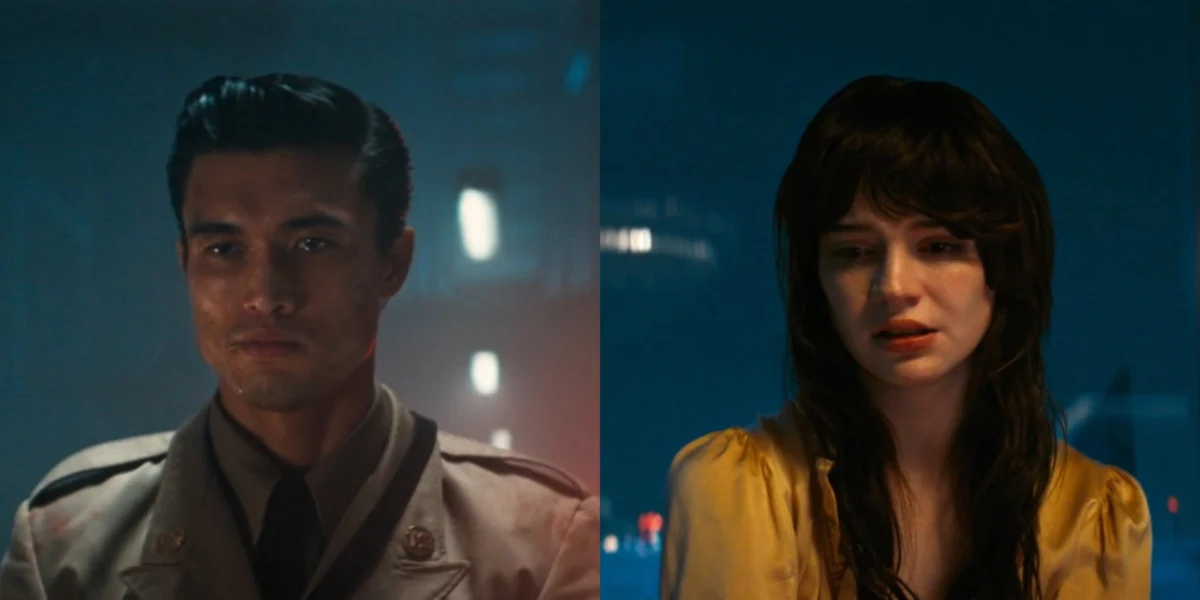
The narrative of the film centers on a troubled young protagonist, portrayed by Sophie Thatcher, who navigates the treacherous landscape of a futuristic metropolis. The city is besieged by a mysterious, dense mist that serves as a precursor to the emergence of a deadly and elusive entity. This atmospheric threat provides the catalyst for the film’s tension, blending elements of traditional horror with the speculative world-building of science fiction.
As the protagonist searches for her missing father, her path intersects with an American G.I., played by Charles Melton. Melton’s character is depicted as being on a harrowing odyssey of his own, attempting to rescue his daughter from a metaphorical and literal "hell" manifested within the urban decay. This dual-narrative structure allows the film to explore themes of parental desperation and the psychological toll of navigating an environment where the line between reality and nightmare is perpetually blurred.
The supporting ensemble includes an international cast featuring Havana Rose Liu, Kristine Froseth, Shioli Kutsuna, Aoi Yamada, Dougray Scott, Diego Calva, and Hidetoshi Nishijima. The inclusion of Nishijima and Kutsuna highlights the film’s global reach and its integration of diverse cinematic influences, a hallmark of Refn’s recent collaborative efforts.
Chronology of Production and Release
The development of the project began in late 2024, following Refn’s successful foray into long-form television streaming. Principal photography commenced in early 2025, utilizing a combination of practical locations and soundstages to construct the film’s "futuristic metropolis." Refn, who has historically favored neon-drenched aesthetics and minimalist dialogue, reportedly utilized new cinematography techniques to capture the "mist" that serves as the film’s primary antagonist.
Following an intensive post-production phase throughout the latter half of 2025, the film was officially selected for the 2026 Cannes Film Festival. It premiered out of competition, a slot often reserved for major genre works from established directors that seek to balance artistic merit with commercial appeal. Following its festival run, NEON secured the theatrical distribution rights, scheduling a wide North American release for July 24, 2026. This mid-summer release date positions the film as a sophisticated alternative to traditional tentpole blockbusters, targeting an audience that favors "elevated horror" and auteur-driven cinema.
Critical Reception and Technical Analysis
The reception at the Cannes Film Festival was characterized by a sharp divide among critics, a common occurrence for Refn’s filmography. Initial reviews were mixed, with some critics questioning the narrative’s pacing and its penchant for abstraction. However, there was a broad consensus regarding the film’s technical execution.
The visuals, managed by Refn’s recurring collaborators, were cited as a career-best for the director, successfully translating the suffocating nature of the mist into a visceral cinematic experience. Furthermore, the performances of Thatcher and Melton received significant acclaim. Thatcher, who rose to prominence in the television series Yellowjackets, was praised for her ability to convey vulnerability and grit in equal measure. Melton’s performance was noted for its physical intensity and emotional depth, continuing his trajectory as a leading man in the independent and prestige film sectors.
A standout element of the production is the musical score composed by the legendary Italian musician Pino Donaggio. Donaggio, known for his iconic work with Brian De Palma on films such as Carrie and Dressed to Kill, provided a soundtrack that blends classical suspense with modern electronic textures. Critics noted that Donaggio’s contribution was instrumental in bridging the gap between the film’s futuristic setting and its roots in classical horror tropes.
Supporting Data and Market Context
The release of this film comes at a pivotal time for NEON, a distributor that has increasingly specialized in high-concept genre films. According to industry data, the "elevated horror" market has seen a 15% increase in domestic box office share over the last three years, as audiences migrate toward original intellectual properties over franchise sequels.

Furthermore, the collaboration between Refn and Giordani suggests a strategic move toward more structured narrative storytelling, addressing previous criticisms of Refn’s work as being overly focused on "style over substance." Market analysts suggest that the July release date is intended to capitalize on the success of previous NEON summer hits, which have historically performed well by providing counter-programming to family-oriented animated features and superhero sequels.
The production also reflects a growing trend of "metropolis horror," where the urban environment is treated as a sentient or predatory force. This subgenre has seen a resurgence as global audiences grapple with themes of urban isolation and technological overreach.
Official Commentary and Artistic Intent
During the press cycle following the Cannes premiere, the lead actors and the director provided insights into the film’s thematic core. Sophie Thatcher described the project as an "intensive character study wrapped in a nightmare," noting that the physical demands of the role were significant due to the practical effects used to simulate the mist on set. Charles Melton commented on the "visceral nature" of the screenplay, emphasizing the emotional stakes of his character’s journey.
Nicolas Winding Refn has remained consistent in his artistic philosophy, stating in press conferences that his primary goal was to create a "sensory experience" that bypassed traditional logic in favor of emotional resonance. He described the film as a "poem to the dark side of the future," suggesting that the futuristic setting was less about technological prediction and more about the internal states of the characters.
The screenplay by Esti Giordani was highlighted as a crucial component in grounding Refn’s visual impulses. Giordani’s influence is seen in the film’s dialogue and the development of the secondary characters, which critics noted felt more fleshed out than in some of Refn’s previous works like The Neon Demon or Only God Forgives.
Broader Impact and Industry Implications
The release of the film is expected to have several long-term implications for the industry. First, it reinforces the viability of mid-budget science fiction films in a theatrical landscape often dominated by high-budget franchises. By keeping production costs controlled while maintaining high aesthetic standards, Refn and NEON have provided a template for sustainable auteur-driven filmmaking.
Second, the film’s success or failure will likely influence the career trajectories of its young leads. For Sophie Thatcher, the film represents a major step into leading theatrical roles, while for Charles Melton, it solidifies his status as a versatile actor capable of handling genre-bending material.
Finally, the involvement of Pino Donaggio marks a resurgence of interest in "Golden Age" horror composers. His work on the film has already sparked discussions regarding the importance of melodic, tension-building scores in an era often dominated by ambient soundscapes.
As the July 24 release date approaches, the film remains one of the most talked-about projects of the year. Whether it will achieve cult status or mainstream success remains to be seen, but its impact on the 2026 cinematic landscape is already undeniable. The combination of Refn’s polarizing vision, a high-caliber cast, and the distribution muscle of NEON ensures that the film will be a subject of critical and academic discussion for years to come. In an industry often criticized for a lack of originality, the production stands as a testament to the enduring power of the director-as-creator, pushing the boundaries of what a science fiction horror thriller can achieve in the modern era.