The transition into adolescence often marks a significant period of growth and burgeoning independence for teenagers. This phase frequently involves navigating the responsibilities and rewards of part-time employment or engaging in volunteer work. These experiences, while ostensibly focused on earning supplemental income, gaining professional experience, or contributing to the community, can also serve as crucibles for developing crucial life skills. Teens learn to hone their organizational abilities, master time management techniques, and refine interpersonal communication. The satisfaction of a job well done is often a powerful motivator. However, within the narratives of Sinclair Smith’s "The Waitress" (1992) and R.L. Stine’s "The Knife" (1992), these seemingly ordinary adolescent endeavors take a decidedly dark turn, transforming into life-threatening ordeals for protagonists Paula McLaughlin and Laurie Masters, respectively.
The Dog House Diner: A Front for Sinister Schemes
Paula McLaughlin’s entry into the workforce begins with the quintessential teenage desire for financial independence and social integration. Having transferred to a new school mid-year, Paula finds herself grappling with the typical challenges of adolescent social dynamics: established friend groups, academic struggles, and navigating the complex social hierarchy. Her daydreaming in English class and an inadvertent entanglement with popular girl Coralynn’s boyfriend, Garth, further complicate her assimilation. It is against this backdrop of social awkwardness that the opportunity to work at the local diner, the Dog House, presents itself. For Paula, it’s a chance to earn money and, more importantly, to connect with her peers, both the fellow waitresses and the high school students who frequent the establishment.
Paula, lacking prior waitressing experience, secures the position by exaggerating her qualifications. Trixie, the Dog House’s owner and a seasoned waitress herself, sees through Paula’s deception but grants her a probationary period, perhaps recognizing a kindred spirit or a valuable, albeit inexperienced, addition to her staff. The Dog House, a central hub for the town’s youth, quickly reveals a complex social ecosystem. Among Paula’s fellow waitresses are Virgil, an academic prodigy focused on securing a scholarship, and Cookie, whose priorities seem to diverge sharply from academic pursuits, even contemplating dropping out to work full-time at the diner. While the waitstaff offers a supportive environment, the patrons present a different challenge. Coralynn, whose aunt is Trixie, leverages her familial connection to gain free meals and preferential treatment, while simultaneously orchestrating a campaign of harassment against Paula.
Escalating Threats and Unseen Dangers
The diner, initially a source of potential camaraderie, becomes a stage for increasingly bizarre and menacing incidents. These range from petty, albeit messy, pranks – like loosening condiment lids, leading to unfortunate sartorial and culinary mishaps for Coralynn and Garth – to genuinely disturbing threats. Anonymous notes, scrawled on napkins and order tickets, carry chilling messages such as, "Think you’re funny? YOU JUST MIGHT DIE LAUGHING!" and "Better watch out or you’ll have a bad accident." The danger escalates when Paula is injured by a steak knife found in her apron pocket. A particularly shocking prank involves a rat being revealed from beneath a serving dish intended for Coralynn’s table, a ruse later revealed to be a clever, albeit revolting, mechanical toy. The uncertainty of distinguishing between Coralynn’s malice, harmless pranks, and genuine threats leaves Paula in a constant state of alarm.
The peril, however, extends beyond the confines of the Dog House. Paula’s car is sabotaged with sugar in the gas tank, designed to strand her on a desolate road. Anonymous, threatening phone calls plague her at home, and her kitchen window is shattered by a thrown rock. The threats are not isolated to Paula; Virgil’s computer disks, crucial for her scholarship application, are stolen from her locker, jeopardizing her academic future. The town itself offers little respite, with only two establishments – the Dog House and an ice cream parlor called Scoops – serving as social gathering points. The closure of a local drive-in, following a boy’s poisoning death, underscores a pervasive sense of unease. The narrative paints a grim picture where simple teenage activities, like socializing or working, become fraught with danger, forcing Paula and her friends to constantly balance their responsibilities with the urgent need for survival.
Trixie’s Descent: Insecurity and Escalating Violence
The adult figures within Paula’s environment prove to be as unpredictable as the dangers she faces. Trixie, the diner owner, oscillates between warmth and aggression. Her initial actions, such as briefly locking Paula in the walk-in freezer as a "safety demonstration," hint at a volatile temperament. Trixie’s dismissive attitude towards Paula’s fears, exemplified by her comment, "I’m sure you had better things to do over at the high school than worry about a little thing like this job," reveals a lack of empathy and a distorted perception of responsibility. Trixie’s own past, marked by dropping out of high school and cosmetology school to pursue waitressing, and her subsequent ownership of the diner, creates a complex internal landscape. She harbors a deep-seated jealousy of the teenagers’ perceived freedom and their aspirations for new experiences, feeling overlooked and underestimated by them.
This deep-seated insecurity fuels Trixie’s descent into criminality. Convinced that the teenagers look down on her, she orchestrates the menacing pranks. The climax of her destructive behavior occurs when Paula returns to the diner late at night to retrieve a forgotten script for the high school play. Trixie confronts Paula in the empty diner, confessing her weariness with continually training new young employees and her resentment of their perceived intellectual superiority. This resentment culminates in her confession of poisoning a boy at the drive-in, driven by his incessant bragging about his college scholarship. Similarly, Virgil’s academic promise intimidates Trixie, leading her to sabotage her project. Paula, simply by existing and perhaps embodying the youthful optimism Trixie resents, becomes a target for murder. Paula’s quick thinking allows her to subdue Trixie, a violent confrontation that exposes the depth of Trixie’s psychological distress. Her immediate remorse upon apprehension – "How could I do all those things? Oh, no, oh, no, they’ll find out now and I’ll get in trouble" – suggests a profound disconnect from her actions, hinting at underlying psychological issues that may require professional intervention.
Shadyside Hospital: A Den of Deception and Danger
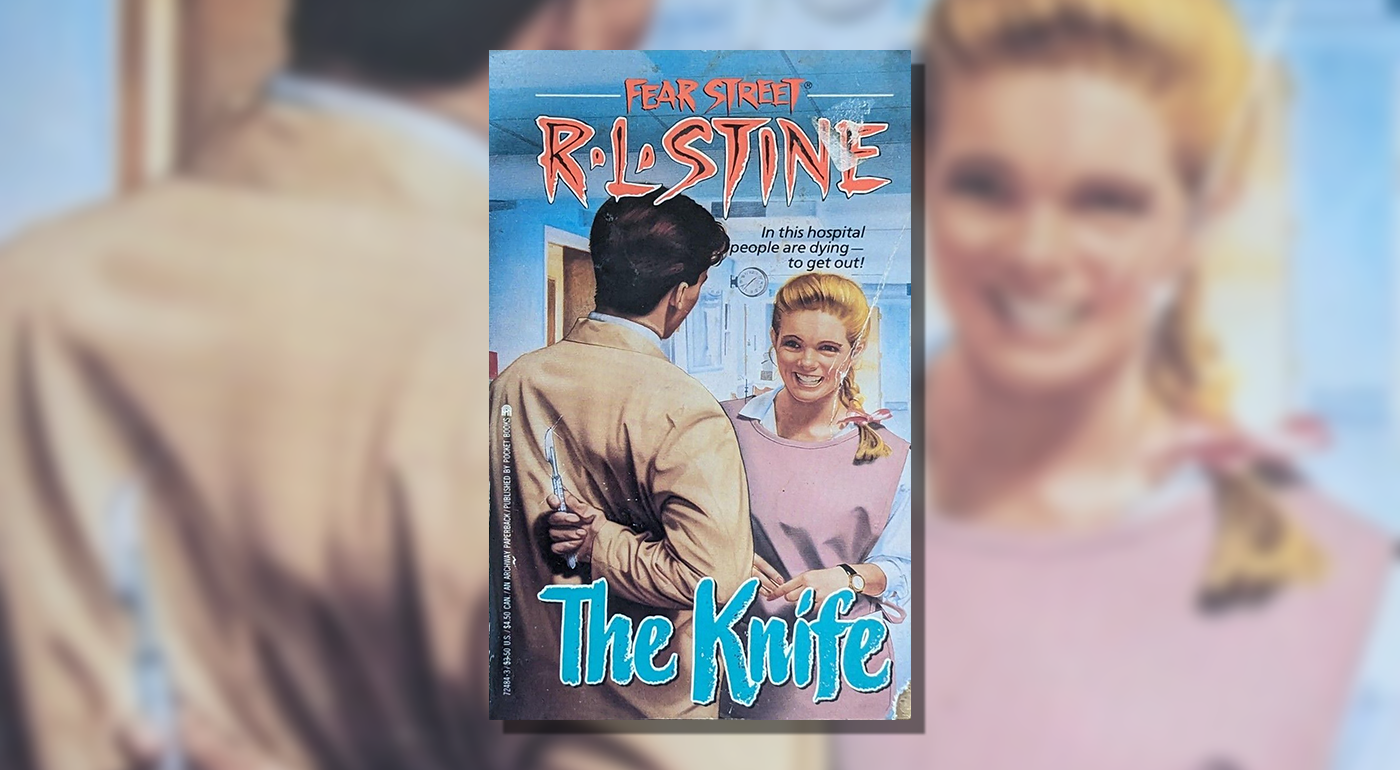
Parallel to Paula’s ordeal, Laurie Masters embarks on a summer volunteer program at Shadyside Hospital, aspiring to a career in medicine. Her duties include administrative tasks, assisting doctors, and delivering items to patient rooms. The pediatric ward, in particular, captures her interest, offering a glimpse into the realities of healthcare. The presence of her best friend, Skye Keely, and a charming new volunteer, Rick Spencer, adds elements of youthful romance and social interaction to her summer.
Laurie’s volunteer work quickly shatters any idealized notions she held about the medical profession. Nurse Edith Wilton, on the children’s floor, displays a chilling lack of compassion, reprimanding Laurie for comforting a frightened young patient, Toby Deane, stating, "Don’t waste your time… He won’t talk to you. He won’t talk to anyone. You’re only bothering him. And you’re in the way here, anyhow." The hospital’s atmosphere darkens further when Laurie discovers Nurse Wilton’s lifeless body in a construction-in-progress wing. Her attempts to alert authorities are met with disbelief and dismissal, attributed to a prank. Dr. Sherman’s dismissive advice – "Do me a favor… Don’t tell Dr. Brooks what happened. He’s just mad because I put a cadaver in his locker. If I don’t react, it’ll drive him crazy… Just pretend nothing happened, okay?" – highlights a disturbing level of unprofessionalism and a concerted effort to cover up the incident. The official explanation for Nurse Wilton’s absence – a lengthy vacation – is soon contradicted by news reports of a mutilated woman’s body found in a crashed car, later identified as Nurse Wilton, yet Laurie’s concerns continue to be marginalized.
The Unraveling Conspiracy and Laurie’s Fight for Justice
The danger does not cease with patient discharge. Laurie becomes increasingly concerned about Toby, a young boy who exhibits profound fear of his mother. During his release, Toby confides in Laurie that the woman accompanying him is not his mother, but is too frightened to elaborate. Laurie’s subsequent visits to Toby’s home, ostensibly for a hospital fundraiser, reveal a disturbing pattern of maternal abuse. Toby’s fluctuating recognition of Laurie and his consistent fear confirm Laurie’s suspicions that he is in grave danger. Her decision to investigate further leads to her being taken hostage and tied up in the basement. After escaping, she kidnaps Toby, intending to bring him to the hospital for protection.
The hospital administration, far from being a sanctuary, becomes complicit in the unfolding tragedy. Dr. Price, the hospital director, prioritizes silencing Laurie over protecting Toby. It is revealed that Dr. Price operates an illegal adoption ring, orchestrated from the pediatric floor, where children are abducted and sold to adoptive parents for substantial sums. Toby is a victim of this scheme, with his twin brother, whom Laurie had mistaken for Toby on multiple occasions, already placed with a new family. Rick Spencer’s involvement stems from his personal connection to the ring; his sister, also named Laurie, was kidnapped by Dr. Price, fueling his determination to recover her. Nurse Wilton had uncovered Dr. Price’s illicit activities and was attempting to blackmail him, leading to her murder. Laurie’s aunt, conducting an audit of hospital finances, also stumbles upon irregularities, placing her on Dr. Price’s target list.
Confrontation and Escape
Dr. Price lures Laurie and Rick into the under-construction wing of the hospital, intending to eliminate them and maintain his criminal enterprise. However, his recklessness leads to a fatal fall down an open elevator shaft. Rick’s quick action saves Laurie from a similar fate, and the narrative concludes with the implication that the abducted children are safely returned to their families.
Analysis of Teenage Agency and Adult Failures
While Paula and Laurie may engage in social activities alongside their work responsibilities, their dedication and seriousness are undeniable. They don’t merely perform their duties; they actively seek truth, questioning the mysterious pranks at the diner and Toby’s palpable fear of his "mother." Their persistence in uncovering answers, even when met with resistance and escalating danger, highlights their moral courage and commitment to protecting others. They embody a proactive approach to problem-solving, refusing to be passive victims.
Both protagonists find themselves thrust into complex adult situations, far beyond their years and emotional readiness. In "The Waitress," Trixie’s violent actions are rooted in her own insecurities and a projected sense of being judged. Paula’s final realization, "Poor Trixie, you wanted to get back at everybody who thought you were dumb for being a waitress—and the only one who thought that was you," encapsulates the self-inflicted nature of Trixie’s torment. The girls who work for Trixie admire her resilience, not her choices, a sentiment Trixie, blinded by her own perceived victimhood, cannot comprehend.
Conversely, Dr. Price in "The Knife" operates not from insecurity, but from a position of perceived authority and confidence. He exploits the trust placed in him by colleagues and patients alike, using his respected status to facilitate his criminal endeavors, assured of his impunity. While nurses defer to him and Laurie initially trusts him to handle her concerns, this faith is tragically misplaced, as he ultimately attempts to murder her to protect his illicit operation.
The Unreliable Adult and the Courage of Youth
Despite their vastly different motivations and life circumstances, both Trixie and Dr. Price represent a profound failure of adult responsibility. Driven by inferiority complexes or insatiable greed, they exhibit a disturbing inability to manage their own issues, leading to the exploitation and suffering of those weaker than themselves. The boy poisoned by Trixie and the children trafficked by Dr. Price serve as stark reminders of the devastating consequences of adult malfeasance. Echoing the timeless trope of the "meddling kids," Paula and Laurie, though not explicitly tasked with detective work, rise to the occasion. They challenge the adults’ actions, holding them accountable and, in doing so, safeguard themselves and their communities. Their journeys underscore the potent combination of courage, determination, and a fundamental sense of justice that can emerge from unexpected quarters, even within the seemingly ordinary context of teenage employment.