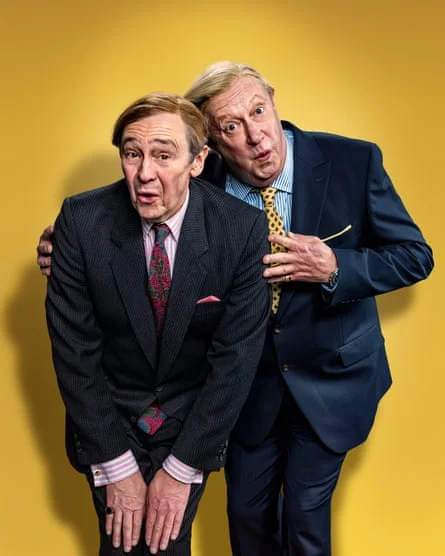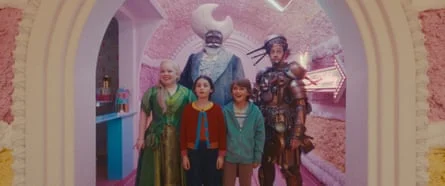
The landscape of film casting has undergone a profound transformation since the early 1980s, a period marked by choices that, in retrospect, appear notably out of step with contemporary sensitivities. In 1980, Max von Sydow was cast as Ming the Merciless in "Flash Gordon," a decision that, while showcasing a legendary actor, has been critiqued for casting a Swedish actor in a role historically associated with East Asian characters. Similarly, the 1981 film "Charlie Chan and the Curse of the Dragon Queen" saw Peter Ustinov take the lead, a casting choice that ignited protests at the time, highlighting early concerns about cultural representation in Hollywood. These historical examples serve as a stark contrast to the current era, where filmmakers face intense scrutiny for casting decisions, particularly in projects that diverge from broader societal expectations of diversity. This week, Andy Serkis, director of the upcoming "The Lord of the Rings: The Hunt for Gollum," found himself at the center of such a debate regarding the film’s predominantly white cast.
The BBC Interview and Serkis’s Defense
During an interview with the BBC, Serkis was questioned about the casting of exclusively white actors in major roles for "The Hunt for Gollum." In his response, Serkis appeared to attribute the casting choices to the source material’s inherent influences, stating, "Tolkien himself was influenced a lot by Norse mythology, there’s a lot of that feeling. The Shire feels very, very much like a very, a very white, you know… They’re not very concerned about what goes on beyond the borders of the Shire, but they know they don’t want people coming in."
He further acknowledged the criticisms, adding, "Yes, there have been criticisms. This particular film is somewhat acknowledging that. But I don’t think we will be doing a politically correct just-casting-for-the-sake-of-casting-and-ticking-boxes version of the film. So, it’s where relevant basically." This statement suggests a commitment to thematic authenticity over a perceived superficial adherence to diversity mandates.
Historical Context and the Evolution of Casting Norms
The early 1980s were a different time in terms of public discourse around representation in media. While protests did occur, the mainstream conversation about casting diversity was less developed than it is today. The casting of actors like Max von Sydow as Ming the Merciless, a character whose origin and portrayal have been subject to discussions about racial stereotypes, and Peter Ustinov as Charlie Chan, a role that has historically been a point of contention regarding yellowface casting, reflects a period where such concerns were either not widely articulated or did not carry the same weight in production decisions.
The intervening decades have witnessed a significant societal shift. Movements advocating for greater representation and inclusivity have gained momentum, influencing audience expectations and industry practices. The rise of social media has amplified these conversations, allowing for rapid dissemination of opinions and increased accountability for creative decisions. This contemporary environment necessitates that filmmakers carefully consider the implications of their casting choices, particularly in fantasy genres that, while fictional, often draw parallels and evoke cultural associations.

Analyzing Serkis’s Defense: The Tolkien Argument
Serkis’s invocation of J.R.R. Tolkien’s influences – specifically Norse mythology and the insular nature of the Shire – as the primary driver for the casting of "The Hunt for Gollum" has drawn considerable attention. The argument posits that the world Tolkien created, particularly its depiction of the Shire and its inhabitants, is intrinsically tied to a specific European cultural milieu.
However, this defense raises several points for critical examination. Firstly, it positions Tolkien, who passed away in 1973, as a direct arbiter of 21st-century casting decisions. Tolkien’s era, Britain in the 1940s, was less ethnically diverse than it is today. The concept of debating the racial representation of fictional beings in an imagined world, particularly one influenced by ancient European mythologies, would likely have been outside the scope of his immediate concerns. His focus was on intricate linguistic development, mythology, and the deep lore of Middle-earth.
Secondly, the reliance on Tolkien’s original text to dictate casting for a modern adaptation overlooks the inherent interpretative nature of filmmaking. Peter Jackson’s acclaimed "The Lord of the Rings" trilogy, released in the early 2000s, itself took significant creative liberties with Tolkien’s work. Timelines were adjusted, characters’ roles were expanded or altered, and visual interpretations were crafted to translate the written word into a cinematic experience. For instance, the portrayal of characters and the visual aesthetic of Middle-earth in Jackson’s films, while widely praised, were not slavishly dictated by literal descriptions but were imaginative interpretations. The visual grammar established in those films, which included a diverse array of beings and fantastical elements, set a precedent for subsequent adaptations.
Precedent Set by Previous Adaptations
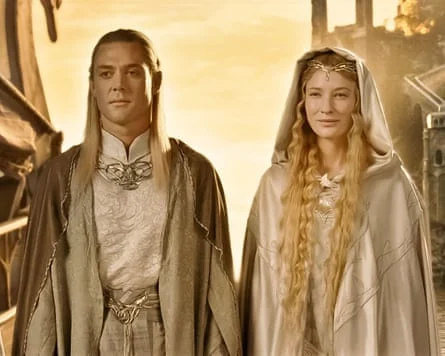
The "Lord of the Rings" film trilogy, directed by Peter Jackson, established a cinematic universe that, while rooted in Tolkien’s literature, also incorporated significant directorial interpretation. The visual language and character depictions in these films, which are the direct predecessors to "The Hunt for Gollum," were not strictly bound by a literal translation of every textual detail. For example, the films introduced a visual style for Elves and Dwarves that, while drawing from Tolkien’s descriptions, was ultimately a creative interpretation.
Furthermore, the discussion around casting in "The Rings of Power," the Amazon Prime series set in Middle-earth, offers a relevant parallel. This series controversially featured actors of color in prominent roles, such as Ismael Cruz Córdova as Arondir, an Elf. This decision, while celebrated by many for expanding representation, also ignited debate among some fans. Lenny Henry’s casting as the Harfoot Sadoc Burrows in the same series also demonstrates a willingness to cast actors of color in roles that might not have been explicitly detailed in terms of ethnicity in Tolkien’s original works. The fact that such casting decisions were made in "The Rings of Power," and that the world of Middle-earth has already been depicted with a broader spectrum of representation in another major production, makes Serkis’s current defense, which leans heavily on the original source material’s perceived limitations, appear less convincing to some observers.
Re-evaluating Tolkien’s World and its Modern Portrayal
While it is true that Tolkien’s geographical descriptions of Middle-earth often align with European latitudes, with Hobbiton situated near the latitude of Oxford and Minas Tirith closer to Florence, this alignment primarily relates to climate and geography. Tolkien himself described populations in the south as generally having darker complexions and those in the east exhibiting varied appearances. However, the extent to which these broad strokes should dictate casting in a modern, globalized context is a subject of ongoing debate.
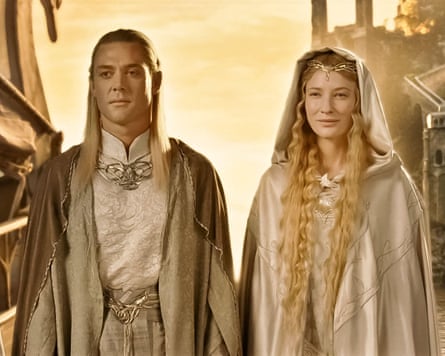
The fundamental issue with a rigid adherence to textual descriptions arises when considering the fantastical elements of Tolkien’s creation. The Numenoreans, from whom Aragorn descends, are described as being of near-superhuman stature, often approaching seven feet tall. This physical characteristic, while central to their lore, is a matter of fantasy, not ethnography. To then debate whether they should resemble specific modern European populations becomes a tangential argument when the core characteristic is their semi-divine lineage and extraordinary physique. Similarly, the Elves, with their immortality, uncanny abilities to move silently on snow, and exceptional eyesight, are beings whose existence transcends mundane biological limitations. Their inherent qualities are magical and mythical, not biological markers that can be rigidly assigned to specific real-world ethnicities. The question of whether an Elf, possessing such abilities, could be played by an actor of any racial background is more a question of creative interpretation than strict fidelity to a biological descriptor.
The Case of "The Odyssey" and Alternative Interpretations
The adaptation of Homer’s "The Odyssey" by Christopher Nolan provides a compelling counterpoint to the arguments presented by Serkis. When faced with the challenge of casting Helen of Troy, famously described as "the most beautiful woman in the world," Nolan chose Lupita Nyong’o. This decision, which diverges from historical interpretations of Helen as a fair-skinned European figure, exemplifies a contemporary approach to adaptation that prioritizes artistic vision and narrative relevance over strict adherence to traditional aesthetic assumptions or even, arguably, literal textual cues regarding physical appearance.
Furthermore, Nolan’s adaptation, like many modern historical or mythological epics, features a cast of predominantly British and US actors speaking modern English, often with American accents. This choice, while a departure from the linguistic realities of ancient Greece, is generally accepted as a pragmatic decision for accessibility and dramatic effect. The source material itself is replete with mythological beings: one-eyed giants (Cyclops), a multi-headed sea monster (Scylla), and enchanting bird-women (Sirens). The narrative’s fantastical elements are widely embraced without demanding strict literalism in their on-screen representation. Yet, when actors of color are cast in roles within such productions, the focus can, paradoxically, shift to their ethnicity rather than the broader artistic liberties taken with the source material. This suggests that the debate is not solely about fidelity to ancient texts but also about evolving societal expectations and the willingness of audiences and critics to accept diverse casting in universally recognized narratives.
Conclusion: Adaptation as Interpretation
The ongoing discourse surrounding the casting of "The Lord of the Rings: The Hunt for Gollum" underscores a fundamental truth about cinematic adaptations: every translation from page to screen is an act of interpretation. Peter Jackson’s "Lord of the Rings" films significantly reinterpreted Tolkien’s timelines and character arcs to suit a visual medium. Christopher Nolan’s approach to "The Odyssey" demonstrates a willingness to cast diversely and employ modern linguistic conventions. The fact that Viggo Mortensen, who portrayed Aragorn, stands at 5’11" rather than a towering height suggested by some textual interpretations, is a detail that rarely sparks controversy.
Directors and creative teams are afforded the prerogative to decide which elements of a source material are preserved, which are modernized, and which are set aside. In this context, Andy Serkis is indeed entitled to make the casting choices he believes best serve his vision for "The Hunt for Gollum." However, the assertion that Tolkien himself dictated these specific casting decisions for a project conceived over half a century after his death presents a narrative that, for many, stretches the bounds of credibility. The true essence of adaptation lies in informed creative choices, and the dialogue around representation in fantasy cinema continues to evolve, pushing the boundaries of how these beloved worlds are brought to life on screen. The challenge for filmmakers like Serkis is to navigate these evolving expectations with transparency and a clear articulation of their artistic intent, rather than solely relying on historical textual interpretations that may not fully encompass the complexities of modern storytelling and audience engagement.