Mariko Miyagi, a figure whose artistic endeavors profoundly intersected with her deep commitment to social advocacy, created a cinematic landmark with her 1974 documentary, "The Silk Tree Ballad." This film, a poignant exploration of life at a facility for children with disabilities, emerged from Miyagi’s personal transformation following intensive preparation to portray a character with cerebral palsy. This immersive experience catalyzed her pivot from a performing arts career to becoming a devoted disability advocate, a commitment beautifully and intimately captured in her directorial debut. "The Silk Tree Ballad" not only stands as a testament to Miyagi’s vision but also as a crucial document in the history of Japanese experimental filmmaking and disability rights.
Mariko Miyagi’s Path to Advocacy and the Genesis of Nemunoki Gakuen
Mariko Miyagi’s journey into advocacy was deeply personal and transformative. Initially recognized for her work in the performing arts, her perspective shifted dramatically when she undertook the challenging task of preparing for a role that required her to embody a character with cerebral palsy. This period of intense research and empathy-building was not merely an acting exercise; it became a profound awakening to the realities faced by individuals with disabilities. It exposed her to the societal barriers, misconceptions, and often-overlooked humanity of those living with physical and developmental challenges. This experience ignited a lifelong passion, propelling her to dedicate her life to advocating for the rights and dignity of people with disabilities.
Her activism was not confined to theoretical discourse; it manifested in tangible action. In 1968, Miyagi founded Nemunoki Gakuen (Nemunoki School) in Shizuoka Prefecture, a pioneering child care facility specifically designed to support children with physical and developmental disabilities. At a time when specialized care and inclusive educational environments for such children were scarce, Nemunoki Gakuen represented a radical departure from conventional approaches, which often leaned towards institutionalization or segregation. Miyagi envisioned a holistic environment where children could not only receive necessary physical therapy and academic instruction but also flourish creatively, emotionally, and socially. The school’s curriculum was thoughtfully designed, encompassing traditional subject-based lessons, essential physical therapy sessions, and enriching activities such as field trips, music, art, and dance, all aimed at fostering self-expression and building confidence.
The Landscape of Japanese Experimental Documentary in the 1970s
The decision to channel her advocacy through film, particularly an experimental documentary, was a strategic one, facilitated by the burgeoning independent film scene in Japan during the 1970s. This era witnessed a significant rise in experimental documentary filmmaking, characterized by a willingness to challenge conventional narratives and cinematic forms, often addressing socially marginalized subjects.
Crucial to Miyagi’s ability to realize her vision was the Art Theatre Guild (ATG). Established in 1961, ATG quickly became a vital force in Japanese cinema, operating as both a distributor and producer of independent and art-house films. Unlike mainstream studios driven by commercial imperatives, ATG provided a sanctuary for filmmakers to explore unconventional themes and artistic styles, often deemed too niche or controversial for broader release. Miyagi’s choice to partner with ATG was deliberate, aimed at preserving creative control over her presentation of subject matter often deemed taboo due to cultural stigma surrounding disability in Japan. ATG’s commitment ensured her vision—one of profound empathy and humanization—was realized without compromise.
"The Silk Tree Ballad" entered a cinematic dialogue that had already been profoundly influenced by groundbreaking works like Kazuo Hara’s "Goodbye CP" (1972). Hara’s film, a raw and unflinching look at a group of activists with cerebral palsy confronting an indifferent society, employed a radical, confrontational direct cinema style. It was a far grittier yet equally powerful work, directly highlighting the struggles and frustrations faced by individuals demanding recognition and rights. In contrast to Hara’s more radical, politically charged approach, Miyagi’s "The Silk Tree Ballad" frames these issues through a deeply empathetic lens, prioritizing compassion, inclusion, and the celebration of individual potential within a nurturing environment. While both films served as crucial interventions in Japan’s disability discourse, they offered distinct, yet complementary, perspectives on the human experience of disability.
A Humanizing Portrait: Inside "The Silk Tree Ballad"
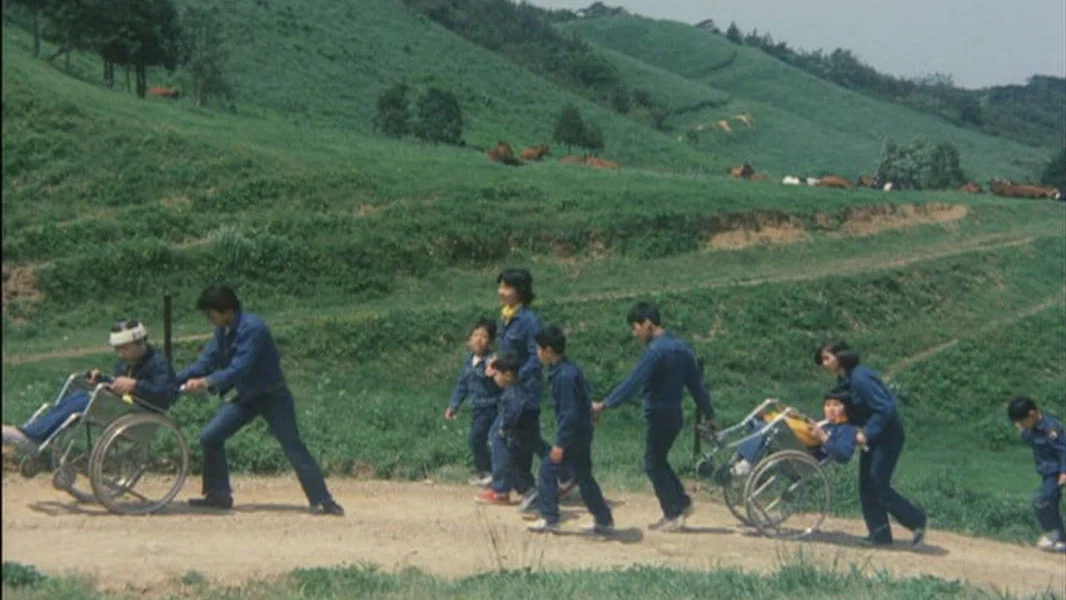
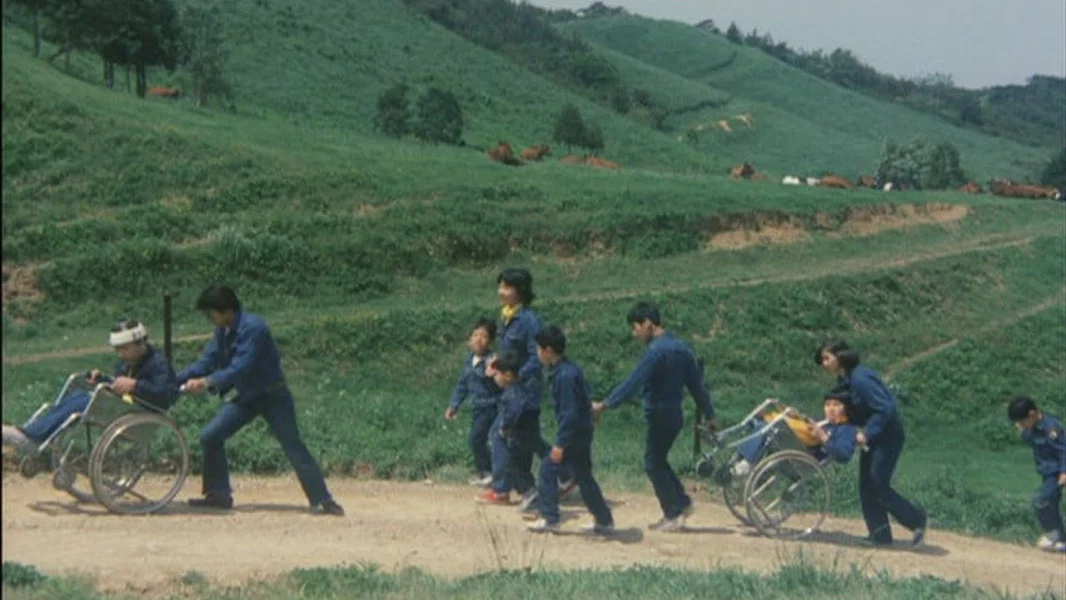
"The Silk Tree Ballad" meticulously documents daily life at Nemunoki Gakuen, offering viewers an intimate glimpse into the routines, challenges, and triumphs of its young residents. The documentary primarily follows two children, Yakko and Toshimitsu, both living with cerebral palsy. Through their participation in the school’s diverse activities—ranging from structured lessons to physical therapy and occasional field trips—viewers witness their navigation and confrontation of the challenges inherent in their condition.
Miyagi’s directorial approach is characterized by an unwavering commitment to authenticity and sensitivity. The film does not shy away from the difficult realities these children face. Health complications related to their conditions, sometimes necessitating surgery and ongoing accommodations, are depicted with honesty. The physical therapy sessions, often physically and emotionally taxing, are shown without dramatization, underscoring the children’s remarkable perseverance. Yet, crucially, Miyagi avoids any hint of exploitation. Instead, these challenges serve to highlight the children’s incredible resilience and the comprehensive support system provided by Nemunoki Gakuen.
Interspersed with these portrayals of struggle are moments of profound joy, growth, and connection. Witnessing Yakko gain the courage to deliver a speech, or Toshimitsu’s determined ascent of a sand hill, evokes an overwhelming sense of hopeful optimism. These instances of gradual growth and the celebrations that follow their accomplishments are emotionally triumphant, designed to tug at the heartstrings while simultaneously inspiring admiration. The film masterfully captures the innocence and pure, unfiltered joy the students express through their participation in activities and their burgeoning friendships, leaving viewers with a smile and a deep appreciation for their spirit.
Everything showcased in "The Silk Tree Ballad" directly reinforces Mariko Miyagi’s underlying message: the destigmatization of disability. She passionately emphasizes that these children, irrespective of their physical or cognitive challenges, possess meaningful potential and are unequivocally deserving of dignified care and unwavering support. By showing these children actively engaging in a diverse range of creative learning activities—singing, painting, dancing, and Japanese language lessons—while navigating their difficulties, Miyagi powerfully reinforces the notion that disability does not equate to incapacity. It is a visual argument for inclusion, demonstrating the richness and vibrancy of lives lived with disabilities when afforded the right environment and support.
Artistic Direction and Cinematic Craftsmanship
The presentation of "The Silk Tree Ballad" is distinctive, relying heavily on a largely observational direction where much of the footage speaks for itself. This approach grants the subjects agency, allowing their experiences and emotions to unfold naturally without overt directorial intervention. Complementing this observational style, Mariko Miyagi occasionally inserts her warm, motherly narration, offering insights and reflections that deepen the emotional resonance of the scenes. Her beautiful songs, often performed by the children or accompanying key moments, further enrich the film’s tender atmosphere, creating an intimate connection between the subjects and the audience.
The striking visual style, expertly crafted by cinematographer Kozo Okazaki, plays a pivotal role in the film’s impact. Okazaki patiently allows images to communicate intent and emphasize what is occurring, capturing a raw realism that never descends into pity. His lens respects the dignity of the children, presenting them as whole individuals rather than objects of sympathy. Furthermore, Okazaki introduces gorgeous cinematic compositions that emotionally align with Miyagi’s intent of reinforcing dignity. The careful framing, natural lighting, and thoughtful shot selection elevate the film beyond mere documentation, transforming it into a sensitive artistic statement that underscores the inherent worth and beauty of every child.
Cultural and Social Context: Disability Rights in Japan
To fully appreciate the significance of "The Silk Tree Ballad," it is essential to understand the cultural and social context of disability rights in Japan. While disability-rights activism has a long history in the nation, people with disabilities have often remained marginalized, facing persistent issues of segregation and discrimination. Historically, Japanese society has grappled with deeply entrenched cultural stigmas surrounding disability, often leading to isolation and a lack of public understanding. The medical model of disability, which views disability as a problem residing within the individual to be fixed or cured, dominated policy and public perception for many decades.
This often resulted in a "passive neglect," where even in the absence of overt malice, a lack of proactive policies, inaccessible infrastructure, and societal discomfort led to systemic barriers and a failure to fully integrate individuals with disabilities into mainstream society. Public discourse on disability was limited, and representation in media was scarce and often stereotypical.
In this context, the emergence of films like "Goodbye CP" and "The Silk Tree Ballad" in the 1970s was revolutionary. They dared to bring disability into the public eye, challenging prevailing norms and initiating crucial conversations. These films served as powerful counter-narratives to the passive neglect, offering vivid, humanizing portrayals that demanded recognition and empathy. They laid crucial groundwork for future advocacy and policy changes.
Timeline of Disability Rights in Japan:
- Pre-WWII: Welfare for people with disabilities largely fell under charity or family responsibility. Institutionalization was common, with limited public services.
- Post-WWII (1950s-1960s): Early legislation focused on rehabilitation and medical care. The Basic Law for Persons with Disabilities (1970) was a landmark, though its implementation was gradual.
- 1970s: A period of heightened grassroots activism, influenced by international disability rights movements. Films like "Goodbye CP" (1972) and "The Silk Tree Ballad" (1974) emerged as powerful voices, pushing for social inclusion and challenging stigma. The establishment of facilities like Nemunoki Gakuen exemplified a shift towards community-based support.
- 1980s-1990s: Increased focus on accessibility (e.g., barrier-free public spaces) and employment opportunities. However, challenges in social integration and attitudinal barriers persisted.
- 2000s-Present: A significant shift towards the social model of disability. Japan ratified the UN Convention on the Rights of Persons with Disabilities (CRPD) in 2014, signaling a commitment to a rights-based approach. This led to legislative changes like the Act on the Elimination of Discrimination against Persons with Disabilities (2016).
Despite these advancements, challenges remain, particularly in rural areas and in overcoming deeply ingrained societal attitudes. Films like "The Silk Tree Ballad" serve as a reminder of the foundational work that paved the way for current efforts towards a more inclusive society.
Broader Impact and Enduring Legacy
"The Silk Tree Ballad" is a masterful documentary that transcends its immediate subject matter, promoting empathy and advocacy while excelling as an artistic statement on a neglected issue in Japan. Upon its release, critics lauded Miyagi’s sensitive direction and the film’s profound humanism. Disability advocates hailed it as a landmark work that humanized people with disabilities on screen, offering a counter-narrative to prevalent stereotypes and contributing significantly to public awareness.
Beyond its initial reception, the film has sustained a remarkable legacy. It continues to be recognized for its educational value, offering insights into pioneering child welfare practices and the complexities of supporting children with disabilities. More importantly, its enduring message of empathy and inclusion remains profoundly relevant today, echoing in ongoing global efforts to destigmatize disability and champion inclusive societies. The "political undertones" that Miyagi thoughtfully weaves into her gentle direction—underscoring the right to dignity, support, and societal integration—are as powerful and pertinent in contemporary discourse as they were in 1974.
Mariko Miyagi, who passed away in March 2024 at the age of 90, leaves behind a remarkable legacy that extends far beyond the silver screen. Nemunoki Gakuen continues its vital work, a testament to her enduring vision. "The Silk Tree Ballad" stands not merely as a historical document but as a timeless call to compassion, a cinematic beacon that illuminates the path towards a more understanding and inclusive world. It is a powerful reminder that true advocacy often begins with deep empathy, beautifully articulated through the lens of a devoted artist and unwavering humanitarian.