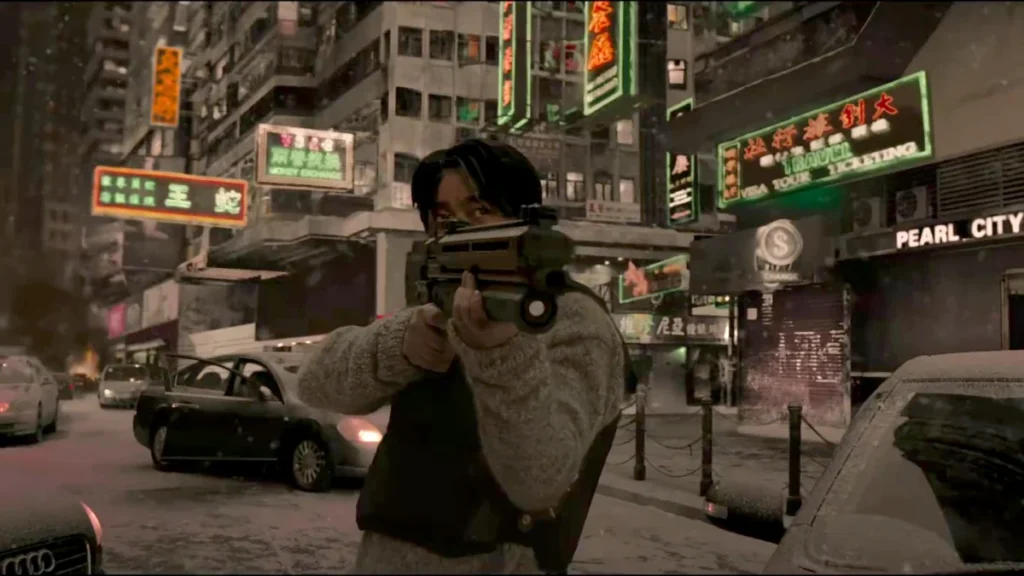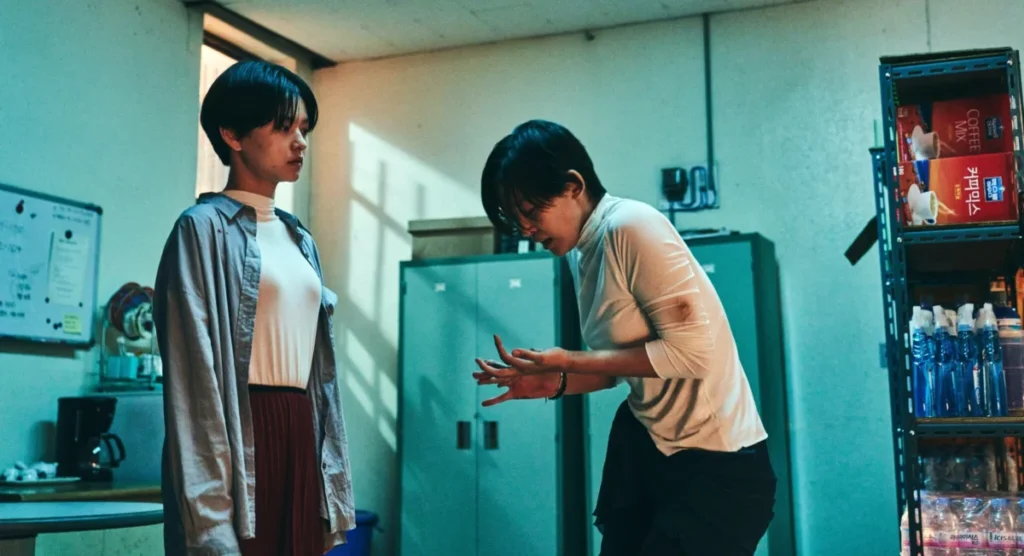
The cinematic landscape is poised for a profound and unsettling exploration of human darkness and inexplicable phenomena with the upcoming release of "Nameless," a psychological thriller slated to hit screens on May 22, 2026. The film promises to unravel a chilling narrative centered on an unprecedented mass killing that occurs in broad daylight at a bustling restaurant, leaving law enforcement bewildered by the inexplicable nature of the assailant’s actions. The mystery deepens significantly with the subsequent discovery of a decomposed woman’s body at the home of the primary suspect, escalating the complexity and horror of the case depicted within the film’s intricate plot.
The Unfathomable Attack: A Scene of Horrifying Anomaly
The core of "Nameless" revolves around a horrific incident at a fictional establishment, "The Crimson Spoon Bistro," during its peak lunch hour. According to early plot details, a middle-aged man, later identified as Taro Yamada (portrayed by veteran actor Jiro Sato), is captured on the restaurant’s high-definition security footage engaged in a brutal and indiscriminate attack. What renders the scenes particularly baffling and has reportedly left the fictional police force "speechless" is the apparent method of the killings: Yamada appears to slash multiple patrons and staff members to death with no visible weapon in his hands.
The CCTV footage, a central element of the film’s mystery, reportedly shows Yamada moving through the crowded restaurant with an unnerving calm, his actions resulting in fatal wounds despite the absence of any discernible instrument. This visual paradox challenges conventional understanding of forensic science and criminal investigation, presenting a unique dilemma for the fictional authorities tasked with piecing together the events. Initial reports within the film’s narrative suggest a scene of utter chaos and terror, with victims succumbing to injuries that defy immediate explanation. The sheer audacity of the attack—committed in a public space during daylight hours—is underscored by the inexplicable means, setting a tone of profound unease and supernatural implication that the film is expected to explore. Forensic teams in the narrative are depicted grappling with the impossibility of the wounds, searching for microscopic evidence of an invisible blade or an unknown assailant capability.
Investigative Crossroads: The Identity of Taro Yamada
The perpetrator, identified as Taro Yamada, quickly becomes the focal point of the fictional police investigation. His identification, likely facilitated by the clear CCTV footage and potential witness accounts, places a face to the horrifying events. Yamada, described as a middle-aged man, offers no immediate clues through his on-screen demeanor regarding his motives or the source of his inexplicable abilities. The casting of Jiro Sato in this pivotal role is a noteworthy decision. Sato, often recognized for his comedic and character roles in various Japanese productions, takes a dramatic turn as Yamada, promising a nuanced and potentially chilling portrayal of a man capable of such incomprehensible violence. This departure from his typical repertoire is anticipated to add layers of intrigue to his character, allowing audiences to question the nature of the evil he embodies.
The police investigation, as depicted in "Nameless," swiftly transitions from merely identifying the perpetrator to understanding the "how" and "why." The initial shock of the restaurant massacre is compounded by the sheer absence of a tangible weapon, pushing the fictional detectives into uncharted territories of criminal profiling and forensic analysis. The film is expected to highlight the frustration and disbelief of the investigators, who are confronted with evidence that defies logical explanation and established patterns of violent crime. This element not only drives the plot but also serves as a commentary on the limits of human understanding when faced with the truly anomalous.
A Deeper Darkness: The Discovery at the Suspect’s Residence
The narrative takes a darker, more complex turn when police, following standard procedure, arrive at Taro Yamada’s reported home address. What they discover there elevates the case from a perplexing mass killing to a potential nexus of profound criminality: the body of a decomposed woman. This discovery immediately introduces a new layer of horror and mystery, suggesting a protracted period of concealment and potentially a history of violence preceding the restaurant attack.
The advanced state of decomposition of the body presents significant challenges for the fictional forensic team. Identifying the victim, determining the precise cause and time of death, and establishing any relationship between the woman and Taro Yamada would be painstakingly difficult. This plot point not only expands the scope of the investigation but also deepens the psychological profile of Yamada, hinting at a disturbed individual with a hidden past. Was the woman a prior victim? A family member? A co-conspirator? The film is expected to meticulously unravel these questions, drawing the audience into a web of suspense and moral ambiguity. The implications of finding such a body at the suspect’s residence are manifold, suggesting a potential pattern of serial offending or a deeply rooted personal tragedy that may or may not be directly linked to the restaurant incident’s bizarre nature. This discovery immediately escalates the charges and the public’s perception of Yamada, transforming him from a baffling assailant into a potentially monstrous figure.
The Narrative Unveiled: "Nameless" as a Cinematic Exploration
"Nameless" is positioned as a high-concept psychological thriller that delves into themes of identity, the unknown, and the limits of human comprehension. While details regarding the director and full cast remain under wraps, the premise alone suggests a film that will challenge audience perceptions and push the boundaries of the genre. The film is likely to explore not just the mechanics of the crime, but also its broader societal impact – the fear generated by an assailant who defies logic, the strain on law enforcement, and the existential questions raised by unexplained evil.

The film’s title, "Nameless," itself hints at profound thematic depth. It could refer to the unknown nature of the perpetrator’s abilities, the anonymity of the victims, the nameless dread such an event instills, or perhaps even a deeper philosophical query about the loss of identity in the face of overwhelming, incomprehensible forces. The narrative is expected to meticulously build suspense, using the dual mysteries of the restaurant attack and the decomposed body to propel a gripping and thought-provoking plot.
Jiro Sato’s Transformative Role and Actor’s Insight
Jiro Sato’s casting as Taro Yamada is a significant talking point for "Nameless." Known for his versatile performances, often infusing roles with a unique blend of humor and pathos, Sato’s foray into such a dark and enigmatic character is highly anticipated. His ability to convey complex emotions and subtle menace could bring an extraordinary dimension to Yamada, preventing the character from becoming a mere caricature of evil. Industry insiders suggest that Sato’s casting aims to subvert audience expectations, leveraging his familiar persona to create an even more unsettling portrayal of a man capable of unimaginable acts.
In a hypothetical statement from the film’s production team, a spokesperson might comment on Sato’s dedication: "Jiro Sato has truly immersed himself in the challenging role of Taro Yamada. His commitment to portraying the intricate psychological layers of a character involved in such inexplicable events is remarkable. We believe his performance will be one of the most talked-about aspects of ‘Nameless,’ adding profound depth to the film’s unsettling narrative." This kind of casting decision often signals a film’s ambition to explore character psychology rather than relying solely on jump scares or explicit violence, making Sato a compelling choice to anchor the story’s unsettling core.
Beyond the Screen: Real-World Parallels and Societal Reflection
While "Nameless" is a work of fiction, its premise taps into real-world anxieties surrounding inexplicable violence and the limits of scientific explanation. The idea of an assailant acting without a visible weapon resonates with ancient myths and modern urban legends, touching upon a primal fear of the unknown. The film’s narrative, though fantastical in its central conceit, is likely to ground itself in the realistic reactions of society and law enforcement, portraying the confusion, panic, and desperate search for answers that would ensue in such a scenario.
Criminologists and forensic psychologists, if they were to hypothetically analyze the fictional scenario of "Nameless," would emphasize the profound psychological impact of such an event. Dr. Arisawa Kenji, a fictional expert in forensic psychology, might comment, "Cases that defy logical explanation, such as those where physical evidence contradicts eyewitness accounts or camera footage, create immense public anxiety. They challenge our fundamental understanding of safety and order, forcing us to confront the possibility of phenomena beyond our current scientific grasp. A film exploring such a premise can be incredibly powerful in reflecting societal fears and our innate need for explanation." The film’s ability to mirror these anxieties, even through a fantastical lens, is what gives it potential for significant cultural impact.
Production Insights and Thematic Resonance
The production of "Nameless" is expected to leverage cutting-edge cinematic techniques to visually articulate the inexplicable nature of Yamada’s attacks. Filmmakers would likely employ subtle special effects and masterful cinematography to create the illusion of harm without a weapon, ensuring the mystery remains central rather than relying on overt supernatural displays. The goal would be to maintain a delicate balance between realism and the uncanny, leaving audiences to ponder the true nature of Yamada’s abilities.
Thematic resonance extends to the broader implications of such a crime. How does society cope when justice cannot be served by conventional means? What happens when the tools of law enforcement—forensics, psychology, interrogation—prove inadequate? "Nameless" is anticipated to delve into these questions, offering a complex exploration of human resilience, the pursuit of truth, and the psychological toll of confronting the incomprehensible. The film’s narrative is not just a crime story; it is a philosophical inquiry into the boundaries of human knowledge and the darkness that can lurk within or beyond the everyday. The filmmakers’ intent appears to be to provoke thought and discussion long after the credits roll, positioning "Nameless" as a significant entry in the genre of cerebral thrillers.
Anticipation and Release
With its intriguing premise, the compelling casting of Jiro Sato, and its promise to deliver a thought-provoking cinematic experience, "Nameless" has already generated considerable buzz among film enthusiasts and critics. The release date of May 22, 2026, marks it as a key entry in the upcoming film slate, poised to captivate audiences worldwide. As the release approaches, further details regarding the director, full cast, and additional plot points are eagerly awaited, promising to shed more light on this enigmatic and deeply unsettling cinematic journey. The film stands ready to challenge viewers to confront the limits of their understanding and the profound mysteries that sometimes lie hidden in plain sight.