Yinan Wang’s journey from Beijing to Milwaukee offers a profound personal backdrop to his artistic endeavors, particularly his exploration of the immigrant experience. Having navigated the complexities of adapting to a new culture while retaining ties to his heritage, Wang channels these insights into his filmmaking. His latest short film, "Thick & Sweet" (甜腻), stands as a poignant testament to this ongoing thematic pursuit, delving into the multifaceted role of food within the Chinese American community. The film’s recent selection for the Chinese Film Festival Hamburg 2026 underscores its critical relevance and international appeal, positioning it as a significant voice in contemporary diaspora cinema.
The Enduring Significance of Food in Chinese Culture
The traditional Chinese adage, "Food is the first necessity of the people" (民以食为天), has resonated through generations, firmly establishing food as a cornerstone of daily life and cultural identity. This sentiment transcends geographical boundaries, becoming particularly potent within the context of the Chinese diaspora. For communities living outside mainland China, food frequently transforms into a powerful symbol of heritage, a tangible link to ancestral traditions, and a comforting reminder of home. It serves not only as sustenance but also as a communal language, a historical record, and a repository of memory.
The cinematic landscape has long recognized this profound connection. Films such as Peter Chan’s "Comrades: Almost a Love Story" (1996), which subtly weaves in the evolving culinary habits of Chinese immigrants in Hong Kong, and Sean Baker’s "Take Out" (2008), an intimate portrayal of a Chinese delivery worker in New York, both illustrate the deep entanglement of Chinese food and restaurants with the immigrant experience. These narratives often highlight how food establishments become vital social hubs, economic lifelines, and cultural touchstones for new arrivals, offering a sense of community and familiarity in unfamiliar lands. "Thick & Sweet" joins this rich tradition, yet seeks to carve out a distinctive interpretative path.
"Thick & Sweet": A Fresh Perspective on Familiar Narratives
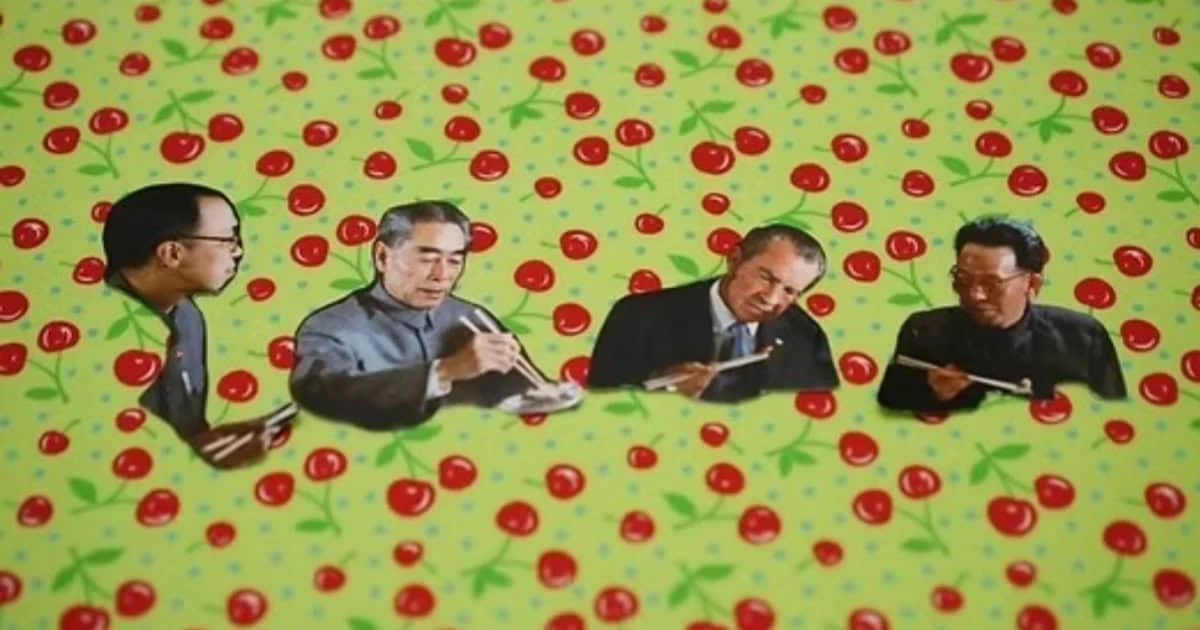
While the stories of immigrant struggle and cultural adaptation through food have been extensively documented, Wang approaches these themes with a refreshing originality in "Thick & Sweet." Instead of crafting a conventional documentary about Yen Ching, a now-closed Chinese restaurant in Milwaukee, Wang employs a vibrant collage-based methodology. He masterfully interweaves archival film footage, clips from classic television series, and pop art imagery, creating a playfully insightful and visually dynamic "video essay." This unconventional narrative structure allows him to blend American pop culture with traditional Chinese food culture, crafting what can be described as an emotional ethnography of the immigrant experience – one that is both accessible and intellectually incisive.
The choice of Milwaukee as the setting, a city perhaps less commonly associated with prominent Chinese immigrant narratives than coastal metropolises, adds another layer of depth. It subtly broadens the scope of the Chinese American story, illustrating that the experience of displacement and cultural negotiation is universal, extending beyond typical demographic centers. The defunct Yen Ching restaurant thus becomes more than just a historical footnote; it embodies the ephemeral nature of immigrant enterprises and the passage of time.
The Art of the Collage: Precision and Purpose
The collage-based approach utilized in "Thick & Sweet" might, at first glance, appear to be a straightforward method for injecting creative flair. However, the precision, curatorial acumen, and editing dexterity Wang demonstrates are remarkably sophisticated. The film’s title, "Thick & Sweet," directly references the iconic American Chinese dish, General Tso’s chicken, which Wang places at the narrative’s core as a powerful symbol of Chinese immigrant identity. This dish, often considered a quintessential representation of Americanized Chinese cuisine, embodies the fusion, adaptation, and sometimes compromise inherent in the immigrant journey.
Wang sharpens this symbolism through a compelling juxtaposition: a sequence depicting the preparation of General Tso’s chicken is intercut with footage of President Richard Nixon’s historic 1972 visit to China. This groundbreaking diplomatic overture marked a pivotal moment in US-China relations. In the background of this archival footage, Nixon’s voice can be heard expressing a mild complaint about the authentic Chinese food served being markedly different from the Americanized versions he was accustomed to. This subtle yet potent irony highlights the cultural gap and the American expectation of a "Chinese" experience filtered through a Western lens, even at the highest levels of diplomacy. It underscores how the perception of Chinese food, and by extension Chinese culture, has long been shaped by external interpretations rather than internal realities.
Following this, the film presents a clip from "The Detectress," a 1919 black-and-white silent short film. This particular segment, unfortunately steeped in racial prejudice common to its era, depicts a woman discovering a puppy in her bowl while dining at a Chinese restaurant. This jarring historical artifact serves as a stark reminder of the enduring and often baseless accusations and stereotypes – such as the false claim of eating cats and dogs – that have plagued Chinese people for over a century. The inclusion of this clip is a deliberate and unsettling moment, directly confronting the viewer with the deep-seated misunderstandings and discrimination that Chinese food culture and the Chinese diaspora have historically faced in America.
Navigating Compromise and Prejudice
Wang’s meticulous selection of footage is both deliberate and pointed, encapsulating two distinct yet intertwined facets of the Chinese American narrative. On one side, the film subtly reveals the compromises and adaptations Chinese immigrants made to their traditional cuisine in order to appeal to American palates and ensure economic survival. This culinary evolution, often born out of necessity, represents a form of assimilation, where cultural authenticity is reshaped to navigate a new societal context. General Tso’s chicken, for instance, is a product of this adaptation, a dish unknown in traditional Chinese cuisine but immensely popular in the West.
Conversely, the film unflinchingly exposes the long history of misunderstanding, xenophobia, and overt discrimination that Chinese food culture and its practitioners have endured in America. From the early days of Chinese immigration, often driven by the California Gold Rush and railroad construction in the mid-19th century, Chinese immigrants faced immense prejudice, culminating in exclusionary laws like the Chinese Exclusion Act of 1882. Chinese restaurants, while providing employment and community, were often targets of suspicion and racist caricatures. "Thick & Sweet" bravely confronts this uncomfortable legacy.
Despite the gravity of these themes, Wang skillfully maintains a relatively light tone throughout much of the film, frequently employing irony to unpack the struggles of Chinese immigrants. This playful veneer, however, gives way to a profound sense of disquiet in certain moments. A particularly striking close-up shot of greasy lips slicked with sweet and sour sauce transcends mere visual detail. It evokes a quiet discomfort, a subtle nausea that speaks to the insidious nature of discrimination and the silent burden of hardship carried across generations. This powerful image encapsulates the bittersweet reality of navigating two cultures, where apparent success often masks deeper anxieties and unacknowledged sacrifices.
Filmmaking Precision and Emotional Resonance
The editing in "Thick & Sweet" is a testament to Wang’s creative vision and technical prowess. His approach is both inventive and expansive, demonstrating a keen eye for juxtaposition. He masterfully pairs images of disparate styles – from archival footage to pop art – with familiar voice-overs from television shows, generating unexpected moments of humor and insight. Furthermore, he skillfully places contrasting pieces of footage addressing the same theme but imbued with entirely different tones, thereby inviting fresh perspectives and deeper critical engagement. Every piece of material is employed with precision and purpose, contributing meaningfully to the overarching narrative.
The film’s conciseness is remarkable; nearly twenty distinct pieces of video footage are seamlessly woven into a short film lasting less than fifteen minutes. Each segment performs its specific function, connecting fluidly to the next, creating a coherent and impactful whole. The result is a cinematic experience that first elicits laughter, then prompts profound reflection, leaving a lasting impression on the viewer. This economy of storytelling, where every frame and soundbite is meticulously chosen, amplifies the film’s message and emotional weight.
The Demolition of Yen Ching: A Symbol of Time and Struggle
The film concludes with a poignant sequence: the demolition of the Yen Ching restaurant played in reverse. This reverse chronology, set against the rhythmic ticking of clocks, underscores the inexorable passage of time and the fragility of human endeavors. The owner’s voice, counting the years spent in the United States – seven, eight, nine, ten, eleven, twelve – provides a deeply personal and humanizing element. These numbers represent not just years but decades of arduous labor, persistent waiting, and the relentless pursuit of the American dream, often intertwined with the complex and protracted process of securing a green card and establishing a new life.
Against the backdrop of often-stereotypical portrayals of Chinese Americans in mainstream popular culture, Wang’s capture of the Yen Ching restaurant feels exceptionally rare and precious. It transcends generic representations, offering an authentic, deeply personal, and collectively resonant account of a shared immigrant memory that is frequently overlooked or marginalized. The restaurant, in its rise and fall, becomes a microcosm of the broader Chinese American experience – a narrative of aspiration, resilience, and the bittersweet reality of building a life in a foreign land.
Chinese Film Festival Hamburg 2026: International Recognition
The selection of "Thick & Sweet" for the Chinese Film Festival Hamburg 2026 is a significant milestone for Yinan Wang and his film. The Chinese Film Festival Hamburg (CFFH) is known for its dedication to showcasing the diversity and vitality of Chinese-language cinema, providing a crucial platform for emerging and established filmmakers to reach a European audience. This festival typically features a curated selection of films that explore contemporary Chinese society, diaspora experiences, and cultural intersections, making "Thick & Sweet" a natural fit.
The festival’s programming often seeks films that challenge conventional narratives and offer unique perspectives on identity and belonging, which aligns perfectly with Wang’s innovative approach. For Wang, this selection not only grants international exposure but also validates his distinctive storytelling method and the universal resonance of his themes. It provides an opportunity for audiences beyond the United States to engage with the nuanced complexities of Chinese American identity, fostering cross-cultural dialogue and understanding. While no official statements from festival organizers are provided, it is reasonable to infer that the film’s artistic merit, thematic depth, and innovative form were key factors in its inclusion, highlighting its potential to spark meaningful discussions among festival attendees and critics alike.
Broader Impact and Implications
"Thick & Sweet" contributes significantly to the evolving discourse surrounding immigrant narratives and cultural identity in contemporary cinema. By using food as its central metaphor, the film taps into a universally relatable experience while simultaneously revealing the specific historical and cultural layers unique to the Chinese American community. The film challenges viewers to look beyond superficial perceptions of "ethnic food" and recognize the profound stories of adaptation, sacrifice, and cultural negotiation embedded within every dish.
Moreover, Wang’s experimental collage technique signals a potential direction for documentary filmmaking, demonstrating how archival material and pop culture references can be creatively repurposed to construct compelling and emotionally resonant historical ethnographies. This approach offers a powerful tool for filmmakers seeking to interpret complex social issues with both intellectual rigor and artistic flair. The film’s ability to elicit both laughter and deep thought suggests its potential to foster empathy and critically engage audiences on issues of prejudice, assimilation, and the ongoing quest for belonging in a multicultural society.
In an era where discussions around cultural appropriation, representation, and identity politics are increasingly prominent, "Thick & Sweet" offers a timely and nuanced contribution. It reminds us that behind every "Americanized" dish or familiar cultural trope lies a rich tapestry of human experience, struggle, and resilience. Yinan Wang’s film is not just about a closed restaurant or a popular chicken dish; it is about the enduring spirit of a people, the bittersweet taste of assimilation, and the ongoing effort to define oneself amidst the confluence of multiple cultures. The film’s journey to international festivals like Hamburg further cements its role in shaping a more diverse and inclusive understanding of global identities.