The recent iteration of Kumoricon, held in Portland, Oregon, served as a significant hub for industry professionals and enthusiasts, highlighting the continued relevance of niche Japanese cultural phenomena. Beyond the convention floor, major industry players, including Sega, Capcom, and Nintendo, have reached significant milestones or announced updates that reflect current trends in gaming preservation, community-driven development, and the modernization of classic intellectual properties.

Kumoricon: A Nexus for Japanese Culture and Industry Networking
Kumoricon continues to function as a vital platform for the cross-pollination of Japanese pop culture and academic inquiry. This year’s programming emphasized the intersection of traditional culture and modern media, with panels dedicated to the history of Japanese superheroes and regional cultural studies. Industry professionals utilized these spaces for high-level networking and direct engagement with the fanbase.
A recurring theme in this year’s convention was the role of voice acting and archival preservation. Notable interactions between attendees and industry veterans underscored a trend toward honoring legacy media. Furthermore, the presence of retro-gaming demonstrations—specifically the use of original hardware like the PC Engine—highlights a growing market demand for authentic historical gaming experiences, contrasting with the increasingly digitized landscape of modern console gaming.

Sega Commemorates 35 Years of Sonic the Hedgehog
Sega has officially launched a series of initiatives to celebrate the 35th anniversary of its flagship mascot, Sonic the Hedgehog. Debuting in 1991, the character was designed as a direct competitor to Nintendo’s Mario franchise, utilizing a design philosophy centered on speed, "attitude," and a distinct visual identity characterized by gloves and bold color palettes.
Historical Context and Evolution
The genesis of Sonic was a strategic response to Sega’s market struggles during the late 1980s. With the Master System failing to gain significant traction against the Nintendo Entertainment System, Sega pivoted to the Genesis (Mega Drive). The hardware advantage of the Genesis—specifically its higher processing speed—provided the technical foundation for the "fast-paced" gameplay that would define the Sonic series.

The timeline of the franchise’s expansion is marked by several pivotal moments:
- 1991: Original Sonic the Hedgehog release, establishing the rivalry with Mario.
- 1992: Sonic the Hedgehog 2 and the introduction of the "Sonic 2sday" marketing campaign, which standardized Tuesday as the industry-wide video game release day.
- 1990s-2000s: The franchise branched into multi-media, including two distinct animated series (The Adventures of Sonic the Hedgehog and Sonic SatAM) and a sprawling comic book universe through Archie Comics.
- 2020s: Transition to high-grossing live-action film adaptations, signaling a resurgence in mainstream brand equity.
Sega’s recent animated short, penned by Ian Flynn, functions as a thematic synthesis of these decades. By emphasizing the role of memory and utilizing musical motifs from the 16-bit era, the studio is effectively leveraging historical brand loyalty to bridge the gap between legacy fans and younger demographics.

Capcom and the Community-Driven Future of Mega Man
In a notable shift toward collaborative development, Capcom has announced the winning entry for its "Robot Master" design contest for the upcoming title Mega Man: Dual Override, scheduled for a Spring 2027 release. The winning design, "Cleanser Man," submitted by Brazilian artist Iregyuradabii, was selected for its distinct color theory and functional design, which centers on a hose-based arm mechanism.
The Significance of Global Fan Integration
The inclusion of international fan designs highlights a broader industry trend: the democratization of asset creation. By soliciting designs from a global pool of talent, Capcom is not only generating buzz but also fostering a sense of ownership among the player base.

The Mega Man franchise has long drawn influence from foundational Japanese media, such as Osamu Tezuka’s Astro Boy and the Kikaider series. The "Cleanser Man" reveal, alongside other confirmed masters like "Cook Man" and "Jet Man," suggests that Dual Override intends to maintain the classic mechanical aesthetic while incorporating modern, creative interpretations of robot utility. This project represents a potential blueprint for how legacy publishers can refresh aging franchises without alienating the core audience.
Technical Analysis of The Legend of Zelda: Ocarina of Time Remake
The recent release of the Ocarina of Time remake has sparked critical discussion regarding the balance between fidelity and modernization. Utilizing the engine developed for The Legend of Zelda: Breath of the Wild, the remake provides a case study in how modern development tools can be applied to legacy gameplay loops.

Mechanical Adjustments and User Experience
While the core puzzles remain largely faithful to the 1998 original, the remake introduces subtle refinements that address modern user expectations:
- Traversal and UI: The implementation of a dedicated jump button and a streamlined item hot-bar reflects a shift toward more fluid, action-oriented controls.
- Economic Balancing: Developers have recalibrated the in-game economy. By increasing the wallet capacity to 200 rupees and tightening the availability of currency, the game forces players to engage more meaningfully with the environment rather than relying on an excess of resources.
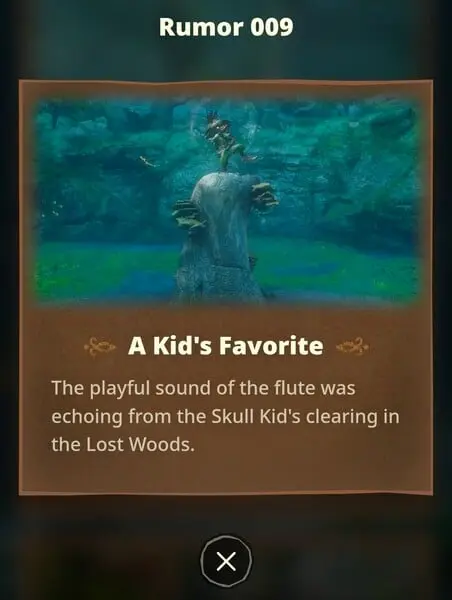
- The Zelda Notes Integration: Perhaps the most controversial addition is the "Zelda Notes" application. While traditional in-game achievements are often criticized for their potential to distract from gameplay, this system serves a dual purpose: it functions as a comprehensive data tracker and a bridge to a meta-scavenger hunt. By offloading these features to an external interface, Nintendo has maintained the purity of the in-game experience while satisfying the demand for modern progression tracking.
Implications for the Industry
The success of this remake suggests that there is a viable path for the restoration of classic titles that prioritizes "mechanical dialogue." Rather than attempting to rewrite the narrative or overhaul the fundamental design, the developers have chosen to converse with the history of the game. The removal of certain environmental cues—such as the distant view of Death Mountain from the Temple of Time—serves to highlight the original game’s iconic status; by changing even small details, the developers underscore the passage of time and the evolving nature of the Hyrule landscape.

Broader Industry Impact
The combined news of Sonic’s ongoing brand revitalization, the participatory development model of Mega Man, and the nuanced, modernization-focused approach to Ocarina of Time points to a maturation of the video game industry. Publishers are increasingly viewing their intellectual property not as static assets to be ported, but as evolving ecosystems that require careful maintenance of their history alongside a willingness to experiment with new technologies and distribution models.
As the industry approaches the end of the year, these developments offer a snapshot of a landscape that is increasingly conscious of its own history. Whether through the preservation of retro hardware at conventions or the deliberate, iterative remaking of foundational titles, the gaming industry is establishing a framework where legacy and innovation coexist. With Thanksgiving approaching, these milestones provide a reflective moment for developers and players alike to consider the long-term sustainability of the medium and the community that supports it.