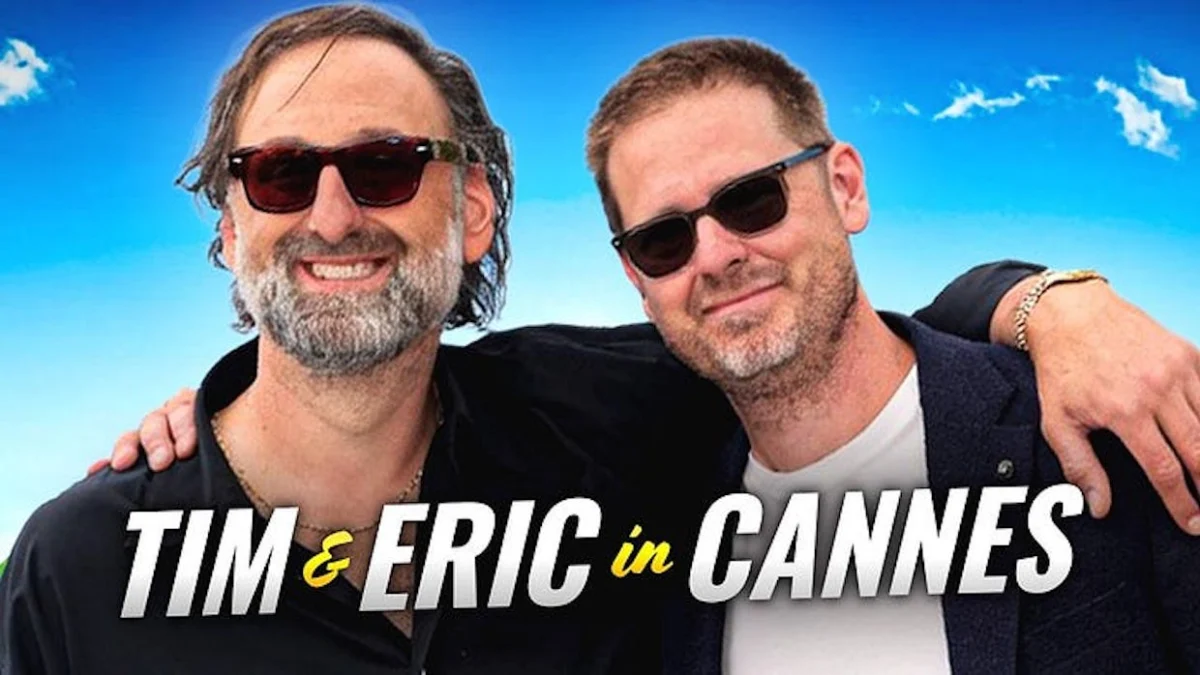
Cannes, France – The prestigious Cannes Film Festival, a global epicenter for cinematic artistry and industry dealings, played host this June to an unexpected yet fitting reunion: comedy pioneers Tim Heidecker and Eric Wareheim. Known collectively as Tim & Eric, the duo arrived on the French Riviera not to showcase their own brand of gleefully unhinged humor, but to celebrate their collaborative role in Quentin Dupieux’s latest feature, Full Phil. The film, described by Dupieux as "Emily in Paris in hell," premiered as part of the festival’s lineup, marking a significant, if somewhat surreal, moment for the artists whose influence on American comedy and internet culture has been profound.
The Cannes Experience: A Study in Contrasts
Heidecker and Wareheim’s impressions of Cannes were, predictably, a mix of awe and their characteristic skepticism. Wareheim, embracing a novel approach of "zero plans," expressed genuine excitement for the festival, a long-held aspiration since their formative years. "We grew up wanting to do this festival," he stated, reflecting on the magnitude of the event. Heidecker, however, offered a more critical, albeit humorous, perspective, likening the festival’s bustling atmosphere to a "Disney World-sized" version of The Grove, a Los Angeles shopping complex. He mused on the "absurdity" of the attendees in their evening gowns and tuxedos, questioning the "intentions" of many and the sheer formality of dressing up to watch a film.
This sentiment highlights a fascinating dichotomy inherent to Cannes: its dual identity as both a high-brow artistic showcase and a highly commercialized, celebrity-driven spectacle. With an estimated 40,000 attendees annually, including filmmakers, industry executives, journalists, and a significant contingent of high-profile personalities, the festival is a vibrant, often overwhelming, ecosystem. For independent artists like Tim & Eric, whose careers have often thrived on subverting traditional media, navigating this opulent landscape presents a unique challenge, as Heidecker pointed out the ironic lack of recognition for their influential work amidst the clamor for more conventional celebrities.
A Cinematic Reunion: Tim & Eric in Quentin Dupieux’s ‘Full Phil’
Their presence at Cannes stems from their collaboration with French filmmaker Quentin Dupieux, a kindred spirit in surrealist storytelling. Full Phil is one of two Dupieux films debuting at this year’s festival, underscoring his prolific output and unique vision. The film centers on a wealthy father (Woody Harrelson) attempting to reconnect with his daughter (Kristen Stewart) during a lavish trip to Paris, only for the daughter to find solace in a black-and-white horror movie she watches on a portable DVD player. Within this film-within-a-film, Heidecker and Wareheim star as "screwy scientists" reminiscent of Victor Frankenstein, expertly chewing the scenery as they pursue a reptilian creature.
This marks Wareheim’s third collaboration with Dupieux, following roles in Wrong Cops (2013) and Reality (2014). Their creative bond was forged through a mutual appreciation for each other’s work, with Wareheim initially drawn to Dupieux’s music (under the moniker Mr. Oizo) and Dupieux fascinated by the "cool shit" Tim & Eric were creating. This shared sensibility, characterized by offbeat existential meta-comedy and a rapid, DIY approach to filmmaking, naturally lends itself to their artistic partnership. Heidecker, who had not previously worked with Dupieux, was brought into Full Phil through Wareheim, undertaking a brief four-day shoot in Paris.
The duo described their acting process for Full Phil as a departure from their usual improvisational style. Dupieux, known for his precise vision, requested that they learn their lines, a directive Heidecker welcomed as it provided a clear framework. Wareheim highlighted Dupieux’s old-fashioned camera techniques, including a "wheelchair dolly," which were often synchronized with specific line deliveries. A notable challenge was the script’s origin: written in French and then translated, leading to an "odd" quality that Wareheim found difficult to lean on with his usual English language skills, yet ultimately contributed to the film’s unique universe. The actors were deliberately given only their "sides" rather than the full script, a common practice in projects with a strong authorial vision, allowing them to focus solely on their immediate roles within Dupieux’s meticulously constructed world.
The Evolution of a Comedy Powerhouse: From Adult Swim to Abso Lutely
Tim Heidecker and Eric Wareheim’s journey to Cannes is rooted in a career spanning over two decades, beginning as students at Temple University in Philadelphia. Their breakthrough came with Tim and Eric Awesome Show, Great Job! (2007–2010) on Adult Swim, a surrealist sketch comedy series that redefined absurdist humor. The show’s distinctive aesthetic, often described as public-access TV filtered through a "cracked funhouse mirror," deeply influenced internet culture and contemporary American comedy. Its lo-fi visuals, jarring edits, and uniquely unsettling characters resonated with a generation, establishing them as pioneers of a new comedic sensibility.
Beyond Awesome Show, their production company, Abso Lutely Productions, founded in 2007, became a significant incubator for independent and avant-garde comedy talent. It produced a slate of critically acclaimed and cult-favorite shows, including Nathan for You, The Eric Andre Show, and Check It Out! with Dr. Steve Brule. This venture initially served as a practical means to produce their own content, evolving into a platform for a broader community of like-minded creators. However, the landscape of television production underwent significant changes, particularly accelerated by the COVID-19 pandemic. Heidecker explained that shifts in network deals and the increasing trend of in-house production made maintaining a traditional production company with office space and staff economically challenging. This led to the strategic decision to sell Abso Lutely to Jimmy Miller’s company, focusing on development, particularly stand-up specials. The move reflects a broader industry trend where independent creators and smaller production houses face increasing pressure from consolidated studios and shifting content acquisition models.
Tim Heidecker’s New Frontier: InfoWars and the HEI Network
In a move that epitomizes his brand of meta-satire, Tim Heidecker recently announced his appointment as the new creative director of InfoWars. This development stems from The Onion‘s acquisition of Alex Jones’s propaganda empire, a highly publicized, satirical maneuver aimed at "wresting Alex Jones’s propaganda empire from his supplement-enhanced grip." Heidecker sees this as a proof-of-concept for a direct-to-consumer content model, similar to the HEI Network he built to host his multimedia psychodrama, On Cinema at the Cinema (2011–).
The HEI Network, a subscription-based platform, demonstrates the viability of creators directly monetizing their content and fostering a dedicated audience without relying on traditional network deals. Heidecker articulated this vision, stating, "If you’ve got people that know how to build websites and you have an audience, you can make stuff and have them pay for it." This strategy offers a pathway to produce "pure stuff" and sidestep the "development hell" often encountered with major studios, where creative control can be diluted by layers of questioning and second-guessing.
The InfoWars project is designed with a specific, albeit limited, satirical arc. Heidecker acknowledges the controversial nature of engaging with a platform known for its conspiracy theories and misinformation, particularly given Alex Jones’s public reaction. Jones, reportedly unable to grasp the satirical intent, branded Heidecker and his associates as "demonic pedophiles," further highlighting the blurred lines between reality and parody that Heidecker’s work often explores. This venture represents a bold experiment in weaponizing satire against its target, leveraging an established platform and audience to deliver a commentary on contemporary media and truth. It also reflects a growing trend among artists to seek alternative distribution and funding models to maintain creative autonomy in a rapidly evolving media landscape.
Eric Wareheim’s Diverse Pursuits: From Winemaking to Horticulture and ‘Onslaught’
While Heidecker delves into media critique, Eric Wareheim has expanded his profile as a multifaceted bon vivant. Beyond his comedic work, Wareheim has become a published cookbook author, a winemaker, and, most recently, a "garden-plant guru." His foray into horticulture involves importing unique plants from around the world, such as Australian grasstrees, which he describes as "stunning" for their evolutionary adaptations to brush fires. This diverse portfolio reflects a deliberate shift in personal and professional focus, driven by a desire for new forms of fulfillment. He noted a transition from "loving restaurants" to exploring botanical gardens, indicating a "post-food world" and a healthier switch in his obsessions.
Wareheim connects these diverse pursuits—comedy, winemaking, and plant cultivation—through a common thread: "giving someone this beautiful feeling." This philosophy underscores a commitment to crafting experiences that enrich and delight, whether through humor or natural beauty. He applies the same intense dedication that characterized his early collaborations with Heidecker to these new ventures, transforming them from personal interests into successful businesses.
In addition to his entrepreneurial endeavors, Wareheim is set to appear in Onslaught, an upcoming horror film directed by Adam Wingard, known for his work on You’re Next (2011) and the recent Godzilla x Kong: The New Empire (2024). Wareheim described Onslaught as a return to Wingard’s indie horror roots, albeit with a substantial budget. This role represents another departure from his typical comedic persona, requiring him to embrace a more conventional acting process. He shared valuable advice from Wingard: "Just let go. You’re not the director," which allowed him to immerse himself fully in the role without the pressures of creative oversight. This experience, including "messing up [his] lines in the hugest production value shot" involving explosions, highlights his willingness to explore new artistic territories and hone his craft as an actor.
Navigating Hollywood’s Changing Tides: Artistic Independence and Future Outlook
The careers of Tim Heidecker and Eric Wareheim offer a compelling case study in navigating the complexities of modern entertainment. Their early success with Adult Swim provided a rare environment of creative freedom, allowing them to forge a distinct comedic identity. However, their subsequent experiences with larger studios, including a period of "development hell" with a show at FX, exposed the limitations and frustrations of traditional industry structures. They recount being subjected to endless questions and second-guessing, hindering their ability to simply "make it" and "figure it out" as they went along, a process central to their creative ethos.
These experiences have solidified their commitment to artistic independence. Both Heidecker and Wareheim now prioritize projects that offer creative control and a direct connection to their audience. Heidecker’s ventures with the HEI Network and InfoWars exemplify this push towards direct-to-consumer models, while Wareheim’s diverse career paths in plants and acting roles that allow him to "let go" reflect a similar desire for fulfilling work on his own terms. "I’m only gonna do my own thing because it’s the only way that we can survive in this landscape and know that the amount of work we put into it will be represented on the screen," Wareheim asserted, articulating a sentiment shared by many artists grappling with the evolving industry.
Despite their individual pursuits, their collaborative dynamic remains robust. Even at Cannes, they found themselves "goofing around," capturing content for their own channels, demonstrating their enduring creative synergy. Their journey from niche cult figures to influential pioneers who have "changed the course of American comedy" while simultaneously grappling with the mainstream’s perception underscores their unique position in the cultural landscape. At Cannes, a festival often seen as the pinnacle of mainstream cinematic achievement, Tim & Eric stood as representatives of an evolving artistry – one that values autonomy, embraces the absurd, and continually seeks new avenues to connect with audiences, whether through surrealist cinema, satirical media takeovers, or the quiet beauty of a well-cultivated plant. Their presence was a testament to the enduring power of their vision, even as they humorously observed the "gilded tumult" of the world’s most famous film festival.