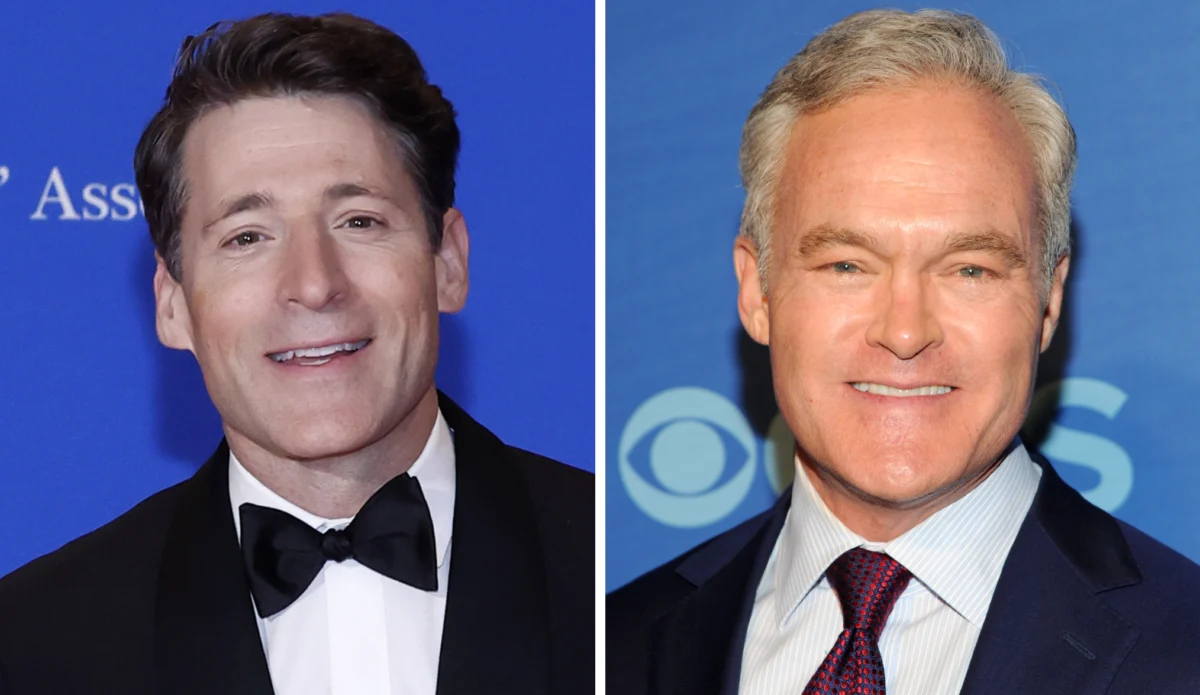
The landscape of American broadcast journalism shifted significantly this week as Tony Dokoupil, the current anchor of the CBS Evening News, delivered a poignant and high-profile tribute to his former colleague Scott Pelley. The broadcast, aired on Wednesday, followed the abrupt and controversial firing of Pelley from his long-standing position at 60 Minutes on Tuesday, June 2. The tribute served as a moment of reflection on a career spanning decades, even as it highlighted the widening rift within one of the nation’s most storied news organizations.
During the segment, Dokoupil addressed the audience from the same anchor desk Pelley once occupied, acknowledging the profound influence the veteran journalist had on the newsroom. "When I started at CBS, Scott Pelley was in this very chair, and still doing a dozen stories a year for 60 Minutes," Dokoupil remarked. He emphasized Pelley’s commitment to the foundational principles of the profession, noting that Pelley made it a point to meet every new correspondent to instill a sense of mission. Quoting James Madison, Dokoupil noted that Pelley viewed the freedom of the press as "the right that guaranteed all the others." He described Pelley as a journalist who worked every day to live up to the standard that being at CBS News meant being among the best in the world.
A Career Defined by Front-Line Reporting and Integrity
The tribute was anchored by a comprehensive montage that chronicled Pelley’s distinguished tenure at the network. Viewers were shown archival footage of Pelley reporting from Ground Zero in the immediate, ash-covered aftermath of the September 11 terrorist attacks. Pelley remained on-site for days, documenting the harrowing efforts of first responders and the resilience of a grieving city.
The retrospective further showcased Pelley’s courageous reporting from the front lines of the conflicts in Iraq and Afghanistan. His career was characterized by a willingness to enter dangerous global hotspots to pursue investigative truths, a dedication that earned him more than 50 Emmy Awards and several Alfred I. duPont-Columbia University Awards. The montage also highlighted his role as a primary interrogator of power, featuring clips from high-stakes interviews with every U.S. President from George W. Bush to Joe Biden.
Dokoupil’s commentary underscored Pelley’s traditionalist approach to the craft. "He was, in some ways, a man from another era, and that’s not a knock," Dokoupil said. "He didn’t watch the competition, he said, because he knew who he was. A journalist who valued truth at all costs." Dokoupil also pointed out Pelley’s habit of honoring colleagues killed in the field, a practice that served as a constant reminder of the inherent dangers of the profession.
Perhaps most significantly, Dokoupil highlighted a symbolic change Pelley made during his time as anchor of the CBS Evening News. Pelley had altered the signage in the studio, replacing his own name under the program’s logo with the phrase, "The CBS Evening News with all of us." Dokoupil concluded the segment by turning that sentiment back toward his predecessor: "Well, Scott, from all of us, thank you."
The Catalyst: A Confrontation at 60 Minutes
The warmth of Dokoupil’s tribute stood in stark contrast to the acrimonious circumstances surrounding Pelley’s departure. According to reports first detailed by the New York Times, Pelley’s termination followed a heated confrontation during a staff meeting with Nick Bilton, the newly appointed executive producer of 60 Minutes.
The tension reportedly reached a breaking point when Bilton asserted that Bari Weiss, the recently appointed Editor-in-Chief of CBS News, "loves 60 Minutes." Pelley, a 20-year veteran of the newsmagazine, reportedly fired back, "She’s murdering 60 Minutes. She does not love this place; she was brought in to kill it and is doing exactly that."
Pelley’s criticisms did not stop at Weiss. He reportedly told Bilton that he possessed "slender qualifications" for his leadership post and warned him that he would "never be welcomed" by the staff. Pelley further criticized the broader editorial direction of the network, specifically the overhaul of the CBS Evening News under the new management. Following this exchange, Pelley received a termination letter from Bilton, ending one of the most successful runs in the history of the program.
Allegations of Political Interference and Editorial Shifts
In the wake of his firing, Pelley has not remained silent. He released a scathing statement alleging that the new leadership at CBS News is attempting to pivot the network’s editorial stance to gain favor with political figures, specifically citing President Donald Trump. Pelley claimed that he had been "instructed to inject falsehoods and bias into a politically sensitive story," though he did not specify which report was the subject of the dispute.
"The leadership of 60 Minutes is no longer recognizable," Pelley’s statement read. "The principles I hold dear are gone, and so I must leave as well." He characterized the current state of the newsroom as one where "incompetence and unprofessionalism" have "wreaked havoc" on the show’s legacy. He concluded by noting that while many rank-and-file journalists at CBS are still "in the fight" for objective truth, the "collapse of values at the top" had made his continued presence untenable.
CBS News has moved quickly to deny these allegations. A network spokesperson issued a statement asserting that there is "no political interference at CBS News, not from ownership, not from Bari Weiss." The network framed the conflict as a standard editorial disagreement, stating, "The only ‘interference’ is the normal back and forth between editor and correspondent that happens at every newsroom."
The Bari Weiss Era: A Network in Transition
The exit of Scott Pelley is the latest and most prominent departure in a series of staff shakeups under Bari Weiss. Weiss was brought in to spearhead a major programming overhaul, aimed at modernizing the network and shifting its editorial focus. As part of this strategy, Tony Dokoupil was moved from his role at CBS Mornings to anchor the CBS Evening News, a move intended to revitalize the flagship broadcast.
However, this transition has been marked by significant internal friction. Pelley’s departure follows the exits of other seasoned 60 Minutes veterans, including Sharyn Alfonsi and Cecilia Vega. The loss of these high-profile correspondents has raised concerns among media analysts regarding the "institutional memory" of the network and whether the new direction risks alienating the program’s traditional audience.
Supporting data suggests that 60 Minutes remains one of the few profitable and high-rated news programs on broadcast television, often ranking in the Nielsen Top 10. Critics of the new management argue that tampering with a winning formula—one built on the "gold standard" of investigative journalism established by pioneers like Don Hewitt—could have long-term negative impacts on the CBS brand.
Timeline of the CBS News Overhaul
The current crisis is the culmination of several months of rapid change at the network:
- Appointment of Bari Weiss: Weiss is named Editor-in-Chief with a mandate to "disrupt" traditional broadcast models and address perceived gaps in coverage.
- Evening News Restructuring: Tony Dokoupil is named anchor of the CBS Evening News, replacing the previous format with a more "dynamic" editorial approach.
- Executive Producer Change: Nick Bilton is appointed to lead 60 Minutes, a move that reportedly caused immediate friction with veteran staff.
- June 1: Reports surface of a contentious staff meeting where Pelley openly challenges Bilton and Weiss’s leadership.
- June 2: Scott Pelley is officially terminated from CBS News.
- June 3: Tony Dokoupil delivers a televised tribute to Pelley, while Pelley releases a public statement alleging political bias at the network.
Broader Implications for the Future of News
The conflict at CBS News reflects a broader tension within the media industry. As traditional networks grapple with declining linear viewership and the rise of digital platforms, leadership often faces a choice between maintaining legacy standards and adopting more aggressive, personality-driven, or "niche-targeted" editorial strategies.
For 60 Minutes, the stakes are particularly high. Since its debut in 1968, the program has been defined by its independence and its ability to hold the powerful accountable regardless of political affiliation. Pelley’s accusation that the show has "lost its DNA" strikes at the heart of the program’s identity. If the departure of veteran journalists continues, the network may find it difficult to maintain the rigorous vetting and deep-dive reporting that viewers expect from the "ticking clock."
As the dust settles on Pelley’s departure, the industry will be watching closely to see how Bari Weiss and Nick Bilton navigate the fallout. While the network maintains that it is simply undergoing a "normal" evolution, the public nature of the dispute and the gravity of the allegations suggest that the "all of us" era of CBS News is facing its most significant challenge in decades. For now, the tribute by Tony Dokoupil remains a singular moment of professional grace amidst a storm of corporate and editorial upheaval.