The 2002 slasher film Halloween: Resurrection remains one of the most polarizing entries in the long-running horror franchise, but for supermodel-turned-actress Tyra Banks, the project represents a significant professional frustration. Decades after the film’s release, Banks has publicly expressed her dissatisfaction with her involvement in the project, citing both the lack of the promised career trajectory and the inexplicable removal of her character’s death scene from the final theatrical cut. Her experience provides a unique case study in the intersection of high-profile casting and the unpredictable nature of film editing in the early 2000s.
The Professional Expectations of a Hollywood Transition
In the early 2000s, Tyra Banks was navigating a critical transition from international fashion modeling to a burgeoning acting career. The pursuit of "serious" acting roles often led talent agents to look toward established franchises as potential springboards for cross-over success. In the case of Halloween: Resurrection, Banks’ representatives drew a direct parallel to the career path of Josh Hartnett, who gained considerable momentum following his role in 1998’s Halloween H20: 20 Years Later.
Banks’ initial apprehension regarding the slasher genre was rooted in a desire for artistic credibility. She sought roles that would distinguish her from the "model-turned-actress" archetype, a label often met with skepticism by industry critics at the time. The narrative presented to her—that the Halloween franchise served as a viable incubator for A-list talent—was a compelling sales pitch. However, the subsequent reality of the production failed to align with these career-advancing ambitions, leading to a long-standing grievance that persists in her public discourse today.
A Chronology of the Production and Release
The production of Halloween: Resurrection followed a turbulent period for the franchise, which had attempted a soft reboot with H20. By the time production began for the eighth installment, the goal was to capitalize on the reality television craze that was dominating pop culture at the turn of the millennium.
- Pre-Production (2001): Casting negotiations occur. Tyra Banks is convinced to join the production based on the perceived commercial success of the previous installment.
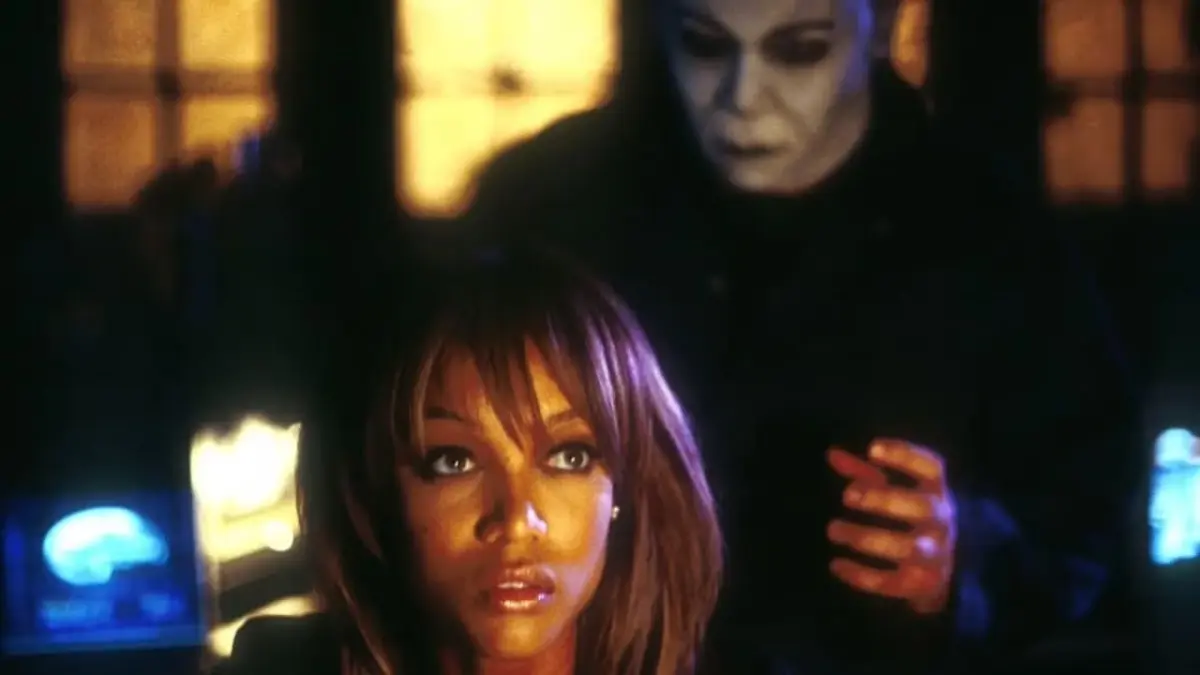
- Production (2002): Filming takes place. Banks portrays Nora, a producer involved in an internet-based reality show set within the abandoned Myers residence.
- Post-Production (2002): During the editing process, the creative team decides to remove the visual depiction of Nora’s death. The intention was to maintain narrative suspense regarding the character’s fate until her body is discovered by other cast members.
- Theatrical Release (July 12, 2002): The film premieres to overwhelmingly negative critical reception.
- Home Media/Workprints: The deleted death scene, featuring an on-screen strangulation by Michael Myers, is later discovered in circulation among horror fans and collectors, confirming that the footage was indeed completed before being cut.
The Anatomy of a Deleted Death Scene
The omission of Banks’ death scene is a focal point of her criticism. In the horror genre, a memorable "kill" is often considered a badge of honor for supporting cast members. The sequence, as seen in the circulating workprint, depicts Nora in the control room of the reality show setup, where she is confronted and ultimately strangled by the franchise’s antagonist, Michael Myers.
The decision to cut this sequence was motivated by a desire for structural suspense. By keeping the audience uncertain of Nora’s status, the filmmakers intended for her discovery to serve as a genuine "jump scare" for the characters within the film. However, from an actor’s perspective, the removal of this footage meant that Banks was denied the very "iconic moment" she was promised during contract negotiations. Without the scene, her character’s arc is truncated, leaving her performance feeling incomplete in the final edit.

Financial and Critical Performance Metrics
The commercial and critical failure of Halloween: Resurrection served to amplify the frustration of those involved. While Halloween H20: 20 Years Later had been a financial success, grossing approximately $64.9 million worldwide, Resurrection struggled to replicate this performance. The film concluded its theatrical run with a worldwide gross of $37.7 million, a significant decline that reflected the franchise’s waning cultural capital at the time.
Critical reception was even more severe. The film currently holds a 10% approval rating on the review aggregator Rotten Tomatoes. Critics frequently cited the film’s reliance on dated internet-age gimmicks and its inability to provide a coherent or satisfying conclusion to the series’ ongoing lore. For an actress hoping to establish a reputation for high-quality work, being associated with a film that is widely considered a low point in a storied franchise proved counterproductive.
Industry Implications of Franchise Casting
The trajectory of Banks’ involvement highlights a broader issue in Hollywood: the disconnect between the marketing of a project to talent and the eventual creative output. When agents suggest roles in established franchises, they are often relying on historical trends—like the success of Josh Hartnett—that may not apply to subsequent entries.
Furthermore, the "director’s cut" or "workprint" phenomenon provides a window into the fragility of an actor’s contribution. When significant portions of a performance are removed during post-production to serve the pacing or structure of the film, the actor’s ability to showcase their range is severely hampered. In the case of Halloween: Resurrection, the absence of the death scene left Banks with an incomplete performance and a sour experience that has colored her perspective on the project for over two decades.
Broader Legacy and Reflections
Today, Tyra Banks’ assessment of the film remains uncompromising. When questioned about her tenure on the set, she has characterized the experience as entirely negative, noting that the promised professional benefits never materialized. Her story serves as a cautionary tale for performers navigating the balance between commercial opportunities and artistic growth.
While the horror community continues to debate the merits of the various Halloween sequels, the case of the missing death scene in Resurrection remains a point of interest for genre historians and fans alike. It serves as a reminder that the final version of a film, which the public consumes, is often a sanitized or edited version of a much more complex production process. For Banks, the frustration is not merely about a scene left on the cutting room floor, but about the unfulfilled expectations that define the reality of a career in the film industry. The lasting impact of this experience remains a definitive chapter in her transition into the public consciousness as an actress, highlighting the risks inherent in choosing projects based on potential rather than creative alignment.