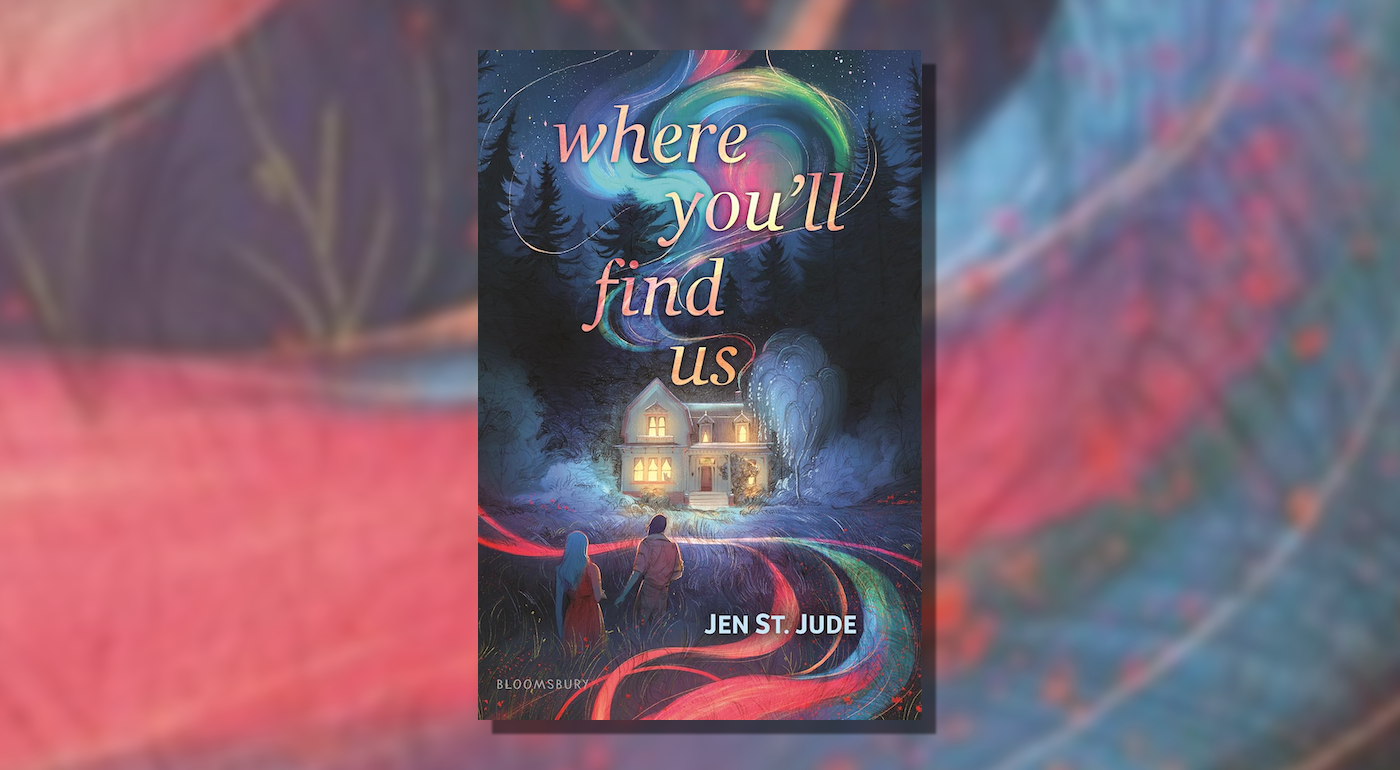
Bloomsbury Young Adult is set to release "Where You’ll Find Us," a compelling new young adult fantasy novel by Jen St. Jude, on June 2nd. The novel introduces readers to Calla Quick, a protagonist grappling with profound personal upheaval and the unsettling realization of her own evolving identity. This excerpt offers a glimpse into Calla’s tumultuous journey and her unexpected discovery of a sanctuary that defies the very fabric of time.
The narrative centers on Calla’s immediate crisis: disowned by her parents via text message, her future plans, including attending an all-women’s college with her girlfriend Ramona, are thrown into jeopardy due to financial constraints. However, Calla harbors a deeper, more complex truth about her parents’ rejection. While she told Ramona it was due to her parents discovering she is gay, Calla herself is questioning her gender identity, grappling with the possibility that she is not a girl at all. This internal conflict adds a layer of vulnerability and urgency to her circumstances.
Seeking solace and time to process these overwhelming changes, Calla and Ramona stumble upon a mysterious farmhouse nestled in the woods. This is no ordinary dwelling; it is Amaranth, a place that claims to be a refuge for queer individuals throughout history. The inhabitants, five teenagers who assert they have resided there for decades, describe Amaranth as a haven free from societal prejudice, violence, and, crucially, the relentless march of time. Within Amaranth, Calla can adopt the name Cal and finds an immediate sense of belonging. The promise of a timeless existence, where the future ceases to be a source of anxiety, is profoundly appealing. However, this temporal anomaly is not permanent. When the clock strikes twelve, the house’s magical stasis is threatened, forcing its inhabitants to find a way to restore it or face a return to their former realities. As Cal navigates this peculiar new environment, they begin to ponder the broader implications of lost history and its impact on queer communities.
The Perilous Journey to Amaranth
The excerpt vividly depicts Calla and Ramona’s desperate attempt to navigate a treacherous storm, underscoring their immediate need for shelter and the precariousness of their situation. The narrative begins with the encroaching darkness of a storm, obscuring the fading daylight. Their journey is immediately hampered by a patch of slick mud, forcing them to skid to a halt and cling to each other for balance. It is at this moment they discover an unexpected fork in the road, a detail neither of them recalls from their approach.
"I don’t remember there being a split," Ramona states, her voice tinged with uncertainty. Calla echoes her sentiment, her mind preoccupied with her failing relationship and the direction they had taken. The absence of their phones, a crucial tool for navigation and communication, further exacerbates their predicament. Calla’s realization that her phone is in Ramona’s purse, and Ramona’s subsequent confession that her purse was left behind in the ballroom, plunges them into a cascade of "shit, shit, shit."
Despite the growing anxiety, Calla attempts to maintain a semblance of calm. "It’s OK," she assures Ramona, trying to project confidence. "We can’t be too far either way." They peer into the dense woods, searching for any recognizable landmarks. Ramona, ever the pragmatist, chooses a path. "I think it’s the right one," she declares, her decision rooted in a desire to resolve their uncertainty sooner rather than later.
Their chosen path is abruptly interrupted by a violent thunderclap, startling both girls. The sky unleashes a blinding flash of lightning, casting an "angry blue" light over their surroundings. The strike is terrifyingly close, causing them to stumble and fall to the forest floor. A deafening crash follows as a massive tree falls behind them, narrowly missing them. The impact is followed by the scent of charred wood, sharp and suffocating, quickly extinguished by the relentless rain. The fallen tree now completely blocks their path, a stark symbol of their entrapment.
"Ramona," Calla manages to utter, her voice trembling. Ramona’s reassuring response, "I’m right here," brings a small measure of comfort as they reach for each other. "We need to find shelter. This storm…" her words are carried away by a new, more ferocious wind that whips around them. Driven by a primal instinct for survival, they push forward, holding onto each other as if their lives depend on it. The biting cold, the cramping muscles, and the sheer exhaustion create a palpable sense of despair. Calla is consumed by the fear that her actions have led them to this perilous situation.
Just as hope begins to wane, Ramona exclaims, "I think I see a light!" While Calla initially imagines the familiar glow of country club lanterns, they emerge into a clearing that presents a surreal and unexpected vista.
A Sanctuary Beyond Time
The clearing reveals a scene that defies the raging storm. Above, the sky is impossibly clear, dotted with more stars than Calla has ever witnessed, appearing close enough to touch. The starlight illuminates a field of vibrant, blood-red flowers, a stark contrast to the surrounding darkness. Dominating the landscape is a white, weathered house, its door a striking crimson. Rocking chairs sit on the porch, every window emanates a warm glow, and smoke curls from the chimney, suggesting an inhabited dwelling. Ripples spread across a small pond at the edge of the property, where a weeping willow tree stands sentinel. Chickens peck at the ground near a coop, seemingly unfazed by the tempest.
"Someone’s home," Calla breathes, a mixture of desperation and gratitude in her voice. Ramona echoes her sentiment, a shared sense of relief passing between them. Calla, overwhelmed with emotion, squeezes Ramona’s hand, and they run towards the house.
Upon reaching the crimson door, their knocks are met with silence. Calla tries the silver handle, and to their surprise, the door opens smoothly into the house. Ramona hesitates, a flicker of caution in her eyes. "Wait," she says, stepping back. "We can’t just go in." She expresses concern about politeness and waiting for someone to answer.
Calla, however, is driven by the urgent need for warmth and safety. "Ramona," she pleads, her teeth chattering from the cold, "We can’t stay out in this storm. We’re wet and freezing and…" Another lightning strike nearby causes Ramona to jump, the sound resonating with Calla. Reluctantly, Ramona agrees, albeit with a humorous warning: "But if there’s an ax murderer in here, I expect you to protect me." Calla readily accepts the challenge.

Stepping inside, they are immediately enveloped by warmth and the comforting scent of maple sugar. The interior is a stark contrast to the storm outside. A grand wooden staircase leads to the second floor. To their right, a spacious kitchen gleams with white, wood, and teal accents. To their left, a living room beckons, a record player spinning music by the fire, which blazes in the hearth.
Ramona recognizes the music: "’Prove It on Me Blues’?" Calla shrugs, her teeth chattering, a gesture of relief rather than cold. They settle by the fire, the heat a perfect, soft counterpoint to their chilling ordeal. An old piano stands against one wall, and a bookshelf overflows with colorful, leather-bound volumes. A large, green velvet couch offers a view of the pond and the weeping willow, the scene outside appearing strangely peaceful despite the storm. Streamers drape across doorways, and a peculiar balloon bouquet stands in the corner, suggesting a recent celebration. Ramona reads aloud the assortment of holiday greetings: "Trick or Treat, Happy St. Patrick’s Day, Grand Opening?"
Calla’s brow furrows in confusion, but she dismisses the oddity, concerned about the mud they’ve tracked onto the floor. As she opens her mouth to apologize, a deafening clap of thunder shakes the house. Ramona grabs her hand, their shared fear palpable.
The sound of scraping on the hardwood floor precedes the appearance of a large German Shepherd, which tumbles down the stairs but quickly recovers and bounds towards them. Calla braces for an attack, but the dog instead nuzzles into Ramona’s lap, its snout flecked with gray. Ramona affectionately scratches its ears, and its tail thumps against a small table, causing the record player to skip. Calla, relieved by the dog’s gentle demeanor, jokes about her own dog’s smaller size. The dog eventually hops onto the couch, settling down with a contented sigh.
Calla wonders if they are alone. The artistic decor, the music, the dog, and the scent of maple sugar all suggest a kind and gentle inhabitant. However, as footsteps descend the stairs, Calla’s mind races with anxieties, picturing a serial killer or a homophobe. To her immense relief, a girl about their age appears, her demeanor relaxed and amused. She has long, curly black hair and wears a bedazzled denim jacket over a vintage Sarah McLachlan tour t-shirt. A Black boy, dressed in a striking geometric sweater reminiscent of the 1990s, joins her, his fingers stained pink. He greets them with jazz hands and apologizes for not hearing them enter, explaining he was in the pantry.
Calla apologizes for their intrusion and the mud, but upon looking back, the carpet appears pristine. The girl, speaking with a thick New York accent, dismisses their apology and poses a perplexing question: "Tell us, what year is it?" Confused, Calla asks for clarification, and Ramona warily replies, "2026." The girl expresses surprise, noting their last guest was from 2011 and remarking that it’s been a long time since they’ve had new visitors.
Ramona and Calla exchange bewildered glances. Fifteen years since the last guest, and these individuals appear to be barely older than themselves? They inquire about borrowing a phone to call an Uber, a concept that elicits blank stares. The boy, Lionel, asks if an Uber is a robot or a flying car. Ramona explains it’s a car-sharing service, like a taxi, ordered via an app. The girl, Ambrosia, acknowledges they are "a bit behind the times," their vintage attire reinforcing this impression.
Ramona presses on, "But you must have a…" Ambrosia interrupts, asking about the well-being of various pop stars, including Whitney Houston, Mariah Carey, and Alanis Morissette. Lionel gently interjects, suggesting they let their guests settle in. Ambrosia, however, persists, asking about the U.S. presidency after Obama, implying a progressive timeline that seems to have passed them by. Calla and Ramona are struck by the blatant manipulation and growing unease. Calla, her patience wearing thin, demands to know their problem. Ambrosia, chewing gum and blowing a bubble, simply states she’s curious. Calla, suspecting a MAGA affiliation, asks directly. Ambrosia responds with her name, "Ambrosia."
Ramona, stepping in to de-escalate, introduces herself and Calla as students from Miss Stone’s, lost and concerned about their teachers realizing they are missing. She reiterates their need for a phone. Lionel apologetically states there are no phones in the house. Calla, incredulous, asks about iPads or laptops, but Ambrosia confirms the absence of any communication devices. Ambrosia suggests sending smoke signals, a sarcastic offer that further fuels Calla’s frustration.
Ramona, maintaining her composure, asks how they contact people. "We don’t," they reply in unison. When Ramona inquires if they are Luddites or living off the grid, Lionel explains that "things work different in this house." He elaborates on the concept of time not existing within the house, comparing it to an island where time flows by. He suggests that if they return to the stream of time, they will be pulled back to the exact moment they left. Ambrosia finds his explanation amusing, while Lionel defends his attempt to clarify.
Calla and Ramona exchange a look, questioning the sanity of their hosts. Despite the lack of overt threat, an unsettling feeling persists. Ambrosia, offering a seemingly sympathetic smile, assures them they are not in danger and that Lionel is making dessert. She offers to take them upstairs for dry clothes. Calla bristles at being addressed as "ladies," but Ramona wisely refrains from correcting Ambrosia, recognizing their dependence on their hospitality.
As they reluctantly follow Ambrosia upstairs, they notice striking framed portraits adorning the walls. There are five, depicting individuals around their age from different eras. One captures Lionel’s warm smile, another showcases Ambrosia’s glamorous persona. A portrait of an androgynous person with light brown hair, freckles, and a captivating gaze evokes a powerful sense of gender envy in Calla. Ambrosia calls out, "Coming?" and Calla rushes to catch up, the mystery of Amaranth deepening with every step.
The excerpt concludes with the tantalizing implication that Amaranth is a sanctuary where time is malleable, a place where queer individuals can find refuge and explore their identities without the pressures of the outside world. The arrival of Calla and Ramona marks a potential disruption to this timeless existence, raising questions about the true nature of Amaranth and the secrets held within its crimson-adorned walls. The novel promises a journey of self-discovery, acceptance, and the profound impact of community, even in the most unconventional of settings.
Excerpted from Where You’ll Find Us, copyright © 2026 by Jen St. Jude.