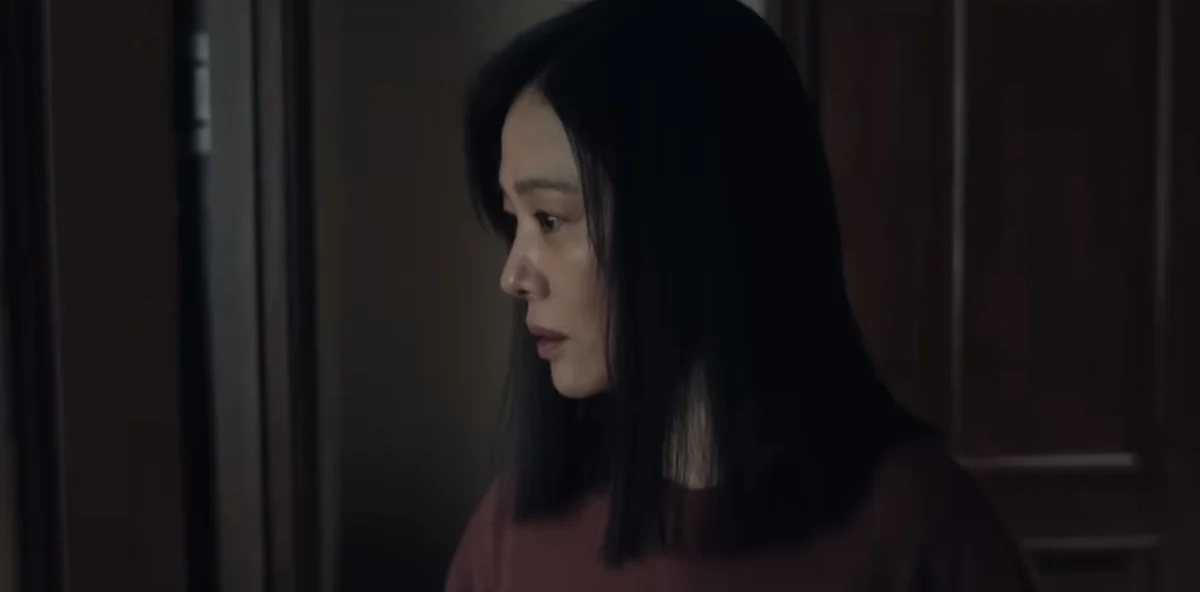
The international cinematic landscape has long acknowledged Yeon Sang-ho as a visionary architect of high-stakes tension, a reputation solidified globally by his landmark 2016 zombie action masterpiece, Train to Busan. Over the past decade, the South Korean writer, director, and creator has maintained an unrelenting production schedule, generating four distinct feature films within a compressed two-year window alone. The latest culmination of this prolific period is Paradise Lost, a psychological and technological thriller that celebrated its highly anticipated world premiere at the 2026 Toronto International Film Festival (TIFF). Distributed stateside by Well Go USA, which has secured the film for an upcoming American theatrical release, Paradise Lost shifts Yeon’s focus away from the supernatural or undead and directly into the unsettling moral grey areas of artificial intelligence, parental grief, and the foundational pillars of human consciousness.
Genesis of the Narrative and Adaptation History
Paradise Lost originates from a conceptual seed planted by Yeon Sang-ho, which was subsequently expanded into a companion novel titled Black Inferno, authored by Oh Seong-eun. The narrative hinges on a devastating premise: a catastrophic school bus accident results in the disappearance of multiple children, leaving an entire community shattered. In the wake of this unmitigated tragedy, grieving parents are provided with sophisticated AI-driven video game simulations designed to replicate their lost children, serving as a corporate-sanctioned psychological palliative.
The story concentrates its emotional lens on Ryu So-young, portrayed by Kim Hyun-joo, nine years after the initial catastrophe. The psychological equilibrium of the narrative fractures when So-young receives the staggering news that her biological son, Ryu Sun-woo—played by Bae Hyun-sung—has been discovered alive. Yet, the reunion is far from triumphant. The returned boy exhibits behavioral and emotional discrepancies that deeply unsettle the mother, culminating in a harrowing psychological paradox where So-young finds herself preferring the uncomplicated, programmable comfort of her son’s AI replica over the unpredictable reality of her flesh-and-blood child.
Evolution from Science Fiction to Contemporary Reality
When discussing the conceptualization of the film during a post-premiere interview, Yeon addressed the rapidly accelerating timeline of technological integration in modern society. Elements of the narrative that would have been classified as pure speculative science fiction just half a decade ago now mirror an emerging, controversial cottage industry of commercial AI grief tech, digital avatars, and posthumous simulations.
Initially, Yeon contemplated positioning the story within a distant futuristic setting to distance the narrative from contemporary realities. However, the unprecedented velocity of artificial intelligence development during the film’s pre-production and shooting phases altered his creative calculus. The filmmaker observed that the current socio-technological landscape has evolved so rapidly that contemporary settings are not only viable for such narratives but inherently more resonant with audiences navigating the daily integration of generative AI into personal and professional spheres.
Thematic Explorations: Human Identity Versus Technological Depth
Cinematic explorations of artificial intelligence have frequently centered on the internal psychology, sentience, or philosophical awakening of the synthetic beings themselves. Works such as Steven Spielberg’s 2001 classic A.I. Artificial Intelligence established a cinematic precedent for examining the interiority of artificial children and the complex ironies of engineered affection.
Yeon acknowledges Spielberg’s masterpiece as his personal introduction to AI-themed cinema, noting that A.I. prioritized the profound investigation of the artificial entity’s mysterious presence and inner depth. Paradise Lost, conversely, pivots away from the internal mechanics of the machine to interrogate the biological subject. The core inquiry of Yeon’s film examines human identity itself, questioning how humanity maintains its defining characteristics when confronted with seamless technological facsimiles. The narrative forces viewers to confront the unsettling reality of modern mourning, where emotional validation can be artificially synthesized, challenging traditional paradigms of maternal instinct and grief recovery.
Character Psychology and the Dichotomy of Mourning
The emotional core of Paradise Lost relies heavily on the profound psychological divergence among the victims’ families. The narrative establishes two distinct categories of parents: those who recovered the physical remains of their children, and those whose children vanished without physical closure.
So-young belongs firmly to the latter, more agonizing demographic. Visual motifs within the film, including sequences near a desolate mine entrance where So-young sought closure and contemplated ending her own life alongside her child, emphasize the absolute extremity of her desperation. According to Yeon, the absence of physical closure renders traditional grieving impossible, leaving the psyche vulnerable to synthetic attachment. So-young’s addiction to the AI simulation is framed not merely as delusion, but as a tragic preservation strategy; she becomes fixated on the digital space because the perceived emotional core and psyche of her child appear to persist within the code, outweighing the cold reality of biological absence.
Literary Parallels: John Milton and the Burden of Choice
The film’s title, borrowed directly from John Milton’s epic seventeenth-century poem Paradise Lost, serves as a thematic blueprint rather than a direct narrative adaptation. Milton’s classic text chronicles the expulsion of mankind from a state of paradisiacal perfection, resulting in vulnerability, moral instability, and the acquisition of complex human identity.
In Yeon’s cinematic interpretation, technological perfection mirrors the prelapsarean paradise. The characters inhabit a world where corporate and digital advancements attempt to eradicate the sharpest edges of human suffering. Yet, the ultimate narrative trajectory involves characters making conscious, albeit tragic, choices to embrace pain, instability, and reality. The returning son functions within this allegorical framework as a destabilizing catalyst, mirroring the archetype of the serpent in Eden. By introducing biological complications and moral ambiguity into an otherwise sanitized existence, the son forces the mother into a deeply human conflict, ultimately choosing the heavy burden of real pain over synthetic perfection.
Strategic Distribution: The Theatrical Versus Streaming Divide
As a filmmaker who has successfully navigated both traditional theatrical models and global streaming platforms—notably through projects with Netflix—Yeon offers pragmatic insights into contemporary distribution strategies. His television and streaming ventures have provided the distinct advantage of simultaneous, worldwide releases, eliminating the staggered rollout schedules traditionally required by regional theatrical distributors.
However, Yeon’s recent experiences have reaffirmed the unique value of the theatrical ecosystem. When streaming platforms execute global launches, individual regional markets frequently lack the centralized promotional energy and localized curation provided by dedicated theatrical distribution partners. Conversely, theatrical releases managed by international distributors allow films to be systematically introduced to specific audiences over extended timelines, fostering localized engagement and a sustained cultural footprint that contrasts sharply with the ephemeral nature of content drops on subscription video-on-demand services.
Future Outlook and Industry Implications
The world premiere of Paradise Lost at TIFF 2026 marks another significant milestone in Yeon Sang-ho’s relentless career trajectory. By balancing high-concept genre mechanics with pressing philosophical inquiries regarding artificial intelligence and human psychology, Yeon continues to challenge international audiences beyond the confines of his breakthrough zombie cinema.
As Well Go USA prepares Paradise Lost for its forthcoming American theatrical run, industry analysts will closely monitor how contemporary audiences respond to domestic psychological thrillers that confront the ethical frontiers of digital grief. The film arrives at a time when societal conversations surrounding generative AI, digital preservation of human likenesses, and the commercialization of bereavement are at an all-time high. Paradise Lost does not offer simplistic cautionary tropes or utopian reassurances; instead, it utilizes the language of suspense to examine the enduring, often self-destructive complexity of the human heart when offered an escape from its deepest sorrows.